A country club offers a wedding something in between a hotel and a private estate: an established function room and grounds at a price that usually beats both, in exchange for a set of members' rules that a purely commercial venue would never think to impose.
Members' rules and dress codes
A country club answers to its membership, not only to paying event clients. Ask what dress code or conduct rules apply to your wedding guests on the day, whether members can be on the grounds or in shared spaces at the same time, and whether a member is required to sponsor the booking at all.
The function room and the lawn
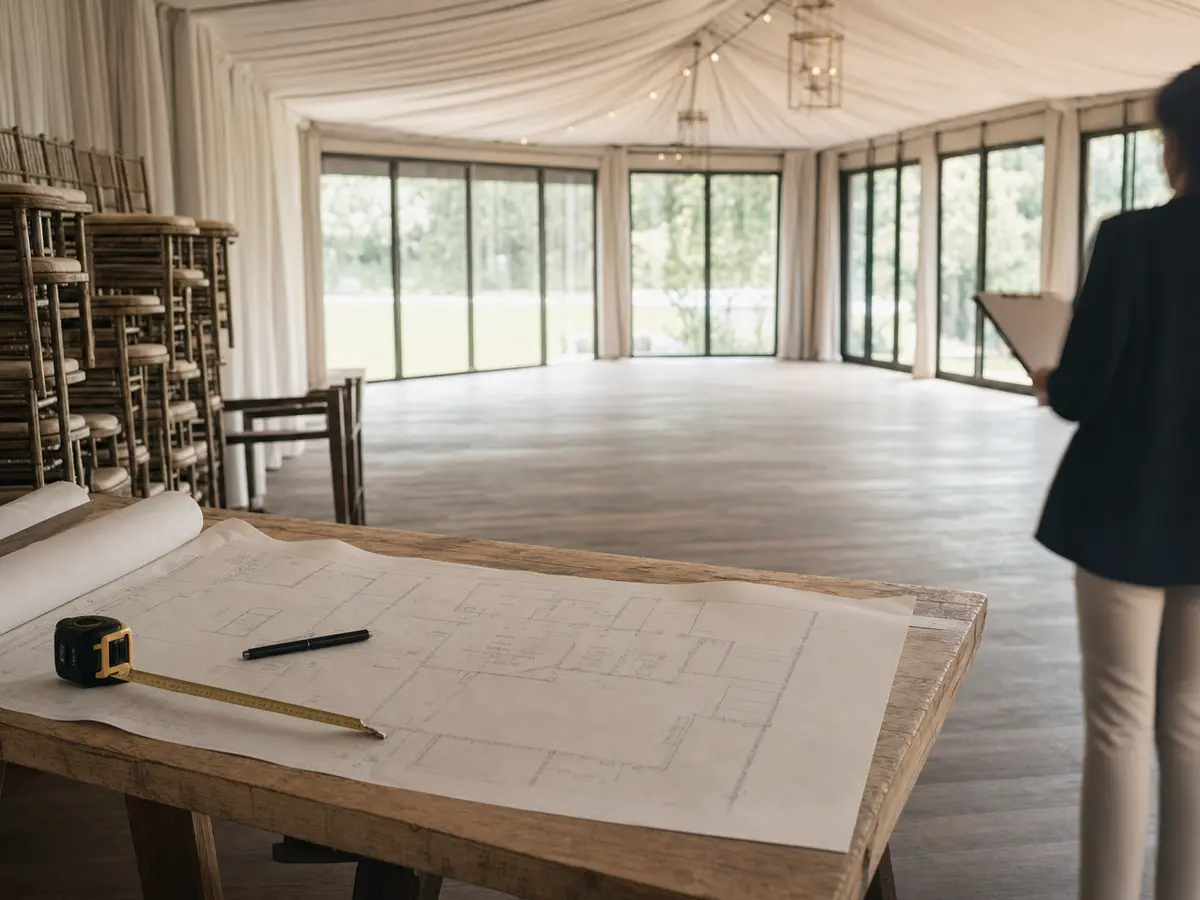
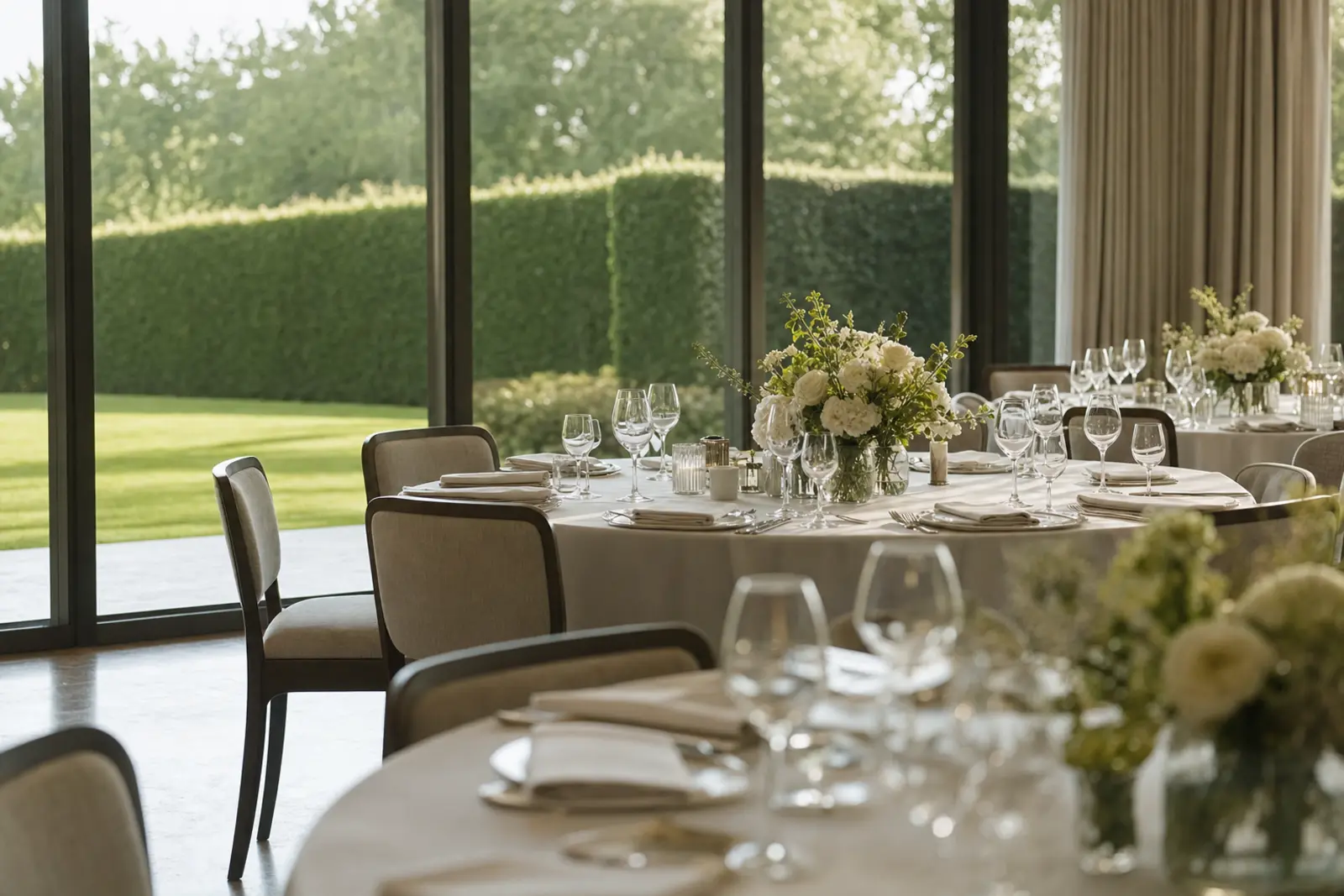
The typical layout pairs an indoor function room for the reception with a lawn or terrace nearby, used for the ceremony or for photographs. Ask whether both are included in the hire or costed separately, and whether another club function could be running in an adjoining room on the same evening.
Catering and the preferred list
Most clubs run in-house catering through their own kitchen, or work from a short preferred-supplier list rather than an open choice. Ask what is fixed and what is negotiable, particularly if you have a specific catering requirement, such as Kosher-supervised or Halaal-certified food, that the in-house kitchen may not be set up to provide.
Parking and access for non-members
Clubs often reserve their best parking for members. Ask what is arranged for wedding guests, especially elderly guests or anyone needing to park close to the entrance, and whether a temporary guest list needs to be submitted to the gate ahead of the day.
Golf, and the rest of the club's calendar
If the club has a golf course, member competitions and ordinary play continue on their own schedule regardless of your booking. Ask whether your event date overlaps with club fixtures that could affect noise, parking or grounds access, particularly on a Saturday, which is often the club's busiest day for both weddings and golf.
Backup power and value for a mid-sized wedding
Like a hotel, many clubs run a generator for their own daily operations, which can work in your favour on backup power compared with a private estate. Confirm this rather than assume it, and weigh the club's typically lower hire fee for a genuinely mid-sized guest list against what a hotel or private estate would cost for the same numbers. The saving tends to show up most clearly in the middle of the range, not at the very small or very large end.
- Ask what dress code or conduct rules apply to your guests, and who enforces them on the day.
- Confirm whether the function room and the lawn or terrace are both included in the hire.
- Get the club's catering position: in-house only, a preferred list, or open to outside caterers.
- Ask what parking is arranged for non-member guests, and whether a guest list is needed at the gate.
- Check the club's calendar for competitions or other functions that could affect your date.
Do we need to be a member to book a country club for a wedding?
Policies vary from club to club. Some require a member to sponsor the booking or attend as a nominal host, while others hire function space to the public directly. Confirm this early, since it can rule a venue out entirely if nobody in the wedding party is able to sponsor it, and it is a wasted conversation to have after you have already chosen the venue in your mind.
Is a country club good value for a mid-sized wedding?
Often yes, since the fixed infrastructure, the function room, the kitchen, the grounds and usually backup power, is shared across many members' events rather than costed as a one-off hire the way a private estate is. This tends to show most clearly for guest counts in the middle range, rather than a very small or very large wedding, where the club's fixed costs are spread least efficiently.
A club rarely tries to be the most memorable venue on anyone's shortlist. It tries to be a reliable one, and for a lot of weddings that is a better trade than it sounds on paper.