A beach wedding venue is really a choice between two different things: a public beach, free but bound by permits and open to anyone passing, or private access through a venue, which costs more but hands you control of the space.
Public beach or private access
A public beach is free to use but is genuinely public: other people, dogs, boats and the tide do not stop for a wedding, and most municipalities require a permit for anything beyond a very small gathering, including a marquee, chairs or amplified sound. A private venue with its own beach access, whether a hotel, an estate or a lodge, removes the permit question and the public-access problem in exchange for a fee and, usually, a requirement to use the venue's own catering.
Wind and tide, before the view
Wind decides more about a beach wedding than any other single factor: it affects hair, dresses, veils, amplified sound, standing candles and whether guests can hear the vows at all. Ask any venue what the wind is typically doing at the time of day you are planning for, and have a covered or indoor fallback confirmed, not just hoped for. Tide matters just as much if the ceremony is set for a specific spot on the sand: check the tide table for the actual date, not just the season, since a beach that looks wide open at low tide can lose most of its usable space a few hours later.
Sand, shoes and the practical stuff
Chairs sink into dry sand and struggle on wet sand for different reasons, so ask how the venue handles seating, whether that means a raised platform, matting or simply accepting that chairs will need resetting during the event. Heels do not work on sand, and guests should be told that plainly in advance rather than discovering it on the day. Shade matters more than most couples plan for: a ceremony held in direct sun in the middle of the day is uncomfortable for guests in formal clothing, and a beach with no natural shade needs a plan for umbrellas, a sail or a tent.
Ceremony on the sand, reception under cover
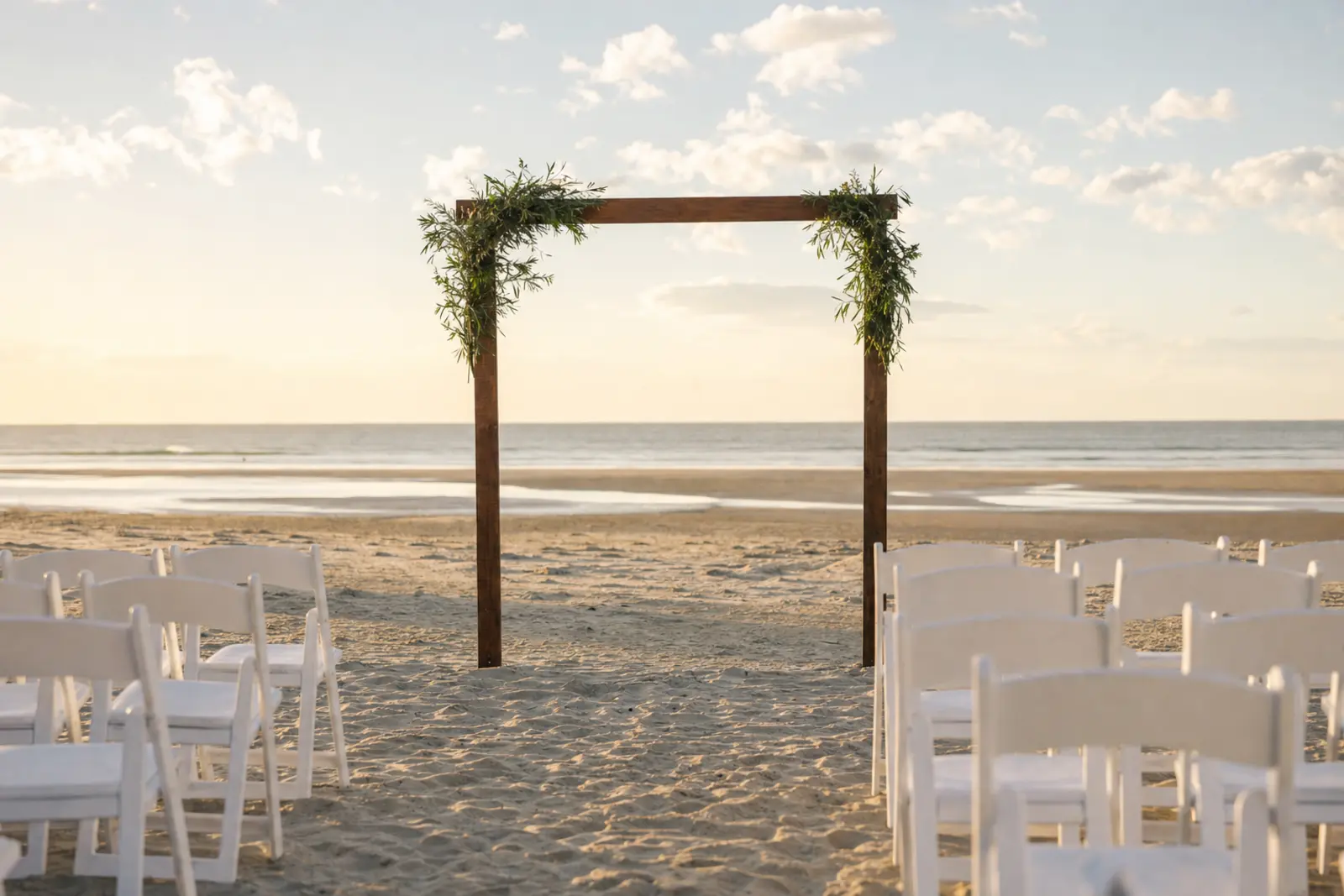
The most workable pattern is a short ceremony on the beach itself, timed for cooler light, followed by a reception under some form of cover, whether that is an indoor room, a marquee or a covered deck. Trying to run the whole event on open sand, including a long seated meal, tends to be where beach weddings go wrong: wind picks up in the evening on most of the coast, and guests in formal wear are not dressed for it.
Choosing a coast
KwaZulu-Natal
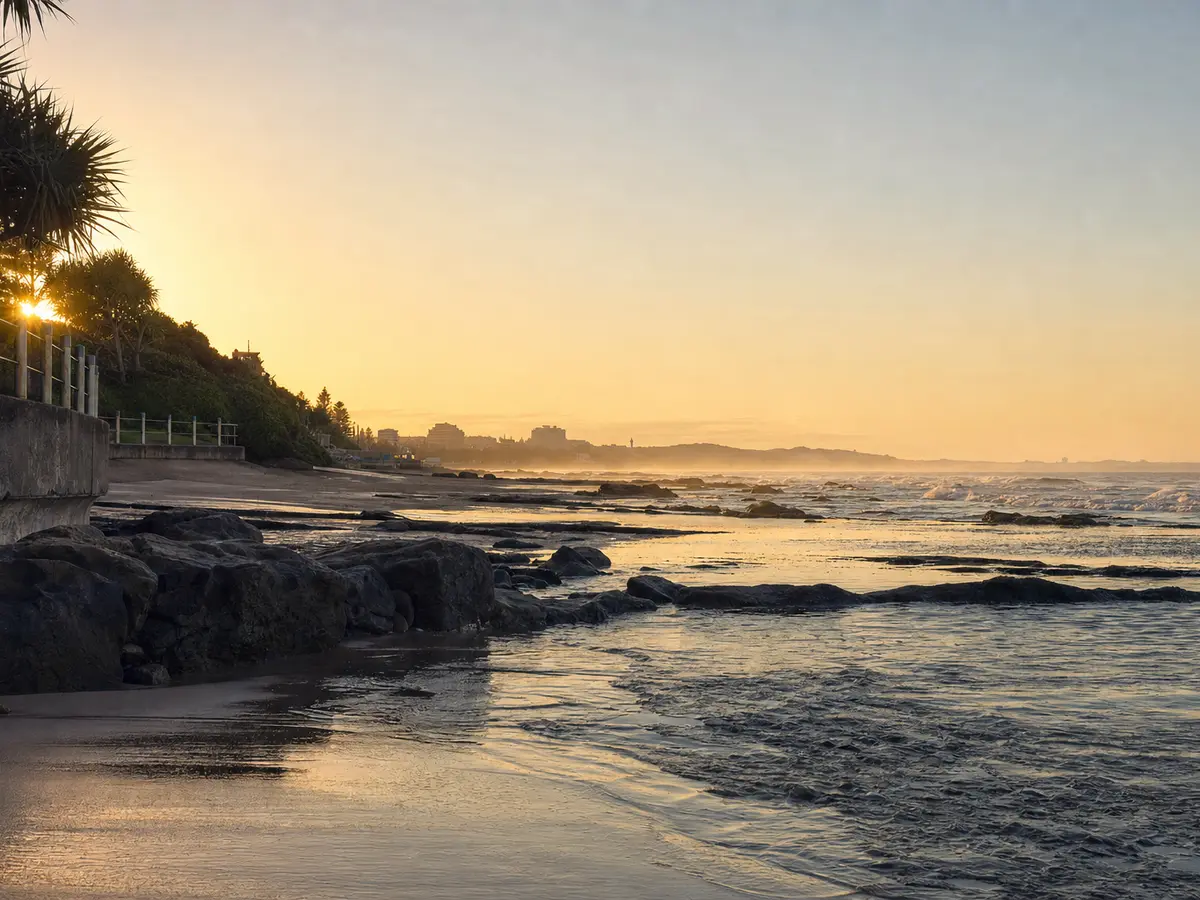
Durban and the North Coast offer warm water most of the year and a beach culture that suits an outdoor ceremony, but summer brings real humidity and the chance of a sudden downpour, so a wet-weather plan is not optional between roughly November and March. Mornings and early evenings are more comfortable than the middle of the day.
The Cape
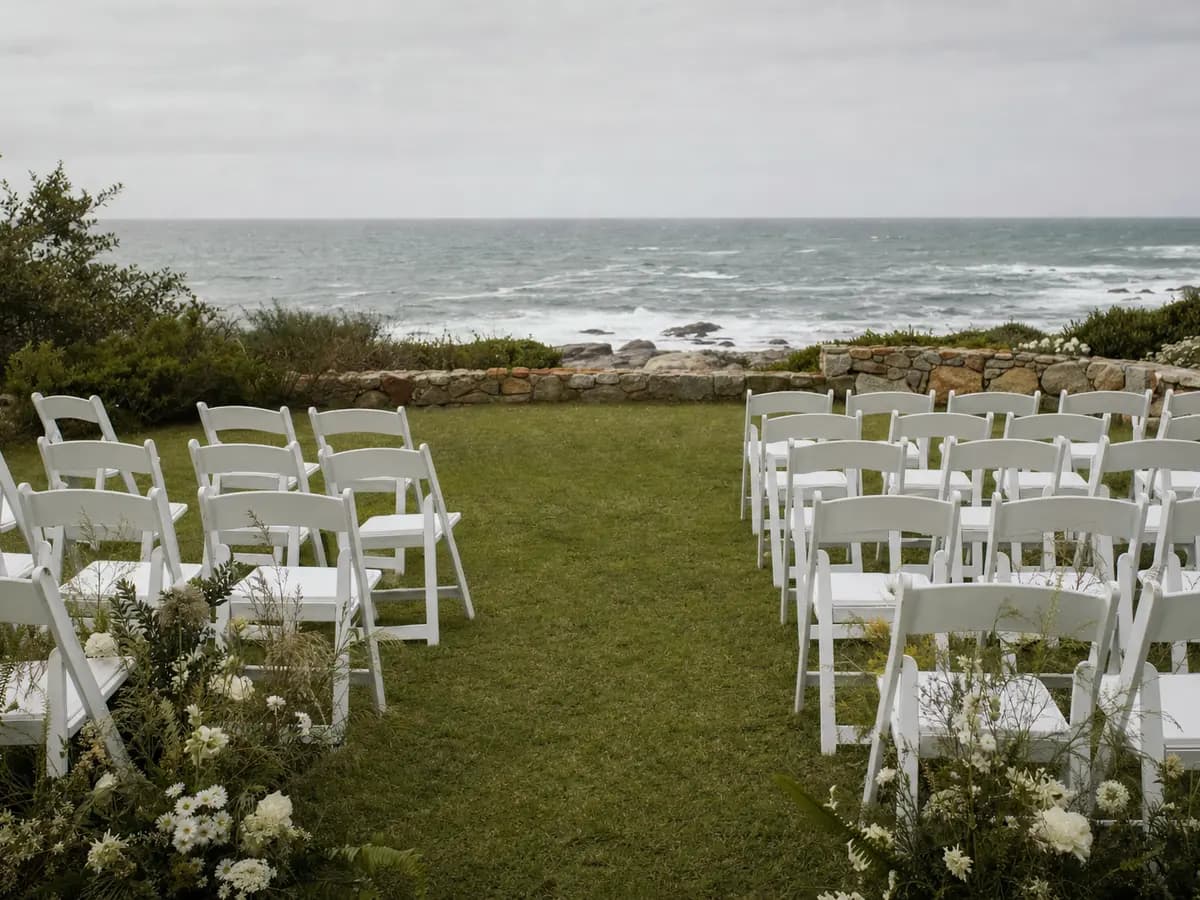
Cape Town's water stays cold year-round, which changes what a beach wedding there is actually for: fewer couples plan to be in the water, and more plan around the light and the setting. The south-easter, which runs hardest from October to February, is the bigger practical concern than the temperature, and it can turn a calm morning booking into an unworkable afternoon on the same day.
The Garden Route
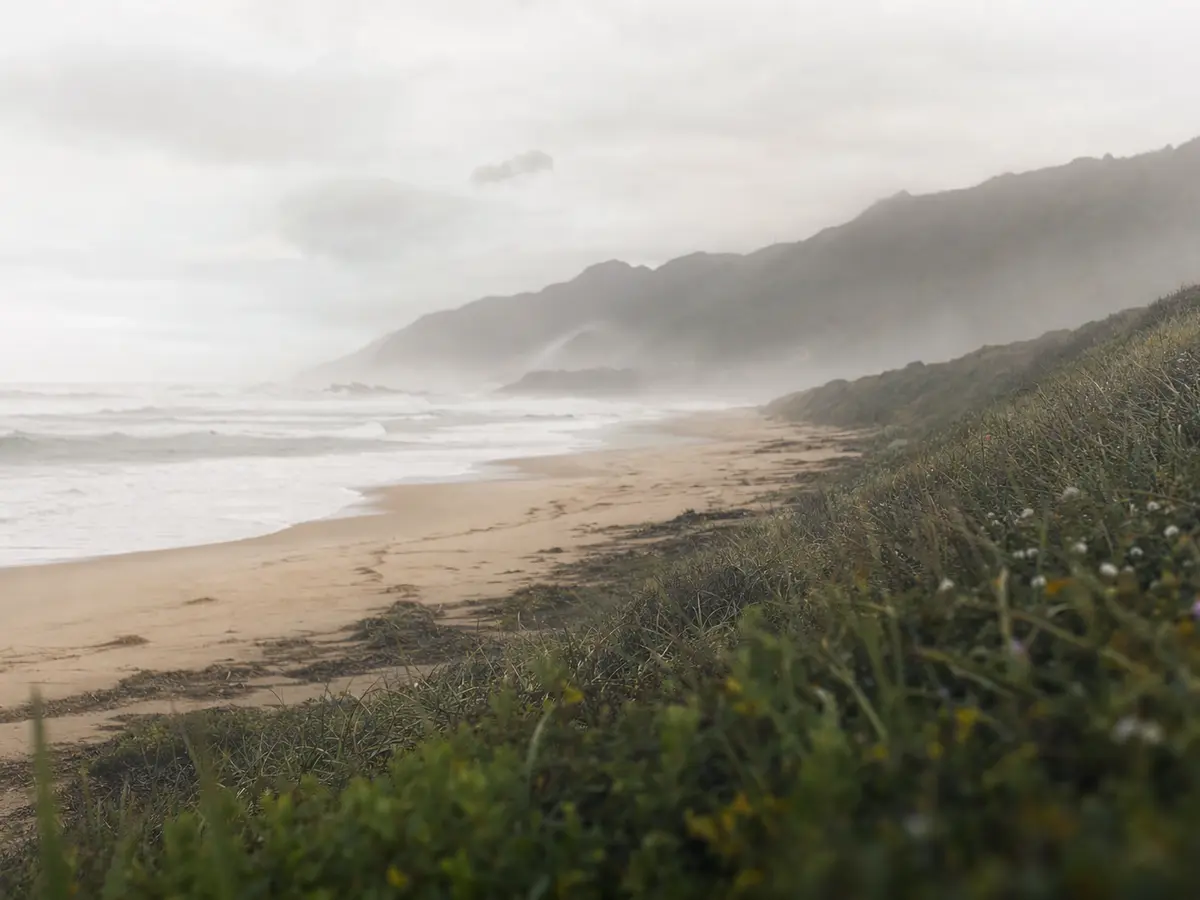
Beyond the open coast, the Garden Route's lagoons and forest-edge settings offer a genuine alternative to a straight beach ceremony: more shelter from wind, softer light through the trees, and water that is calmer than the open sea without losing the coastal feel. Worth considering if wind is the deciding risk for your date.
Questions to ask a beach venue
- Is beach access public or private, and if public, what permit does the municipality require?
- What does the wind typically do at the time of day we are planning for?
- What is the tide doing on the actual date, not just the season?
- How does the venue handle seating and walking surfaces on sand?
- What is the covered or indoor fallback if the weather does not cooperate?
- Is there natural or provided shade for guests during the ceremony?
A beach gives a wedding a setting no built venue can copy, and it takes away control over wind, tide and weather in exchange. Plan for both sides of that trade, not only for the photographs.
Is a public beach wedding actually free?
The beach itself usually is, but almost nothing else about a public beach wedding is, once you add a permit application, hired chairs and a marquee, portable toilets if the location needs them, and a plan for parking and guest transport. Compare that real total cost against a private venue with its own beach access before assuming the public option is automatically cheaper, since the gap is often smaller than it looks at first.
What is the best time of year for a beach wedding in South Africa?
It depends on the coast more than the calendar. KwaZulu-Natal is most comfortable outside the peak summer humidity, roughly April to September. The Cape is calmer outside the south-easter season, which runs hardest from October to February, so late autumn through early spring tends to work better there. Whichever coast you choose, ask the specific venue about its own wind and weather pattern rather than relying on a general seasonal rule.