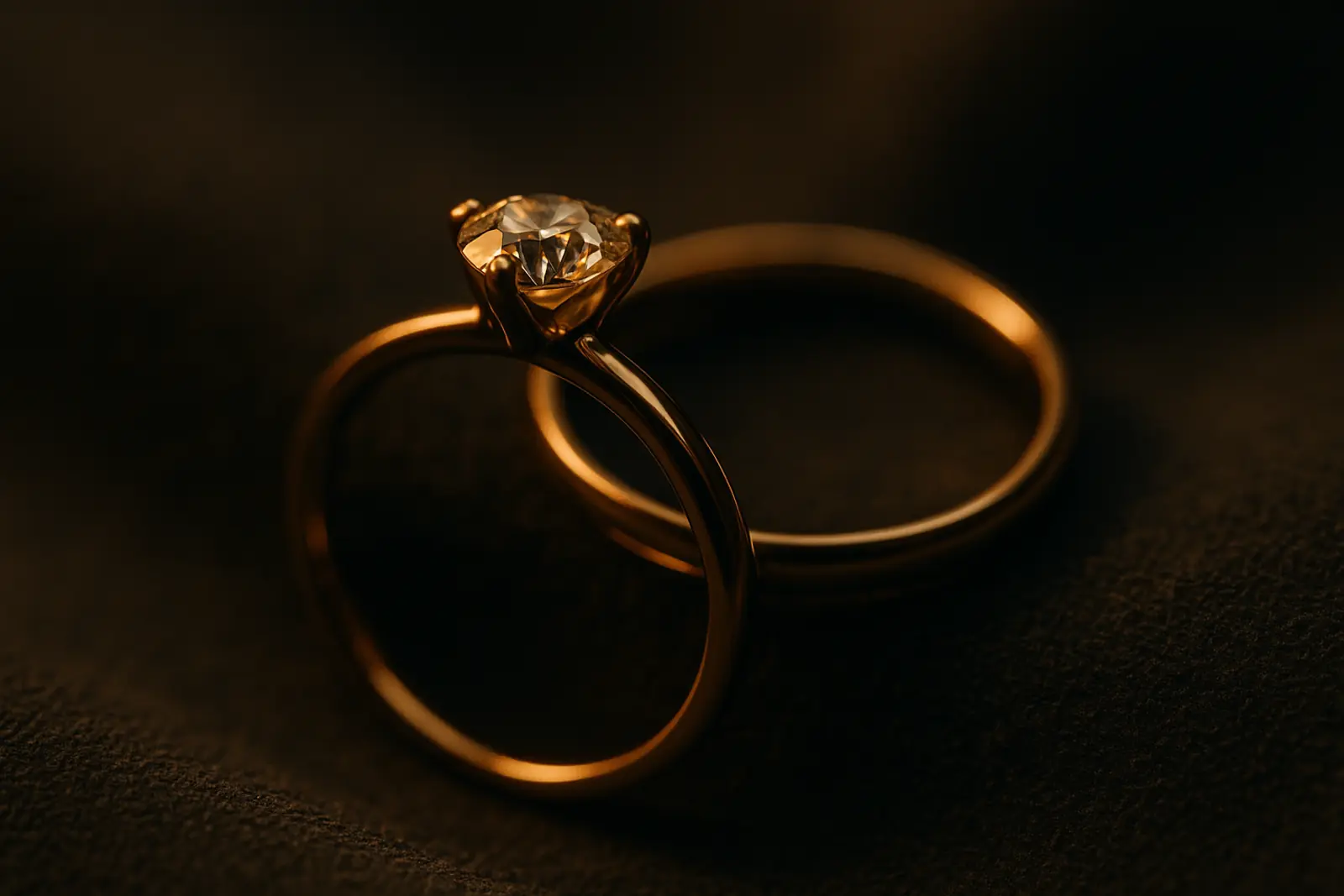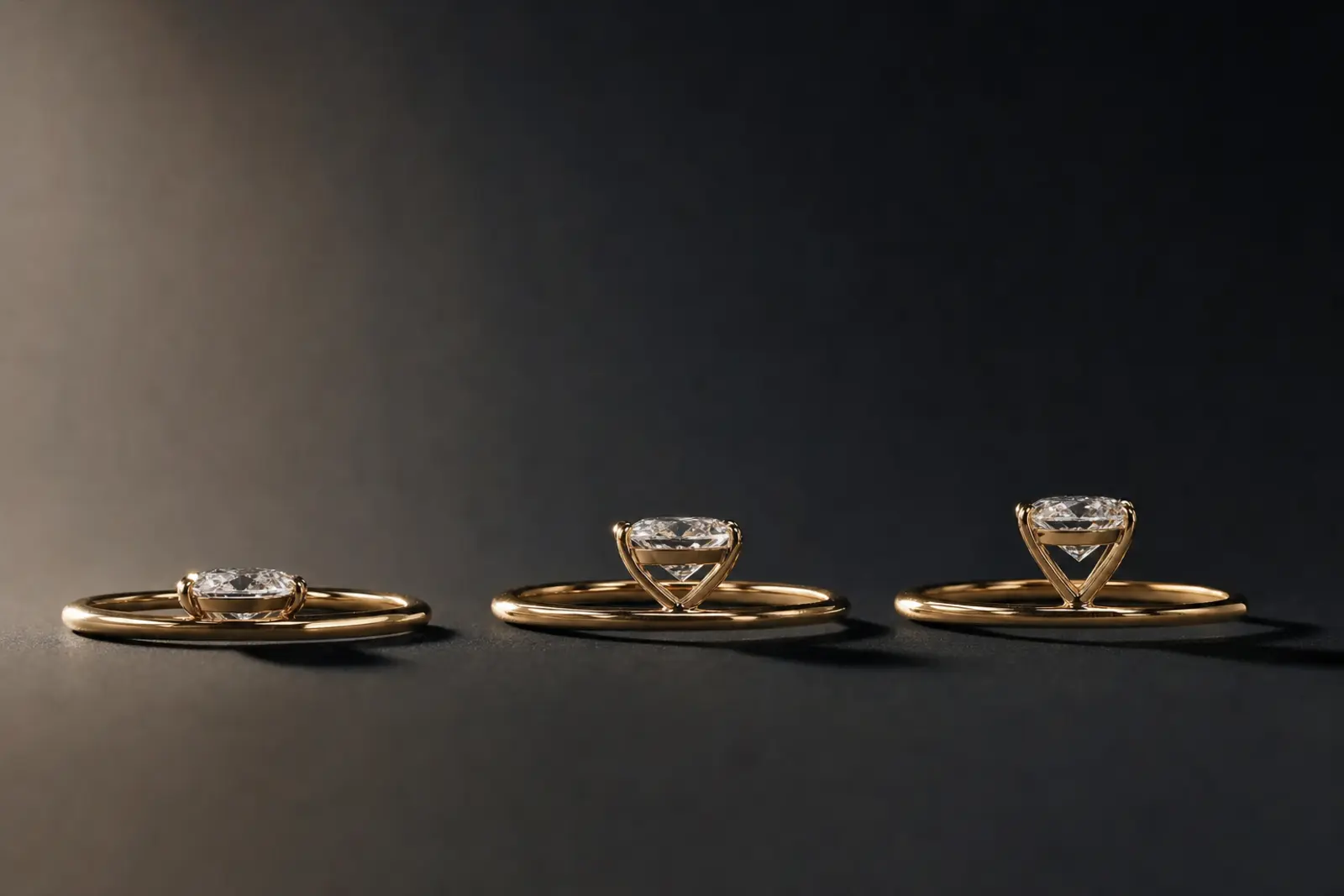
How far a stone sits above the finger, its profile height, is one of the few decisions in a ring's design that is genuinely objective rather than a matter of taste, and it changes almost everything about how the ring is actually worn, from what it catches on to how a wedding band will sit beside it later.
What profile height actually measures
Profile height is the distance from the top of the band to the highest point of the stone, measured in millimetres. A difference of two millimetres between two settings is small on paper and obvious on the hand: it is roughly the difference between a ring that disappears under a glove and one that snags every time a sleeve goes over it.
Low, mid and high, and what each does
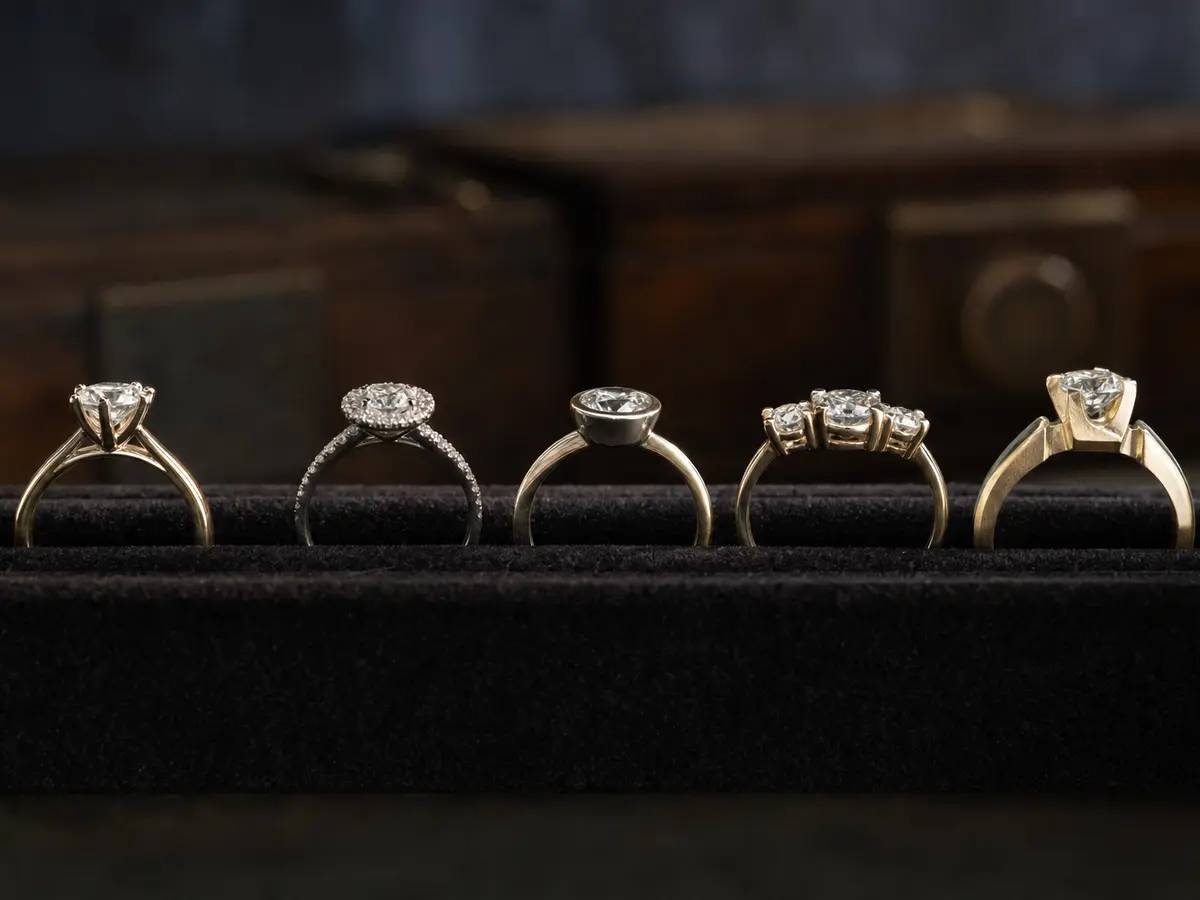
A low setting brings the girdle close to the finger, using a shallow basket rather than a tall cathedral. It sits under a glove comfortably, catches far less on jersey and hair, and gives up a small amount of the light that would otherwise enter from the side. Most people cannot see the difference from directly above; everyone notices the difference when a sleeve stops catching.
A mid setting is the balance most people land on without realising there was a decision to make: enough lift for the stone to catch light generously, without the basket becoming the tallest thing on the hand. It is the default at most jewellers for exactly this reason.
A high setting, usually a cathedral or trellis basket, lifts the stone furthest into the light and reads as the most dramatic of the three from across a room. It is also the one that catches most often on gloves, scarves and small children, and it needs the most careful thought about the wedding band that will sit beside it.
Height and the wedding band that comes later
A lower setting generally leaves a smaller gap for a future wedding band to bridge, because there is less curve and less basket for a straight band to work around. A high cathedral setting almost always needs a shaped band, cut specifically to that ring's profile, to sit flush against it. Deciding the height with the future band in mind, even before that band exists, saves a harder conversation later.
Gloves, sleeves and everyday snagging
The simplest test for profile height is not a photograph but a glove. Pull on an ordinary winter glove or a pair of gardening gloves with the ring on, and the difference between a low and a high setting becomes obvious in seconds: a low setting slides on without a fight, a high cathedral catches on the seam almost every time. The same test works for a jersey sleeve, which is worth doing before deciding rather than after buying a ring that spends its first Johannesburg winter caught on every cuff.
- Low profile
- Best for gloves, active hands, and a quieter everyday feel
- Mid profile
- The common default; noticeable light without excess catch risk
- High profile
- Maximum light, maximum catch, needs a shaped band later
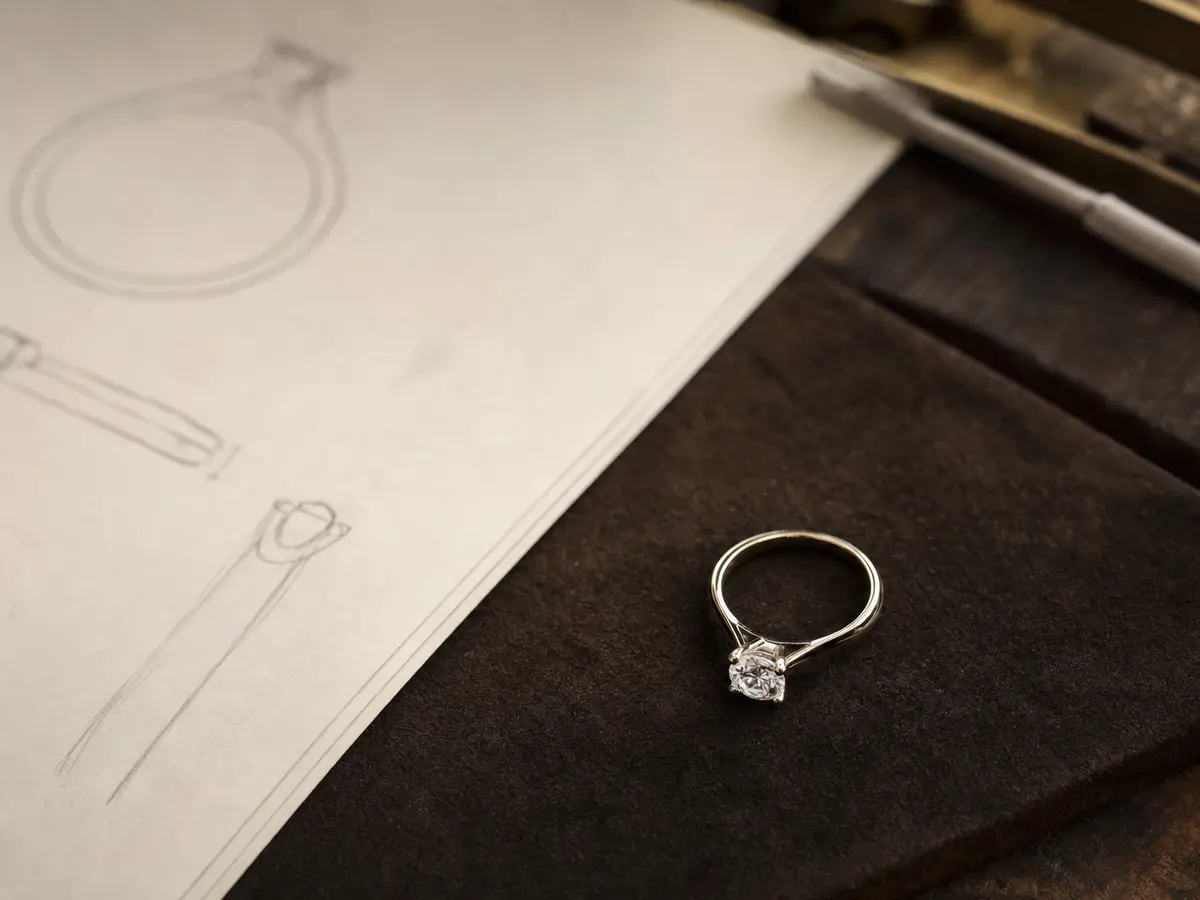
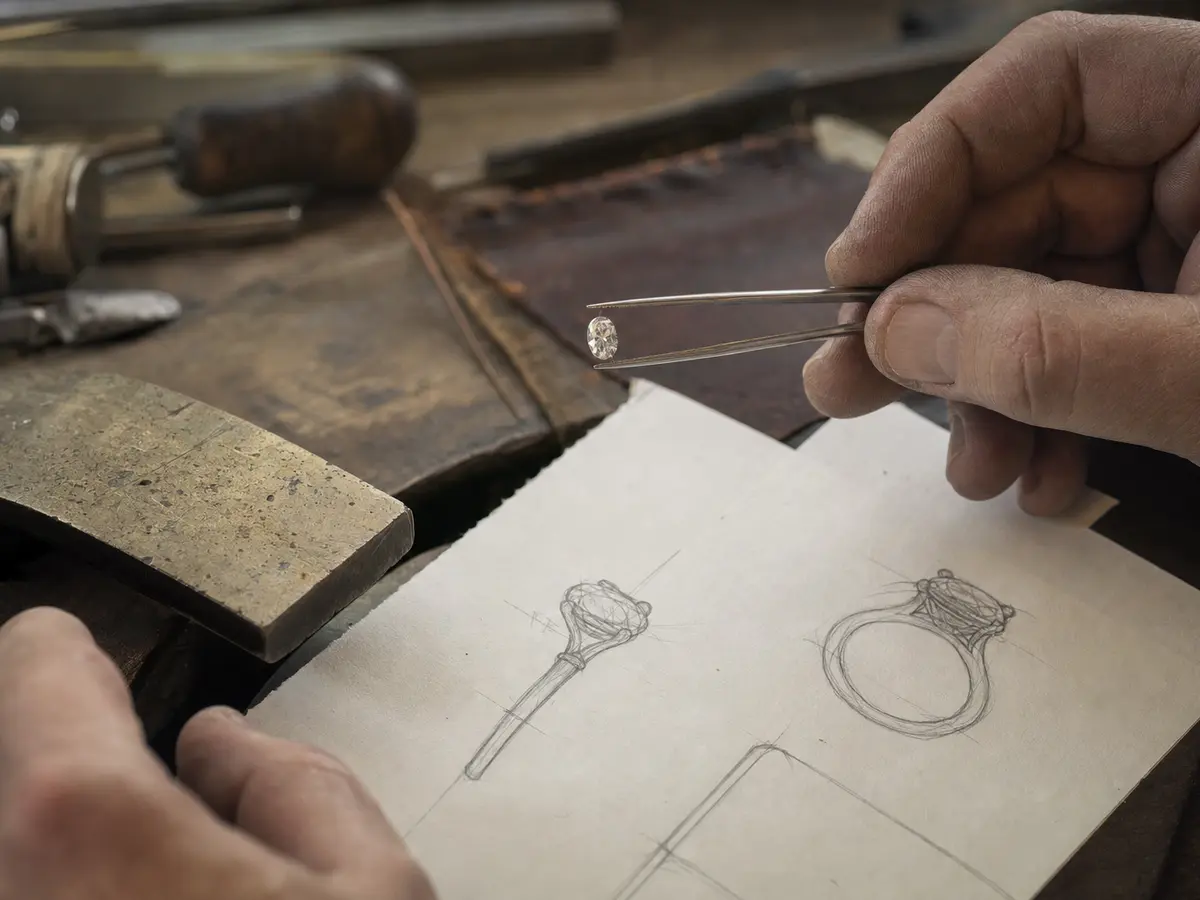
Ask to see the height difference on your own hand rather than deciding from a drawing. Two millimetres reads very differently in person than on paper.
Does profile height change how big the stone looks from above?
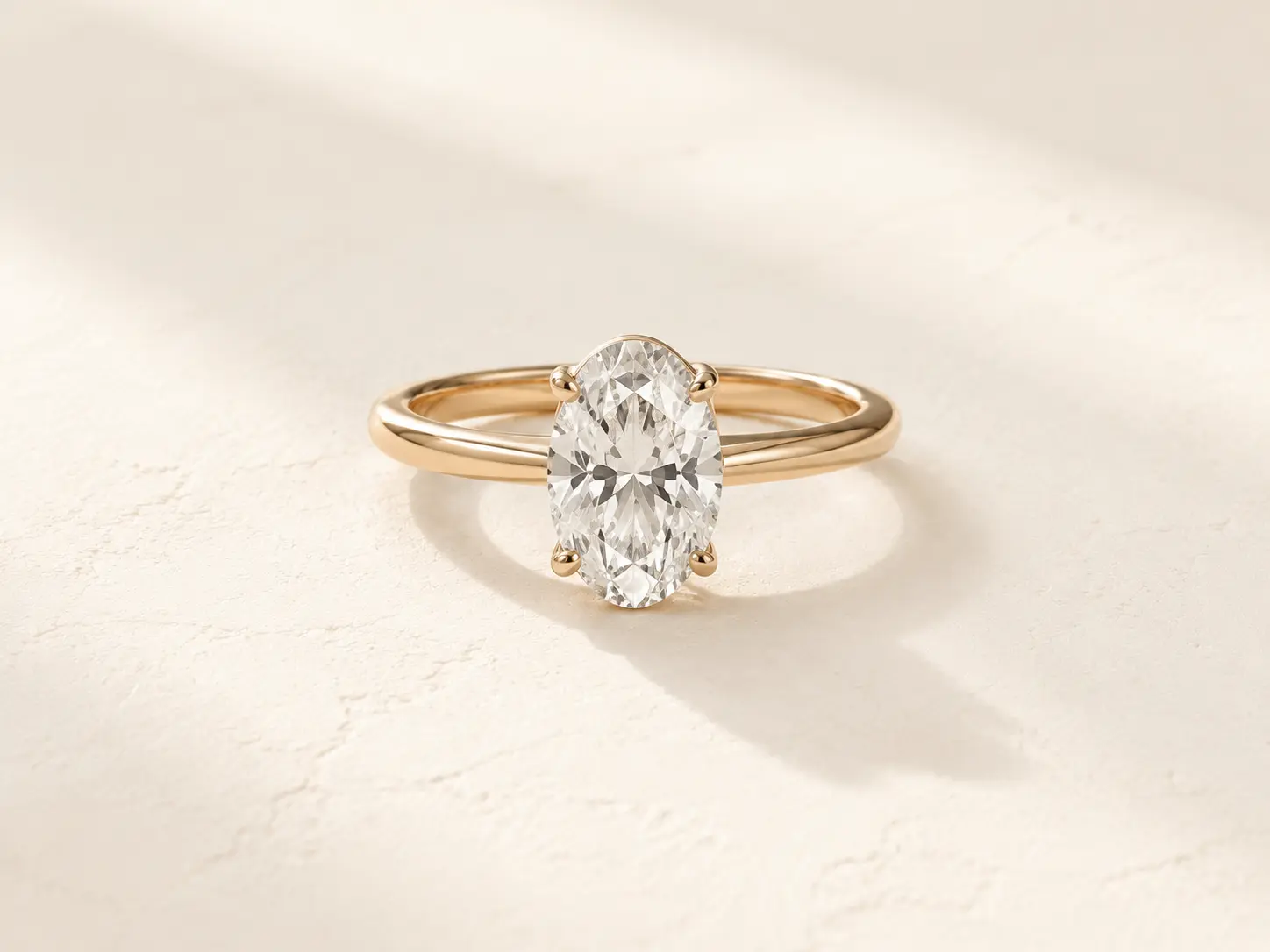
Barely. The face-up size of a stone is its diameter, which stays the same whatever the height of the basket beneath it. What height changes is how much light enters from the side and how the ring interacts with everything it touches. Judged from directly above, a low and a high setting of the same stone look close to identical; judged from any other angle, or by feel, the difference is obvious.
Can the height be changed after the ring is made?
Sometimes, within limits. Lowering a basket slightly is often possible without remaking the whole head. Raising a low basket significantly usually means building a new head and resetting the stone into it, which is a bigger job. This is exactly why we ask about profile height at the design stage, before it becomes a repair rather than a decision.