Setting an engagement-ring budget starts with putting aside the idea that a correct number exists, deciding what you can genuinely afford without strain, and then working out what that figure actually buys once it is broken into stone, metal and making.
The months-of-salary rule is marketing, not arithmetic
The idea that an engagement ring should cost a fixed multiple of a month's salary traces back to a mid-twentieth-century advertising campaign, not to any financial logic. It has no relationship to what a good ring actually costs, what two people can comfortably afford, or what either of them values. Treat it the way you would treat any other advertising line from seventy years ago: interesting history, not guidance for your household.
What a budget actually buys
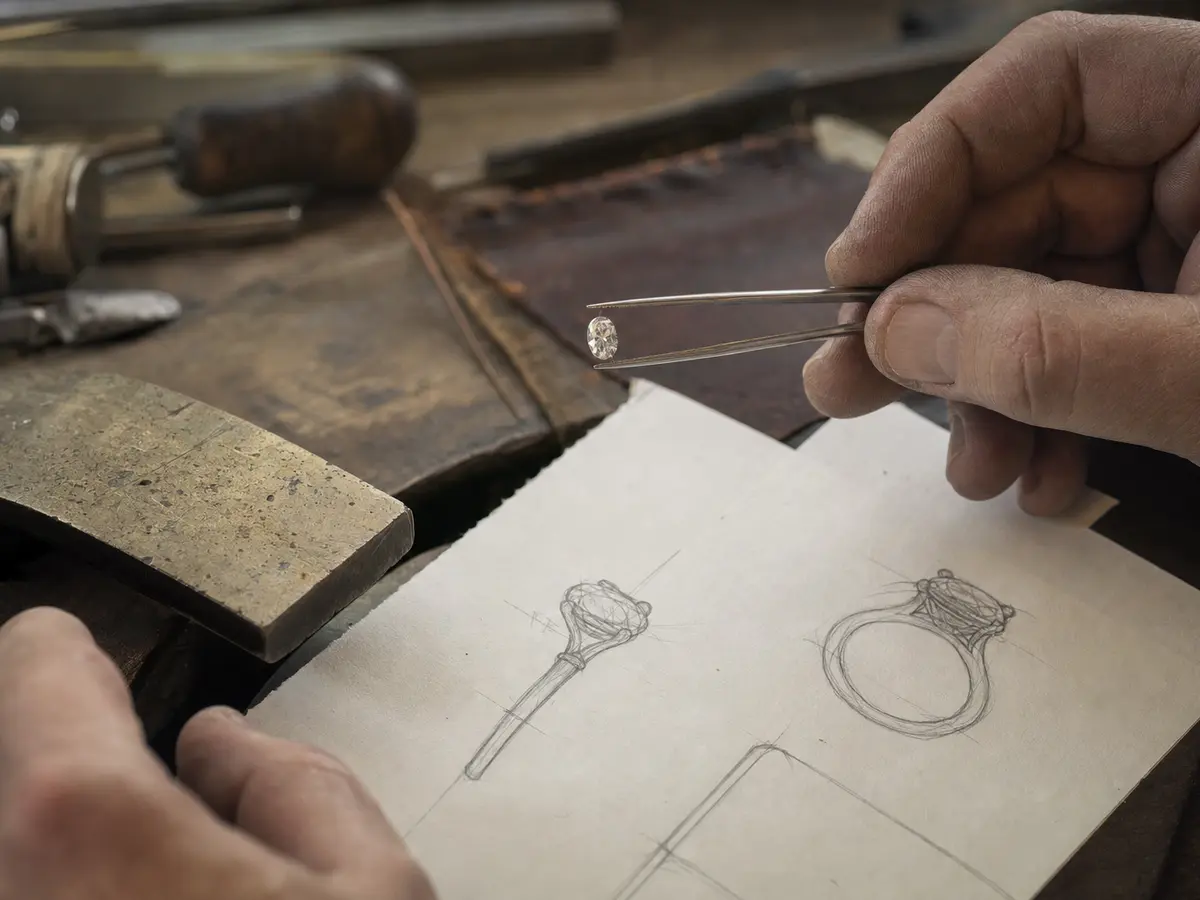
A budget converts into three things: the centre stone, the metal, and the making, which covers design, casting, setting and finishing. In almost every commission the stone is the largest share of the total by a wide margin, the metal is a smaller share than most people guess, and the making is real, skilled work that occupies a modest part of the number.
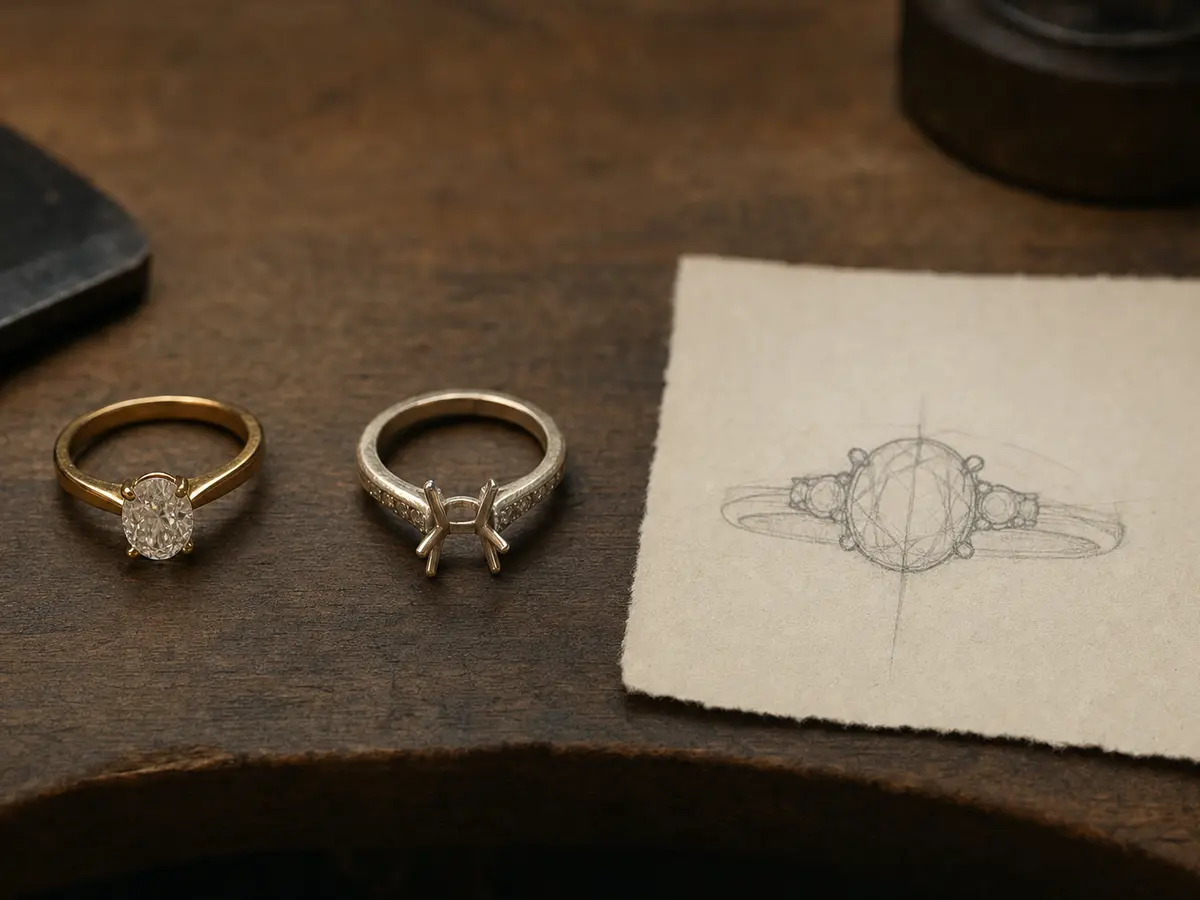
It also needs to cover, or at least plan for, two things that sit outside the ring itself: a valuation for insurance, issued at collection, and a wedding band, which is a separate commission but is genuinely easier and cheaper to design alongside the engagement ring than to fit against it a year later.
Where the money goes, and what moves it most
- Carat weight, especially at the round numbers, where price jumps because demand clusters there rather than because the stone changes meaningfully in appearance.
- Cut quality, the one place we would never suggest economising, because it does more for how a stone looks than colour and clarity combined.
- Colour and clarity beyond the point either is visible to the eye, which is the most common way to spend money without anyone ever seeing the difference.
- A natural coloured stone in place of a diamond of similar size, which very often lowers the number rather than raising it.
A simple way to think about the trade-off
Almost every budget conversation is really a trade-off between three things: the size of the stone, its grading, and the complexity of the setting. Moving money away from any one of them frees it up for the other two, and the honest job of a first consultation is showing what each move actually looks like on a real stone, rather than describing it in the abstract. Someone who cares most about size can buy just under a round carat number and stop earlier on colour and clarity. Someone who cares most about a particular cut of stone can hold that fixed and adjust the setting instead. Neither is a lesser priority than the other; they simply spend the same number differently.
Two people planning this together are also increasingly splitting the cost, or saving toward it jointly, rather than one person carrying the whole figure alone. That changes nothing about how the ring is designed, but it is worth naming plainly at the outset if it affects who is part of the budget conversation and the design decisions that follow from it.
The conversation with Gavin
Tell Gavin the number first. It is a far more useful starting point than a photograph, because it lets the stone, the setting and the metal be chosen against a real figure rather than discovered to be wrong three weeks into a design. Every quote is written before anything is made, broken into stone, metal and making, in rand and inclusive of VAT, so the number is never a surprise at collection.
Prices move with the rand, because both stones and precious metals are priced against international markets. A quote holds for a stated period for that reason, and a figure from months ago is a starting point for a fresh conversation rather than a promise that still stands.
There is no correct number. There is only the number you are genuinely comfortable with, and what that number can honestly buy.
Is there a rule for how much to spend on an engagement ring?
No, and the rules that circulate, most often some multiple of a month's salary, come from advertising rather than any financial logic. A sensible budget is simply the largest figure you can commit to without financial strain, decided by the two people whose money it is. What matters far more than the number itself is what it is spent on: cut before clarity, spread before carat weight, and honesty about what you can afford before either.
Does asking for a lower budget get a worse ring?
No. A lower budget changes what is emphasised, not whether the result is good. Moving to a natural coloured stone, buying just under a round carat number, or choosing a setting with fewer additional stones can all lower the total meaningfully while keeping cut quality, which is the thing that is actually visible, uncompromised. There is no shame in naming a number early; it is the single most useful piece of information Gavin can be given.