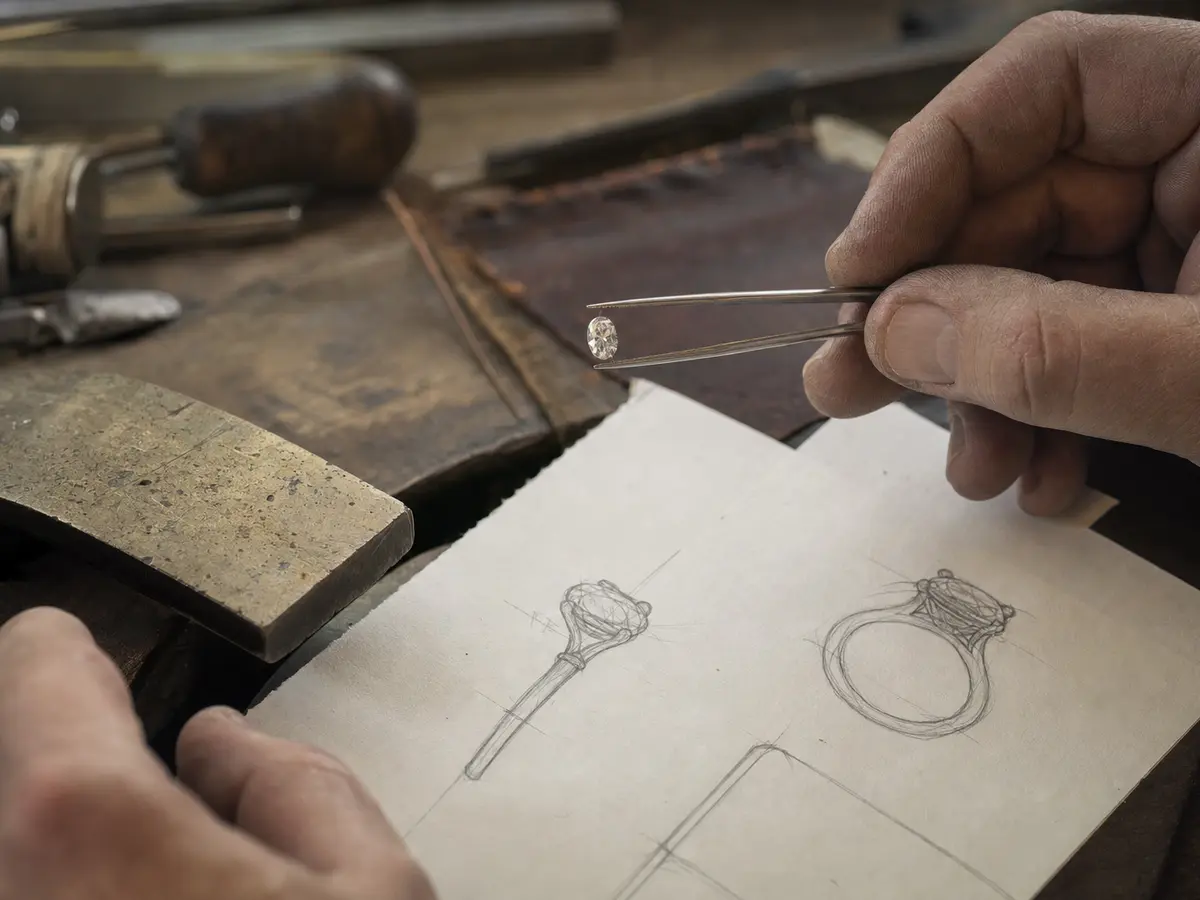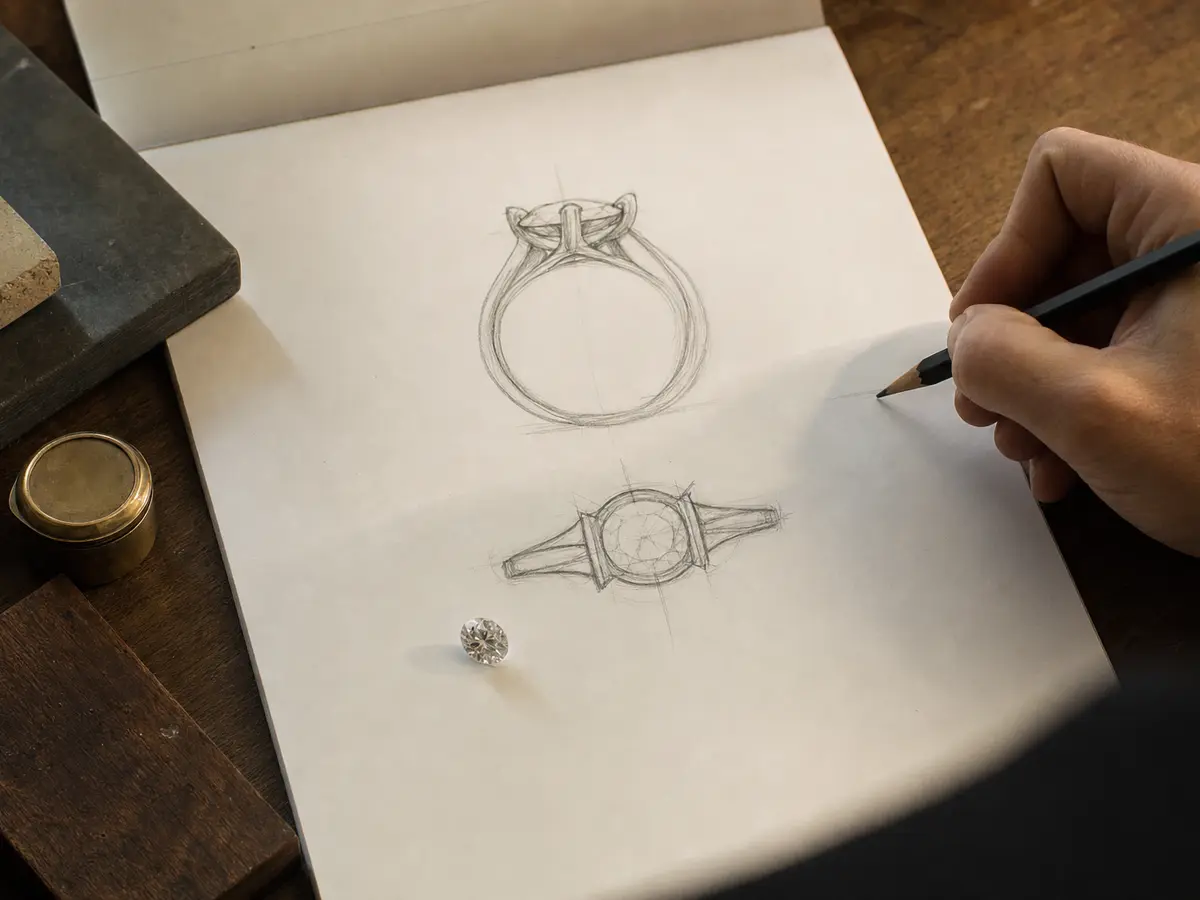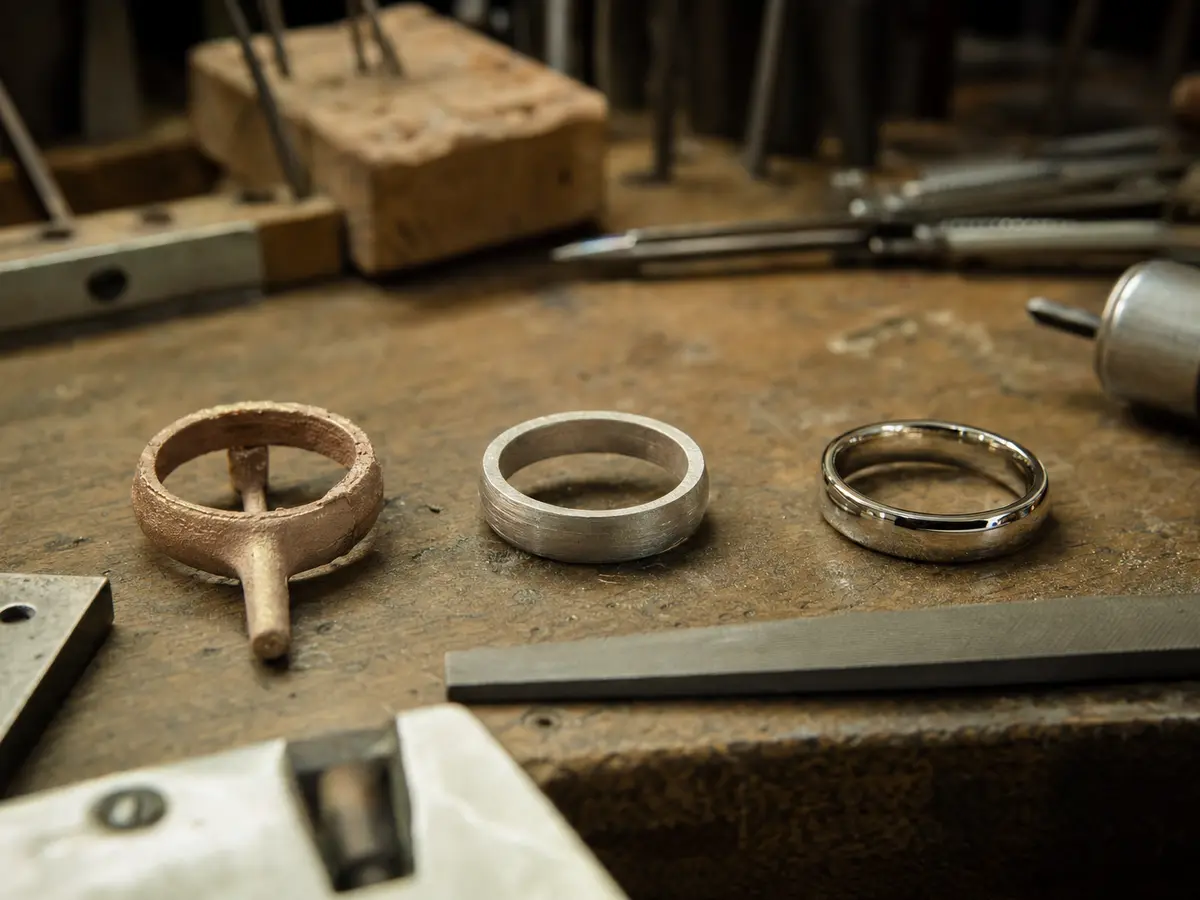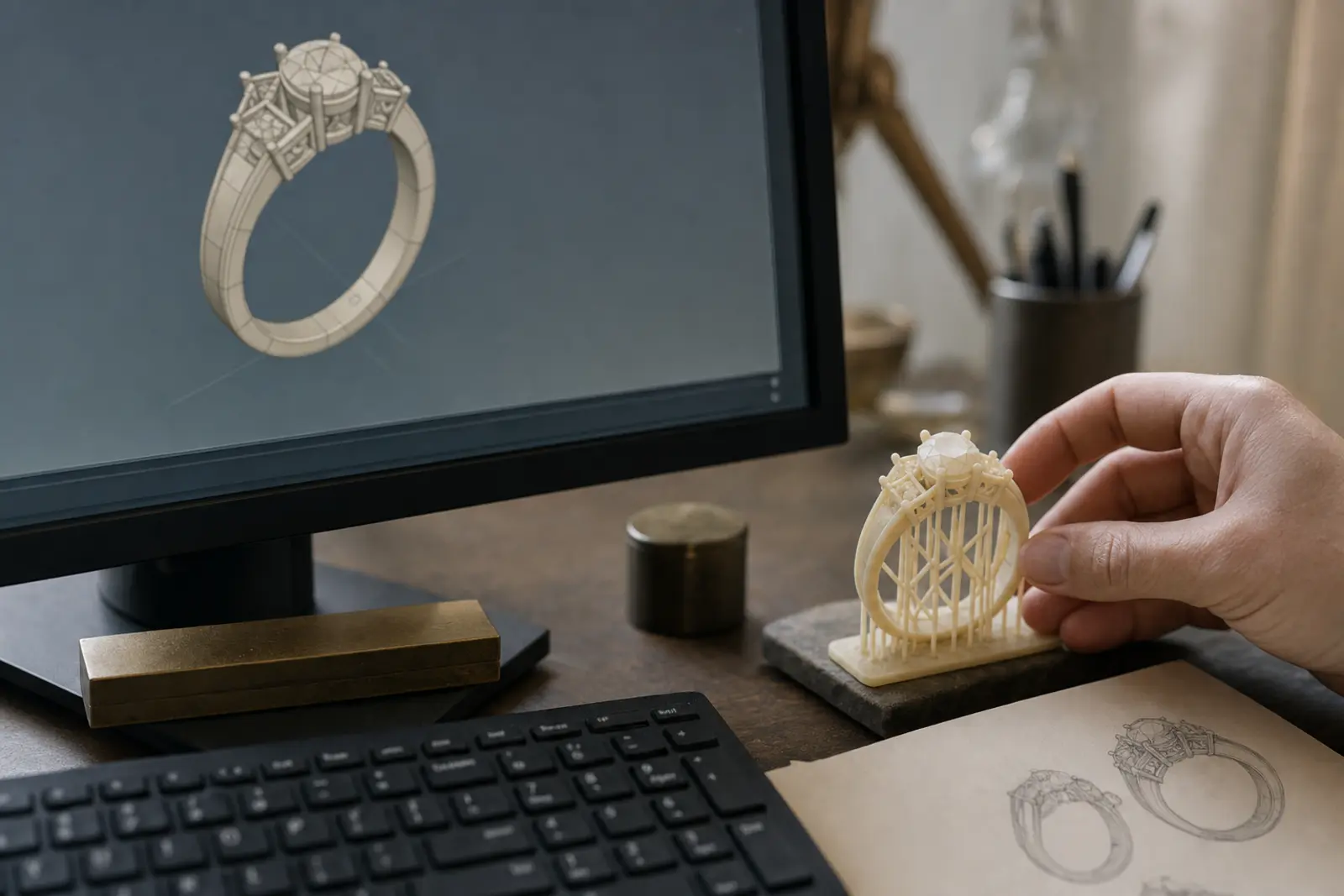
A hand sketch, a CAD render and a wax try-on each show you a different, incomplete version of the same ring, and approving a design means knowing which one to trust for which question before any metal is cast.
Hand sketch versus CAD render
A pencil sketch is fast and cheap to argue with. Draw three directions in an afternoon, cross two out, and nothing has been lost but paper. A CAD render is the opposite: precise, three-dimensional and slow to change once built, because it is a mathematical model of a real object, not an impression of one. Neither replaces the other. The sketch decides the direction. The render decides whether that direction actually works in metal.
What a render can and cannot show
A render will tell you the truth about proportion: the exact height of a setting, the taper of a shoulder, how a halo sits against a centre stone from every angle you ask for. It will not tell you the truth about weight in the hand, how a polished surface actually catches light compared to a flat screen, or how a band feels against the finger next to it. A screen shows geometry. It does not show experience.
The wax or resin try-on
This is why the model is printed or carved into wax or resin and tried on the actual finger before anything is cast. It is the only point in the process where you feel the ring rather than look at it: whether a setting that seemed low on screen still catches a knuckle, whether a band that looked slim enough is not. Problems found here cost a day. The same problems found after casting cost a remake.
What approval actually commits you to
Approving a CAD design is not a formality. It is the point at which casting is scheduled, stones are prepared for setting, and the shape becomes expensive to argue with. Treat the approval step the way you would treat signing off a plan for a structure, because in a small way that is what it is.
Changes after approval
A finish, a texture, or a very small dimension can usually still move without starting over. A change to the stone, the setting style or a structural proportion generally cannot, because the model has to be rebuilt from that point and the wax stage repeated. Neither we nor you gain anything from a quick yes at this stage that gets reopened a week later, so ask every question you have before you approve, not after.
Reading a CAD image critically
A render can be lit and angled to flatter a design the same way a photograph can. Ask to see it from directly above and directly side-on, the two angles that hide the least. Ask for the actual band width and setting height in millimetres rather than trusting your eye against a screen with no sense of scale. If a proportion is described only in adjectives, ask for the number behind it.
- See the render from above and from the side, not only the angle it was sent in.
- Ask for every key dimension in millimetres, not a verbal impression of scale.
- Try the wax or resin on the actual finger before signing off.
- Confirm which changes are still free and which mean rebuilding the model.
- Say yes only once every question has been asked, not to keep things moving.
Approve the ring you tried on, not the one you admired on a screen.
Can I ask for changes after seeing the wax?
Yes, and this is exactly what the wax stage is for. It is far cheaper and faster to move a setting or narrow a shank at this point than after casting, because nothing has been committed to metal yet. What changes at this stage should stay proportional rather than structural: a millimetre here or there is normal, while swapping the whole design usually means going back to CAD.
Why can I not just approve from the CAD image and skip the wax?
You can, and some clients working from outside Johannesburg do, but it removes the one check nothing else replaces: how the ring actually feels. A screen cannot show weight, balance or how a setting sits against a knuckle in daily movement. Skipping the wax is a reasonable trade-off for convenience, not a sign that the step does not matter.