Something old, new, borrowed and blue is repeated at weddings more from habit than belief these days, and it still earns its place as a light, practical way to choose a handful of small pieces without overthinking any single one of them.
Old: a family heirloom
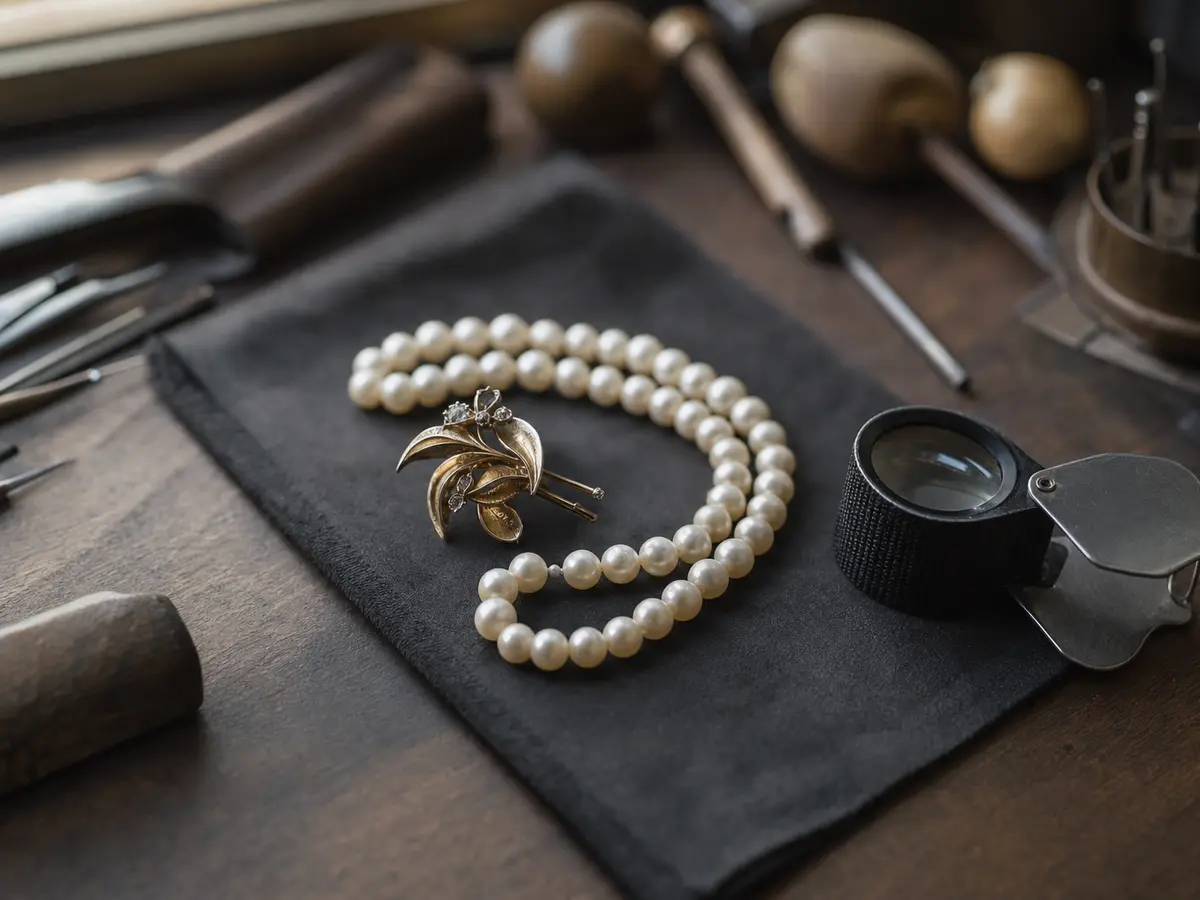
This is usually the most straightforward of the four. A grandmother's brooch pinned inside a bouquet wrap, a mother's earrings, or a pendant carrying a stone from an older piece all satisfy it comfortably. It does not need to be worn visibly; carried, sewn into a hem or held during the ceremony counts just as much.
New: the wedding band
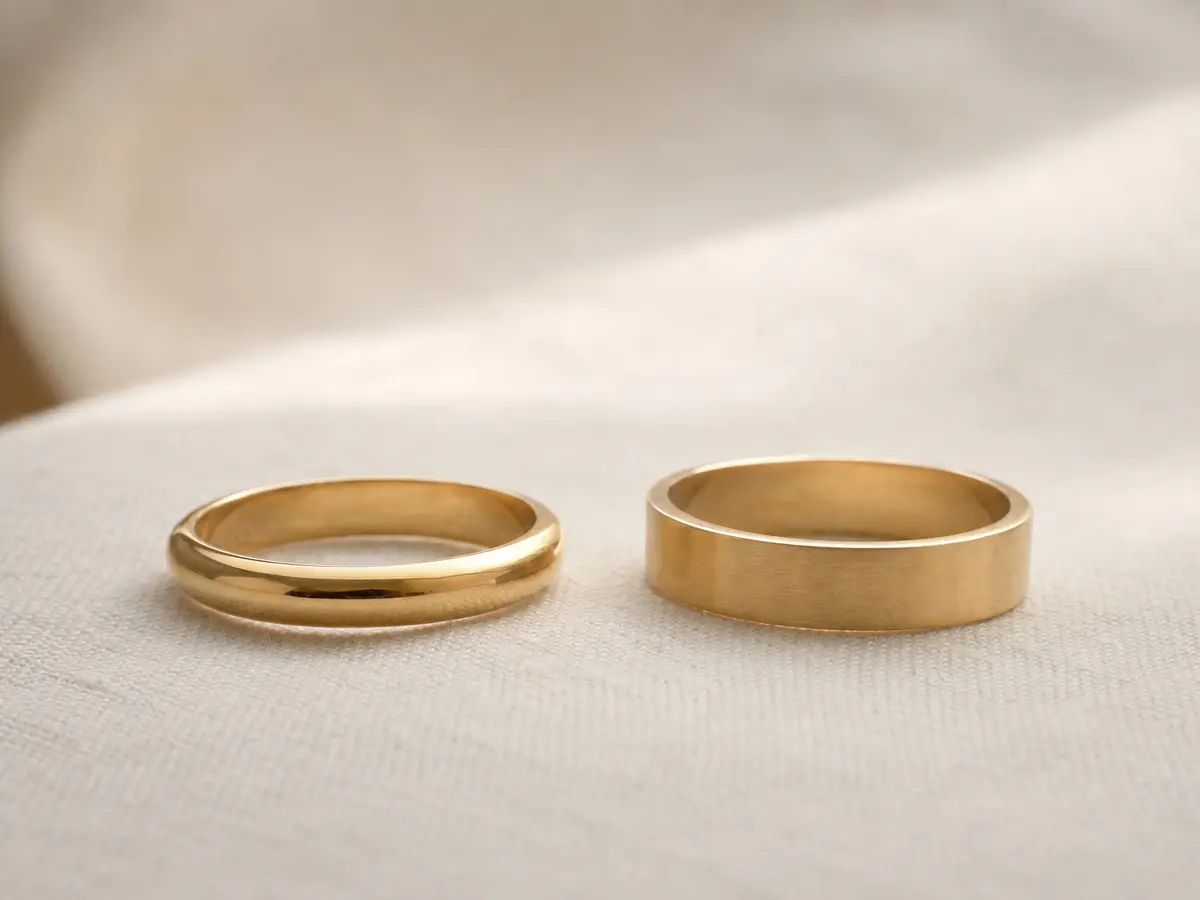
The wedding band fills this element on its own for most brides, without needing a separate new piece. There is no need to add anything else purely to satisfy the rhyme; a separate guide on choosing wedding bands covers that decision in full.
Borrowed: a mother's or a friend's piece
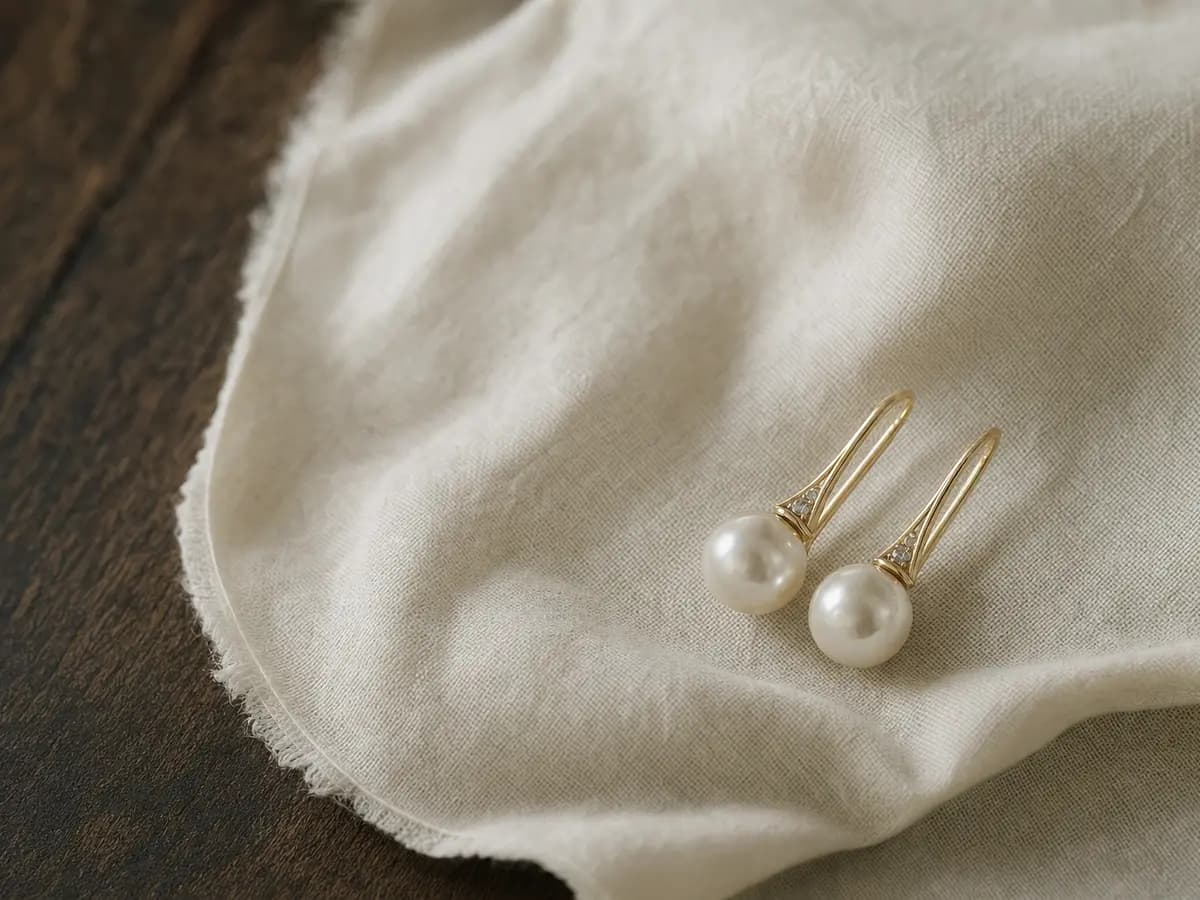
Earrings, a bracelet or a hairpin borrowed for the day work well here, and it is worth genuinely being comfortable wearing something that is not yours before committing to it, since a borrowed piece is one more thing to keep track of during a busy day. A separate guide on jewellery for the mother of the bride covers the specific case of borrowing from her.
Blue: a sapphire or a hidden stone
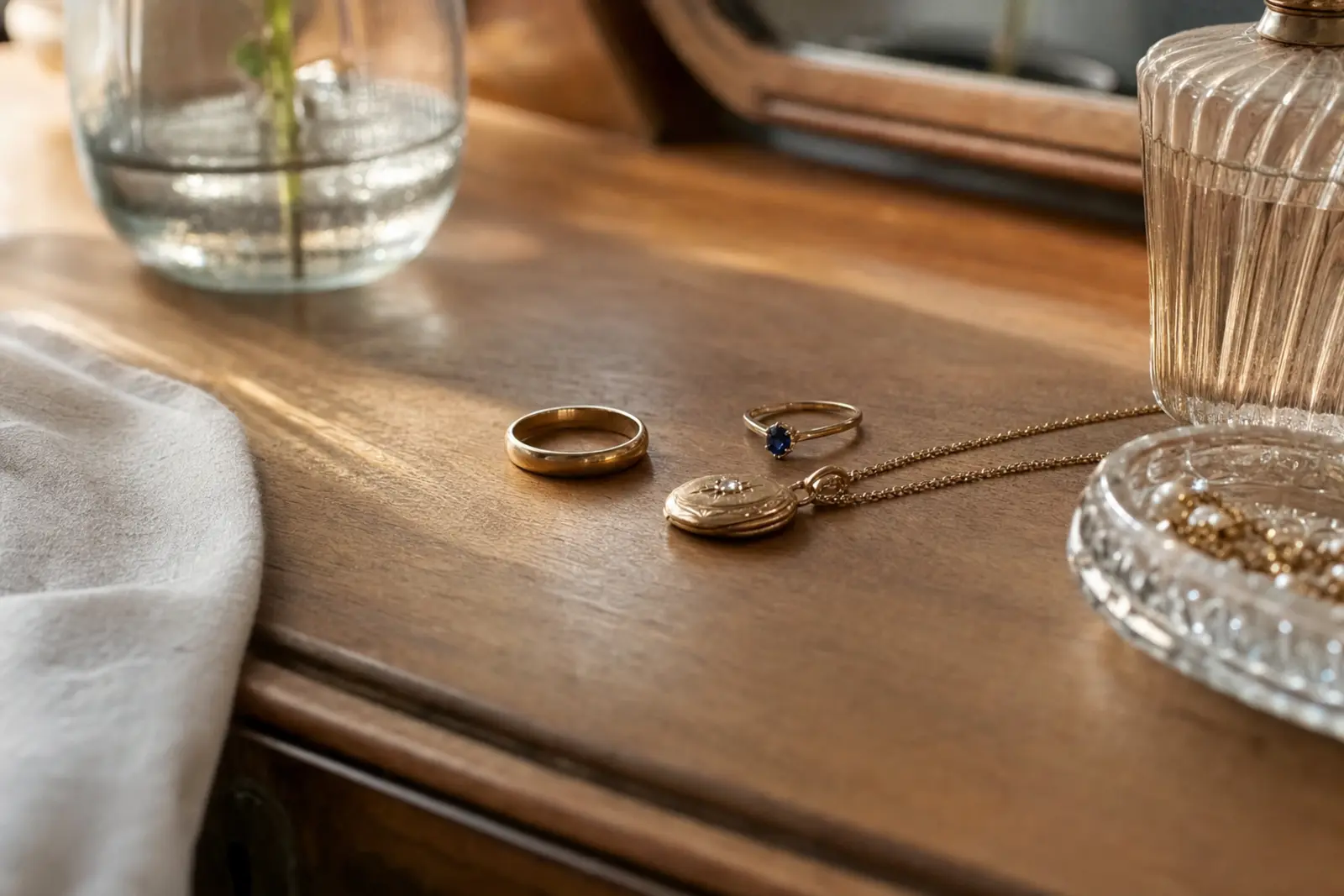
A small sapphire set into a bracelet or earrings is the most literal answer. A quieter option some brides prefer is a blue stone set inside the wedding band, visible only to the wearer, or a small sapphire set into the underside of the engagement ring's gallery. If jewellery does not appeal for this one, plenty of brides simply have blue thread sewn discreetly into the dress instead, which is just as valid.
Why the rhyme still gets used
The rhyme survives because it gives a bride four small, low-stakes decisions to make instead of one large one, and each element attaches easily to jewellery she already has a reason to choose. Treating it as a light structure rather than an obligation is what keeps it useful. A family that has never followed it and one that follows it closely both tend to end up choosing jewellery for largely the same reasons: something inherited, something new, something lent, and a small flash of colour.
- Old
- An heirloom, worn or carried, does not need to be visible
- New
- Usually the wedding band; nothing extra required
- Borrowed
- A mother's or friend's piece, checked at a bench beforehand
- Blue
- A sapphire, worn or hidden inside a setting
Do all four elements need to be jewellery?
No, and most couples do not manage that in practice. Old and new lend themselves naturally to jewellery, an heirloom and the wedding band, but borrowed and blue are just as often something else entirely: a borrowed handkerchief, blue stitching sewn into a hem, a garter. Treat the rhyme as a loose prompt rather than a checklist to complete exactly, and only use jewellery for the pieces where it genuinely suits what you already have or want.
Where is the traditional place to hide a blue stone?
There is no single tradition here, which is part of why it works well as jewellery: a small sapphire can sit inside a wedding band where only the wearer sees it, be set into the underside of an engagement ring's gallery, or simply be worn visibly in a bracelet or earrings if hiding it does not appeal. Ask a jeweller what is realistic for a specific ring's structure before committing to a hidden setting, since not every design has room for one.
Does the sixpence in the shoe count as part of this tradition?
It is usually treated as a separate, related custom rather than one of the four elements itself, and it has nothing to do with jewellery specifically, a coin rather than something worn. Some brides fold it into the same conversation regardless, since it is another small, optional addition with no fixed rule attached to it. If it does not interest you, leaving it out changes nothing about the other four elements.
Treat the rhyme as a starting point for four small decisions, not a task to complete perfectly. The pieces that end up meaning something are the ones chosen because they suited you, not because the list demanded them.