A wine-estate wedding venue comes with its own wine list and usually its own view of the bar, which means the catering and drinks conversation starts from a different place than it does at a hotel or a private estate, before you have even discussed the room.
The estate's own wine, and the bar
Most wine estates want their own label poured at a wedding held on their property, and some insist on it. Ask directly whether outside wine or spirits are permitted at all, whether corkage applies if they are, and whether the wine offered at weddings is the same range sold in the tasting room. Liquor licensing and house policy vary from one estate to the next, and this is worth confirming in writing rather than assuming from the tasting-room list.
Harvest is the wrong two months
February and March are harvest across most of the Cape Winelands. The cellar and the grounds are working at capacity, staff are stretched across the estate's core business, and access roads can have tractors and pickers moving through them at odd hours. Some estates restrict weddings during this window entirely; others host them with changes to what is available. Ask directly whether the estate hosts weddings during harvest, and what is different if it does.
The tasting-room public
Unlike a private estate booked exclusively, a working wine estate usually keeps its tasting room and restaurant trading to the public during the day, even on a wedding weekend. Ask whether your ceremony and reception spaces are separated from the visitor areas, and what time the public side closes relative to your ceremony start. A beautiful lawn is less private if a tour group is walking past it at four in the afternoon.
Weekday or weekend
A weekday wine-estate wedding is sometimes available at a materially different rate, and with fewer scheduling conflicts against the estate's own tastings and events calendar. Ask what a weekday changes about staffing levels and catering minimums before assuming the saving is purely in the venue fee.
Getting guests there, and where they sleep
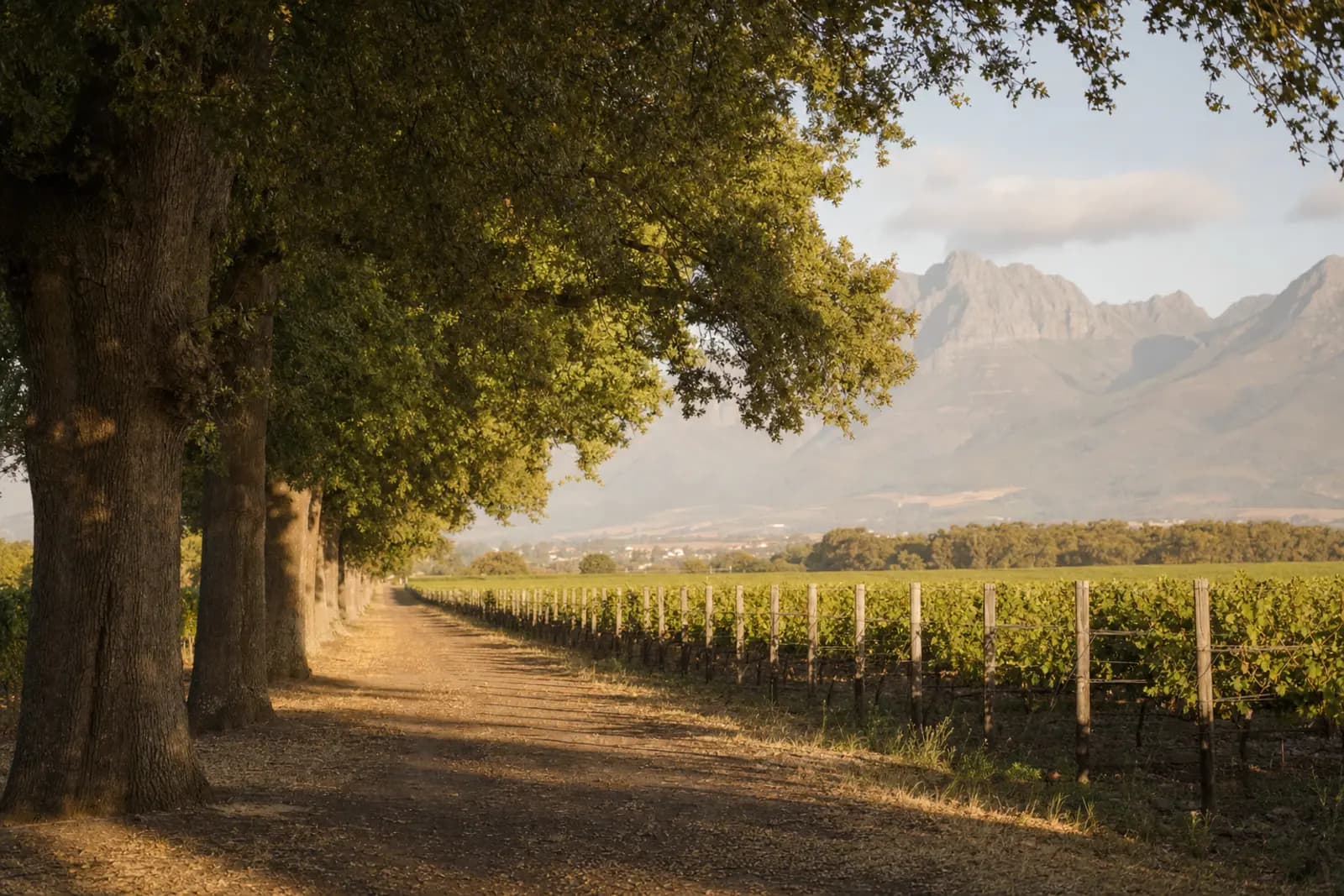
Drive time from central Cape Town into Stellenbosch, Franschhoek or Paarl is roughly forty minutes to an hour depending on traffic and which valley you are headed to. Guests unfamiliar with the region need a shuttle plan rather than directions, particularly once wine is involved on the return trip. Accommodation is usually spread across the specific town rather than on the estate itself, and a whole valley can fill for a weekend when several estates have events on the same dates, so book early.
Chapels, lawns and cellars: the three usual settings
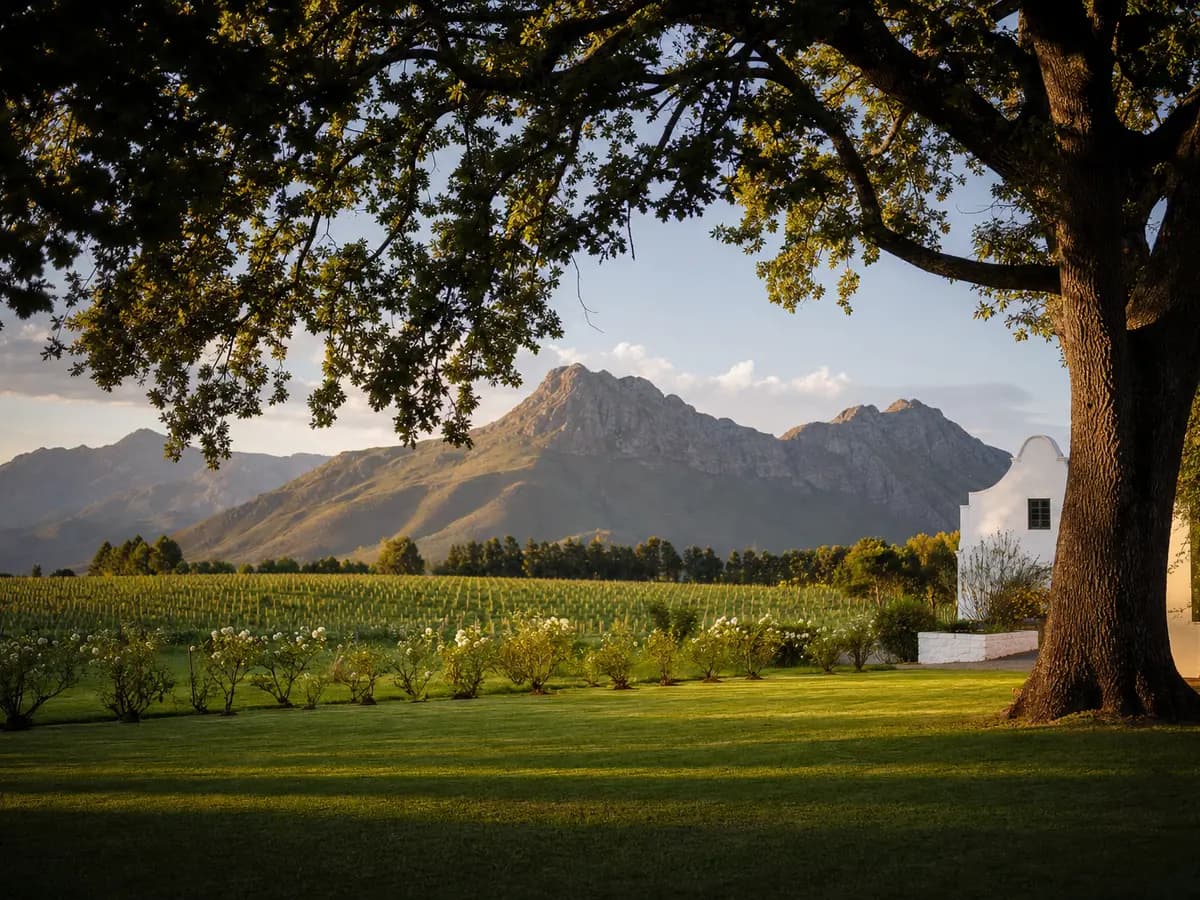
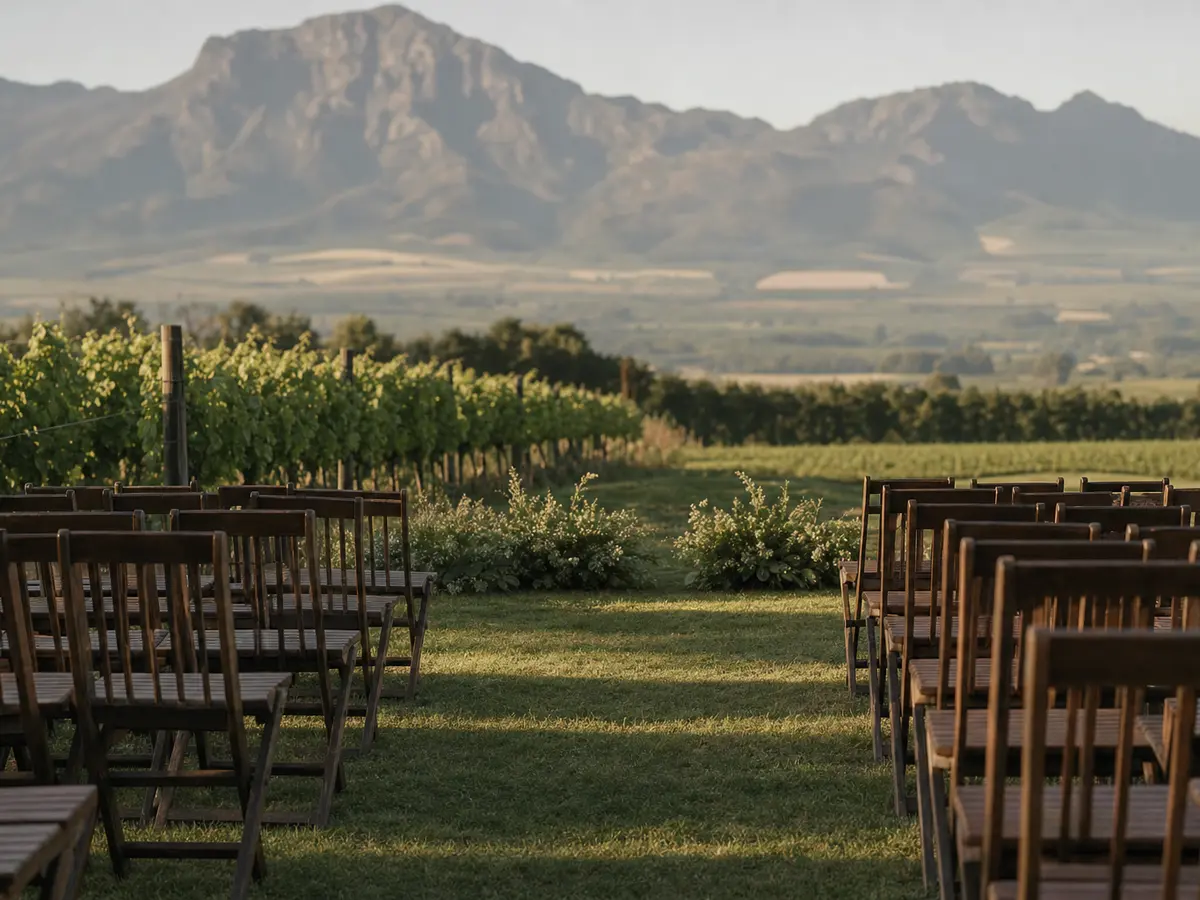
Most wine-estate weddings settle on one of three settings, without needing to name a specific property. A small chapel or a converted outbuilding suits a formal ceremony. A lawn under oaks, dressed with a marquee, is the most common reception setting and the one estates photograph best. A working or retired cellar or barrel room gives an indoor reception its own character, but check the acoustics and the temperature: barrel rooms can be genuinely cold even in a Cape summer, and stone or concrete cellars can amplify sound in ways a marquee never does.
Stellenbosch, Franschhoek and Paarl by character
The three main Winelands valleys suit different weddings without any need to compare specific estates. Stellenbosch is the largest and most varied, close to a university town, offering the most choice but also the most competing weekend traffic. Franschhoek is the tightest valley, with a short, walkable main road and a village guests staying over can explore on foot, which tends to suit smaller, more intimate weddings. Paarl is the largest single valley, generally more spread out, often better value for a larger guest count, and set against its own mountain rather than the same peaks that dominate every Stellenbosch photograph.
- Ask directly whether harvest, typically February and March, is available for weddings, and what changes if it is.
- Confirm whether outside wine and spirits are permitted, and what corkage applies if so.
- Ask how the ceremony and reception spaces are separated from the public tasting room and restaurant.
- Get the actual drive time from central Cape Town for a Saturday afternoon, not a quiet weekday estimate.
- Confirm where the bulk of your guests will sleep, and book that accommodation early if the valley has other events that weekend.
Can we bring in outside catering to a wine estate?
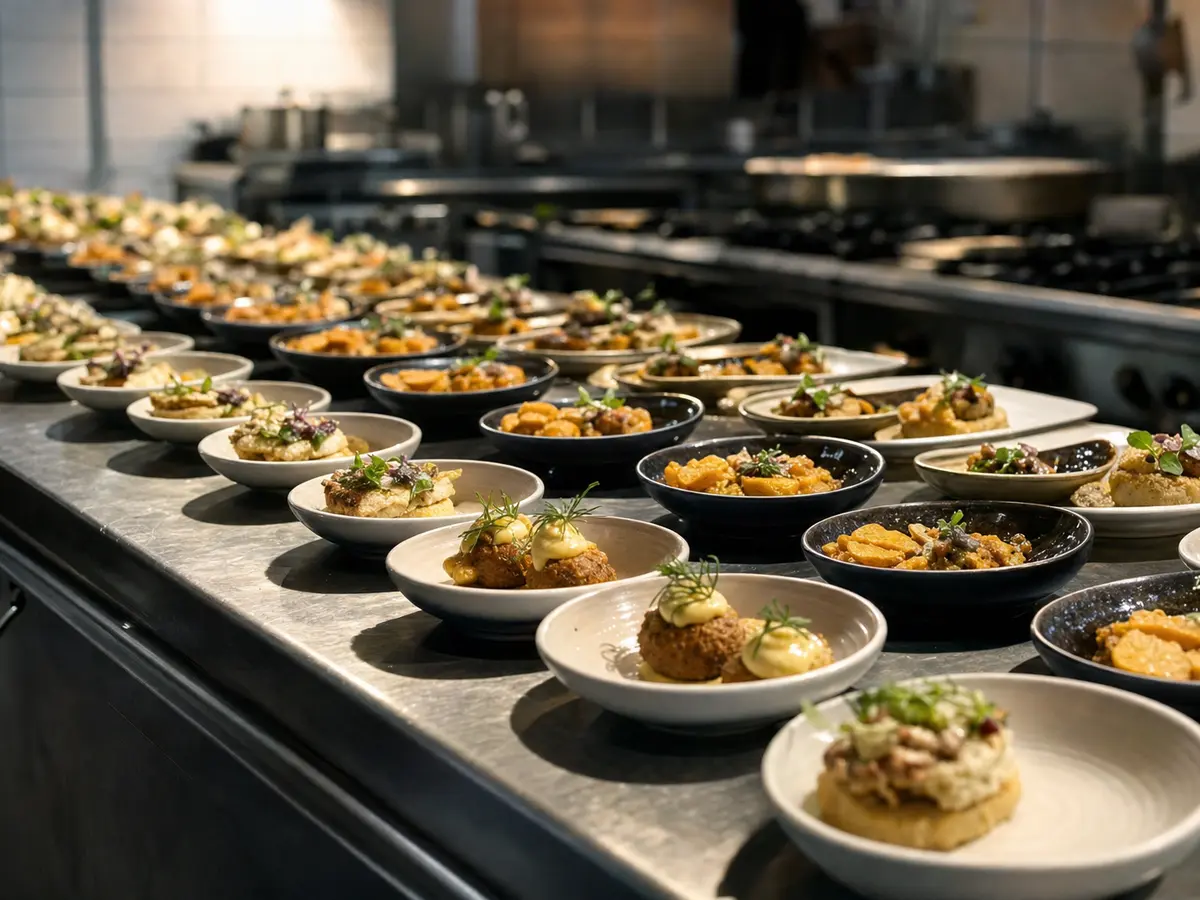
It varies from estate to estate. Many wine estates run their own restaurant kitchen and require it to be used for any function on the property, while others allow an approved external caterer or make an exception for a specific need. Confirm this before you fall for a particular property, and factor the estate's catering position into your comparison of the total cost, not just the venue hire fee.
Is a wine-estate wedding cheaper than a private estate?
Not necessarily. The headline venue hire can be lower because the infrastructure already exists: a working kitchen, parking, restrooms and often a generator. Wine and catering minimums, though, can bring the total to a similar figure. Ask for a full costed quote that includes drinks and catering minimums before comparing a wine estate to any other venue type on price alone.
Which valley is best for a wedding: Stellenbosch, Franschhoek or Paarl?
It depends on what matters most to your guests. Stellenbosch offers the widest choice and proximity to a town with hotels and restaurants. Franschhoek suits a smaller wedding where guests are staying over and want to walk between the venue and the village. Paarl tends to offer more space and better value for a larger guest count. Visit more than one valley before deciding, since a photograph rarely shows the drive or the Saturday crowd.
The estate's own wine is usually a strength, not a limitation. It only becomes a problem if nobody asks about it until the tasting.