Jewellery security is mostly a set of small, ordinary habits rather than any single device, and the ones that matter most cost nothing and take no real effort once they are established.
A home safe, used sensibly
A safe is most useful when it is fixed in place rather than portable, kept out of an obvious sightline, and sized for more than what it holds today. It is a deterrent and, for some policies, a condition of cover for higher-value pieces, not a guarantee against everything, so treat it as one part of a routine rather than the whole of it.
Not wearing everything at once
It is worth rotating what actually leaves the house rather than wearing the full collection to every event. Whatever is not being worn that evening stays exactly where it always sits, whether that is the safe or the dish by the basin, and the decision about what to wear becomes part of getting ready rather than an afterthought at the door. Over a year, this habit alone reduces how much ever leaves the house on any single evening.
The drive home
The most exposed point in an evening is often the drive home or the wait for a car after an event, when people are tired, jewellery is visible, and attention has dropped. Keep pieces on rather than putting them on the passenger seat or in the console, and if a venue is one you visit often, it is worth not being entirely predictable about timing. The same applies leaving a wedding rather than an ordinary evening out, when jewellery is often at its most visible and a car park is at its busiest.
Jewellery and social media
A location-tagged photograph taken in the moment can broadcast both a new piece and roughly where to find it, before you are even home. If that is a concern, post afterwards rather than live, and leave the location tag off pictures that clearly show a new ring or a significant piece.
The dish by the basin
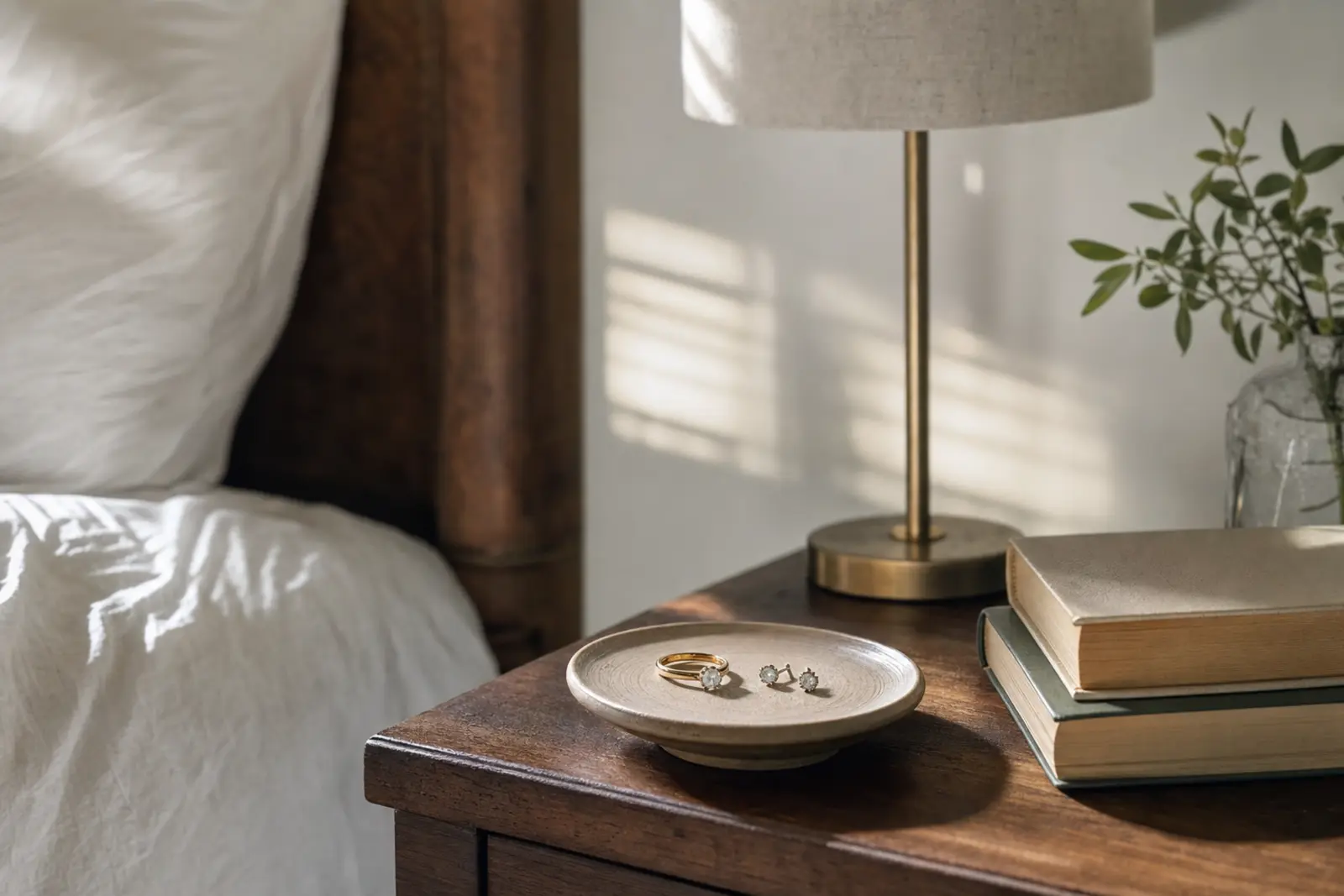
The single most useful habit is a fixed spot, the same dish or tray, every time a ring comes off to wash hands, shower or cook. It sounds trivial. It is also the difference between a ring that is always exactly where you left it and one that ends up on a windowsill, a hotel counter or, eventually, nowhere you can find.
Keeping records and photographs
An up to date inventory, with photographs and the current valuation, is worth having whether or not anything has ever gone wrong. Keep a copy somewhere other than only the physical papers at home, an email to yourself or a cloud folder is enough, so a burglary or a fire does not also take the records. Update it whenever a piece is added, revalued or repaired, rather than treating it as a once-off task.
What insurers usually expect
Policies generally expect what is described as reasonable care: secure storage for higher-value items, not leaving jewellery visibly unattended, and the maintenance or inspection condition described elsewhere in this Journal. What counts as reasonable, and whether a safe is required above a certain value, varies by policy, so this is worth confirming directly rather than assuming either way.
Travelling by car in Johannesburg
Do not leave jewellery in a parked car, in a glove box or visible on a seat, even briefly, whether outside a shop, a restaurant or your own driveway. Park in well-lit, attended areas when you are wearing anything of note, and keep the same habit for a quick errand as for an evening out; it is the quick errand where the habit tends to slip.
Valet and hotel practice
Where it is practical, remove obviously valuable pieces before handing car keys to a valet, or keep them on your person rather than in the car at all. The same logic that applies to a hotel safe applies here: it is a sensible extra step, not a reason to relax about anything else.
- One fixed spot at home for jewellery taken off daily.
- Rotate what is worn rather than wearing the whole collection each time.
- Keep pieces on, or properly stored, during the drive home from an event.
- Avoid location tags on photographs showing a new or significant piece.
- Never leave jewellery in a parked car, even briefly.
- Keep an updated inventory with photographs somewhere other than only at home.
Consistency is the whole of this list. Every habit above only works if it is followed the same way each time, not just when a piece feels valuable enough to bother with.
Is a home safe actually required by insurers?
It depends on the policy and sometimes on the value of the item being insured; some insurers set a threshold above which secure storage is expected, others leave it unspecified. Rather than assume either way, ask your broker directly what your own policy requires, since acting on an assumption is exactly what can complicate a claim later.
What is the one habit that prevents the most loss?
A single fixed spot at home for anything taken off during the day, the same dish or tray every time, without exception. Most of the pieces we hear went missing at home were not stolen; they were put down somewhere different just once, and never quite made it back to where they belonged.