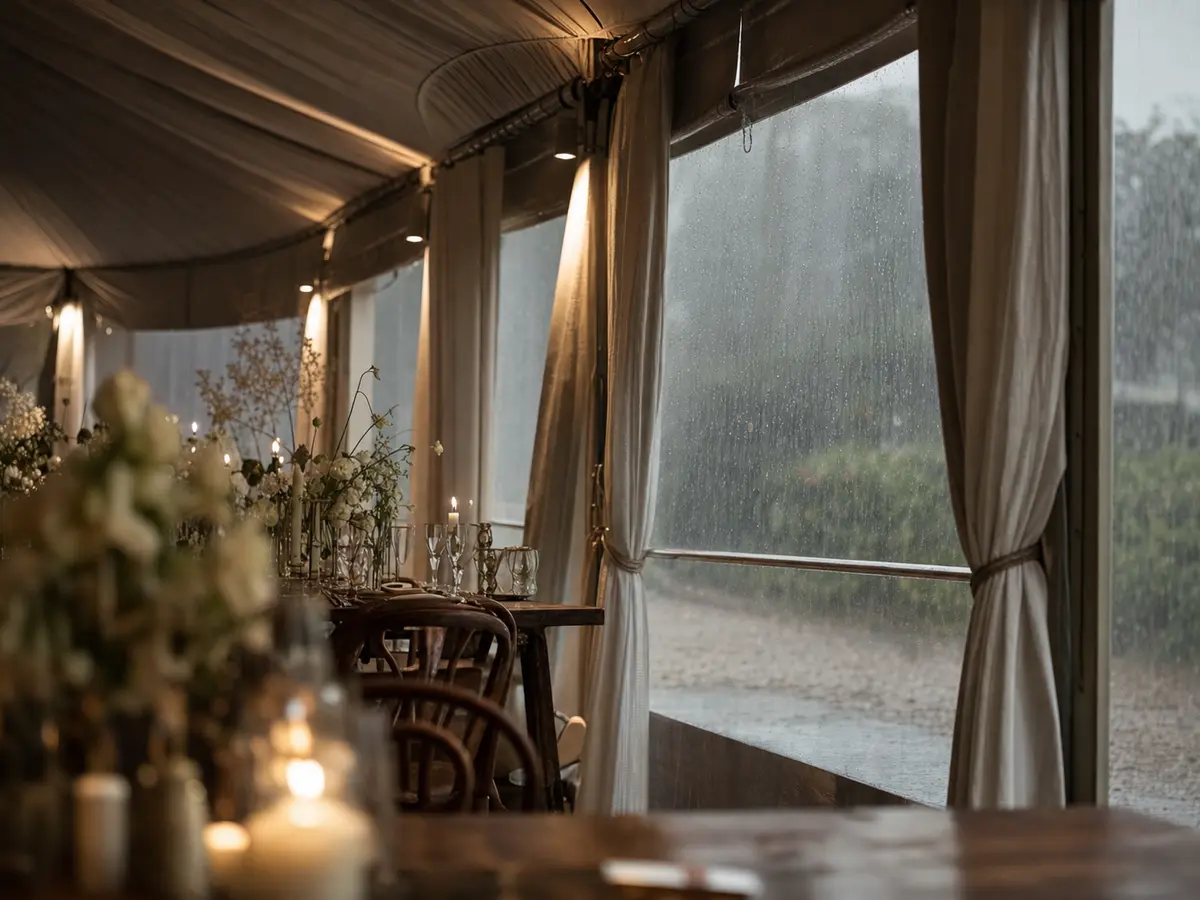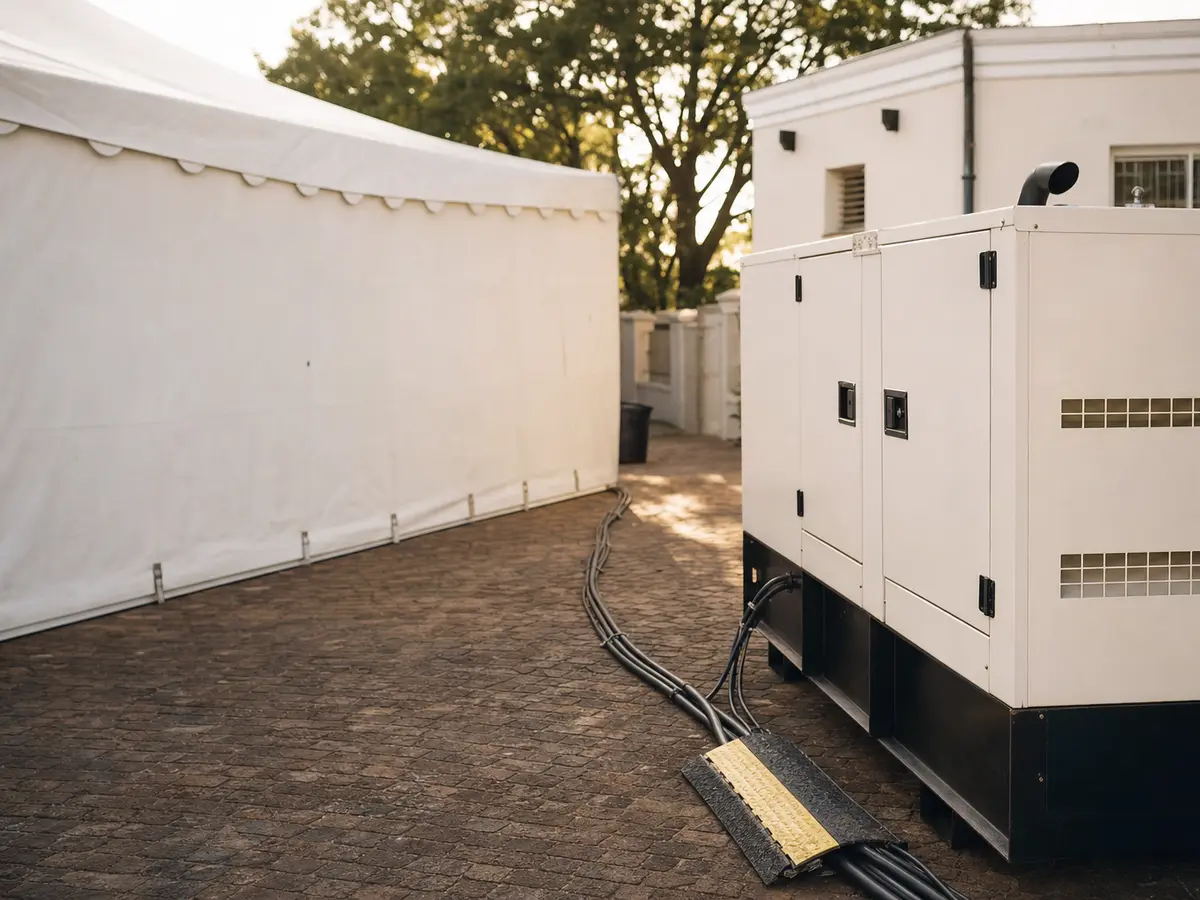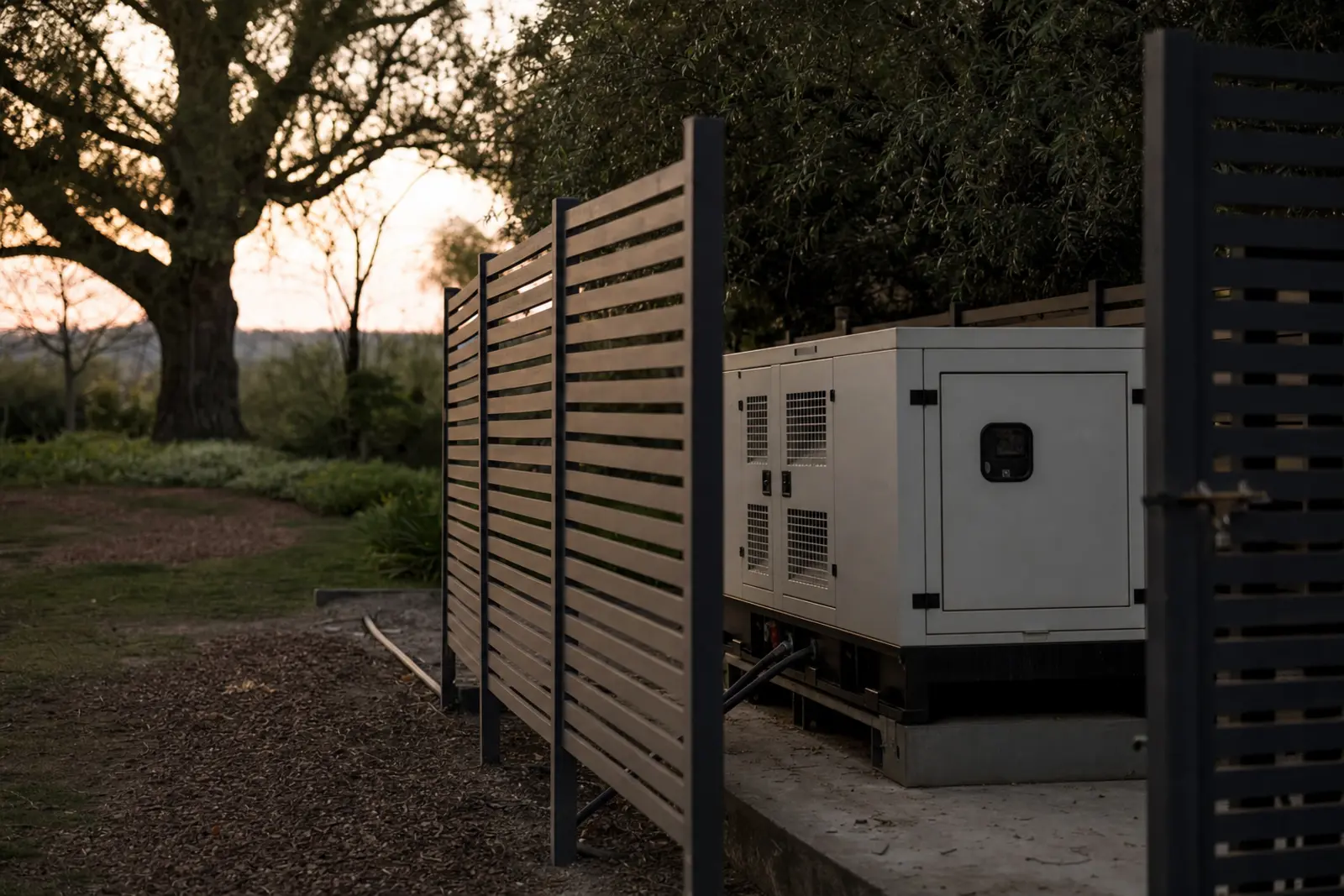
A generator on the property does not, by itself, mean a wedding is protected from a power outage. What matters is what the generator covers, how long it can run, who starts it, and whether the kitchen keeps working while it does.
What the generator actually covers
Ask specifically what a venue's backup power reaches: the kitchen and cold rooms, so food stays safe and service continues; the sound system, so the ceremony and speeches are not silenced mid-sentence; the lighting in the reception space and, separately, in the car park, since a beautifully lit reception with a dark car park still leaves guests navigating in the dark at the end of the night. A generator sized for the kitchen alone is a different thing from one that keeps the whole evening running.
Runtime, fuel and who starts it
Ask how long the generator can run on a full tank and whether that comfortably covers a full evening reception, not just a short outage. Ask who is responsible for starting it if load-shedding begins during the event, how quickly that happens, and whether it starts automatically or needs a staff member to switch it on. A generator that takes several minutes to start manually is a different experience for guests than one that switches over without anyone noticing.
Water outages and tanks
Power is only one side of resilience. Ask whether the venue has its own water storage, a borehole or tanks, and what happens to the kitchen, the toilets and the bar if municipal water is interrupted on the day. This matters more in some areas than others, and it is a reasonable question to ask regardless of the venue's location, since infrastructure issues are not limited to any one part of the country.
Ask specifically what a borehole or tank supplies, since some venues use borehole water for irrigation and grounds only, not for the kitchen or the guest toilets, which changes what actually happens during an interruption. If a generator also powers a borehole pump, the two systems are connected, and it is worth asking the venue to walk through what fails and what keeps working if either one is affected on the day.
Suppliers with their own power needs
A band, a DJ and a lighting or sound supplier often bring their own equipment and their own expectations of a stable power supply, separate from the venue's kitchen and general lighting. Ask your suppliers directly whether they need a dedicated circuit or a specific amount of power, and confirm with the venue that the backup plan accounts for it, since a generator sized around the kitchen and the reception lights may not have capacity left over for a full sound rig. This is worth confirming before the day rather than discovering it when the music cuts out.
- Ask what the generator covers: kitchen, cold rooms, sound, reception lighting and car-park lighting.
- Ask the generator's runtime on a full tank, and whether that covers a full evening.
- Confirm who starts the generator, and whether it switches over automatically or manually.
- Ask whether the venue has water storage, a borehole or tanks for a water outage, and what each one actually supplies.
- Ask the venue for the load-shedding schedule for your date the week before, and confirm the plan against it.
- Ask suppliers with their own equipment, particularly bands and lighting, what power they need and whether the venue's backup covers it.
Track record over statistics
A venue's own experience is a better guide than any general figure. Ask how it has handled load-shedding or a water interruption at previous weddings, whether guests noticed, and what, if anything, went wrong. A venue that answers this calmly and specifically, rather than deflecting the question, is usually the more reliable one.
None of this needs to be dramatic. It is a short list of calm, specific questions, asked early enough that the answers can still change your mind about the venue if they need to.
Should we ask about load-shedding even if our wedding date has no scheduled outages?
Yes, because schedules change closer to the date and are not fixed months in advance. Ask the venue what its backup plan is regardless of the current schedule, and confirm the actual stage and timing for your date in the week before the wedding rather than relying on what was true when you booked. A venue with a genuine, tested plan will be able to answer this without hesitation.
How do we know if a venue's generator is big enough for our wedding?
Ask the venue directly what the generator covers at full capacity, ideally with your own guest number in mind, rather than accepting a general assurance that backup power is in place. A generator that comfortably runs the kitchen for a smaller function may not cover kitchen, sound, lighting and the car park at once for a larger one. If in doubt, ask for a specific, recent example of a wedding of a similar size where it was tested.
Should our band or DJ bring their own backup power?
Ask them directly what they normally rely on, since some suppliers travel with a small backup of their own for exactly this reason, particularly for outdoor events. Whether or not they do, confirm with the venue that its own backup power has capacity for a full sound and lighting rig on top of the kitchen and general lighting, rather than assuming the venue's generator automatically covers whatever equipment your suppliers bring on the day.