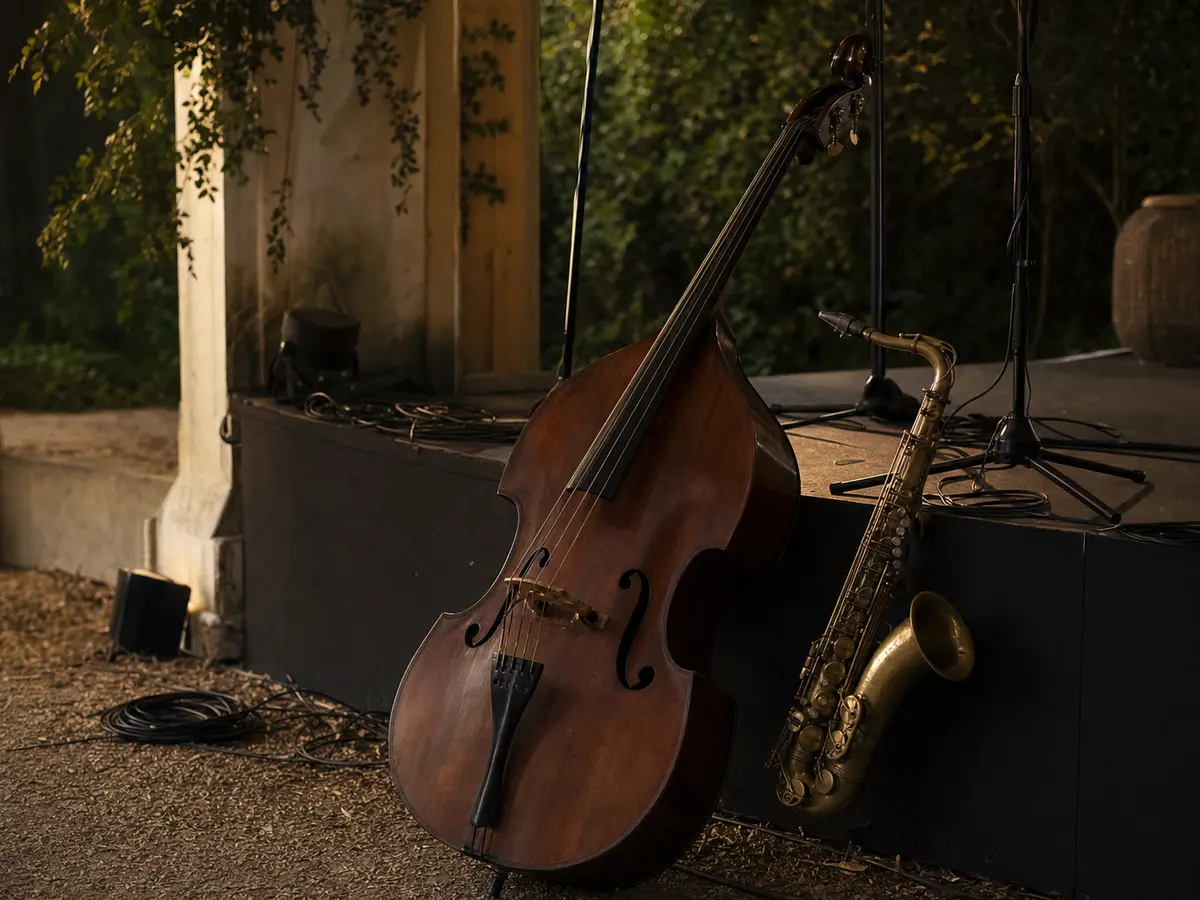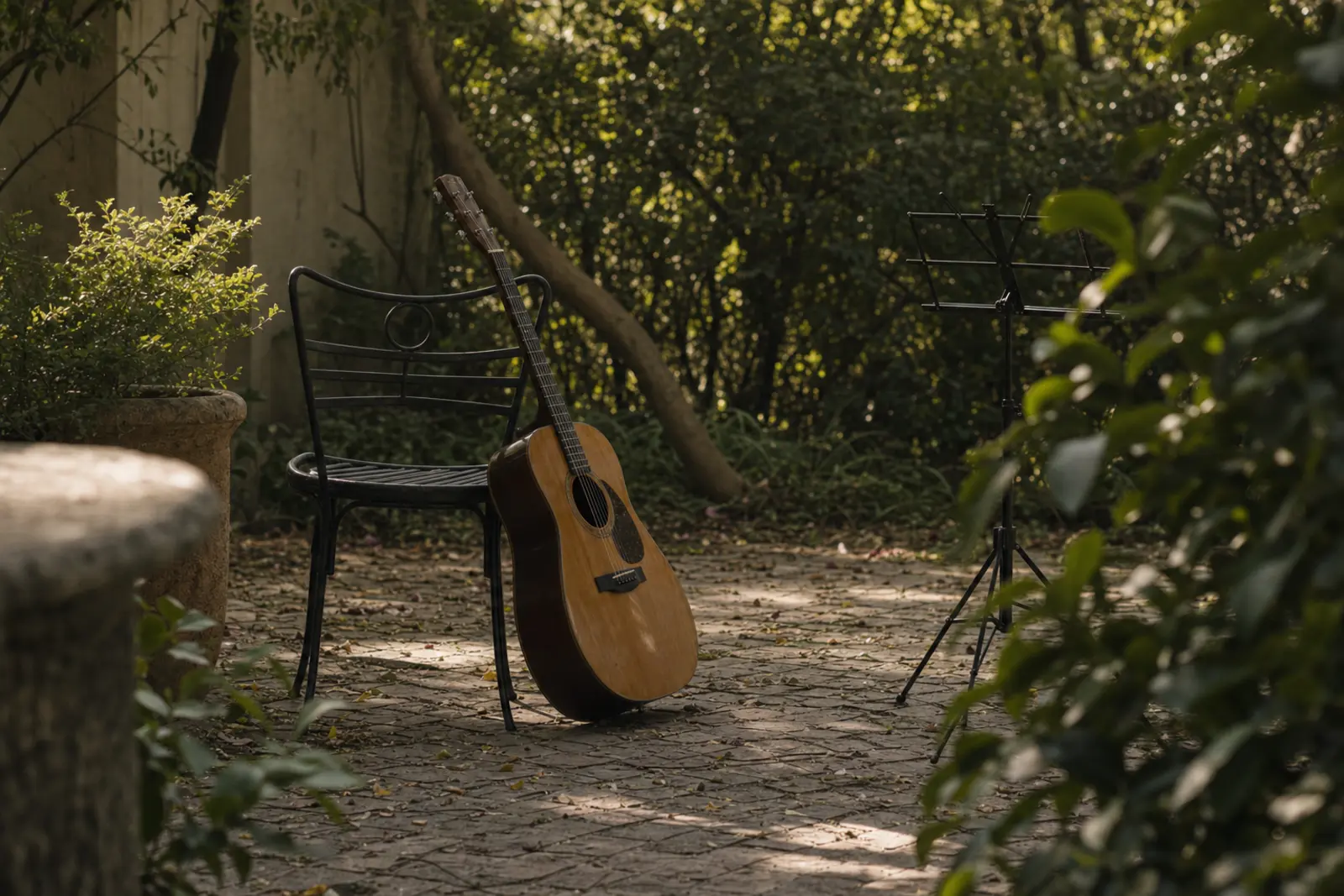
Live music helps a proposal when it gives the moment a clear cue to happen, and hurts it when it turns a private conversation into a performance in front of an audience neither of you asked for.
What live music actually does at a proposal
A single musician, usually a guitarist, violinist or singer, can mark the moment the way a signal cue does in a film: a song starts, and both of you know something is about to happen. Done well, it is subtle rather than theatrical, playing quietly in the background until the question itself, then stopping or fading rather than swelling. The musician's other job is timing: they need to read your signal, whether a nod or a text to a phone in their pocket, and start precisely when you are ready rather than on a fixed schedule.
When it helps and when it does not
Music tends to help in a setting where a quiet moment could otherwise feel exposed, such as a restaurant or a public garden with other people nearby, because it gives everyone around you a reason not to stare. It tends to work against you in a genuinely private setting, where the sudden appearance of a musician is itself the thing that gives it away before you have said anything, or where your partner would find a stranger playing for the two of you more awkward than romantic. If she dislikes public attention, a musician is usually the wrong call regardless of how good they are.
Choosing a musician without a directory of names
Ask for a short recording of them playing quietly and unaccompanied, not a full band mix, since the solo sound is what you will actually hear in a small setting. Ask whether they have played a proposal before and how they handled the timing: a musician who has done this understands they are working to a signal, not a set list. Confirm what equipment they need. A guitarist needs nothing, a singer with a backing track needs power, and power at an outdoor location during a load-shedding slot is worth checking before you assume it.
- Can I hear a short recording of you playing solo and quietly, not with a full band?
- Have you played a proposal before, and how do you take the timing cue?
- What equipment or power do you need, and does the location actually have it?
- What happens if load-shedding affects the venue's power at the booked time?
- What is the deposit, and how far in advance do you need the exact timing confirmed?
What goes wrong
The most common failure is timing: a musician who starts too early, before you are actually ready, or too late, after the moment has already begun. The second is volume, where music pitched for a stage overwhelms a conversation meant to be quiet and personal. The third is power, particularly outdoors, where a load-shedding slot nobody checked in advance leaves an amplifier silent at the worst possible time. A musician who asks detailed questions about all three before the day is the one worth booking.
Keeping the music, and the musician, in the background
Agree the exact signal to start and stop well before the day, and rehearse it if you can, even informally over the phone. Ask the musician to position themselves somewhere they will not be the first thing either of you notices when the moment happens, and to stop playing, or fade right down, the instant the question is asked. The music should support the moment from the edge of it, not sit in the middle of it.
A song that nobody remembers afterwards did its job properly. It was there to hold the moment, not to be the moment.
Do we need a full band, or is one musician enough?
One musician is almost always enough, and often works better than a full band for a proposal specifically because it is quieter and easier to position discreetly. A full band brings equipment, volume and a physical footprint that suits a wedding reception rather than a private moment for two people. Save the larger booking for the wedding itself and keep the proposal to a single guitarist, violinist or singer.
Can the musician also help with the surprise element?
Some can, particularly if you brief them clearly, since their job already involves waiting out of sight and reading a signal. It is reasonable to ask a musician to help manage a small piece of the logistics, such as confirming when your partner has arrived, but be specific about what you are asking and confirm they are comfortable with it rather than assuming it comes with the booking.
What if the location has no power for an amplifier?
Ask the musician directly whether they can play acoustically without power, which most guitarists, violinists and unamplified singers can, or whether they need a small battery-powered amplifier as a fallback. Checking this before the day matters particularly at outdoor locations, where load-shedding schedules can affect power even at venues that normally have it. A musician experienced in outdoor bookings will usually have already thought about this.