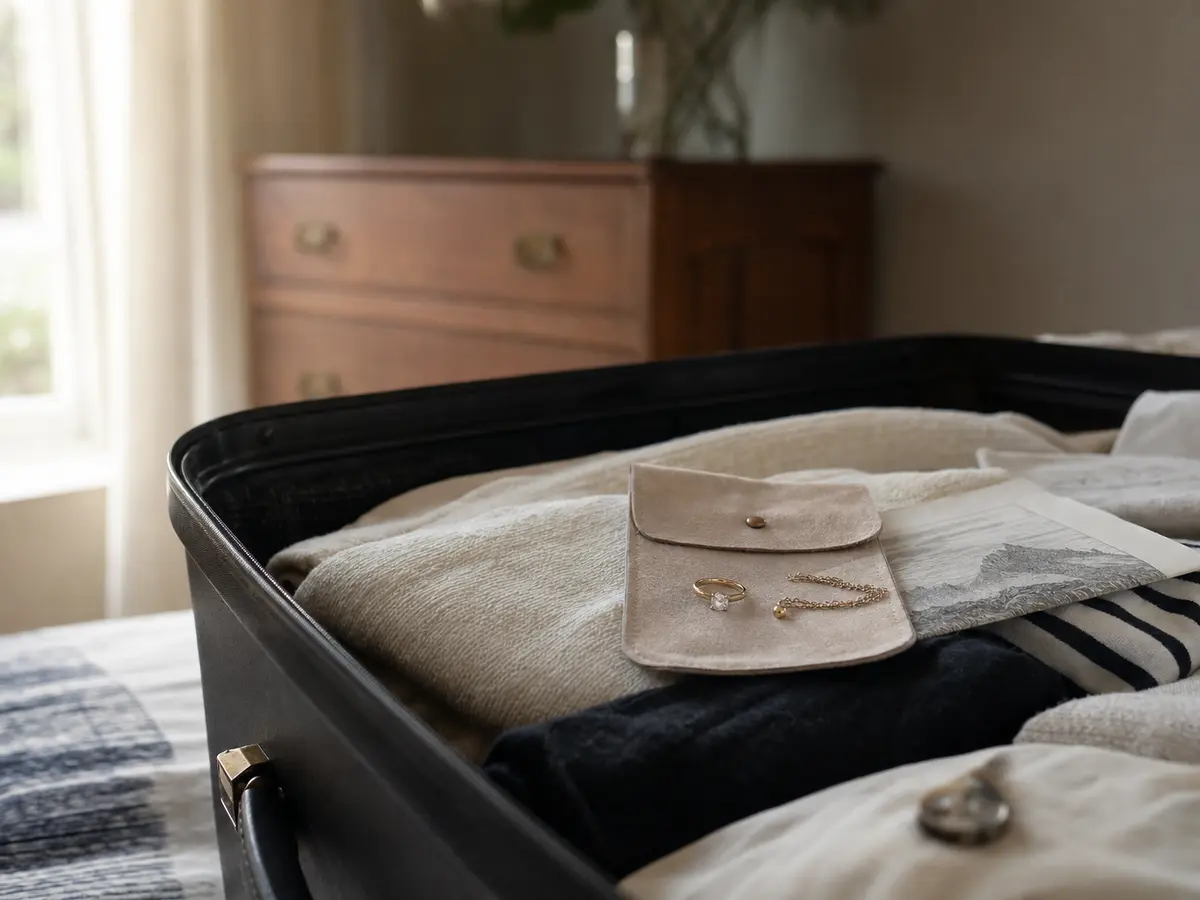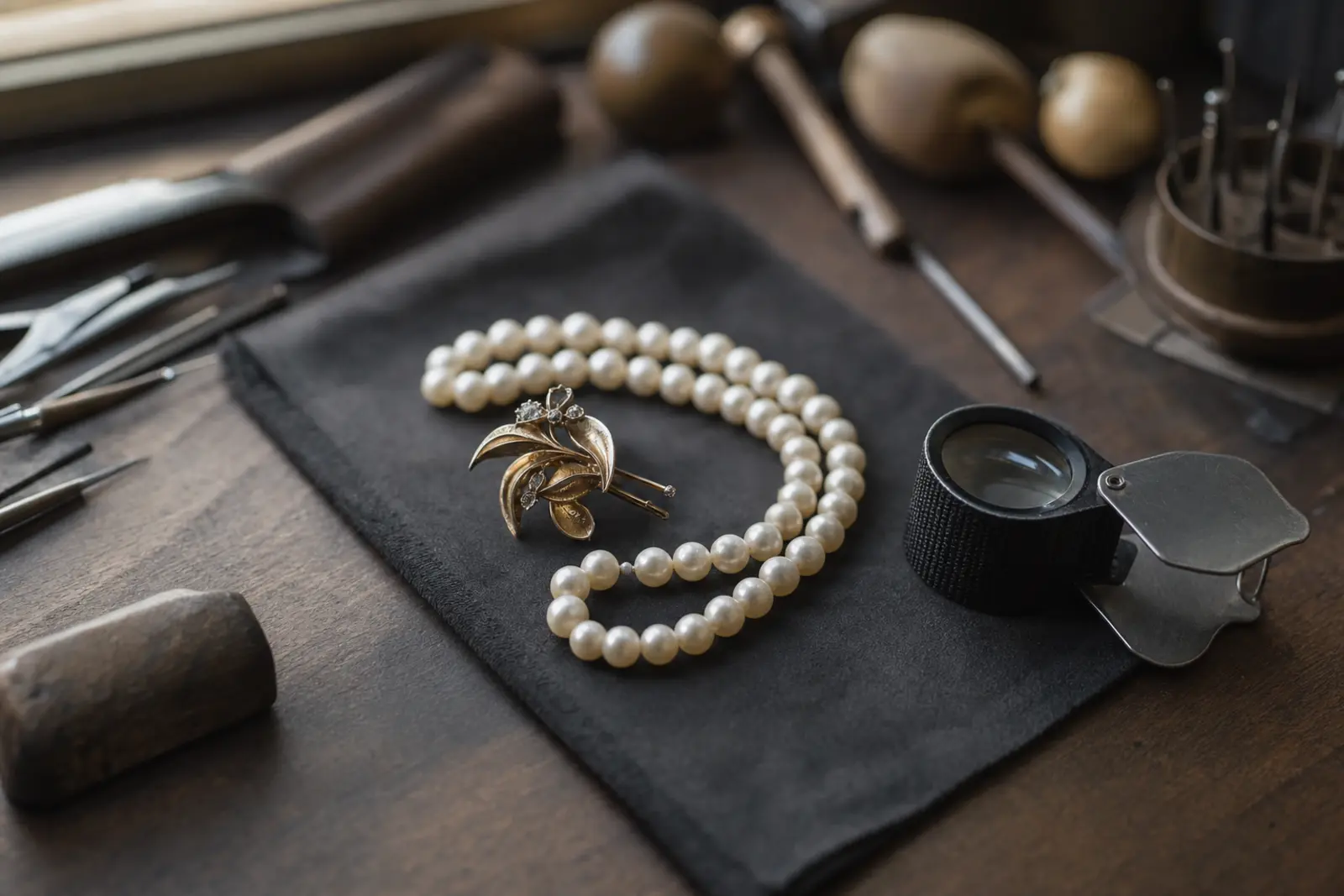
Wearing a family heirloom at a wedding solves one problem, connecting the day to people who cannot be there, and creates a few practical ones that are far easier to solve before the morning of than during it.
Which piece, and whose
Decide which single piece, and whose, as early as possible. More than one relative sometimes wants their piece worn, and it is worth talking about directly rather than assuming, since only one piece usually needs to actually be worn; another can be carried, displayed at the reception, or simply acknowledged in another way. A quiet conversation now is easier than a misunderstanding noticed at the wedding.
Condition checks and a pre-wedding repair
Have the piece checked at a bench well before the day: loose stones, worn prongs and weak clasps are common in older jewellery and are far better found in a quiet appointment than during the getting-ready photographs. If the piece needs more than a repair, a separate guide covers remodelling an heirloom properly; the short version here is that a genuine redesign takes weeks, so raise it the moment the piece is chosen, not the week it is needed.
Security on the day, and getting it home
Assign one person, not the bride or groom themselves, responsible for the piece from the moment it goes on to the moment it comes off, particularly if it comes off for dancing or is swapped out partway through the day. Have a plan for where it is kept overnight if the venue is not home, and treat that plan as seriously as you would for the rings themselves. A separate guide covers practical jewellery security at home and away in more detail.
Insurance for a borrowed piece
A piece that does not usually live with you, and is not usually insured under your own policy, needs a specific check rather than an assumption. A family or household policy may or may not extend to an item worn by someone other than the policyholder, or to an item away from the insured address for the day.
Honouring the person without a speech
Wearing the piece is very often enough on its own. Some families choose a small, quiet acknowledgement instead, a line in the programme, or simply an answer ready if someone asks about it, rather than a formal mention during the speeches. There is no single right way to do this, and it is worth deciding what feels natural to your family rather than copying what another family did.
Remodelling an heirloom for the day
Occasionally a family chooses to have an heirloom remodelled specifically for the wedding, a brooch reset as a pendant, or a stone moved into something the bride will actually wear again. The full process for that decision, including what to keep and what to let go of, is covered in a separate guide; start that conversation early if it is on the table at all.
- Agree which piece, and whose, well before the wedding week.
- Have the piece checked at a bench for loose stones and weak clasps.
- Assign one person responsible for it on the day, separate from the bride or groom.
- Confirm insurance cover with the family's insurer rather than assuming it.
- Decide how, if at all, you want to acknowledge whose piece it was.
A borrowed piece does not need a speech to do its job. It has already done it, quietly, the moment it goes on.
Who decides which family member's heirloom gets worn?
There is no automatic answer, and it is worth a direct conversation rather than an assumption, particularly if more than one relative would love to see their piece worn on the day. Some families solve it by having one piece worn and another carried or displayed instead, or by choosing a different piece for the ceremony and the reception. The conversation goes better held early and openly than left until someone feels overlooked close to the wedding.
Does a borrowed heirloom need its own insurance for the day?
It is worth checking rather than assuming it is automatically covered. A family policy may or may not extend to a piece being worn by someone other than the policyholder, and a household contents policy does not always cover an item once it leaves the house. Confirm with the family's insurer, or ask about a short-term rider for the day, well before the wedding rather than the week of it; this is general guidance and every policy differs.