Most couples spend weeks choosing an engagement ring and then decide on wedding bands in a single afternoon, which is a mistake, because a band is worn daily for longer than almost any other piece of jewellery either of you will own.
Width, profile and comfort fit
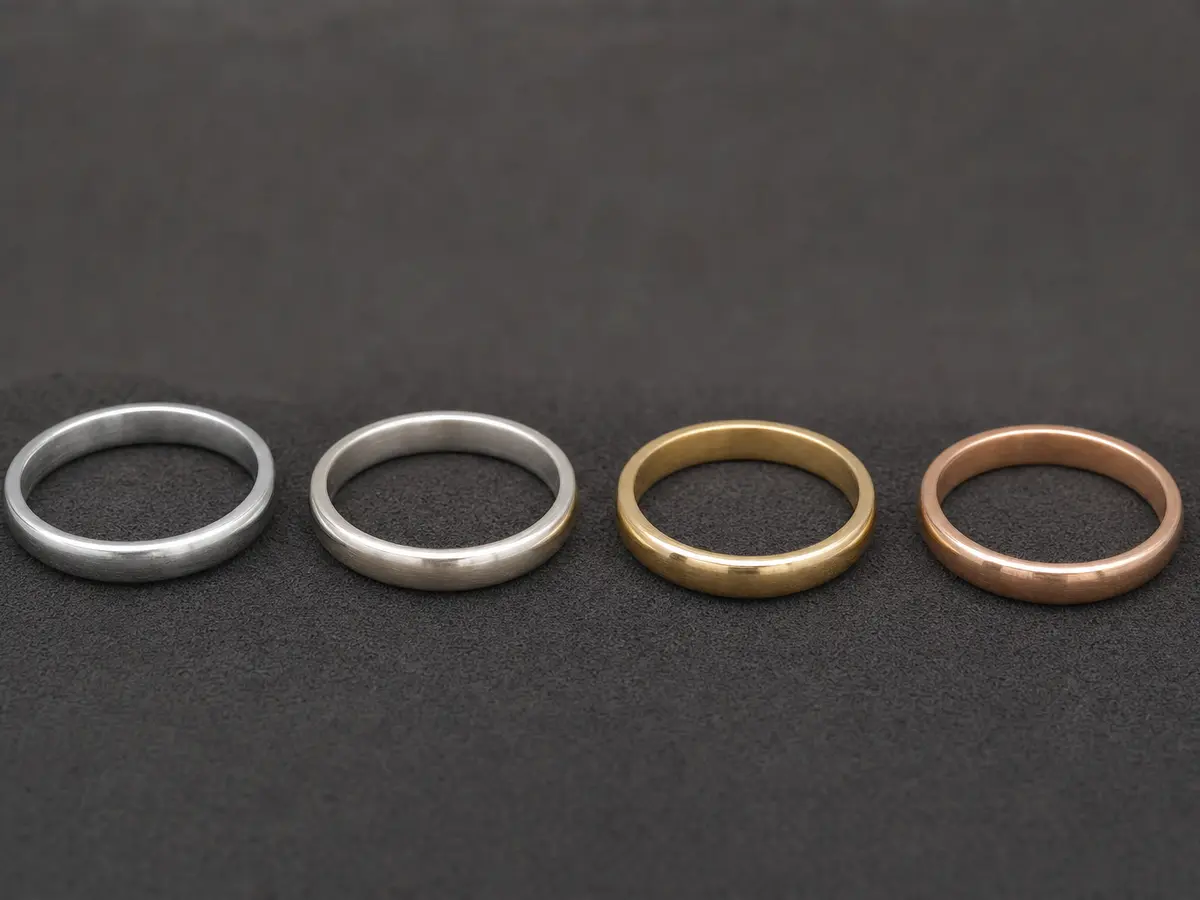
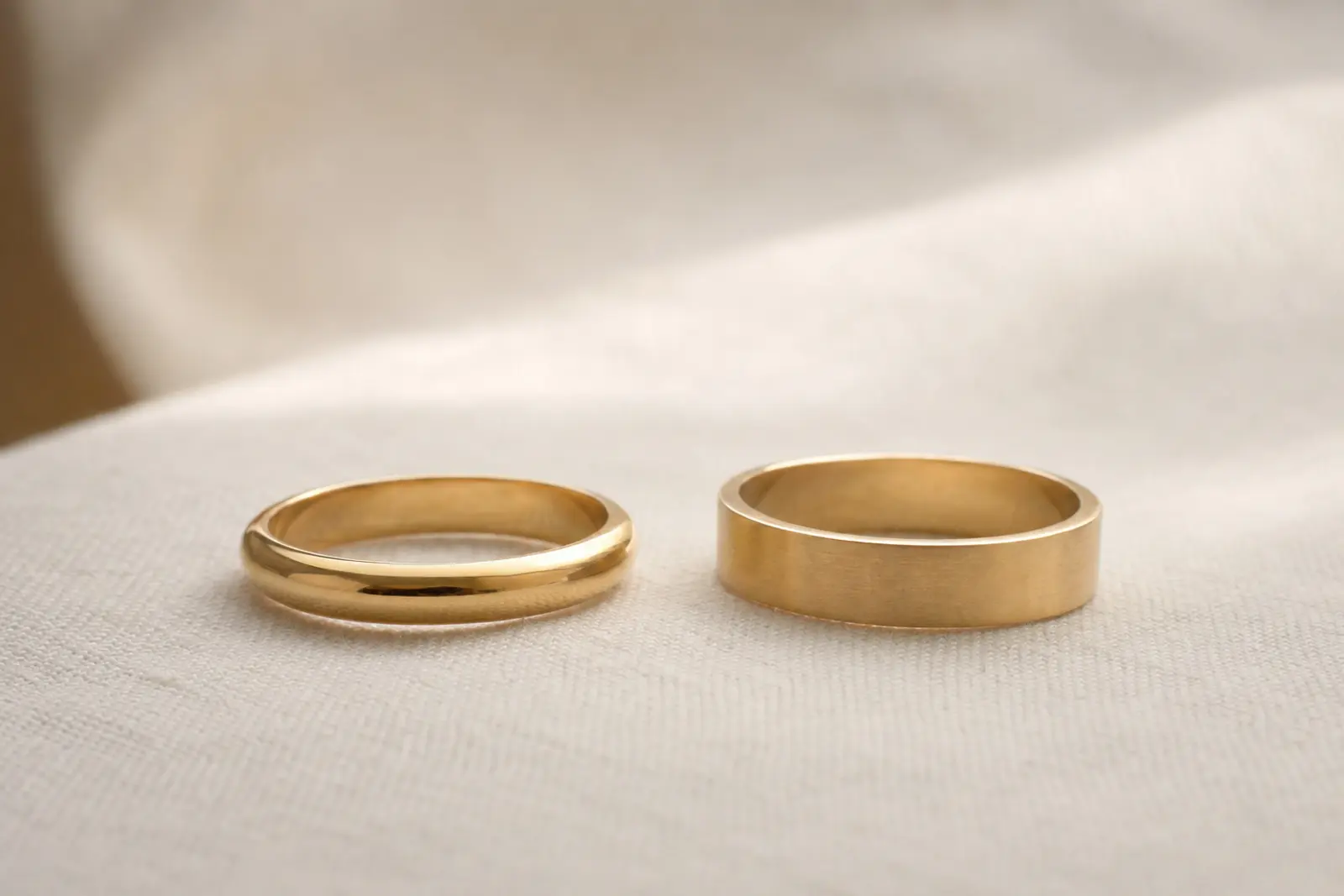
Most women's bands run between two and four millimetres wide, and a hand with longer fingers can comfortably carry more without the band looking heavy, while a narrower hand often suits something closer to two. The profile matters as much as the width. A court profile is rounded on both the outer and inner faces, which is why people describe it as the comfortable option: there is no edge to catch a knuckle on the way past. A flat profile keeps a crisp, flat outer face with a flatter or gently rounded inner face, and reads as slightly more architectural than a court band of the same width. A D-shape sits between the two, flat on the outside and rounded on the inside, named for the cross-section it makes when the band is viewed end-on.
Comfort fit is a separate decision from the profile, not another name for it. It describes a rounded, slightly domed interior added to any of the three shapes above, which reduces how much metal actually touches the finger and eases the band past the knuckle. A flat-profile band can still have a comfort-fit interior, and it is worth asking for explicitly if any ring has ever felt tight going on or coming off, because it is a small change that matters every single day.
Matching the engagement ring
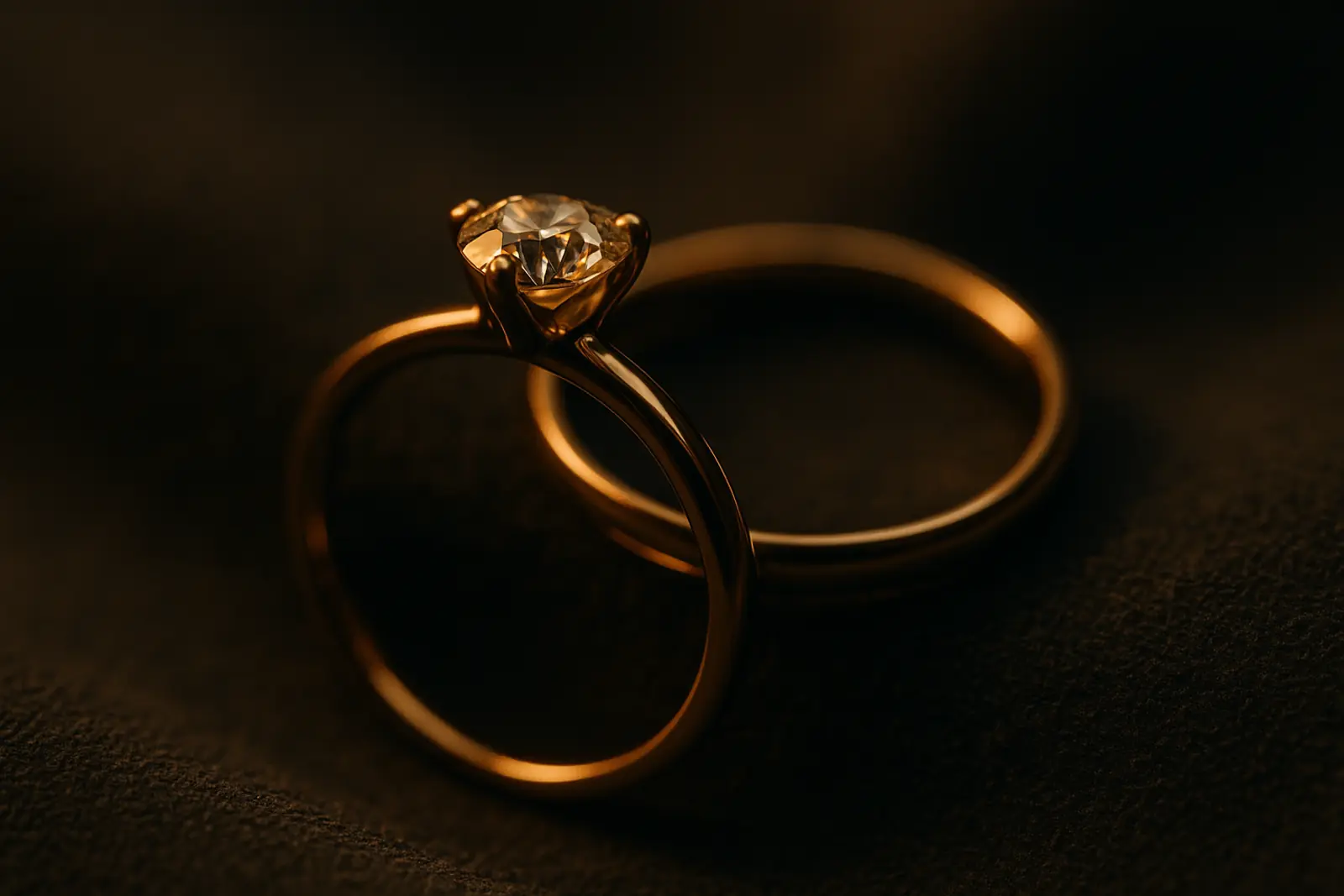
The band's metal is almost always matched to the engagement ring rather than chosen to please the eye on its own, because the two sit against each other on the same finger for decades, and a mismatch in hardness means the softer of the pair quietly wears away. Platinum against platinum, or 18ct gold against 18ct gold of the same colour, is the safest pairing for that reason. A plain band suits a ring with a strong centre stone that should stay the focus, while a band set with small diamonds or a run of pave suits a simpler solitaire that can carry a little more light without competing with itself. Matching the two bands, his and hers, to each other is a tradition rather than a rule, and plenty of couples now choose different metals, widths or finishes on purpose.
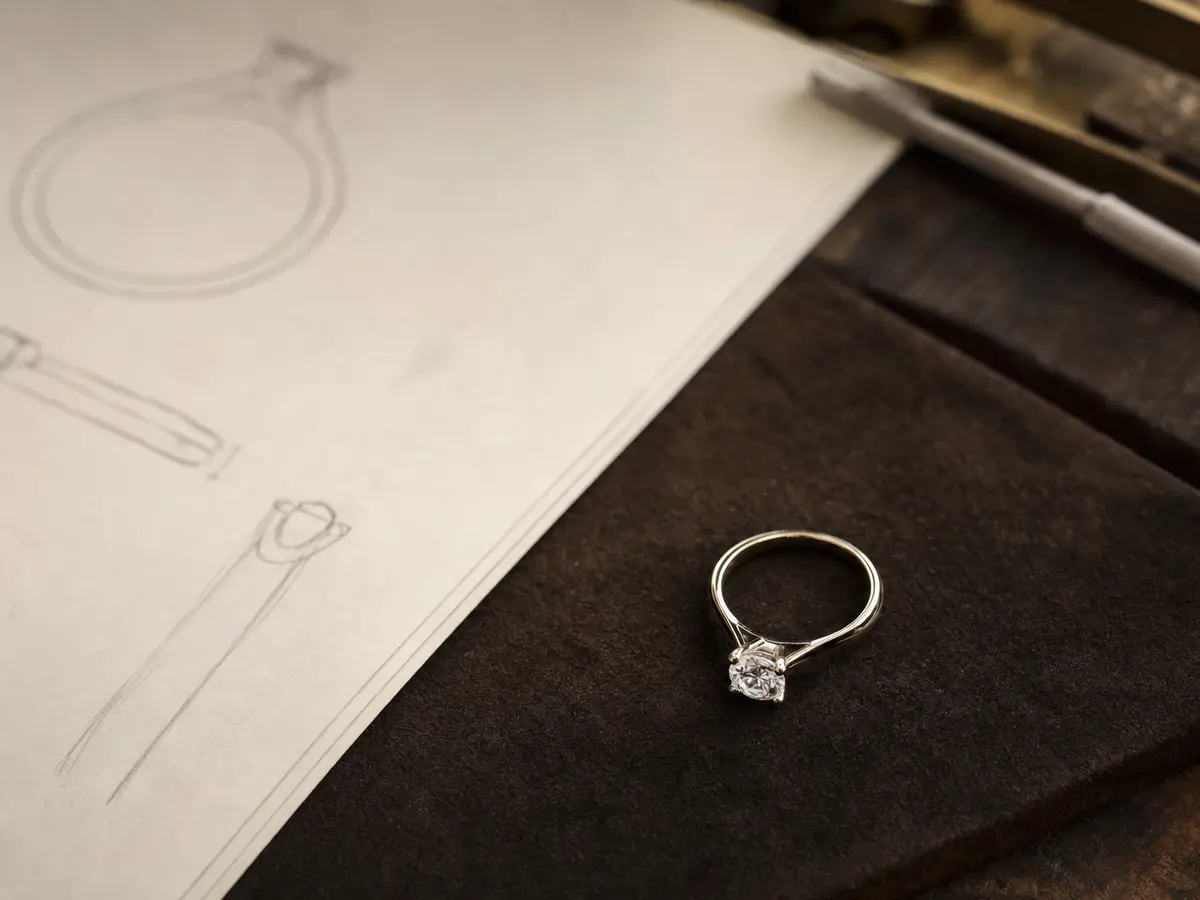
If the engagement ring sits low, carries a wide basket or curves at the shoulder, a straight band will not sit flush against it, and that gap is worth solving before the wedding rather than living with afterwards. A separate guide covers why the gap happens and the three practical ways to close it against a specific ring; read that once the engagement ring itself is settled, since the band has to be designed against the real thing rather than a description of it.
Engraving
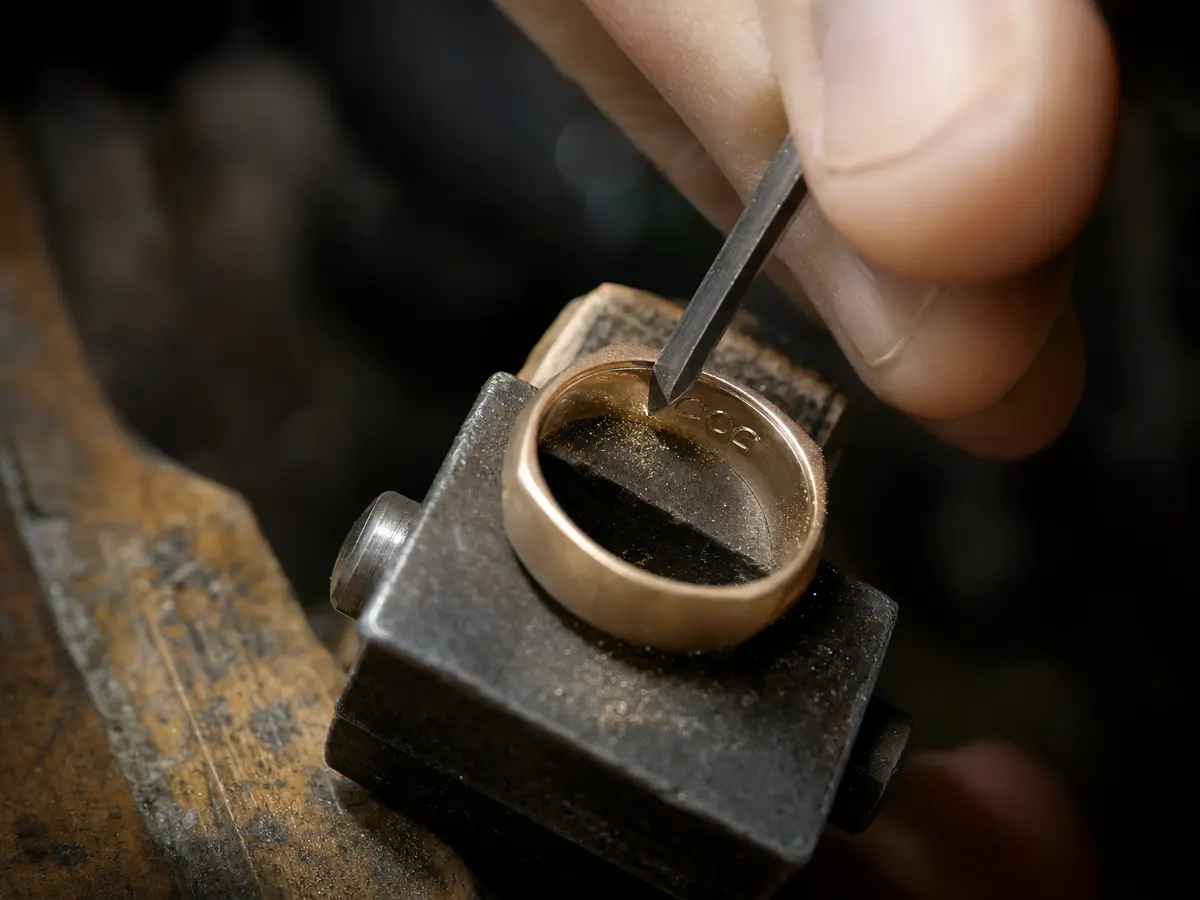
Most people engrave the inside of the band with a date, a set of initials, or a short private line, and keep the font plain and legible at a small size rather than ornate. Decide the wording early enough to check it twice, calmly, rather than at the counter the week before the wedding. How engraving is actually cut, and which methods survive fifty years of wear, is covered in full in a separate guide; the short version is that a hand-cut or machine-cut line outlasts a shallow laser mark by decades.
Sizing: worn alone or stacked, and getting the timeline right
A band that will be worn stacked against the engagement ring every day from the wedding onward needs to be sized, and sometimes shaped, against that specific ring rather than against the finger in isolation. A band that will more often be worn alone, with the engagement ring kept for occasions, can be sized more simply, as its own piece. Say which is the plan before sizing is finalised, because the two answers are not always the same number.
There is no rule that the band has to wait until close to the wedding; it can be ordered as soon as the engagement ring is settled. What is worth planning around is the season. December and the weeks either side of it slow every workshop, casting house and courier in the country, so a band needed for a December or early January wedding is safer ordered by October. Outside that window, six to eight weeks from a confirmed design to a finished band is a realistic figure. In South Africa, 9ct and 18ct gold both remain common choices for a band worn every day, and platinum, while it costs more for the same look, does not need the replating that white gold eventually asks for.
- Decide the profile, court, flat or D-shape, on the actual hand, not from a photograph.
- Ask for a comfort-fit interior if a ring has ever felt tight over a knuckle.
- Match the metal to the engagement ring, unless you are deliberately choosing not to.
- Say whether the band will be worn stacked or alone before sizing is finalised.
- Order by October for a December or January wedding; six to eight weeks is normal the rest of the year.
The band that gets worn every single day is rarely the one that looked most dramatic in the case. It is the one that was sized for the life it was actually going into.
Should the wedding band be wider or narrower than the engagement ring?
There is no fixed rule, but most bands are made slightly narrower than the engagement ring's shank so the engagement ring stays the visual focus and the pair sits comfortably on one finger. A band the same width as the ring reads as more deliberate and suits a simple solitaire particularly well. The only way to judge it properly is to try both in wax on the actual hand, because the difference is obvious there and easy to miss on paper.
Can a plain band be added to a stack later, after other rings?
Yes. A plain band is one of the easiest pieces to add to an existing stack, because it has no setting to clash with and its width can be chosen specifically to sit against what is already there. The one thing worth doing first is bringing the existing rings in so the new band is measured against them rather than against a description of them; a gap of half a millimetre is invisible on paper and obvious on the hand.
Do his and hers wedding bands need to match?
No. Matching bands are a tradition, not a requirement, and plenty of couples choose different metals, widths or finishes for entirely practical reasons: different working hands, different existing jewellery, or simply different taste. What matters more than matching each other is that each band works with the ring it will actually sit beside, if either of you already wears one, and that both of you are happy wearing yours every day.