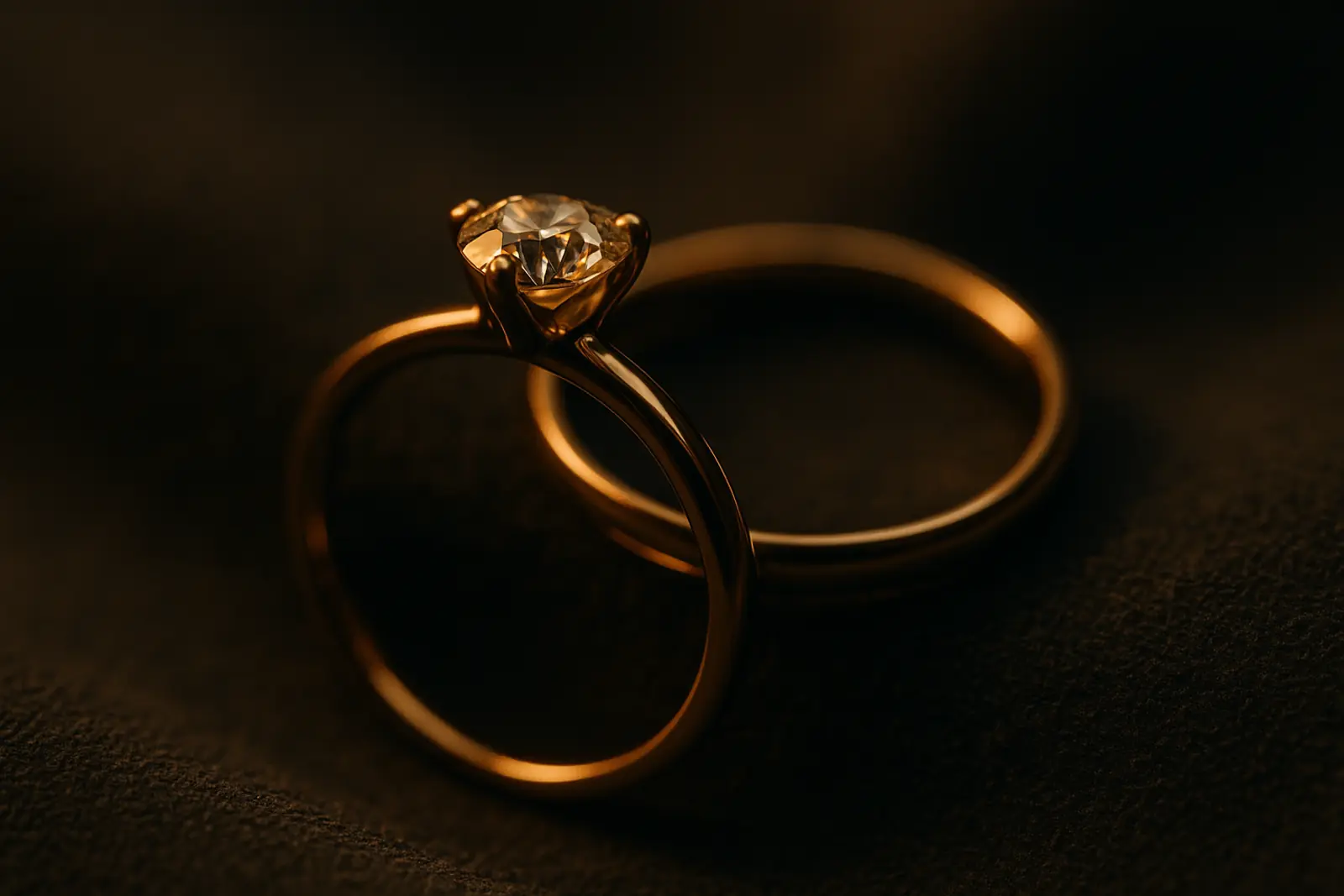
Two rings that were designed separately rarely sit flush, and the gap is the thing people notice for the next forty years. It is much easier to solve at the design stage than afterwards.
Why the gap happens
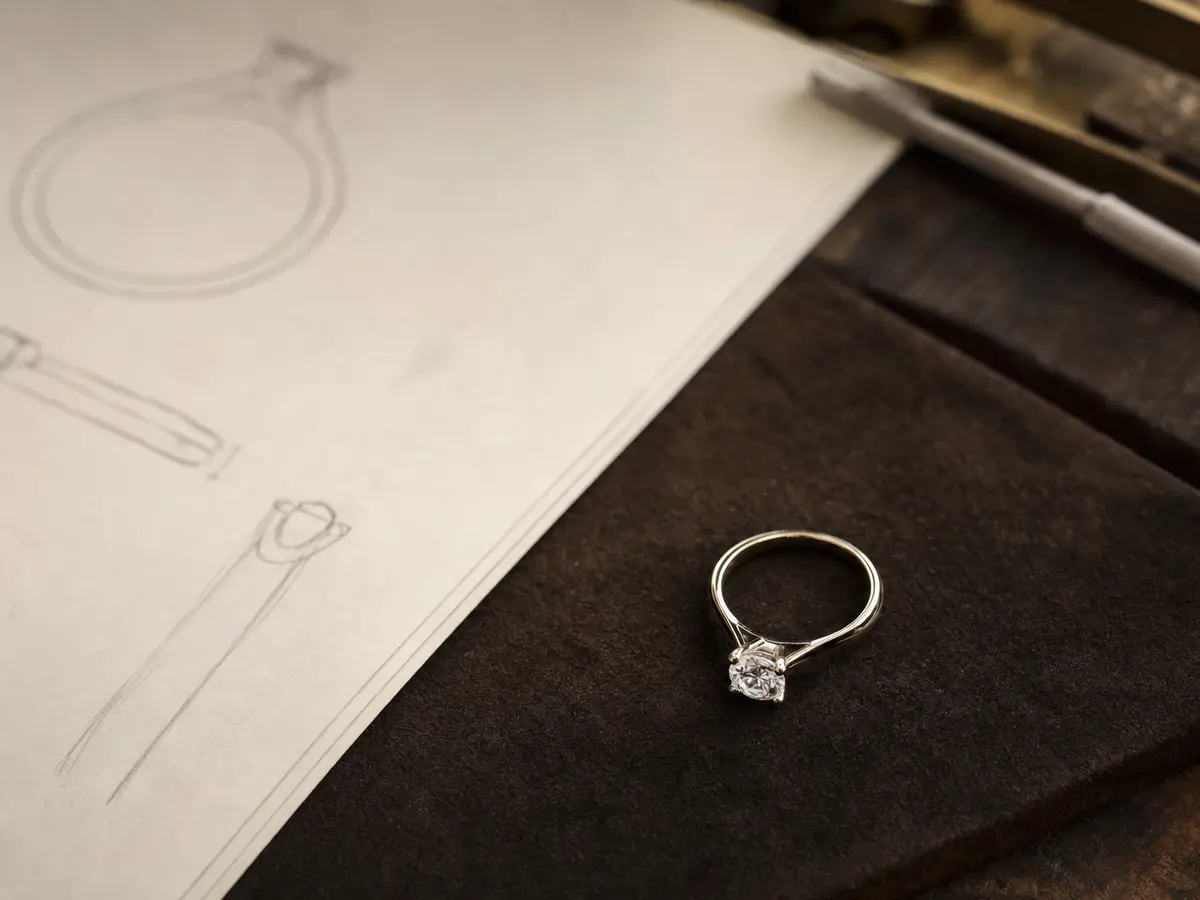
Anything with a stone set low, a wide basket or a curved shoulder pushes a straight band away from it. The gap is usually somewhere between half a millimetre and two, and it collects everything a hand encounters during a day.
The three ways out
- A shaped band, cut to follow the engagement ring's profile. The neatest answer and the one that has to be made for that specific ring.
- A straight band with the engagement ring's setting lifted slightly at the design stage, decided before the first ring is made, not after.
- Wear them on separate hands, or the band alone day to day. Far more common than people admit, and completely legitimate.
Metal, and the thing nobody warns you about
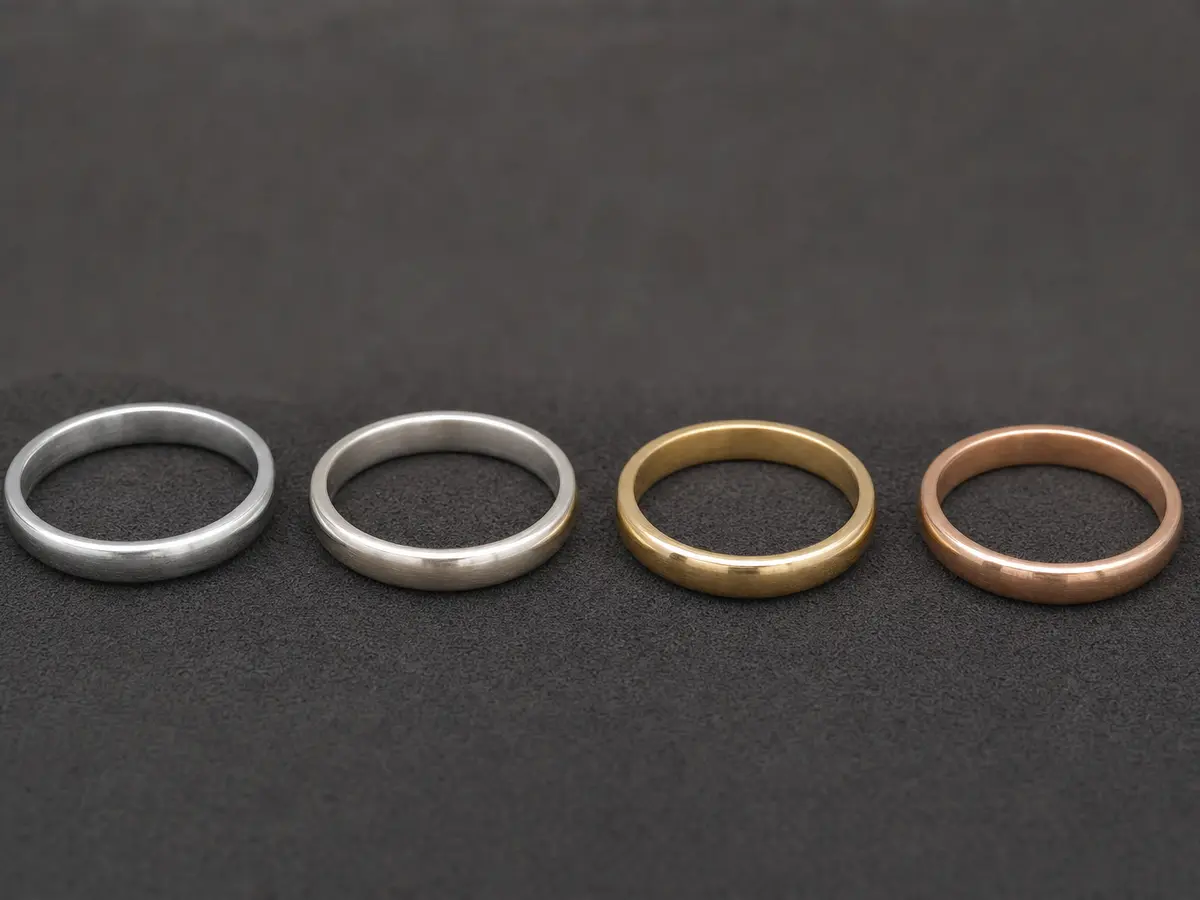
Two rings rubbing together for decades will wear the softer one. If the engagement ring is 18k and the band is platinum, the gold gives way. Matching the metals is not aesthetic fussiness. It is what stops one ring quietly eating the other.
Designing the band against a ring that already exists
If the engagement ring was made elsewhere, or years ago, bring it in. A shaped band is drawn against the actual ring, not a photograph: the setting is measured, the profile is traced, and the band is modelled to sit under the basket with a consistent, deliberate line rather than a wedge. It can be plain, or set with small stones that stop where the engagement ring's shoulders begin so the two read as one piece.
One caution. A band shaped to a specific ring is committed to it. If the engagement ring is ever remodelled, the band will need attention too. That is rarely a reason not to do it, but it is worth knowing before you choose a deep curve over a gentle one.
Design the pair, even if you are only making one of them now. The second ring is much easier when the first one expected it.
Should the wedding band be the same width as the engagement ring?
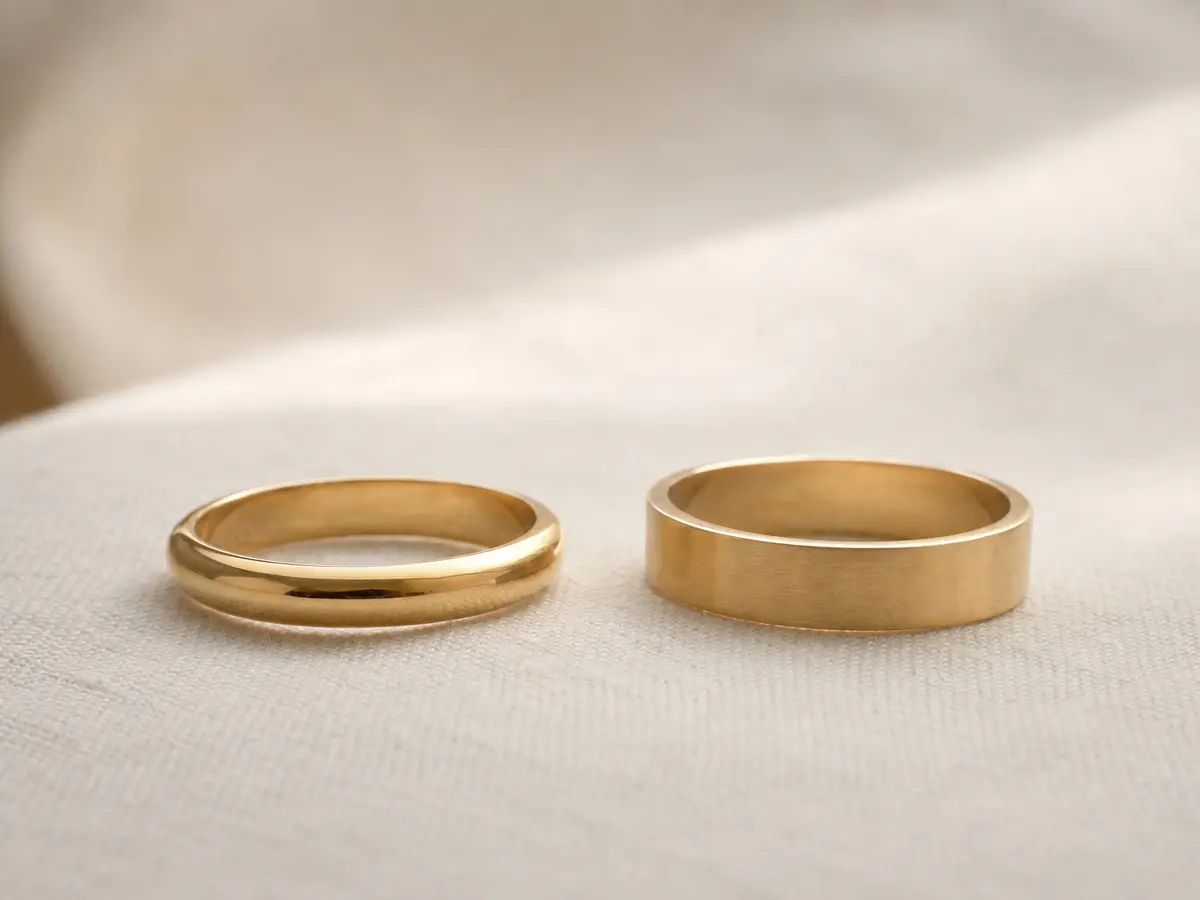
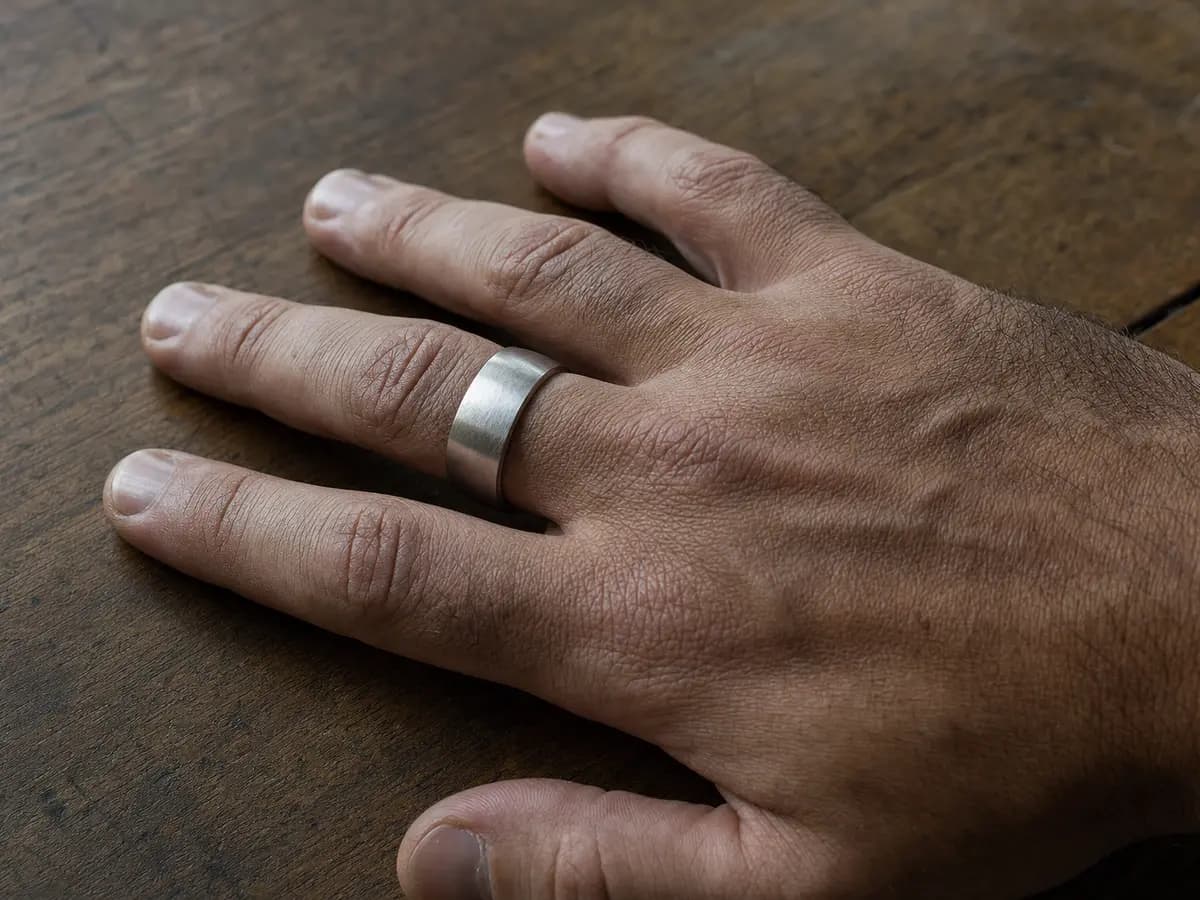
Not necessarily. Most bands are made slightly narrower than the engagement ring's shank so the engagement ring stays the visual focus, and so the pair sits comfortably on one finger without pushing the knuckle. A band the same width reads as more deliberate and more modern, and it works well when the engagement ring is a simple solitaire. Try both widths in the wax stage; the difference is obvious on the hand and invisible in a drawing.