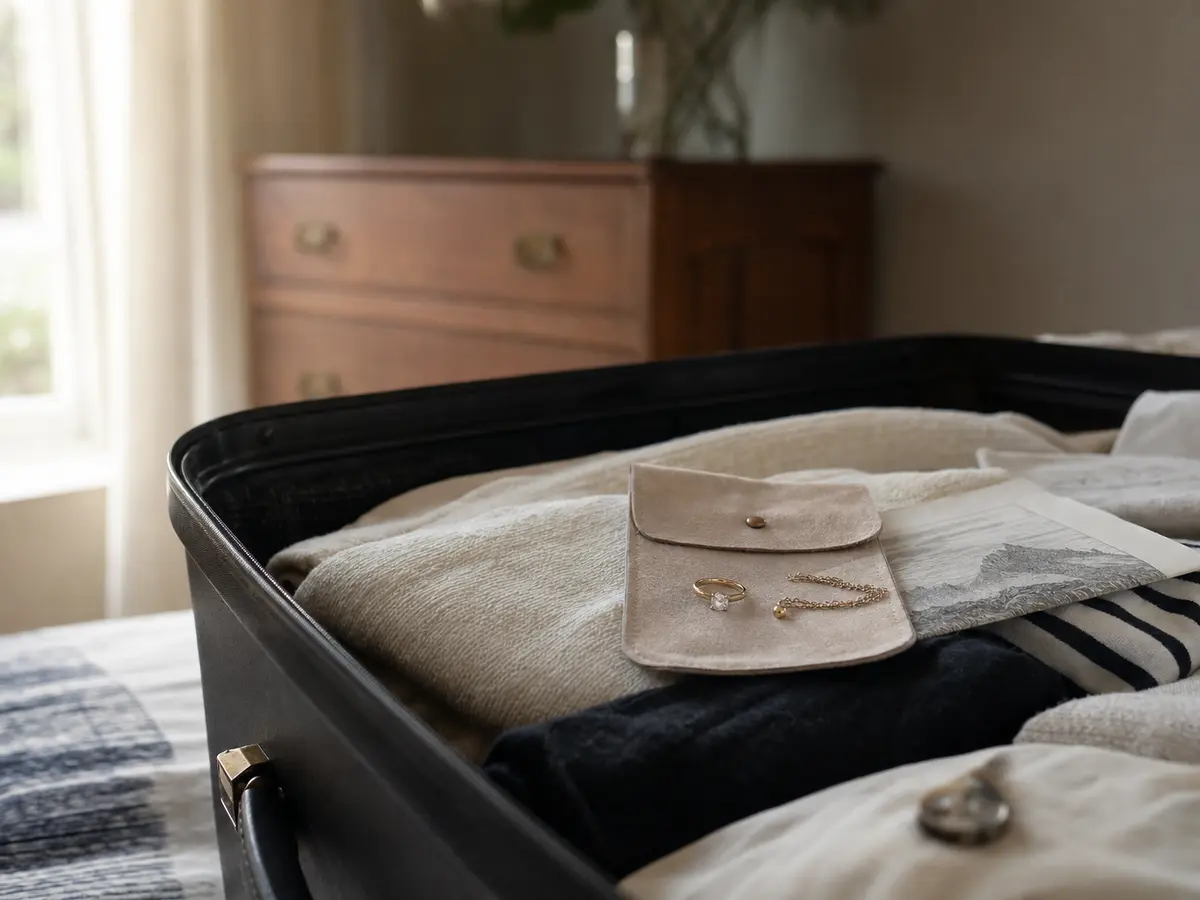
The ring spends far longer in a pocket, a car cubbyhole or a hotel safe than it does in the box on the night itself, which is the part of a proposal most people plan the least. Carrying it well is mostly a matter of habit rather than any special equipment.
On your person, not in a bag
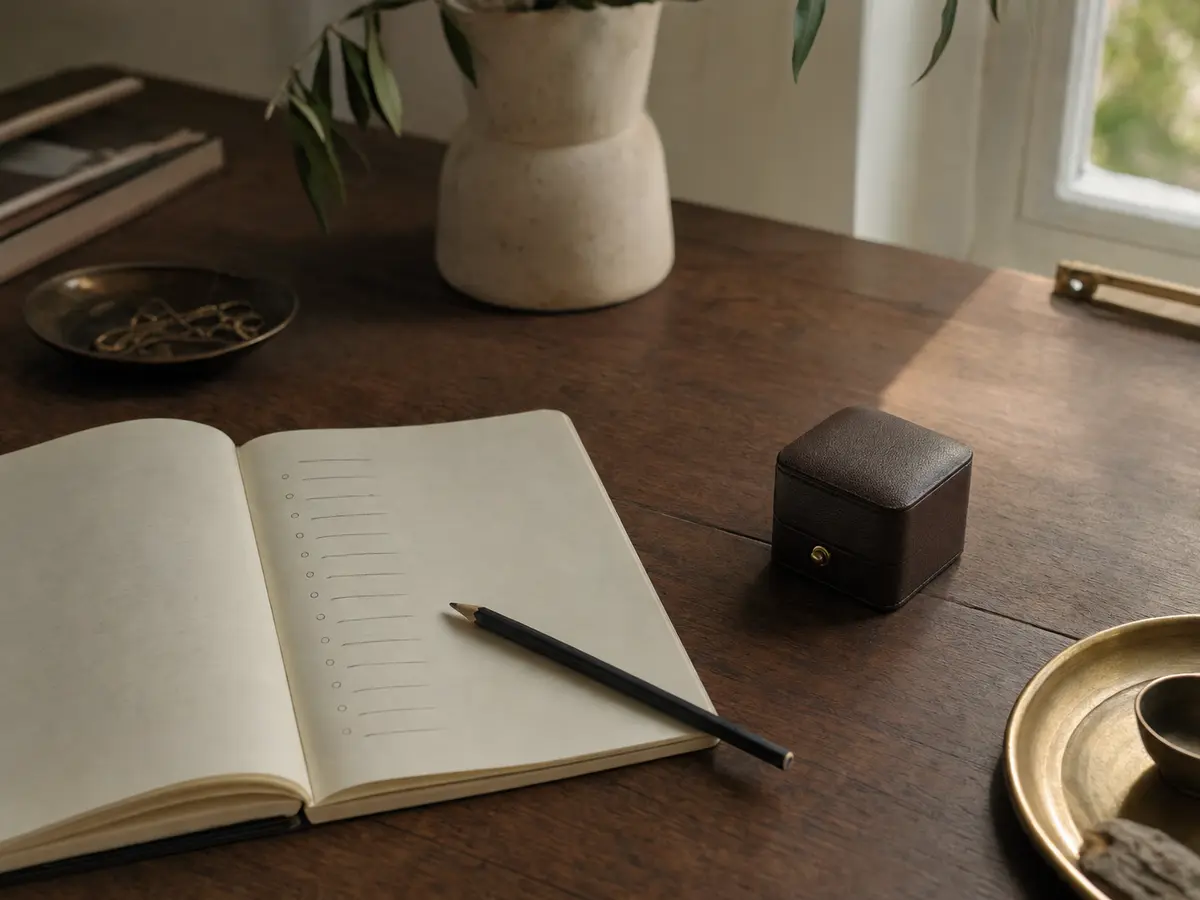
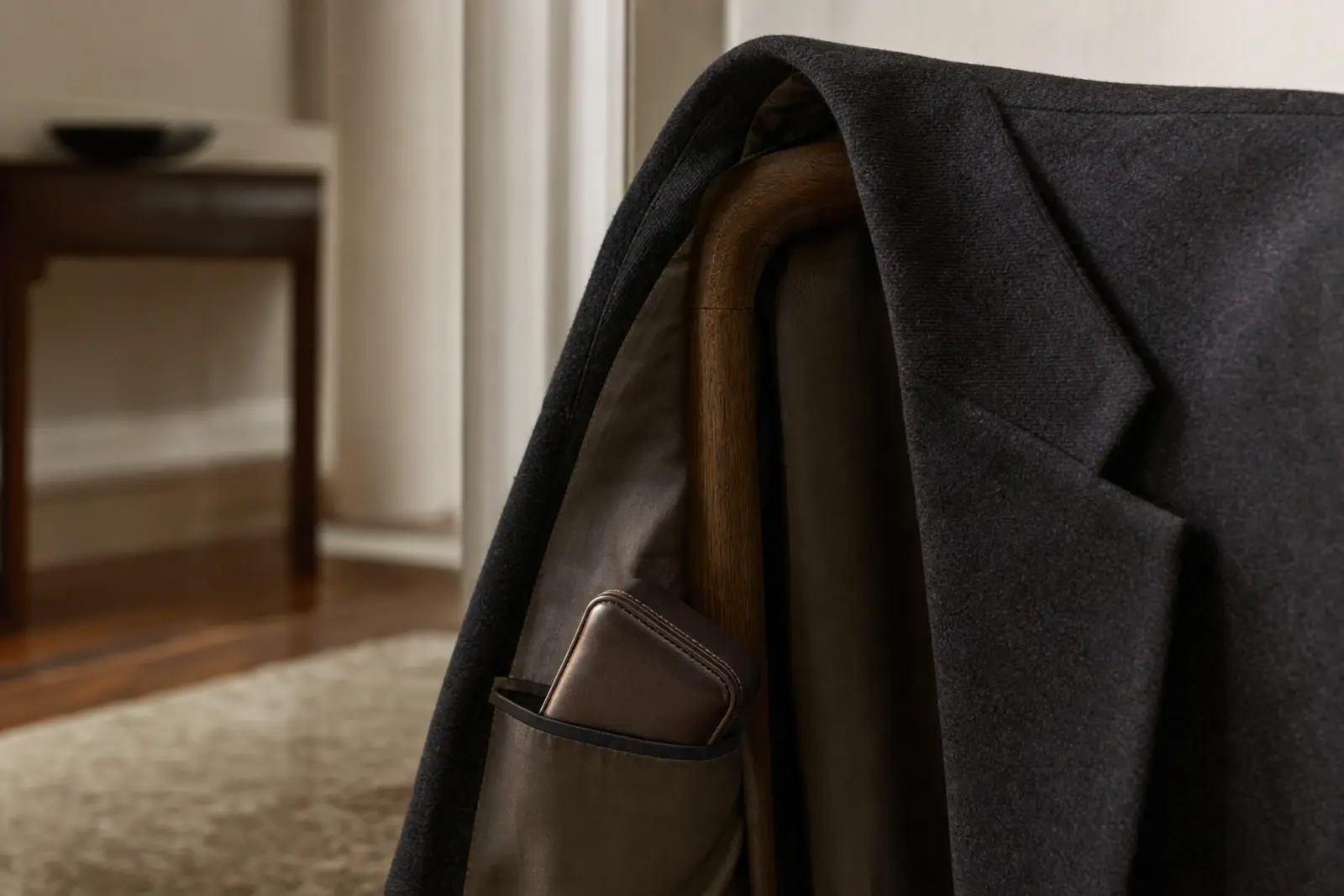
The safest place for the ring, for the days or weeks before the proposal and on the day itself, is a slim case in an inside jacket pocket or a similarly secure inner pocket, never a trouser pocket and never a bag that could be set down, handed to someone else to hold, or simply forgotten on a chair. A small, structured case protects the ring from scratching against keys or coins and stops it slipping out unnoticed. If you do not own a jacket with a proper inner pocket, a small zipped pouch worn close to the body does the same job.
Cars, flights and hotel safes
If you are driving to the setting, the ring travels on you, not in the cubbyhole, the boot or a bag left on the back seat, all of which are the first places broken into if a car is targeted. If you are flying, carry it in hand luggage on your person rather than in checked baggage, and keep it on you through security rather than in a tray. A hotel room safe is reasonable for the days before the proposal, provided you set it yourself and know the code, but the ring should come out of the safe and onto your person well before the moment itself, not be collected in a rush on the way out.
- The ring is in a slim case, not loose in any pocket or bag.
- It travels in an inner jacket pocket or a similar secure pocket close to the body.
- In a car, it stays on you when you get out, never left inside the vehicle.
- On a flight, it stays in hand luggage and on your person, not in checked bags.
- A hotel safe is only used for the days before, not for the hour of the proposal itself.
- Nobody else, however trusted, holds or carries the ring on your behalf.
Do not hand it to anyone
Giving the ring to a friend, a venue manager or a photographer to hold until the right moment feels like a sensible way to keep it hidden, but it multiplies the number of things that can go wrong: a phone left unattended, a bag set down at the wrong table, a plan that changes at the last minute and nobody thinking to pass the ring back. If the setting genuinely requires it to appear from somewhere other than your pocket, agree the exact handover in advance, keep it as brief as possible, and treat it as the highest-risk part of the whole plan rather than a minor detail.
Insure it from collection day
The weeks between collecting the ring and proposing are exactly when it is carried in pockets, hidden in drawers and cupboards, and sometimes taken travelling, which is more risk than it will typically see in an ordinary year of being worn on a hand. Ask your broker to add it as a specified item on the day you collect it, using the studio's valuation, and mention if it will be flown or driven any distance before the proposal itself. A ring that is only insured from the day of the wedding has been uninsured for every day before that.
Treat the ring the way you would treat any other single valuable item you are responsible for in public: on your person, out of sight, and handed to nobody, however briefly, until the moment it is needed.
Is it safe to keep the ring at home before the proposal?
A home is generally reasonable for short-term storage, provided the ring is not left somewhere obvious such as a bedside table or a jacket hanging in view. A locked drawer or a small safe is better than an open surface. The bigger risk is usually not where it sits at home but the moments it travels in a bag or pocket in between, which is where most loss and damage actually happens.
Should the ring be insured before the proposal or only after the wedding?
From the day it is collected, not from the wedding or even the engagement. The period immediately after collection, when the ring is being carried around and possibly travelled with, carries more risk than most of the ring's later life being worn day to day. Speak to your broker on collection day and give them the studio's valuation so cover starts immediately rather than being backdated later.