Skip to content
You are here

The Journal · Rings & Jewellery · Signs your ring needs repair

Rings and jewellery

Signs your ring needs repair

A ring rarely fails without warning. What a loose stone, a worn prong or a thinning shank actually look like, and which signs mean stop wearing it today.

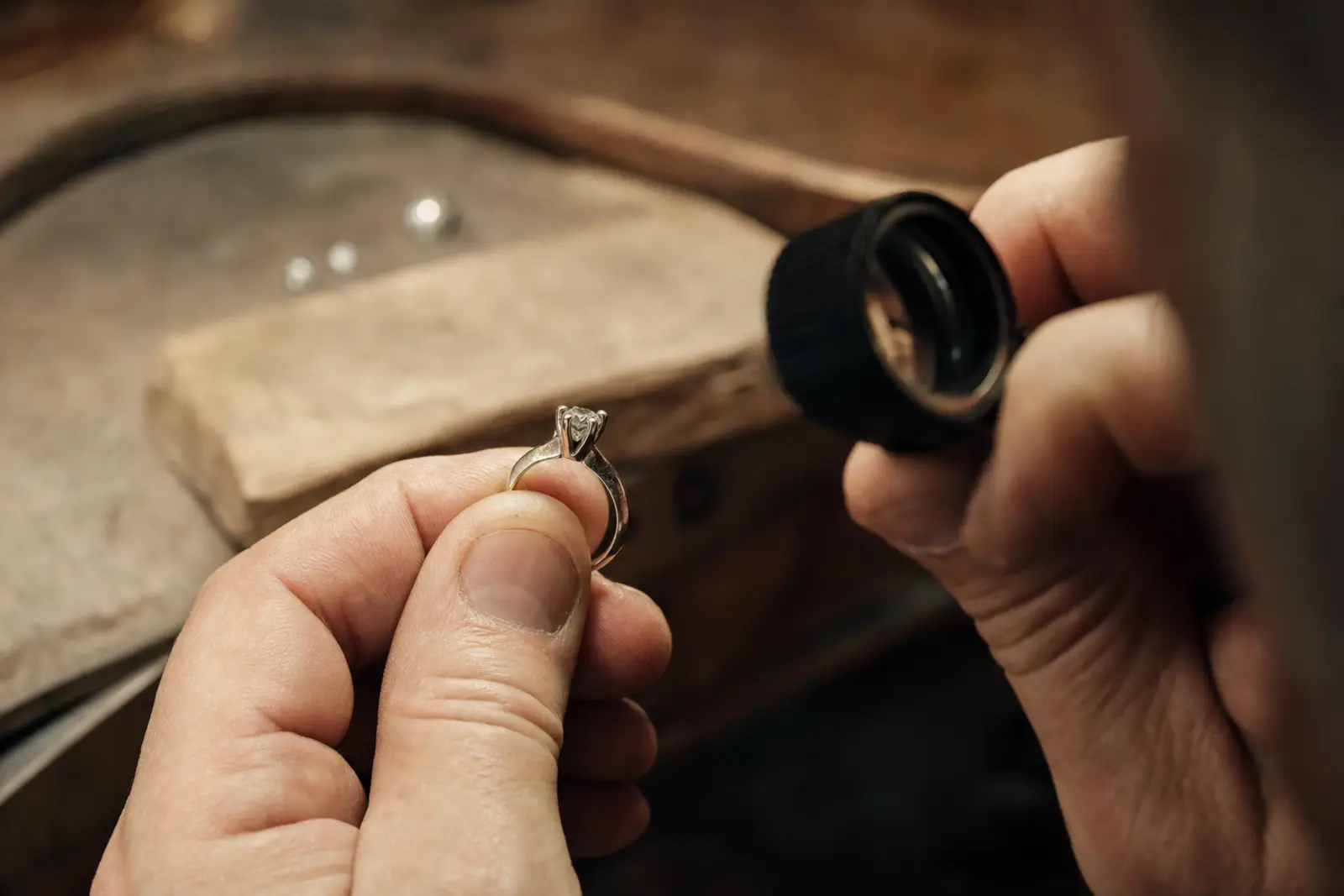
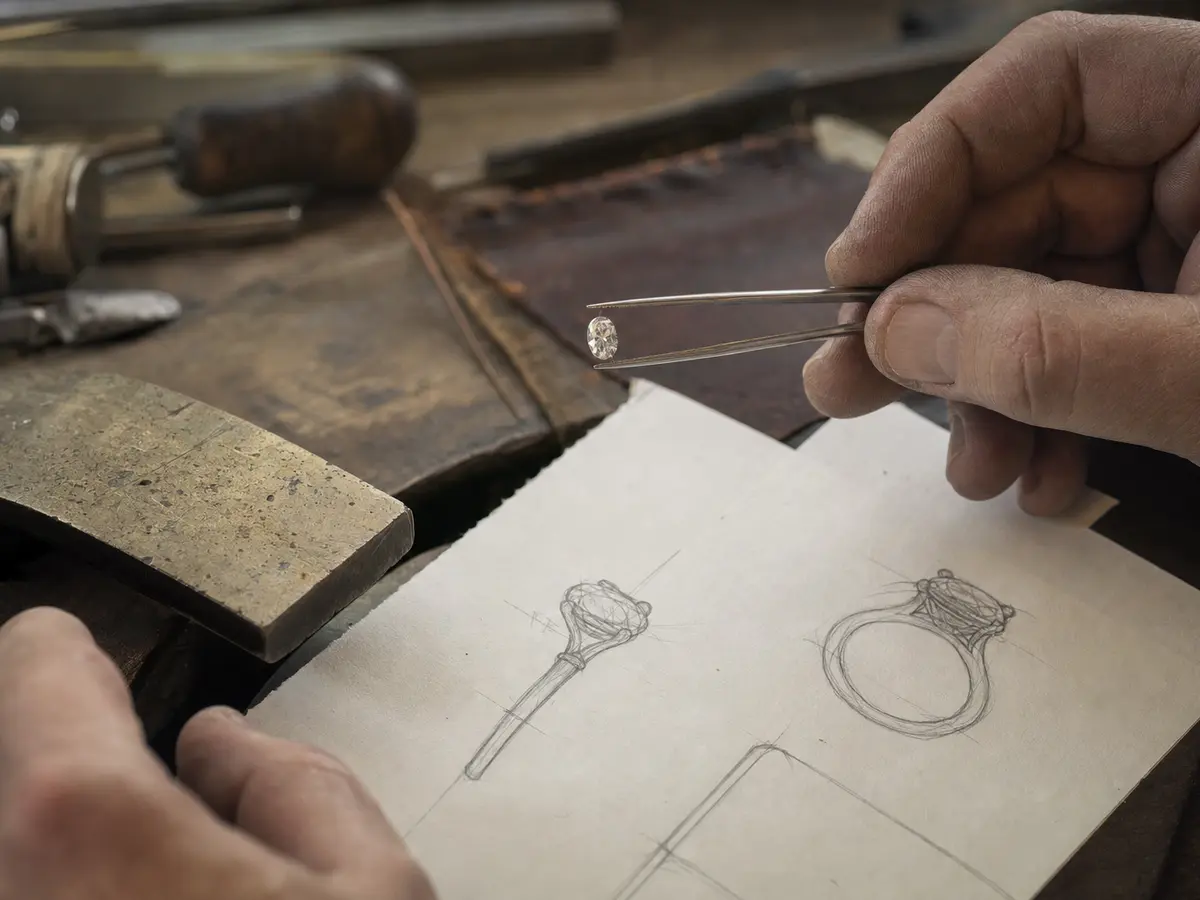
A ring held under a jeweller's loupe with a claw and stone visible at close range

At a glance

The quick test
Gently check whether any stone moves
Stop wearing it if
A stone moves, a claw is bent, or a clasp has opened
Can usually wait
Dulled plating and minor surface wear

A ring rarely fails without warning, and learning to notice the small signs early, a stone that has started to move, a claw wearing thin, is what keeps a minor repair from becoming a lost stone.

The loose stone test

Hold the ring by the band and gently press the stone from the side with a fingernail, or bring it close to your ear and tap it lightly against a hard surface, listening and feeling for any rattle or give. A stone that moves at all, even slightly, means the setting has failed to some degree and the ring should come off and come in that week. Never try to tighten a claw yourself; it is easy to bend one the wrong way and make the problem worse.

What to look for

  • Worn prongs: a claw tip that has gone thin and shiny instead of staying rounded is a claw close to failing.
  • A thinning shank: the band visibly thinner underneath or at the back than elsewhere, usually where it rubs against another ring.
  • Bent claws: most often from a knock at the gym, in the garden or against a hard surface, not from an obvious accident.
  • Chipped stones: a small nick along the edge of a diamond, or a chip in a softer stone, usually from a direct knock.
  • Discoloured plating: a warm patch showing through white gold where the rhodium has worn away.
  • A clasp that opens on its own: on a chain or bracelet, a spring or catch that has started to wear loose.

What to stop wearing immediately, and what can wait

Stop wearing it straight away if a stone moves at all, if a claw has visibly bent away from the stone, or if a clasp has already opened once without you noticing. None of these get better on their own, and all three risk losing the stone or the piece entirely. Dulled plating, light surface scratches and a shank that has thinned slightly but shows no movement can wait for the next routine visit; they are cosmetic or slow-moving rather than urgent.

What a check involves

Every claw and setting is examined under magnification, each stone is tested individually for movement, and the shank is checked for wear along its whole length. Anything found gets noted, and small things like a loose claw or dulled plating are usually put right at the same visit. It is a short appointment, not a project, and it is the reason an annual check catches problems this list would otherwise let through. Bring the ring even if nothing on this list quite matches what you are seeing; a second opinion at the bench costs nothing and settles the question either way.

  • Gently test whether any stone moves from side to side.
  • Look at the tip of each claw for a thin, shiny point rather than a rounded one.
  • Check the underside of the shank for a section thinner than the rest.
  • Look for any claw bent visibly away from the stone it holds.
  • Check the edges of every stone for a chip or a nick.
  • Test whether a clasp opens under light pressure.
Most of what we replace at the bench was visible for months before anyone brought it in.

None of this requires expertise to notice. It just requires actually looking, every so often, rather than assuming a ring that looks fine on the hand is fine underneath.

How often should a ring be checked even if nothing looks wrong?

Once a year is the usual rhythm for a ring worn daily, and it is worth doing whether or not anything seems off, since prong wear and shank thinning happen slowly enough that the person wearing the ring is often the last to notice. Bring it in more often if it is worn to manual work, the gym or regular gardening, where knocks are more frequent.

Is a chipped diamond still safe to wear?

It depends on where the chip is. A small chip on the girdle, away from a claw, is often stable in the short term but is worth having assessed so it does not catch on fabric or grow with further knocks. A chip nearer a claw, or in a softer stone such as an emerald, is more urgent and should not be left.
Related jewellery guidance

The ring side of this decision.

The next step

Send a photograph before you decide it can wait.

A quick picture on WhatsApp is often enough for Gavin to tell you whether it needs an appointment this week or can hold until the annual check.

Keep reading

The next stage

All of Rings & Jewellery

Testimonials

In their words.

  • “I decided to get engaged while my lovely girlfriend went to the UK for a short trip and I used the time to get a ring made while she was away. Gavin and his team gave me great advice and freedom. They helped me create and design my own ring, and taught me so much about the choices I have. They made the whole process a fantastic experience and I will totally send my friends back for the one on one experience.”

    Willie NelFreelance filmmaker
  • “Gavin and his firm were recommended to us by a mutual friend. From the very first contact, Gavin conducted himself in a very friendly but professional manner. Gavin clearly demonstrated the love and understanding of his business. His attention to detail and willingness to listen to our needs was very reassuring. We are extremely pleased with the design, quality of our jewellery and the superb service. It was certainly one of the best shopping experiences we have had. Our friends have found Gavin amazing and are very impressed with their purchases. On purchasing diamonds, we highly recommend others to contact Gavin. We certainly look forward to doing business with his company for years to come.”

    Dusanka and Robert CosicWales, UK
  • “My experience with Gavin was nothing less than exceptional. He provided excellent customer service, quality diamonds, and competitive prices. He was very knowledgeable and an excellent teacher. I learned everything I needed to know before purchasing the right diamond. I would recommend him and his company to anyone considering the purchase of a precious stone.”

    Michael Zarrabi, M.D.Plastic and Reconstructive Surgery
  • “Great experience dealing with Gavin. I have had many good experiences dealing with Gavin. The jewellery and stones are breathtaking and very reasonable in price. The service we received was so efficient and good advice was given to us when choosing specific stones. We look forward to many more dealings with Gavin.”

    Daniel and Elise Boyer
  • “My experience with Gavin goes back some years. Not only have I and my wife been advised and purchased from the company; we have, in addition, successfully referred a number of our friends to Gavin. His knowledge, service and flexibility have ensured that we consult them on any occasion where we are thinking of purchasing jewellery.”

    Bernard FreemanCEO, European Healthcare Group PLC, London
  • “Gavin Ruschin has been my preferred supplier of diamonds and designer jewellery for the past five years. During this period of knowing Gavin, I feel extremely privileged to have a supplier of such character and integrity servicing me personally, my company The BLD Group and our clients. Gavin has through excellent service become one of the most credible suppliers on our books. His honesty, unconditional professional service, excellent pricing and pleasant manner have earned him the respect and reputation of the highest degree amongst my clients, which include professional sportsmen and sportswomen, leading business people and politicians.”

    Bruce V DavidsonExecutive Chairman, The BLD Group