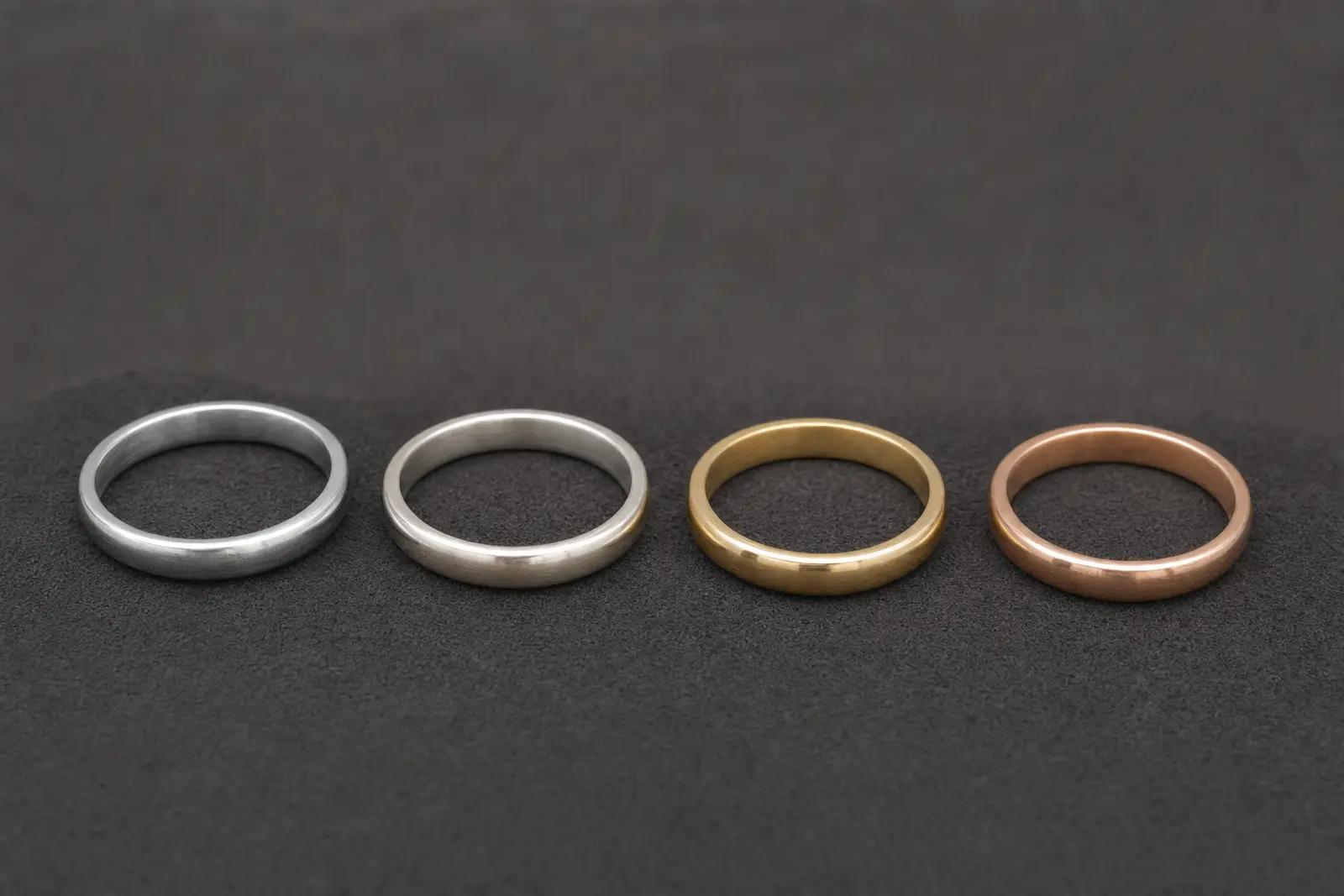
Platinum, white gold, yellow gold and rose gold behave differently in ways that matter well beyond colour: density, hardness, how each ages, and how each holds a stone securely over decades all point toward a genuinely informed choice rather than a purely aesthetic one.
Platinum 950
Platinum sold for fine jewellery is typically 950, meaning ninety-five percent pure platinum alloyed with a small amount of other metal. It is dense, noticeably heavier than gold for the same ring size, naturally white so it never needs plating, and gentle on almost every skin, including sensitive ones. Over years it develops a soft surface patina some people love and others prefer polished back to a bright finish at a service visit. Its real practical advantage is at the prong tip: platinum wears away far more slowly than gold, which means it holds a stone securely for far longer between checks, a genuine consideration for a ring meant to last generations.
18 carat and 9 carat gold, as sold in South Africa
Eighteen carat gold is seventy-five percent pure gold, alloyed with other metals such as copper, silver or palladium depending on the colour required, giving a warm, substantial glow at a real cost in softness compared with platinum. Nine carat gold, thirty-seven and a half percent pure gold, is harder and less expensive, and it is widely sold across South Africa. For a fine engagement ring meant for daily wear over decades, eighteen carat is the more common choice locally, because it strikes a better balance between genuine gold content and durability than nine carat does.
White gold and rhodium plating
White gold starts as yellow gold alloyed to a pale colour, then plated with rhodium for the bright white finish most people expect. That plating wears, typically over roughly twelve to eighteen months of daily wear, and needs redoing to keep its brightness; underneath, the metal shows a warmer, slightly greyish tone once the plating has worn through. This is worth knowing before choosing white gold over platinum purely for the look, since the two start out similar and diverge with age unless the plating is maintained.
Yellow and rose gold
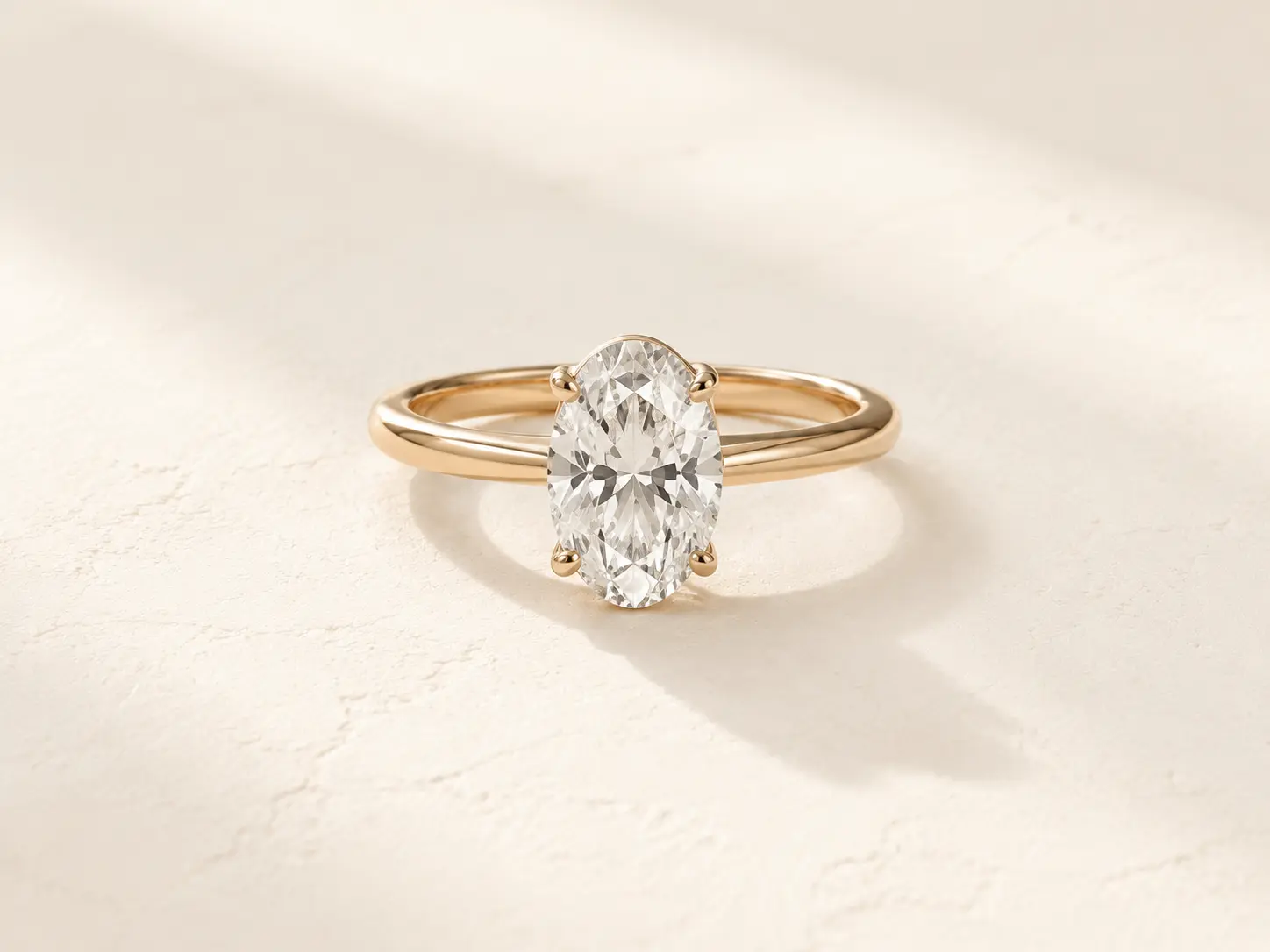
Yellow gold is the traditional South African choice and is firmly back in fashion after years of white gold dominating. It flatters warmer skin tones and, usefully, flatters a lower colour grade of diamond, since the warm metal lends the stone a colour reference that makes a whiter grade less necessary. Rose gold takes its pink tone from a higher proportion of copper in the alloy, which also makes it slightly harder than plain yellow or white gold of the same carat. It ages into a deeper hue as the copper in its surface reacts gently over years, and polishes back easily at a service visit.
Skin tone, allergies and mixing metals
Cooler undertones generally suit platinum or white gold, and warmer undertones generally suit yellow or rose gold, though this is a tendency worth checking against the actual hand rather than assumed. Johannesburg's bright highveld daylight shows a metal's true tone differently to indoor light, so it is worth looking at a sample in both before deciding.
Most reactions blamed on gold are actually reactions to nickel, sometimes used in white gold alloys or in cheaper plated base-metal jewellery, rather than to gold itself. Platinum and nickel-free gold alloys solve this for almost everyone with a known sensitivity, and it is worth mentioning at the consultation so the right alloy is used from the start.
Wearing platinum and gold rings together, on the same or different hands, is visually fine, but the hardness difference still applies: worn hard against each other for years, the softer ring wears first. Matching the metal across an engagement ring and its wedding band avoids that, or it can be accepted as a known, minor trade for two rings that otherwise suit their wearer better separately.
Everyday cleaning and maintenance, by metal
Platinum tolerates the most neglect: a warm soapy soak and a soft brush keep it presentable for years, and the patina it picks up is a finish choice rather than a fault. Eighteen and nine carat gold benefit from the same gentle routine but show scuffs sooner, so a light professional polish every couple of years keeps the surface even rather than dulled in patches. White gold is the one that genuinely needs a diary reminder, since the rhodium layer is doing the visible work and its wear is not always obvious until the warmer tone underneath starts to show through.
- Platinum 950
- Densest, most hypoallergenic, needs no plating, holds a stone longest
- 18 carat gold
- The common South African choice for a fine ring; softer than platinum
- 9 carat gold
- Harder and less expensive; less gold content and less substantial feel
- White gold
- Bright, but relies on rhodium plating that wears and needs redoing
No metal is objectively better. Each one asks something different of a hand, and the honest answer is to hold all four against the skin before choosing.
Is platinum always more expensive than gold?
Not automatically. Platinum's density means a ring of a given size uses more metal by weight than the same ring in gold, which pushes its cost up, but the purity and alloy content of the specific gold being compared matters just as much. An eighteen carat gold ring with a substantial, heavy design can cost close to a comparable platinum piece. Compare like with like at the quote stage rather than assuming either metal is cheaper by default.
Does nine carat gold wear out faster than eighteen carat?
It scratches and dulls faster because it contains less pure gold and more of the harder base-metal alloy, though that same hardness also makes it more resistant to bending out of shape. For a ring worn daily for decades, eighteen carat generally ages better and keeps its colour more faithfully. Nine carat remains a reasonable, lower-cost choice for a ring that will see gentler wear or be worn less often.