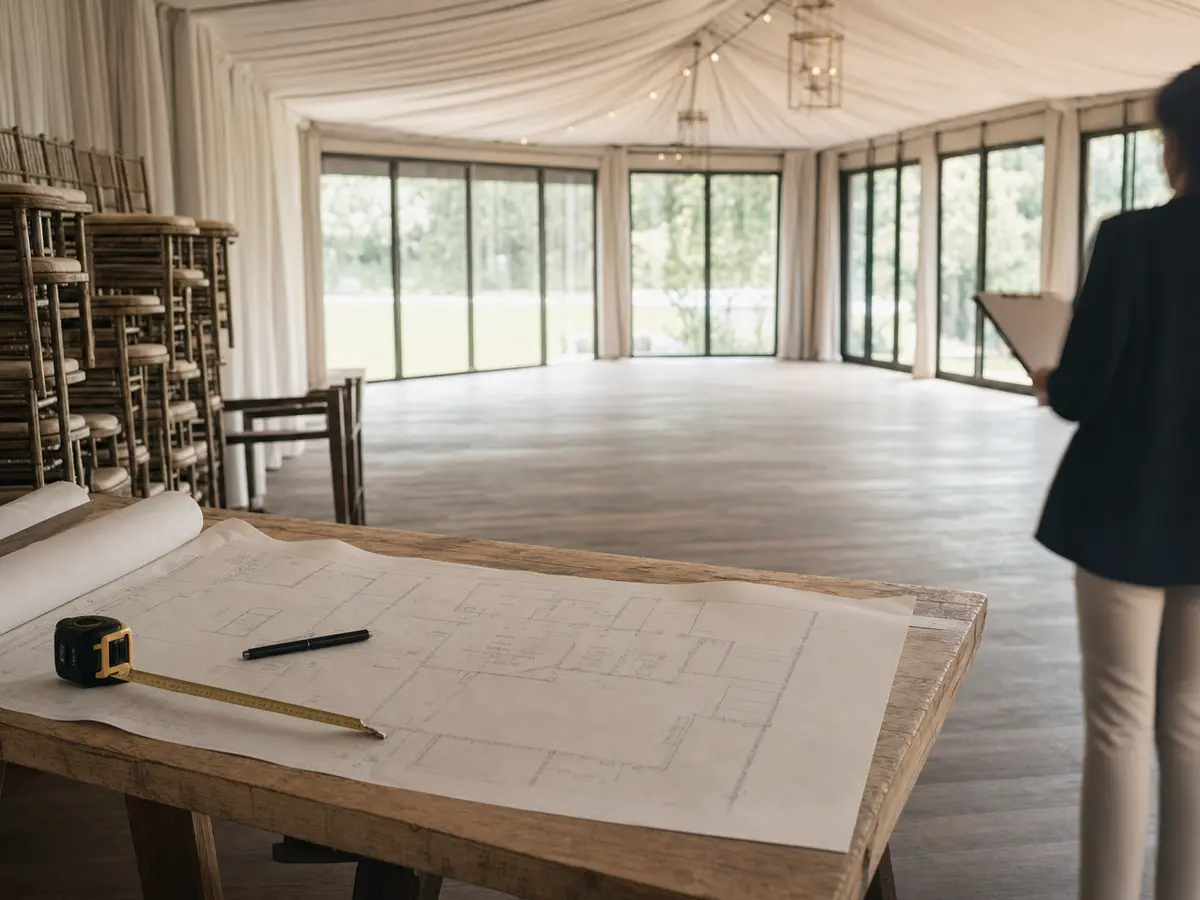
A wedding budget only works once it has an order to it: decide roughly how many people first, let the venue and catering set the scale of everything else, and build in room for the costs nobody remembers to plan for.
Guest number before rand figures
The single decision that moves every other number is how many people you are inviting. A budget built around a figure before the guest list is settled tends to be wrong in both directions: too generous for a small wedding, badly short for a large one. Settle a rough range with both families before pricing anything seriously, and treat that range as provisional until the venue and catering quotes come back and tell you what it actually costs to feed and seat that many people properly.
Where the money usually goes
Every wedding is different, but the shape of the spending is fairly consistent. The venue and catering together usually take the largest single share of the budget, often close to half once drinks are included. Photography and video are the next meaningful block, followed by attire for the couple, flowers and decor, entertainment, and stationery and gifts, in roughly that order of size. Transport, hair and makeup, and the smaller extras add up faster than they look like they should on their own.
- Venue and catering
- Usually the largest share of the total
- Photography and video
- The next largest block for most couples
- Attire, flowers and decor
- A meaningful but smaller share each
- Everything else
- Adds up faster in total than any single line suggests
The venue sets the budget more than any other choice
Choosing the venue before the rest of the budget is finalised is not backwards; it is usually the right order, because the venue's hire fee, catering minimum and any exclusivity terms decide how much is left for everything else. Two venues at a similar hire fee can leave very different amounts once catering, corkage and service charges are added, so ask for a full, itemised quote before comparing them on price alone.
Contingency, and reading a VAT-inclusive quote properly
Set aside a contingency line from the start rather than treating it as whatever is left over. Many experienced planners work with something in the region of a tenth of the total, held back and genuinely unspent until it is needed, because something in almost every wedding costs more than the first quote suggested. When you compare quotes, check whether the figure shown is VAT-inclusive; a final South African quote should show pricing inclusive of VAT, but early estimates are not always presented that way, and the difference matters once you are comparing several suppliers against each other.
What families contribute, and how to have that conversation
If a parent or family offers to contribute, have the conversation about amount and expectations early and directly rather than assuming the offer is open-ended. It is a reasonable question to ask what the contribution is intended to cover, and a reasonable answer if a family would rather give a fixed sum than fund whatever the total turns out to be. Written down, even informally, a contribution is easier for everyone once the planning gets busy, and it removes the awkwardness of either side guessing what the other still expects.
Tracking it without it becoming a second job
A single shared spreadsheet, updated after every deposit rather than in one sitting at the end, is normally enough. Track what has been quoted, what has been paid as a deposit, and what is still owed and when, since deposit dates are the detail most easily missed once several suppliers are involved. A short weekly check-in between the two of you, five minutes rather than an hour, keeps the spreadsheet honest without either of you dreading it.
The budget that holds together is rarely the cleverest one. It is the one with a contingency line nobody has been tempted to spend early.
How much of a wedding budget should go to the venue and catering?
It varies by wedding, but the venue and catering together are almost always the largest share of the total, frequently close to half once drinks are included. It is worth treating this as the category to settle first rather than last, because the venue's terms, minimum numbers, corkage and service charges shape how much is realistically left for photography, flowers, attire and everything else.
Should we build in a contingency, and how much?
Yes, and it is easier to hold that line from the beginning than to find it later. Many experienced planners work with something in the region of a tenth of the total set aside and genuinely left unspent until needed. Something in almost every wedding costs more than the first quote suggested, a weather backup, an extra hire item, a last-minute guest, and a contingency line means that cost does not have to come out of another category.
Are wedding quotes in South Africa usually VAT-inclusive?
A final, formal quote from a registered supplier should show pricing inclusive of VAT, presently 15 percent, though the rate itself is set by legislation and can change over time. Early estimates and verbal figures are sometimes given exclusive of VAT, which can make one supplier look cheaper than another until the final invoice arrives. Ask directly whether a quote is VAT-inclusive before comparing it against another.
What should we do if the budget runs over partway through planning?
Go back to the categories rather than panicking about the total: decide together which line still matters most and which can be trimmed without changing the day you actually wanted. A guest-list reduction, a simpler flower brief, or a shorter band set are usually less painful in practice than they sound in the abstract. Revisit the contingency line first, since it exists precisely for a moment like this, and only dip into other categories once that is genuinely used up.