Cufflinks are decided by the shirt before they are decided by taste: a shirt without French or double cuffs cannot take them at all, and that single fact rules out more options than any style preference does.
Start with the shirt
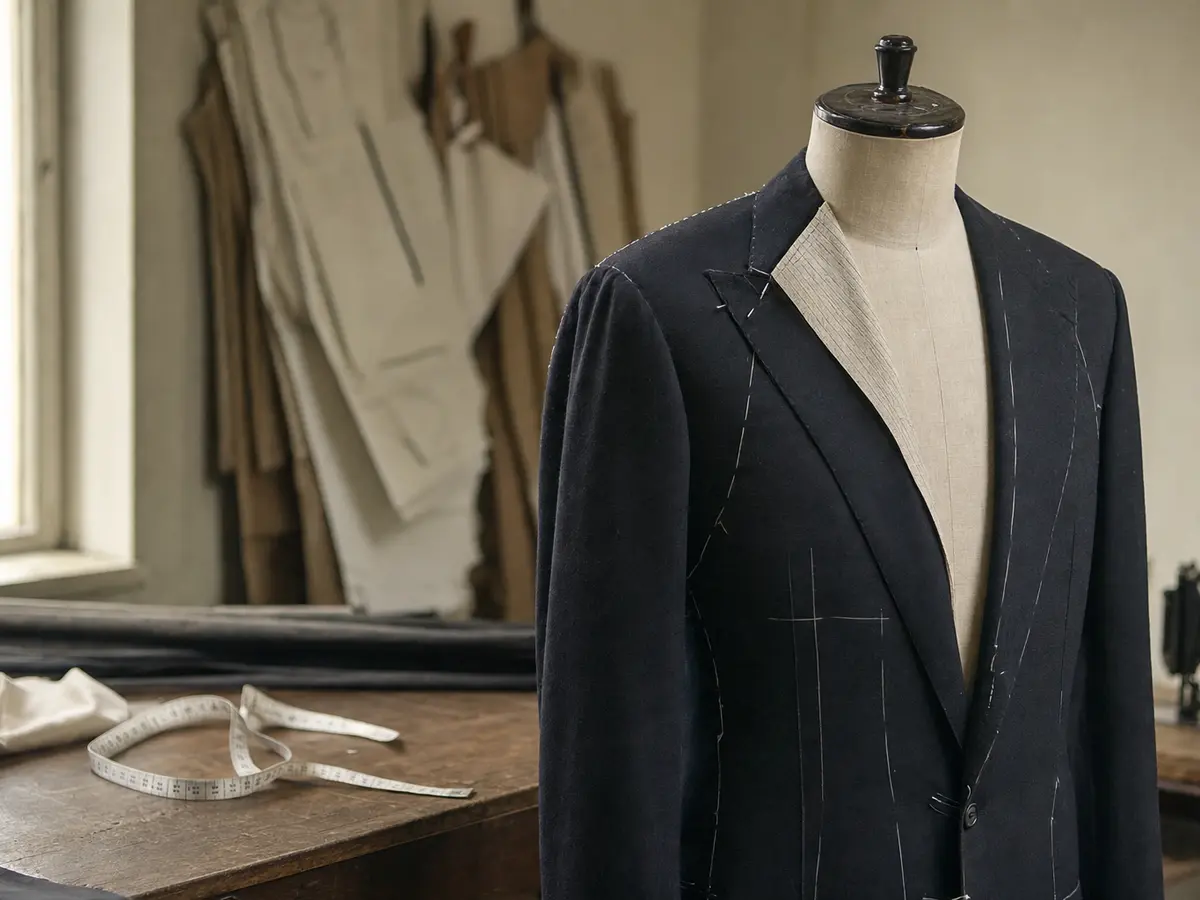
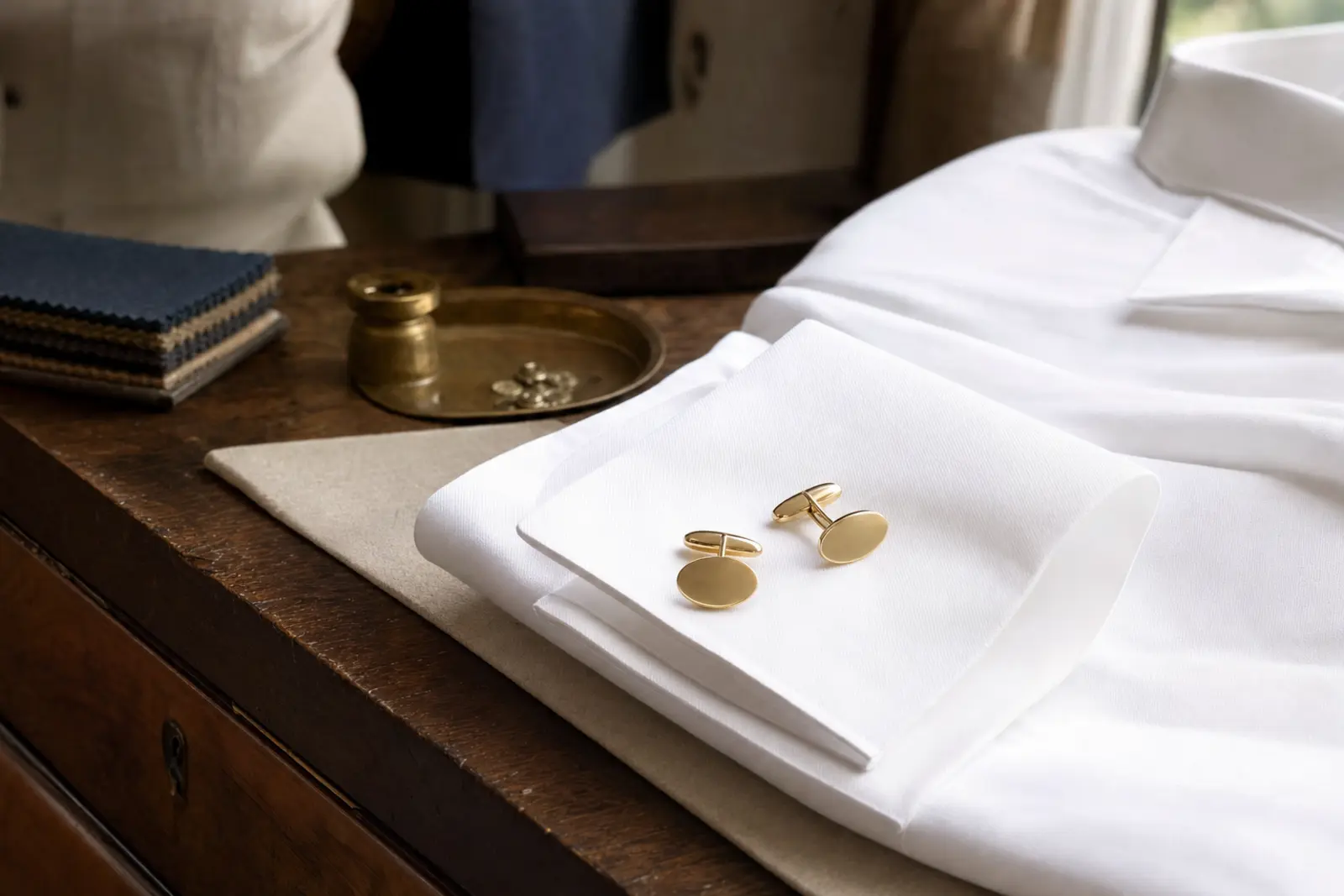
A French or double cuff folds back on itself and fastens with a link rather than a button, which means it needs paired buttonholes on each side rather than the single hole an ordinary cuff has. Confirm the actual wedding shirt has this before choosing cufflinks; some shirts marketed as suited to cufflinks still have a hidden button rather than true holes, and a swivel-back link will not sit properly in one. A tailor or the suit fitting is the place to confirm this, well before the cufflinks themselves are chosen.
Metal against the ring and the watch
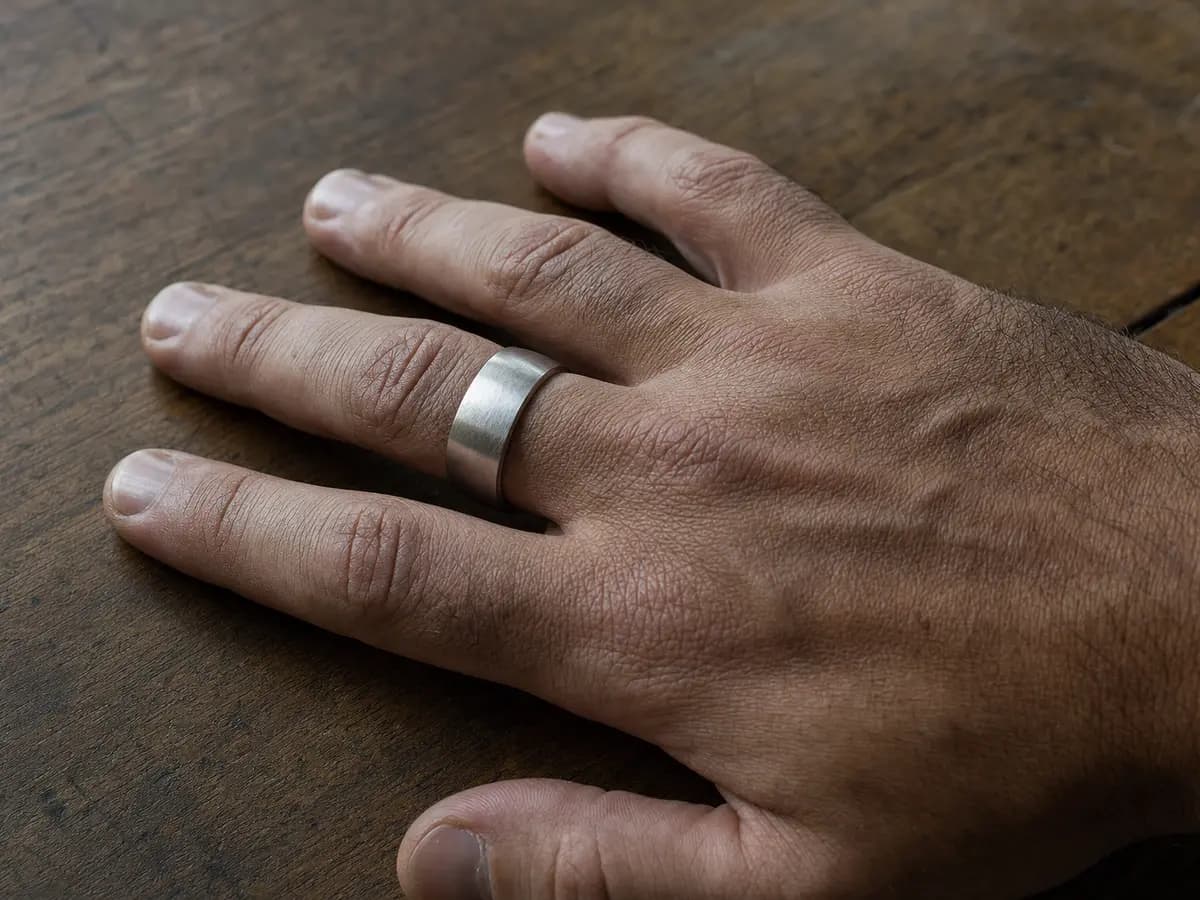
Match the cufflinks to the wedding band's metal, and to the watch case if one is worn that day, so the metal tones do not clash across the hand and wrist in photographs. They do not need to be an identical finish or brand, only the same family: warm gold tones together, or cool platinum and steel tones together. A mixed metal day is not a disaster, but it is one more thing to notice in a photograph if it was not intentional.
Plain, engraved, stone-set and heirloom cufflinks
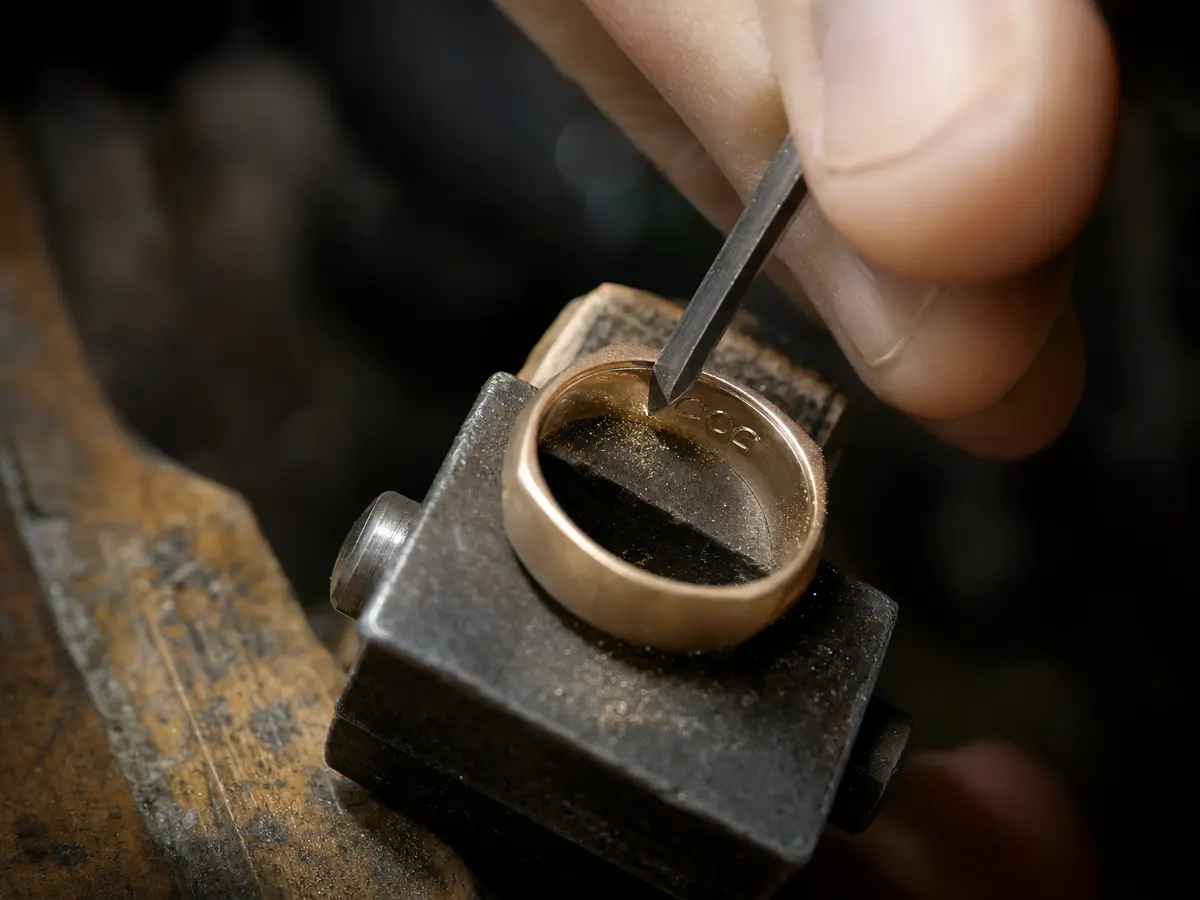
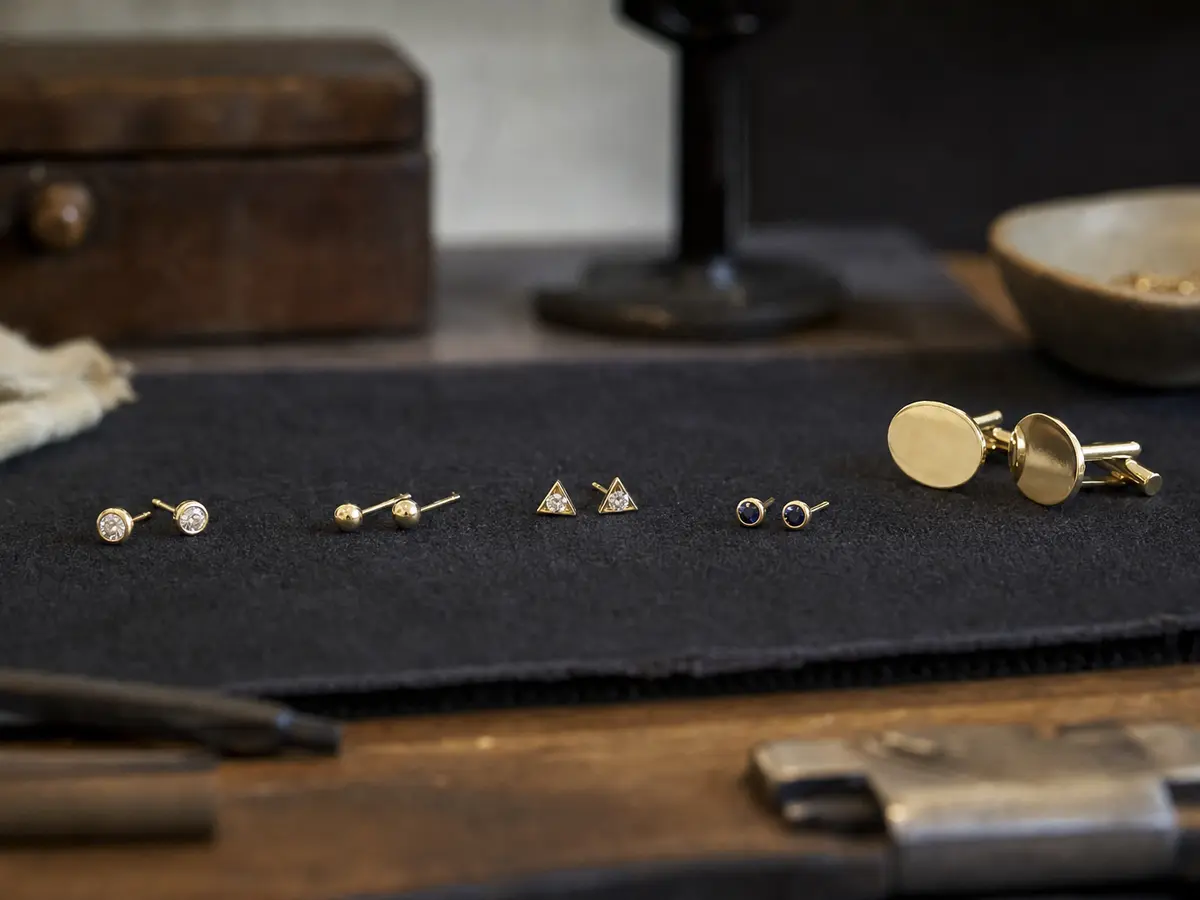
A plain oval or bar-link cufflink is the safest and most versatile choice, and works with almost any suit long after the wedding. Engraved cufflinks, initials, a date or a short line on the reverse, personalise a plain pair without adding the cost of stones. Stone-set cufflinks, onyx, mother-of-pearl or a small flush-set sapphire, add colour without being loud. Heirloom cufflinks, a father's or grandfather's, are a common and genuinely meaningful choice, and a jeweller can clean, reset or lightly refresh an older pair so they are ready for the day.
A gift from the bride or the family
Cufflinks are a common gift from the bride to the groom on the wedding morning, or from a parent to a son. If they are meant as a surprise, confirm his cuff style and general taste discreetly beforehand rather than guessing; a groomsman or best man is usually a reliable source for that without giving anything away.
Keeping them afterwards
Unlike some wedding-day pieces, cufflinks tend to keep being worn at other formal occasions afterwards, so it is worth choosing something he would reach for on his own rather than something purely ceremonial. A restrained, well-made pair earns its place in the drawer for years, which is more than can be said for most single-day purchases. A pair kept only for the wedding, in a box that is never opened again, is a common but avoidable outcome; wear them again soon after, to any formal event, so they become simply part of what he owns rather than a relic of one day specifically.
- Confirm the wedding shirt has genuine French or double cuffs before choosing cufflinks.
- Match the metal to the wedding band and the watch, if one is worn.
- Decide plain, engraved, stone-set or heirloom based on what he will wear again.
- If gifting as a surprise, confirm his cuff style discreetly beforehand.
- Choose a pair restrained enough to suit a suit he already owns, not only the wedding one.
Can cufflinks be worn without a full suit?
Yes, as long as the shirt has proper French or double cuffs, which fold back and fasten with a link rather than a button. Plenty of grooms wear cufflinks with a waistcoat and no jacket, or with the jacket off later in the evening, and the cufflinks read just as well either way. The one thing to check in advance is that the specific shirt being worn on the day genuinely has the cuff style cufflinks need, since not every shirt sold as formal actually does.
What if there are no family cufflinks to inherit?
A new pair, chosen with the intention of it becoming the next generation's heirloom, is a perfectly honest answer, and plenty of grooms start exactly that way. Choose something restrained enough to still look right in twenty years rather than closely tied to current fashion, and keep any engraving details recorded so the story is not lost the way it sometimes is with older pieces that arrive without one.
Do a groom's cufflinks need to match his groomsmen's?
No, and many grooms deliberately choose something slightly different to mark the day: a better metal, a small stone, or an engraved detail the groomsmen's plainer pair does not have. If you would rather everyone matched, that is a perfectly good choice too. There is no tradition requiring either approach, so decide based on whether you want the groom's role visually distinguished at all, rather than following a rule.