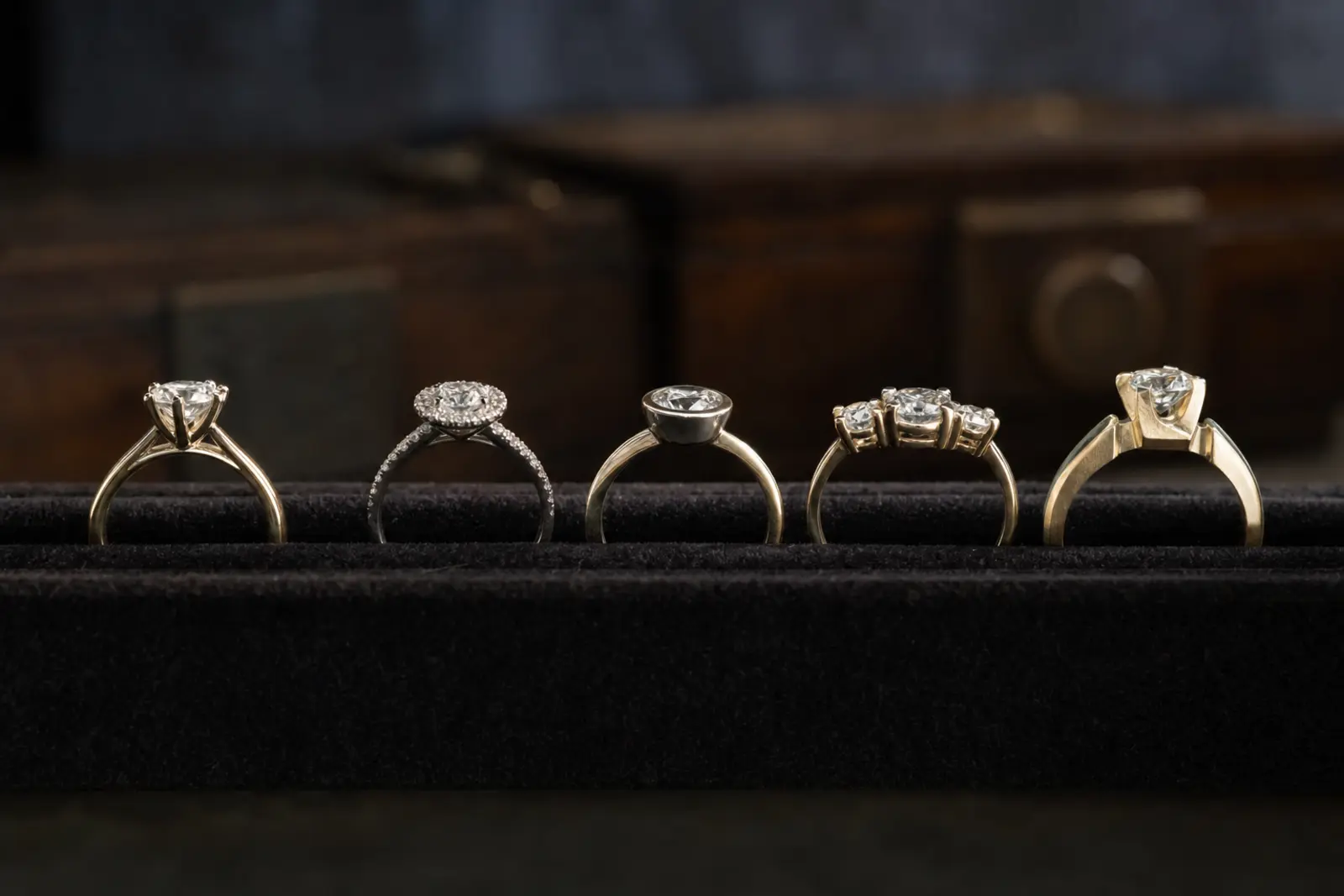
Every engagement-ring style is answering the same four practical questions in a different way: how much light reaches the stone, how securely it is held, how far it sits off the finger, and how it survives what her hand does every day. Once you can read a setting for those four things, the name matters far less than what it does.
Solitaire, halo and hidden halo
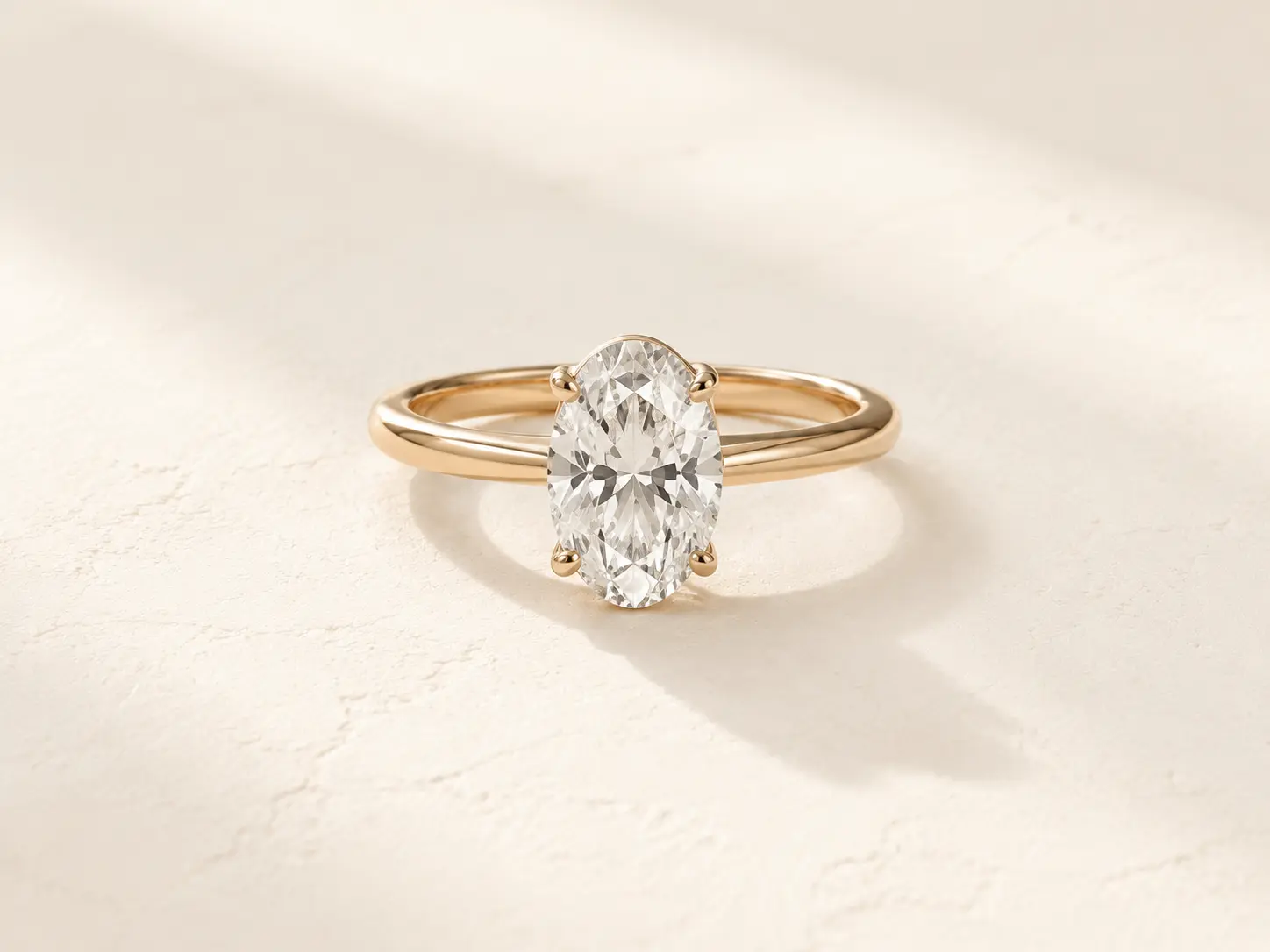
A solitaire is a single stone raised on prongs, usually four or six, with nothing beside it. It is the setting that lets the most light into a stone because the least metal is in the way, and it is the reference point everything else is measured against.
A halo circles the centre stone with a ring of smaller ones, which spreads light outward and makes the whole head read larger than the centre stone alone. It also adds width and more surfaces for a sleeve or a glove to catch on. A hidden halo sits underneath the centre stone rather than around it, invisible from directly above and only visible from the side, which keeps a clean top view while still throwing extra light from an angle. It is a little more delicate at the join than a plain solitaire and worth checking at the same interval as any other prong work.
Three-stone, cluster and east-west
A three-stone ring sets a centre stone between two smaller side stones. The side stones need to be proportioned deliberately: too small and they read as an afterthought, too large and they compete with the centre rather than supporting it.
A cluster groups several smaller stones so they read as one larger shape from across a room, which is a genuine way to buy presence without paying for a larger single centre stone. It has more prongs to check over the years than a solitaire, simply because there are more stones. East-west sets the stone sideways along the finger instead of up it, most often with an oval, marquise or pear. It reads as distinctive rather than classic, and because it is less usual, a jeweller matching a band to it later needs the actual ring in front of them rather than a photograph.
Bezel, half bezel, pavé and channel
- Bezel: a rim of metal wraps fully around the girdle. The most secure setting there is, it protects the most vulnerable edge of the stone, and it quietens the outline slightly in exchange.
- Half bezel: metal on two sides, open on the others. The compromise most people choose once they see it beside a full bezel and a plain solitaire.
- Pavé: small stones set close together along the band with tiny beads of metal holding each one. Adds sparkle without a second centrepiece, and the beads wear over decades and occasionally need re-tipping.
- Channel: stones set edge to edge between two metal walls with no visible prongs at all. The smoothest setting to wear against gloves or tools, and the hardest to clean underneath.
Cathedral, trellis and basket: what lifts the stone
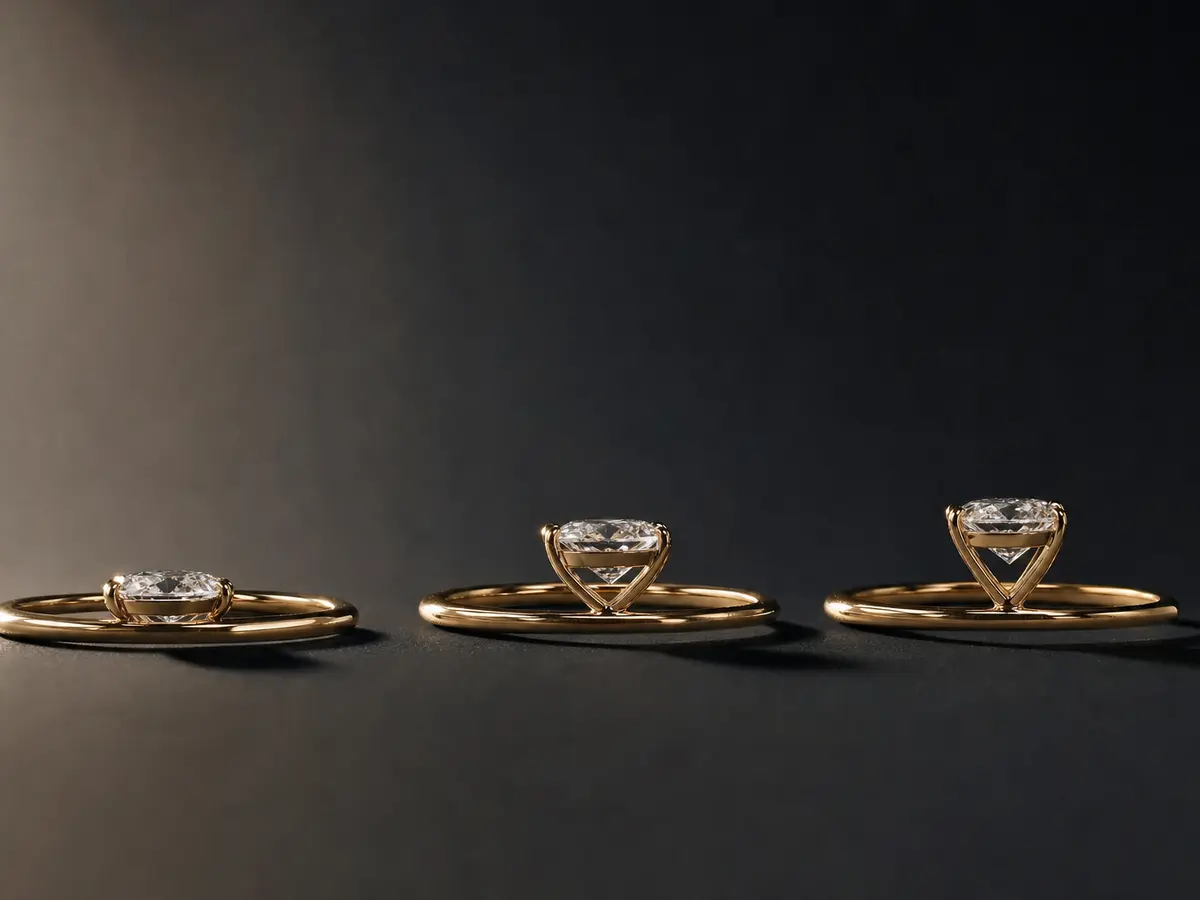
The basket is the small cage of metal, usually four to eight fine prongs at its base, that actually cradles the stone from underneath. It can be built low or high independent of everything above it, and it is the single biggest lever on profile height.
A cathedral setting arches metal up from the shank to lift that basket into more light, which reads as elegant and sits noticeably higher off the finger. A trellis crosses two or more arches beneath the head in a similar, slightly more decorative way. Both add a small amount of height and a small amount of extra surface to catch a jersey sleeve, which is worth knowing before choosing one for a hand that works hard.
Tension, and vintage or old-cut styles
A tension setting holds the stone by pressure between the two ends of the band, with no visible prongs at all, so the stone appears to float. It is dramatic and it comes with a genuine limitation: because resizing changes the pressure holding the stone, most tension settings cannot be resized once made, and repair is a specialist job. Anyone choosing one should be certain of the size first.
Vintage and old-cut styles borrow facet patterns from antique stones, most often the old European or old mine cut, which have smaller tables and higher crowns than a modern round brilliant. They throw warmer, softer flashes of light rather than the sharper white brilliance a modern cut is built for, and they are often paired with milgrain edging or open filigree work, both of which are more delicate to clean and worth a gentler hand at home.
There is no single best setting. There is only the one that matches how this particular hand lives, and that is worth deciding before the stone is chosen.
- Solitaire
- Most light, least security; six prongs is the safer choice above a carat
- Halo
- Reads larger, adds surface area that can catch on knitwear
- Bezel or half bezel
- The most secure and the quietest outline, at a small cost to light
- Tension
- Dramatic, and generally not resizable once it is made
Which setting is the most durable for daily wear?
A bezel or half bezel, by a clear margin, because there is no thin prong tip to catch or wear away. A channel-set band is a close second for anyone whose hands do heavy manual work, since there is nothing raised to snag. A well made six-prong solitaire is still a sound everyday choice; it simply needs the prongs checked every couple of years, which is true of any prong setting and not a reason to avoid one.
Can a halo be added to a solitaire later?
Sometimes, but it is rarely the right way to get there. A halo is designed into the head's proportions from the start, and adding one afterwards to a basket that was never sized for it usually looks fitted rather than intended. A hidden halo is a little easier to add later because it sits underneath and does not touch the visible outline. If a halo might be wanted eventually, say so at the design stage rather than after the ring is finished.