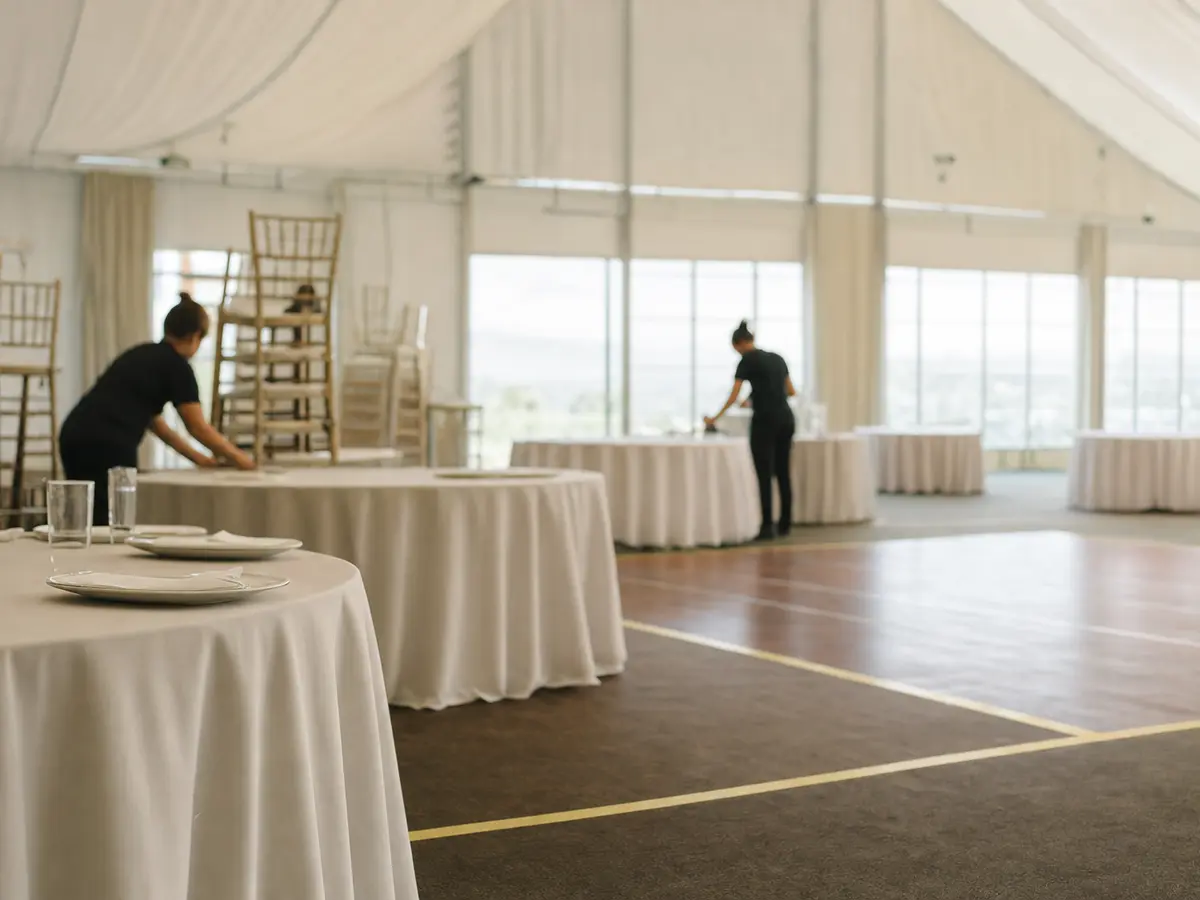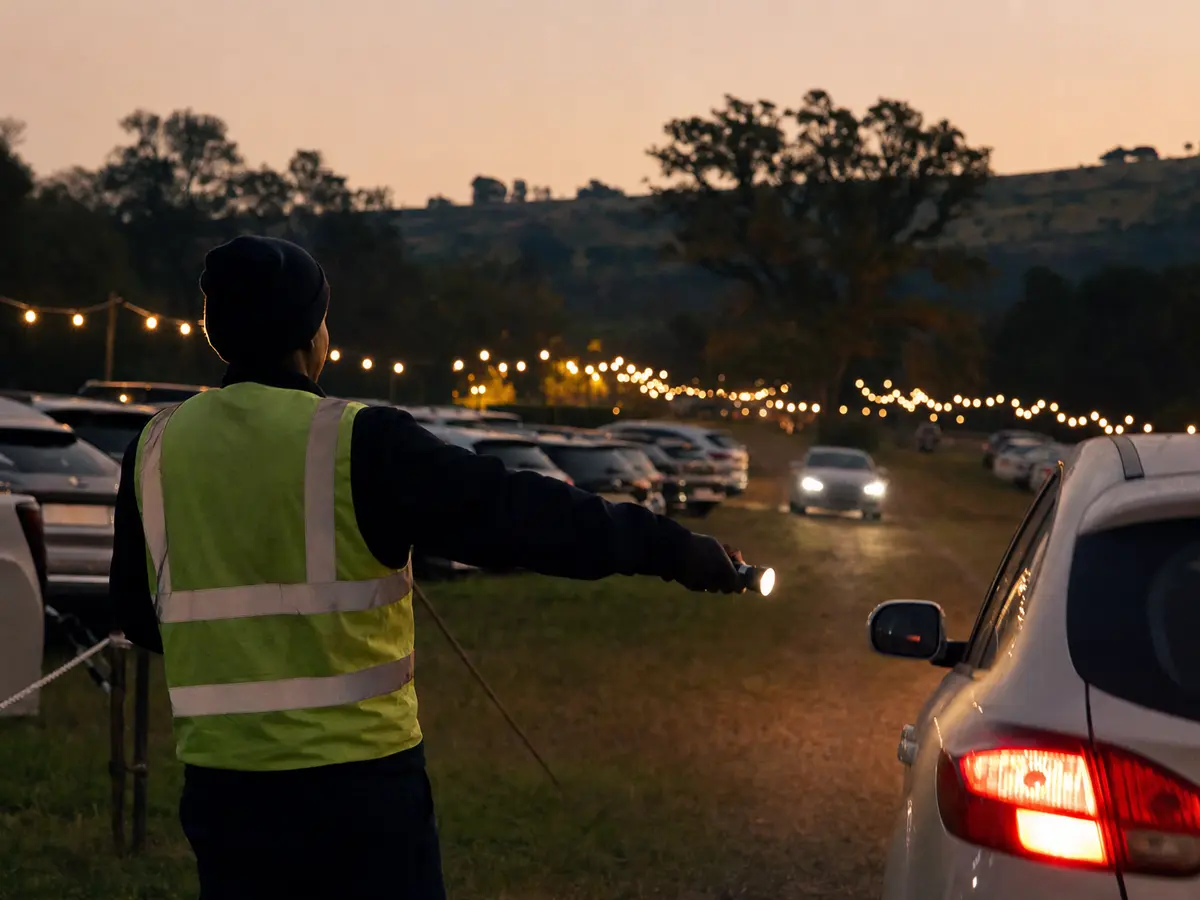
Assessing whether a venue works for every guest means walking it with specific people in mind, not forming a general impression of how it looks. Steps, gravel, distance and seating each matter to a different guest for a different reason.
Steps, gravel and the ground itself
Note every set of steps between the parking area, the ceremony, the reception and the toilets, and ask whether a ramp or a level alternative route exists for each one. Gravel, loose stone and uneven lawn are easy to walk across casually and much harder to manage with a cane, a walker or wheels, so walk the actual surface rather than assuming a garden setting is automatically fine.
Distances between the parts of the day
A venue where the ceremony, the reception and the toilets are close together asks far less of guests with limited mobility than one where they are spread across a large property. Ask about the distances in general terms and about whether transport such as a golf cart is available for guests who need it, and check specifically that an accessible toilet exists and is not a significant walk from the reception space.
Seating, lighting and sound
Ask whether seating is available near the front or at the edges for guests who cannot stand for a long ceremony, and whether chairs with backs and arms can be provided rather than only benches or hired chairs without support. Ask about the sound system, since a ceremony held outdoors with a single speaker can be genuinely hard to follow for a guest with reduced hearing, and check the lighting plan for the walk back to the car once it is dark.
Dietary and medical needs
Accessibility is not only about the physical space. Ask the caterer, separately from the venue, how allergies and medical dietary needs such as diabetes are handled, since a buffet with unclear labelling is harder for a guest managing a medical condition than a plated meal where each course is known in advance. If a guest carries medication that needs refrigeration or a specific storage temperature, check with the venue whether the kitchen or a staffed area can accommodate that rather than leaving it to the guest to manage alone.
- Walk the full route from parking to ceremony to reception to the toilets in person.
- Note every step and every stretch of gravel or uneven ground, and ask about alternatives.
- Confirm an accessible toilet exists and is not a long walk from the reception.
- Ask about seating with backs and arms for guests who cannot stand for long.
- Ask the caterer how allergies and medical dietary needs are labelled and handled.
- Ask specific guests what they need, rather than deciding on their behalf.
The most reliable source on what a guest needs is that guest, asked directly and early, not a general accessibility checklist applied on their behalf.
How do I ask elderly relatives what they need without making it awkward?
A short, practical question usually lands better than a general one. Rather than asking whether they have any accessibility needs, ask something specific: whether they are comfortable walking on gravel, whether they would prefer a seat near the front, or whether they would find a long ceremony tiring while standing. Most people answer a direct, practical question more easily than an open-ended one about their limitations.
What should we check for guests bringing small children?
Look for shade, somewhere quiet nearby for a child who needs a break from the noise or the crowd, and a bathroom that is not a long walk from the reception. Ask the venue whether prams can manage the same paths guests will walk, and if the ceremony runs long, consider whether a slightly later start or a shorter ceremony would help families with very young children.
How do we make a ceremony easier to follow for a guest with reduced hearing?
Ask the venue about the sound system in specific terms rather than assuming a microphone is enough: whether speakers are placed so sound reaches the back rows evenly, and whether the officiant and readers will be close enough to a microphone to be heard clearly outdoors. Where a guest has told you hearing is a concern, seating them nearer the front, away from any background noise such as wind or traffic, usually helps more than any technical fix on its own.