South Africa's wedding calendar has its own rhythm: two busy seasons either side of winter, a December that empties out for weeks at a time, and a few local realities, load-shedding among them, that a generic wedding timeline never accounts for.
Twelve months out
This is when the venue and the date get decided, since both drive everything that follows. If the date falls inside March to May or September to November, South Africa's two most popular wedding windows, book earlier rather than later; good venues and suppliers in those months are often booked a year or more ahead. This is also the point to start on anything with a genuinely long lead time: a wedding dress from an atelier, a marriage officer for a specific date, and, if the ring is not yet sorted, the ring itself. A date chosen without checking it against public holidays and school terms can also quietly work against you, since both affect flight prices and accommodation availability for guests travelling from another city.
Nine months out
With the venue confirmed, book the suppliers whose calendars fill first: photographer, caterer if the venue does not provide one, and a planner if you are using one. This is a sensible point to send save-the-dates, particularly for guests travelling from outside the city or the country, and to start collecting a working guest list rather than a rough number. It is also worth confirming, in writing, exactly what the venue's own booking includes at this stage, since assumptions made verbally in the excitement of signing tend to be the ones that cause disagreement later.
Six months out
Florist, entertainment, hair and makeup, and stationery are usually booked around now. If the wedding falls anywhere near the December shutdown, from mid-December into January, confirm every supplier's actual operating dates now rather than assuming they are open; many small suppliers close for several weeks over this period, and it is one of the most common scheduling mistakes in South African wedding planning. It is also a sensible point to revisit the guest list once RSVPs start arriving, since the working number rarely matches the first estimate exactly.
Three months out
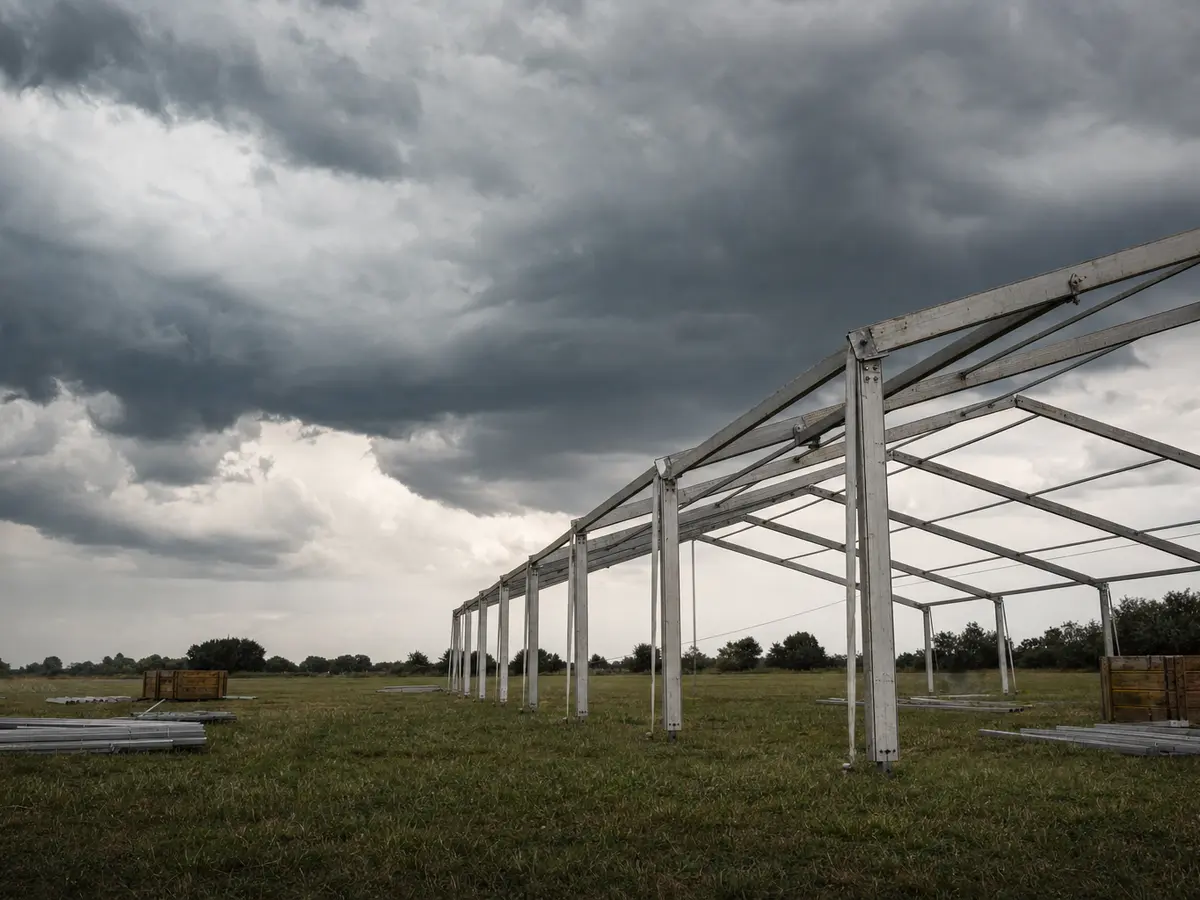
Send invitations, finalise the menu and any catering requirements, and confirm final numbers with the venue. This is also the point to think seriously about weather: if the wedding sits inside the Highveld storm season, roughly October to March, or anywhere the weather is genuinely changeable, confirm the venue's backup plan in writing rather than leaving it as an assumption.
The final month
Confirm every supplier in writing: arrival times, contact numbers, and what happens if a generator or backup plan is needed. Build the day's running order and give it to whoever is coordinating the day, whether that is a hired coordinator or a trusted family member. Load-shedding schedules, where they apply, are worth checking again in this final stretch, since a venue's own backup power is only as good as its fuel supply and its maintenance. This is also the week to reconfirm the weather backup, restock anything that runs on the day, and make sure every driver, from the couple's own transport to any guest shuttle, has the correct address and arrival time.
- Twelve months out: confirm the venue and the date.
- Nine months out: book the photographer, the caterer and a planner if using one.
- Six months out: book the florist, entertainment, hair, makeup and stationery.
- Three months out: send invitations, confirm the menu and the weather backup.
- The final month: confirm every supplier in writing and finalise the running order.
None of this needs to run exactly to schedule. It needs to run roughly in this order, so that the decisions that shape everything else get made before the decisions that depend on them.
Why does the December shutdown matter so much for wedding planning in South Africa?
A large number of South African businesses, including many wedding suppliers, close for an extended break from around mid-December into January. If a wedding falls in or near this window, or if a supplier deadline lands inside it, confirm their actual operating dates directly rather than assuming normal availability. It is one of the most common scheduling surprises in South African wedding planning, and it is entirely avoidable by asking early.
Which months are the busiest for weddings in South Africa?
March to May and September to November are generally the country's two most popular windows, since they sit outside the coldest winter months and the hottest, stormiest part of summer. Venues and in-demand suppliers for these months are often booked a year or more ahead, so if the date matters more than flexibility, start the venue search as early as possible rather than waiting for the twelve-month mark.
How far in advance should we plan around load-shedding?
Treat it as a standing question rather than a single task: ask every relevant supplier, particularly the venue, the caterer and anyone running sound or lighting, what their backup power actually covers and how it is tested. Revisit the question again in the final month before the wedding, since backup arrangements can change and a plan confirmed a year out is worth reconfirming closer to the date.
Is it worth building slack into this timeline, or following it exactly?
Treat every milestone as a deadline to be ahead of rather than a date to hit precisely. Suppliers occasionally need more lead time than expected, a proof takes longer to approve, a fitting has to be rescheduled, and a timeline with no slack turns a small delay into a scramble. Aim to complete each stage a few weeks before the milestone listed here, so the final month is spent confirming rather than still chasing outstanding bookings.