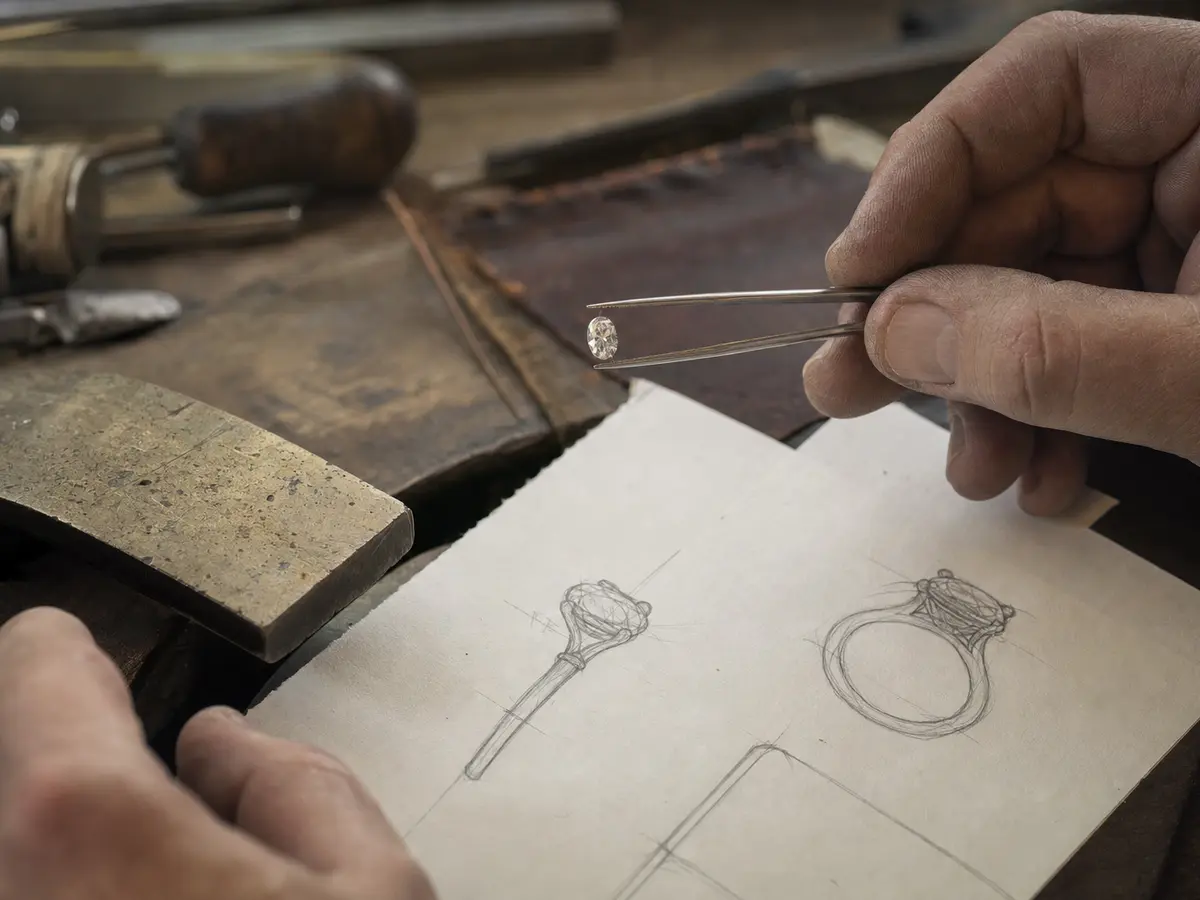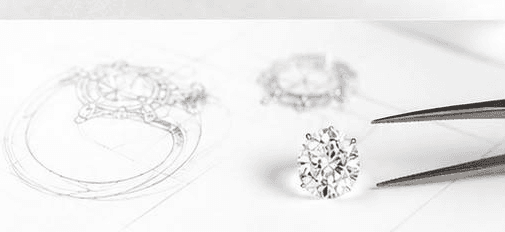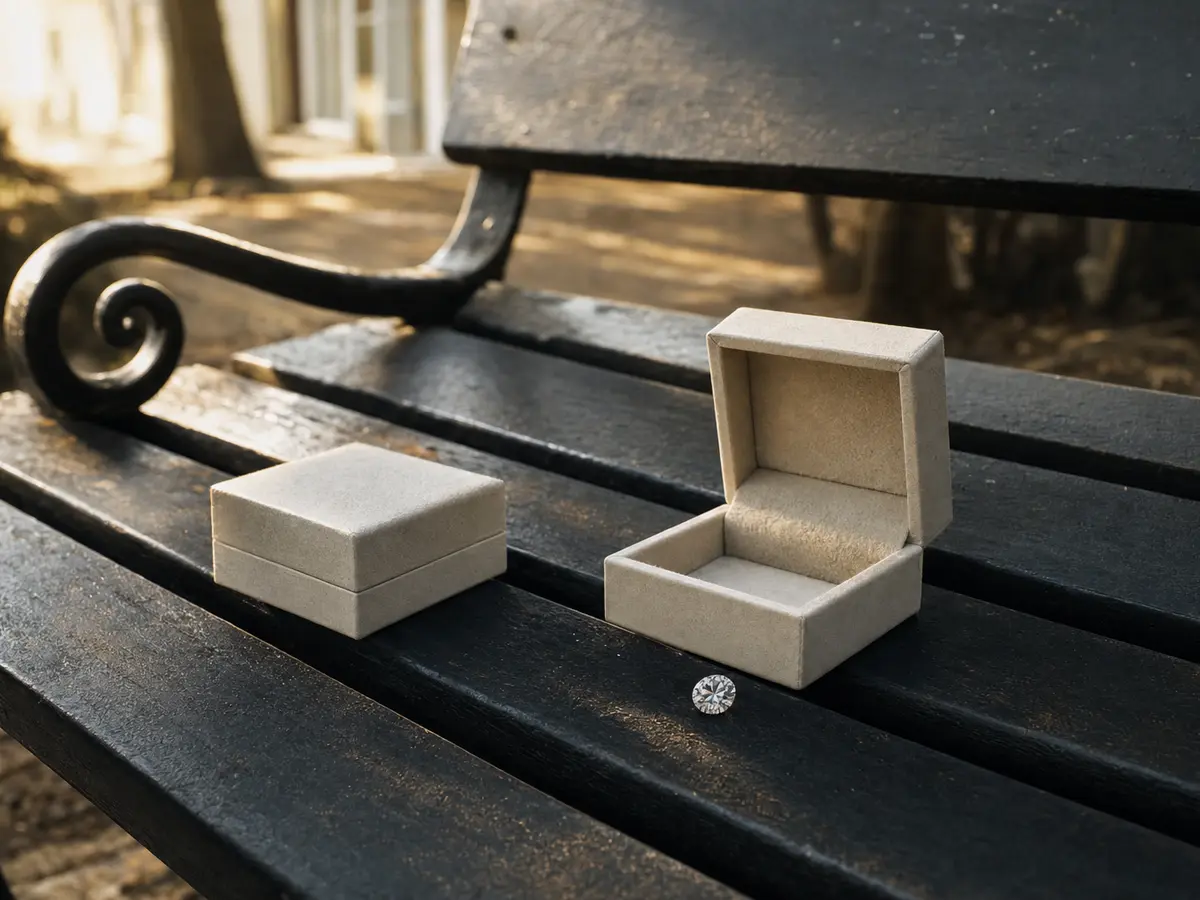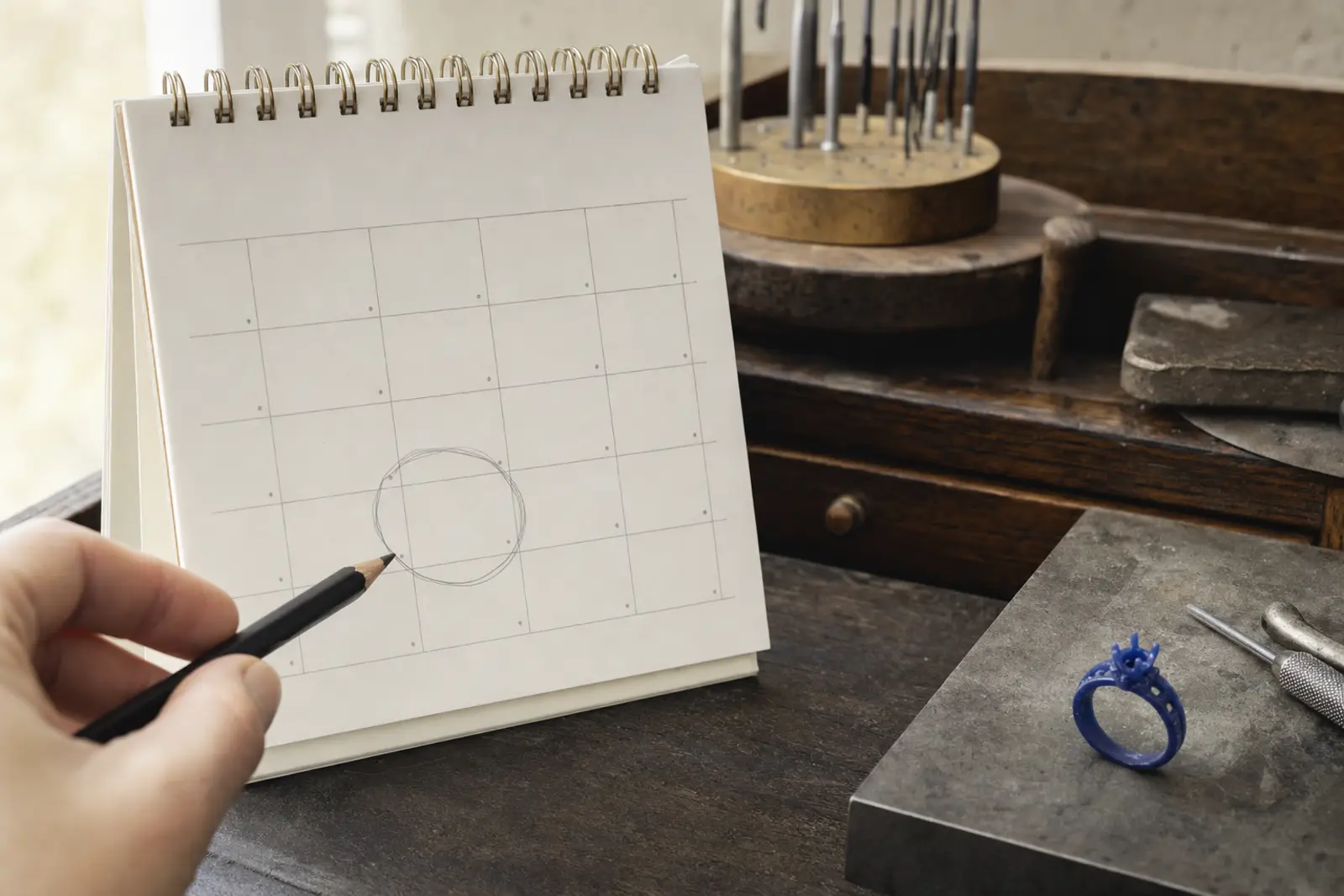
Ask how long an engagement ring takes and the honest answer starts with a different question: what date actually matters, because planning backwards from that date gives a far more useful answer than starting the design and hoping it lands in time.
Work backwards from the date, not forwards from today
If there is a specific moment in mind, a trip, an anniversary, a family gathering, the planning should start there and count backwards, allowing time for design, stone sourcing, making and a final fitting, in that order. Starting instead with 'we will see how long it takes' tends to produce either a rushed final fortnight or a ring finished with nowhere planned to give it.
What shortens a timeline
- Choosing ready-to-wear or a semi-mount rather than a full commission, since most of the time in a commission is spent on design and stone sourcing rather than metalwork.
- Deciding on a stone reasonably quickly once options are shown, rather than extending the search indefinitely.
- Approving a single design round instead of several rounds of revisions.
- Already knowing the ring size with reasonable confidence, so no time is spent guessing or waiting to confirm it.
What lengthens it
- Sourcing a specific rare stone, whether a larger diamond or a fine natural coloured stone, which depends on what genuinely exists in the market at that time, not on studio capacity.
- Several rounds of design revision, each one adding time before anything is made.
- Peak periods, particularly December and the weeks around Valentine's Day, when many commissions are in progress at once.
- A stone sourced from overseas, which adds shipping and customs time on top of the sourcing itself.
Rush work, honestly
A rushed commission is sometimes possible, most often when a strong ready-to-wear or semi-mount option already suits the brief and simply needs sizing. What we will not rush is sourcing the stone itself: a fine stone chosen properly, or a placeholder ring or no ring at all until the real one is ready, is a better outcome than a compromised stone forced into a deadline. A proposal does not need a finished ring to be genuine.
After the ring is finished
Build in time after collection, not just before it. A final fitting confirms the size still feels right once the ring has been worn for a few days, rather than tried on once at the bench. If the proposal is happening away from Johannesburg, whether at the coast, in the bush or overseas, allow a few extra days between collection and travel so there is time to sort insurance and think through how the ring will actually be carried, rather than adding that to an already full week.
- Set the real date, or the real window, before anything else.
- Book the first consultation as soon as the decision to propose is made, not once the design is fully decided.
- Choose ready-made, semi-mount or full commission based on the time actually left, not preference alone.
- Confirm the ring size early, even approximately, so it does not become the thing holding everything else up.
A date does more for a ring's timeline than any amount of hurrying. Give us the real one, as early as possible, and it shapes every decision after it.
How far ahead should I start if I have a specific date in mind?
As early as the date is known, even if the design is not decided yet. The first conversation does not commit you to anything; it simply establishes how much time there is and which path, ready-made, semi-mount or full commission, actually fits it. More lead time buys more choice, particularly around stone sourcing, so an early start is rarely wasted even if the ring itself is finished well ahead of the date.
Can a ring genuinely be rushed for an emergency proposal?
Sometimes, most realistically with a ready-to-wear ring or a semi-mount where a suitable stone is already available. A full commission on very short notice is harder to promise honestly, because stone sourcing does not compress reliably. If the date cannot move, ask directly what is achievable in the time available rather than assuming everything is possible; an honest answer now is more useful than a promise that slips later.