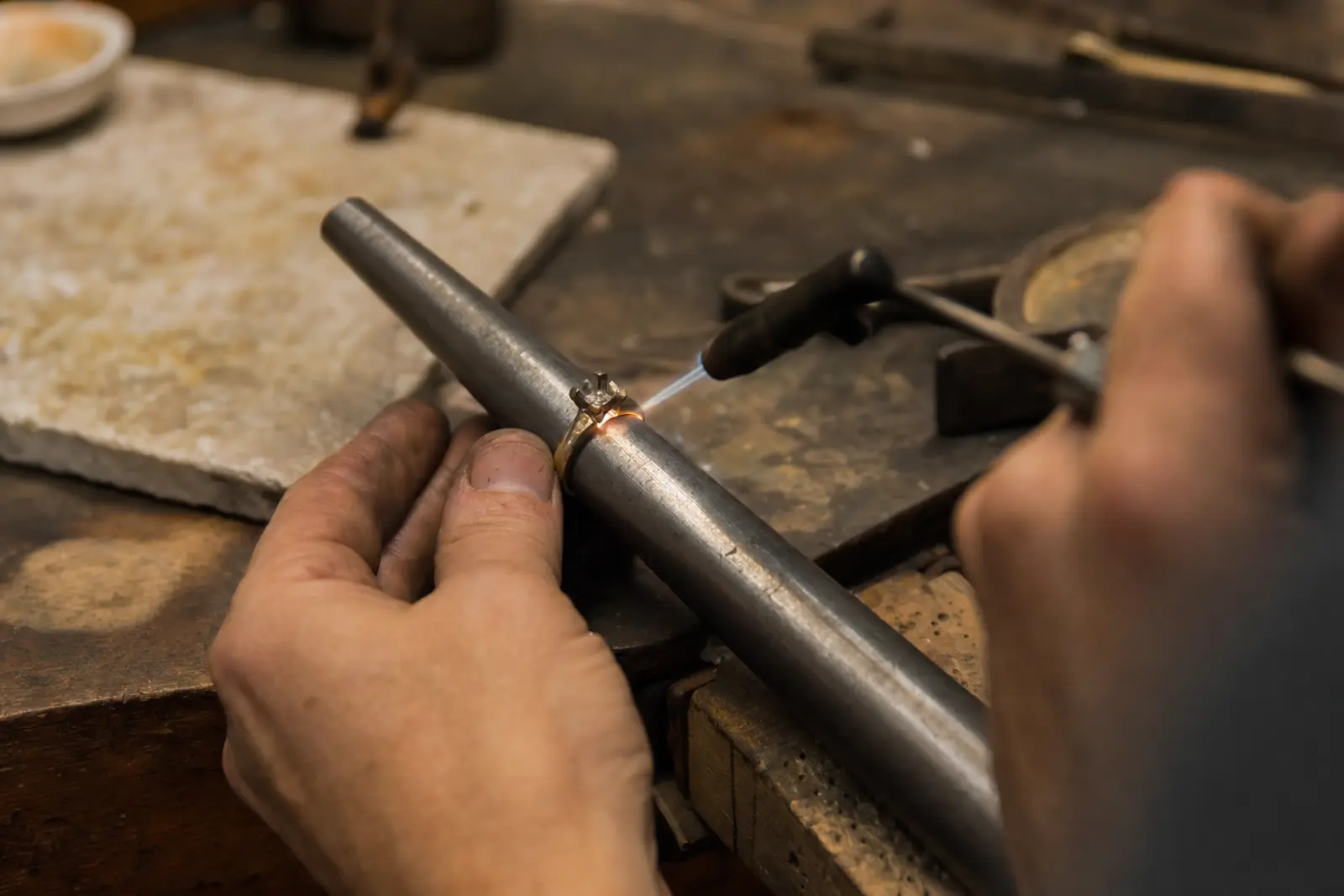
Restoration returns a piece to how it worked and, broadly, how it looked, without changing its design, and that distinction from remodelling, which changes the design on purpose, decides almost everything about how the work should be approached.
Restoration versus remodelling
The two get confused because both happen at the same bench, sometimes on the same piece in the same week. Restoration is conservative by intention: replace what has failed, secure what has loosened, and leave the design exactly as it was. Remodelling is a design decision: change the setting, the shank or the arrangement of stones on purpose. A piece can need both, in which case it helps to agree which parts are restoration and which are remodelling before work starts, so nobody is surprised by a change that was never actually requested.
What restoration usually involves
- Re-tipping prongs that have worn thin enough to risk the stone.
- Replacing a shank that has worn dangerously thin, often on the underside where it rubs.
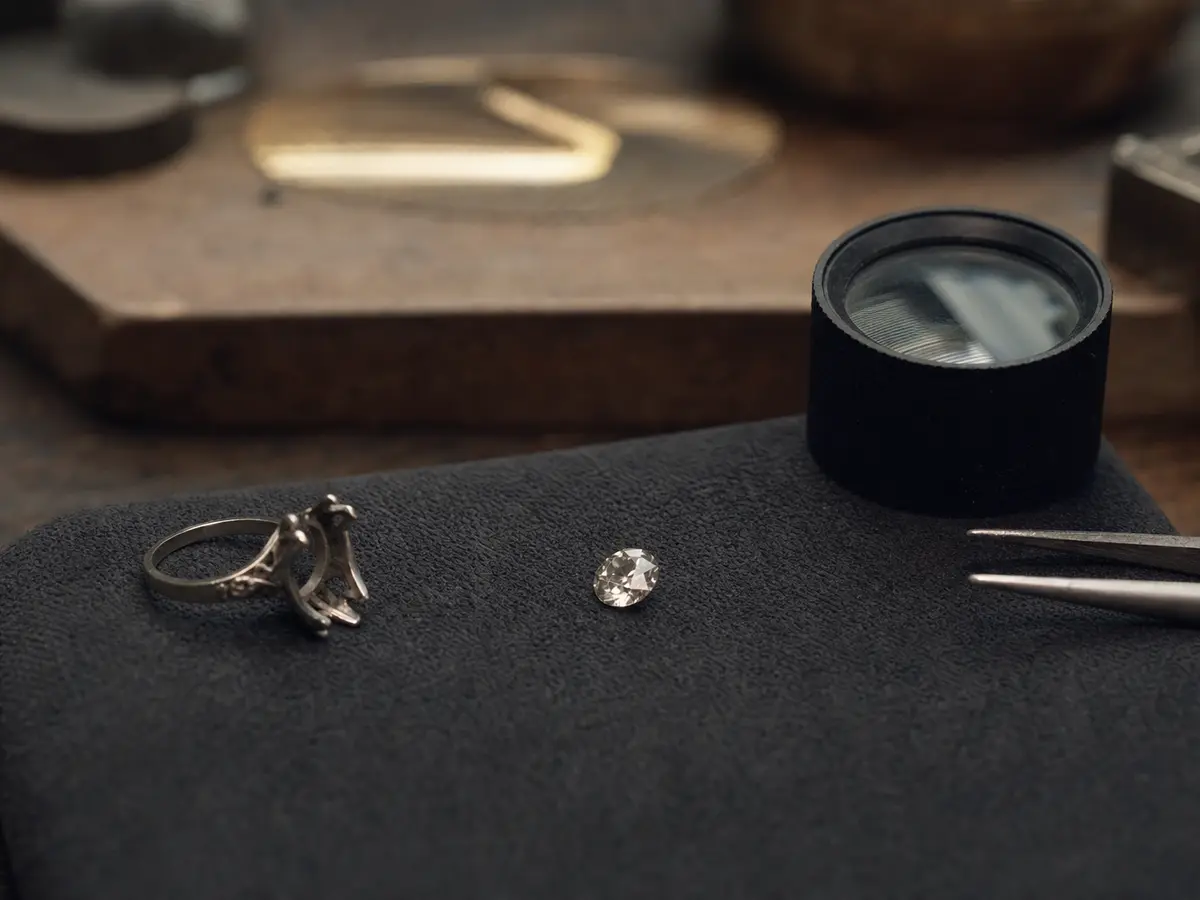
- Re-setting stones that have come loose in their original seats.
- Replacing a missing small stone with one matched as closely as possible in size, colour and cut.
- Rebuilding a worn hinge or a clasp that no longer closes securely.
Re-plating, re-polishing and when polishing removes history
Re-plating a white gold piece in rhodium and giving it a careful polish is routine and safe, done well within reason. The judgement call is how much polishing is enough. Aggressive polishing can round off original engraving, soften a maker's mark, or blur a hallmark that identifies where and when a piece was made. South African hallmarking practice generally follows a recognised standard, and a mark like that, once polished away, cannot honestly be put back. A careful jeweller polishes only as much as the repair actually needs and no more.
Cleaning old pieces safely
What cannot be restored
Some things are genuinely beyond repair rather than merely expensive to fix. A stone with an internal fracture that has already grown cannot be made whole again, only stabilised or replaced. A hallmark polished away decades ago cannot be legitimately re-struck outside the correct official channel. Gold loss severe enough to leave a shank too thin to safely rebuild usually means recasting that section in fresh metal rather than restoration in the strict sense, and we will tell you plainly when that line has been crossed.
Keeping a record
Photograph a piece before any restoration work begins, and keep a note of exactly what was done and when: which prongs were re-tipped, which stone was replaced and with what. That record protects the next valuation, the next insurance claim, and the next person who works on the piece after Gavin, who will want to know what they are looking at rather than guessing.
- A prong that catches on fabric or looks visibly thin against its neighbours.
- A stone that shifts or rattles slightly when tapped gently.
- A clasp or hinge that needs real effort to close.
- A shank that feels thin on the inside when you run a finger around it.
- A hallmark or engraving that has become hard to read.
How often should an older ring be checked for restoration needs?
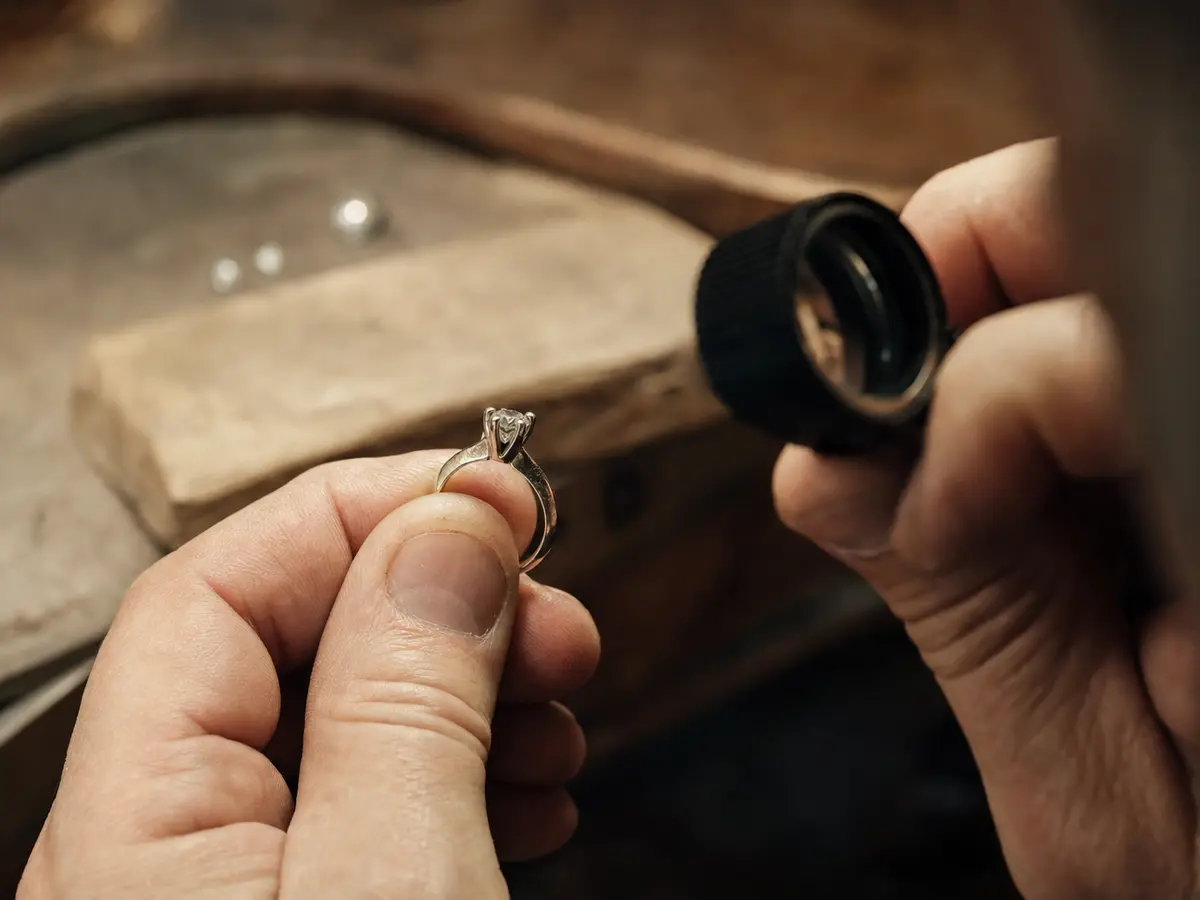
Roughly every one to two years for a piece worn daily, or after any knock you noticed at the time. Most restoration is caught early and is straightforward: a prong re-tipped before it fails rather than after a stone is lost. Waiting until something actually breaks usually costs more time and, occasionally, the stone itself, so a quick check well before then is worth the small effort.
Will restoring a ring reduce its value?
Done well, no, and it often protects value by preventing a loose stone or a broken clasp from being lost altogether. What can reduce value is over-restoration: heavy repolishing that removes original marks and character, or replacements that do not genuinely match the piece. A careful restoration that does only what is needed, recorded honestly, generally holds a piece's value rather than reducing it.