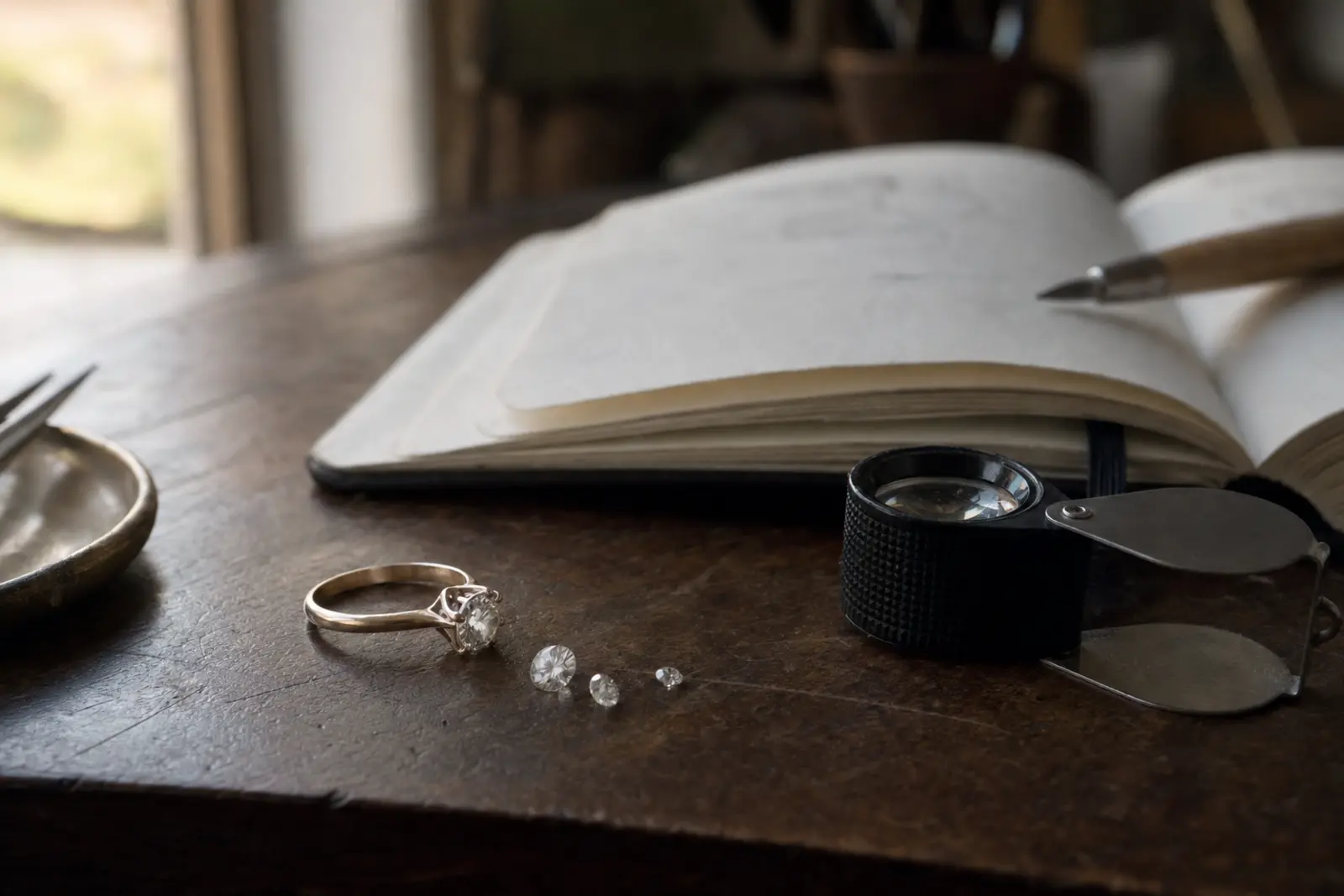
A valuation is the document an insurer, an estate or a buyer will ask for before anything else, and the honest answer to when you need one is more often than most people assume.
Insurance comes first
For most people the first valuation happens because a ring needs to be insured, and that remains the single most common reason to have one done. The document is what lets a broker put a specific, current figure on the policy rather than a guess. How that cover should be structured is its own subject; the short version is that the valuation is the starting point for all of it.
Estates, wills and divorce
Jewellery is often the least straightforward asset in an estate or a settlement, because unlike a bank balance or a property, nobody knows what it is worth until someone examines it properly. An executor dividing an estate, a will naming specific pieces to specific people, or a divorce settling shared assets, all need an independent figure to work from rather than a family's best guess or an old receipt. The valuation supplies the number; the legal process around it belongs to an attorney or the estate's own adviser.
Selling, customs and after a remodel
A current valuation reassures a private buyer that what they are paying for is what the description says it is, which matters more with jewellery than almost anything else sold privately. Travelling with valuable pieces can also raise questions at a border, particularly on the way back into the country, and having documentation of what a piece is and how long you have owned it is worth having ready. And once a ring is reset, remade or has stones added or removed, its original valuation describes a piece that no longer quite exists; a new one should follow.
What a valuation actually contains
A proper valuation is a description precise enough that the piece could be identified or remade from it alone: every stone weighed and graded for colour and clarity, the metal and its purity, exact measurements, and photographs from more than one angle. Vague wording is how a claim ends up settled with something that only loosely resembles what was lost.
- Every stone
- Weight, colour, clarity and cut, individually
- The setting
- Metal, purity, ring size and total weight
- Photographs
- More than one angle, in enough detail to identify the piece
- A dated figure
- Signed by the valuer, current to that date
Three different numbers
Replacement value is what it would cost to remake or replace the piece today, at retail, and it is the number insurers work from because it is the number that actually rebuilds the ring. Market value is closer to what a willing buyer would pay for the piece second-hand, which is the relevant figure for an estate or a private sale and is usually lower. The original purchase price sits in neither category; it is a historical fact, useful as a record, but not what any of the situations above are actually asking for.
Who can issue one matters less than people assume. A qualified valuer, whether or not they made the piece, can examine it, weigh it and grade the stones on its own merits. Gavin values pieces made at the Illovo studio and pieces made elsewhere on the same basis; what it costs depends on the piece, so ask when you book rather than guess.
Ten minutes with a notebook and a loupe is a small thing to put off for as long as most people do.
Does a valuation prove that I own the piece?
No. It describes what the piece is and what it is worth, not who it belongs to. Ownership is generally established with a receipt, a gift record, or in the case of an inheritance, the estate documents, kept alongside the valuation rather than instead of it. If a piece has no purchase record at all, the valuation is still worth having, but mention the gap to your broker when you insure it.
Can Gavin value a ring he did not make?
Yes. The examination looks at the piece itself: the stones under magnification, the metal, the measurements and the workmanship, none of which depend on who made it. Bring whatever paperwork exists, but it is not required. Most rings brought in for a first valuation were made somewhere else entirely.