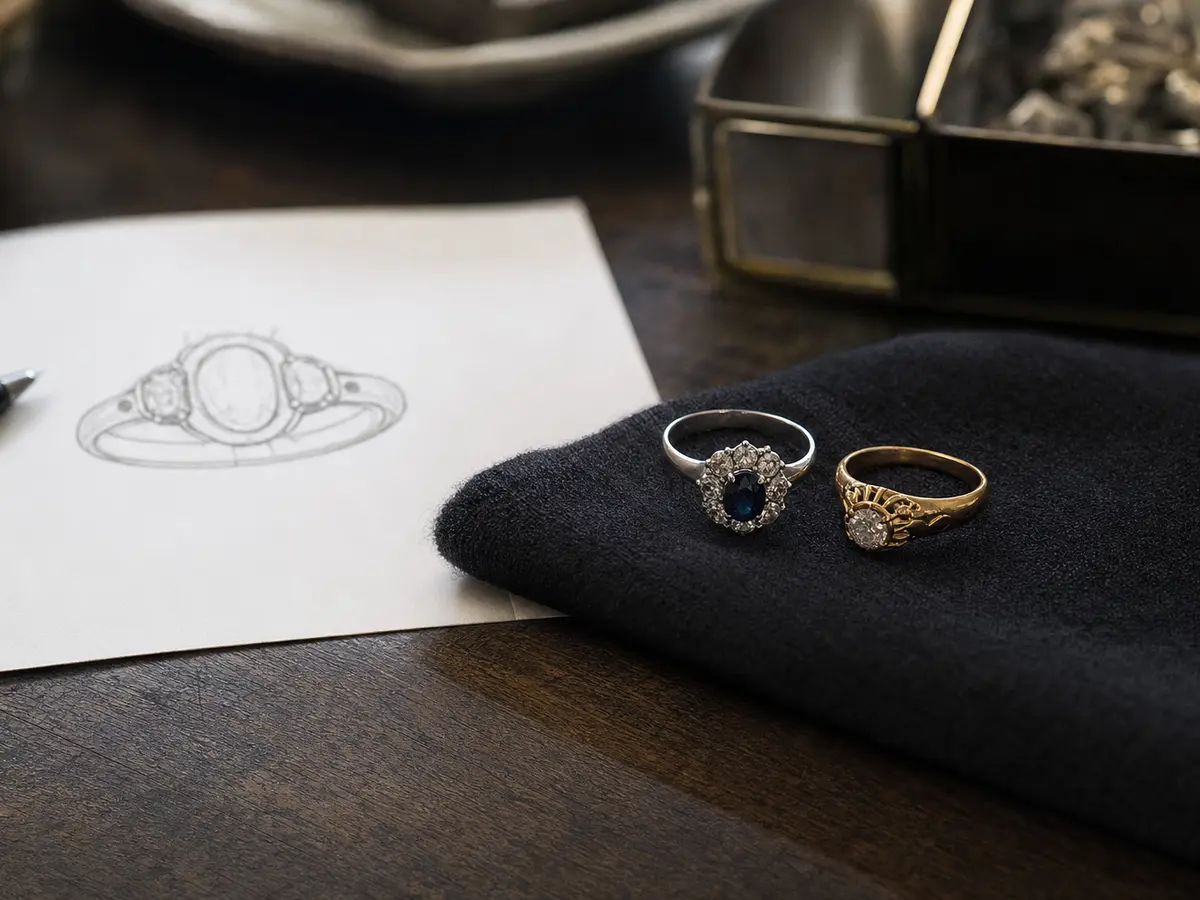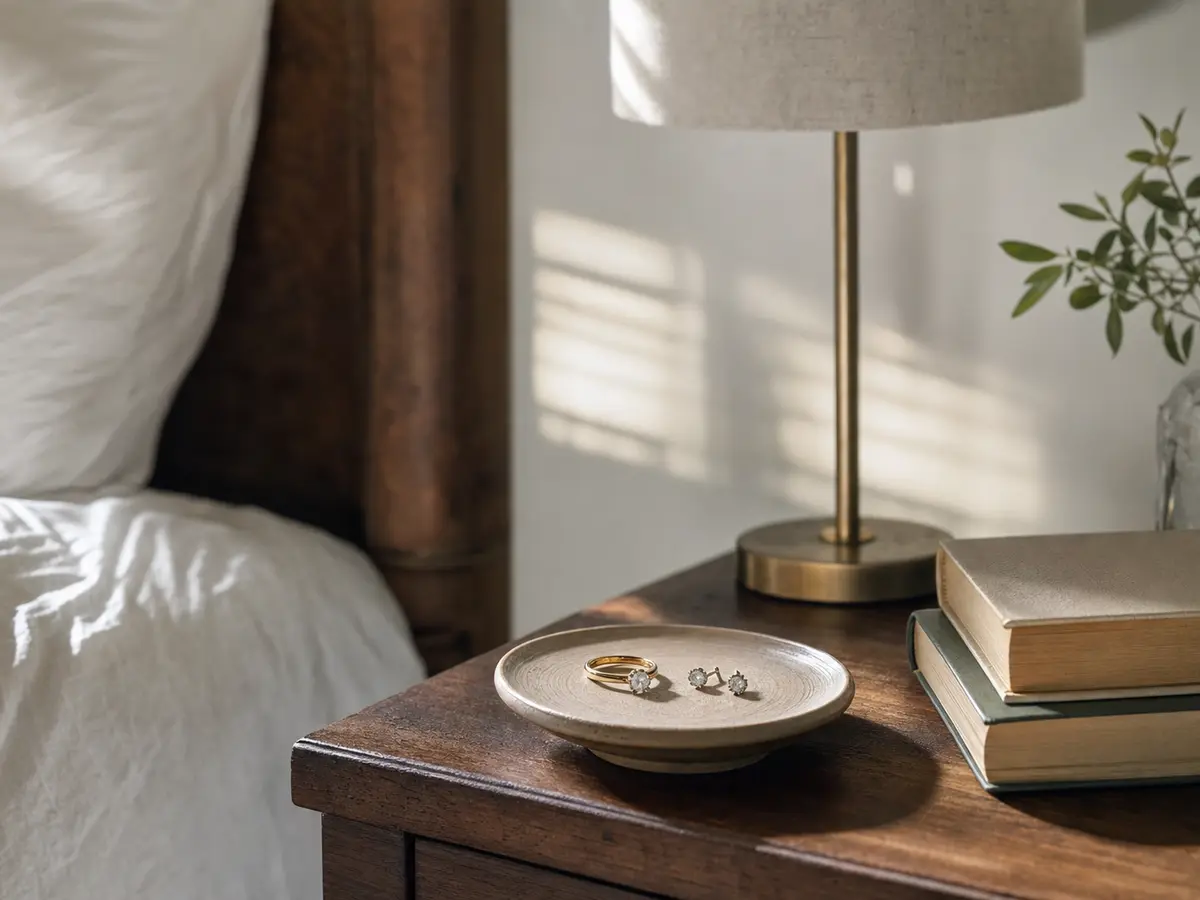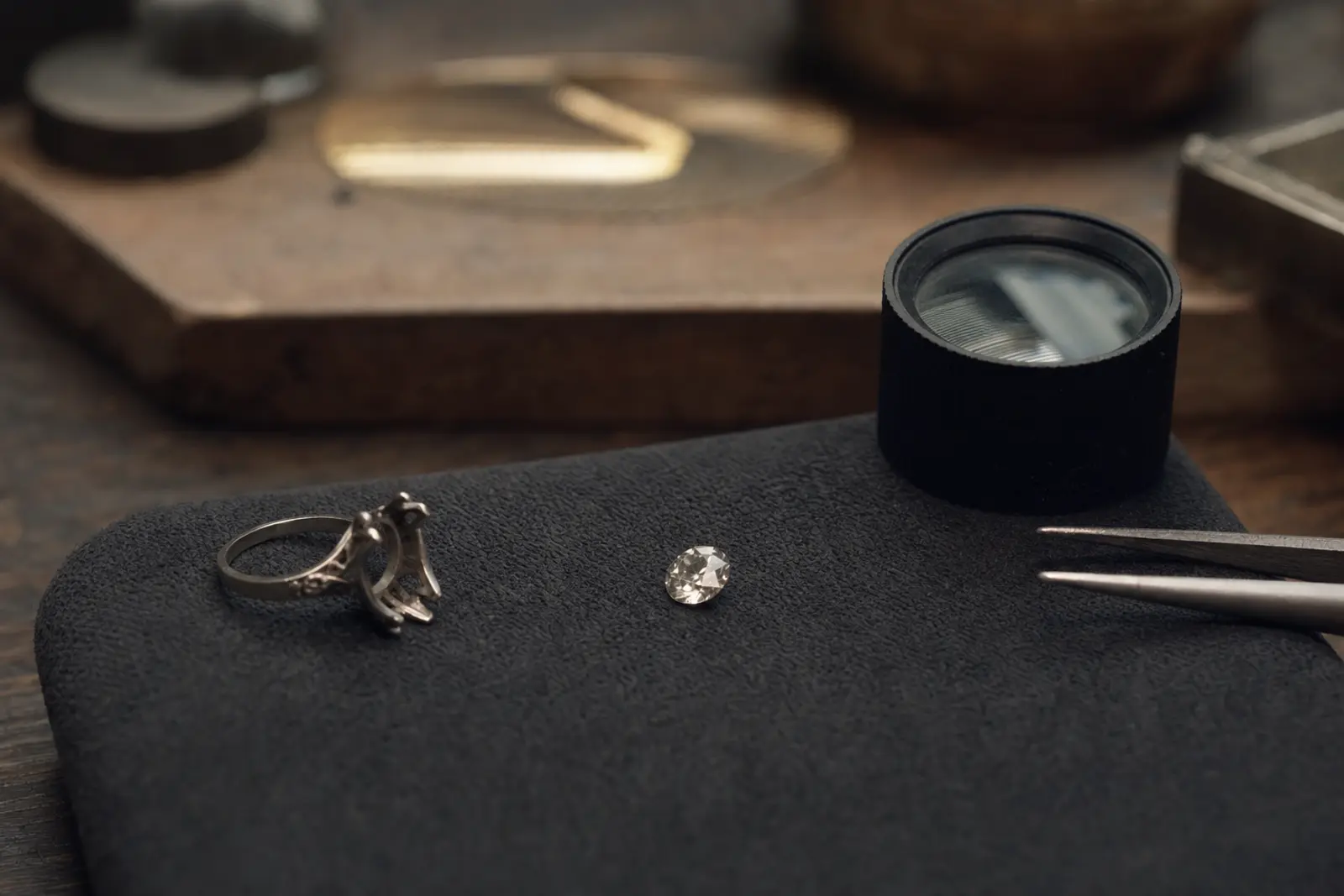
An inherited stone is only ever as good as its next setting, and the first honest step is assessing it entirely on its own, out of whatever mount it currently sits in, before anyone talks about what it should become.
Assessing the stone out of its setting
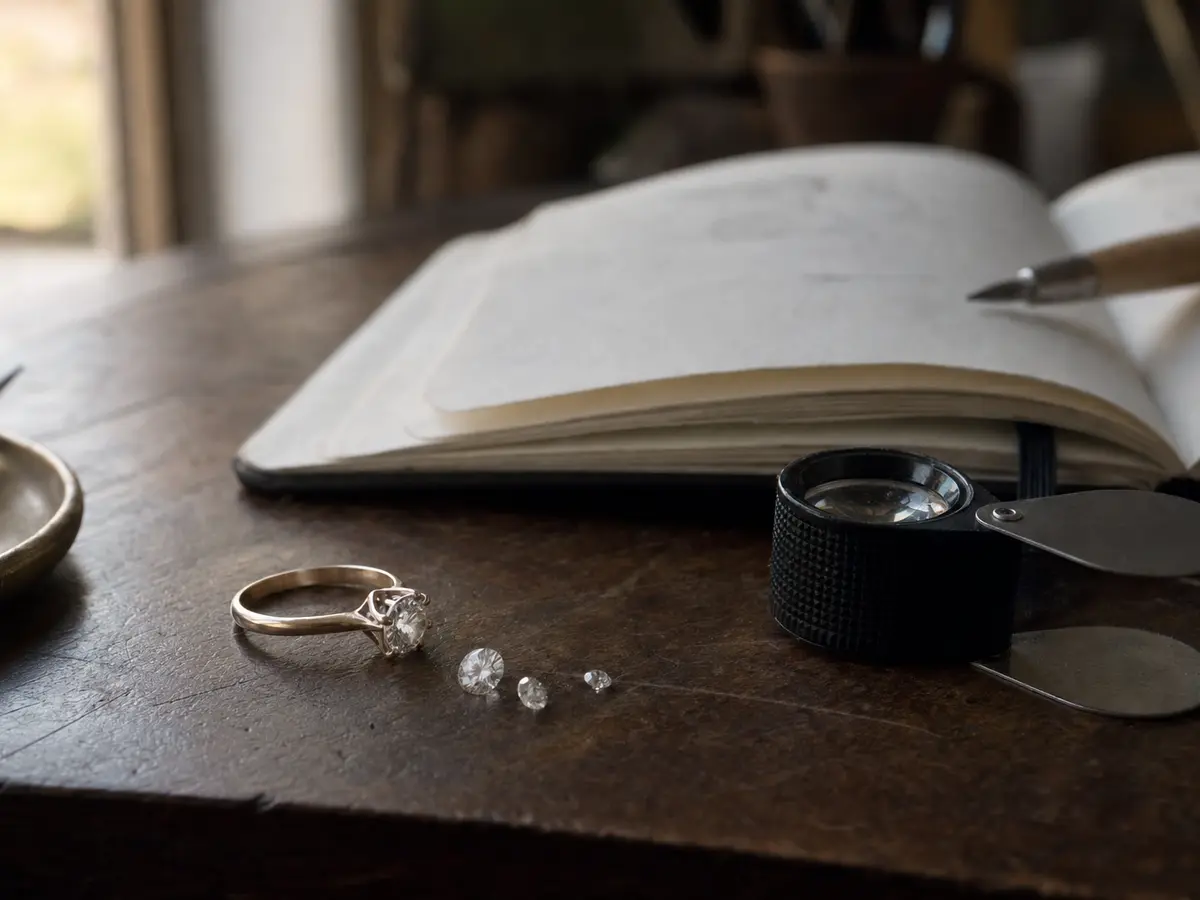
A stone tells the truth once it is out of its mount and nothing else. Metal reflects colour into a stone and can hide the true tone underneath, particularly with coloured gemstones. It also hides the girdle, the thinnest and most vulnerable part of the stone, where decades of wear tend to show first. We look at every inherited stone loose, under magnification, before we discuss anything about a new setting.
Old cuts and how they handle light
Stones cut two or three generations ago were cut for candlelight and early electric light, not for the LED spotlights in a modern shop. Old European and old mine cuts tend to have smaller tables, higher crowns and larger culets than a stone cut today, which gives them a softer, warmer flash rather than the sharper fire of a modern round brilliant. That is a difference in character, not a fault, and it is worth deciding whether you want to keep that character before anyone suggests changing it.
Chips, abrasion and recutting
Wear at the girdle and small chips at facet junctions are common on a stone that has been worn for decades, and most of it can be worked around in how the stone is set rather than fixed in the stone itself. Recutting removes real weight and changes the stone's character permanently, so it belongs at the end of the list, considered only when damage genuinely threatens the stone's structure or safety in daily wear, never simply to chase more sparkle.
Where the stone can go
A single strong stone usually goes into a new ring, but it does not have to. A stone that suits a lower, more protected setting sometimes works better as a pendant. Two stones of similar size and colour, perhaps from two different pieces or two family sources, can become a pair of earrings rather than being forced to compete for the centre of one ring. The right home for a stone follows from what it is, not from habit.
Grading an old stone
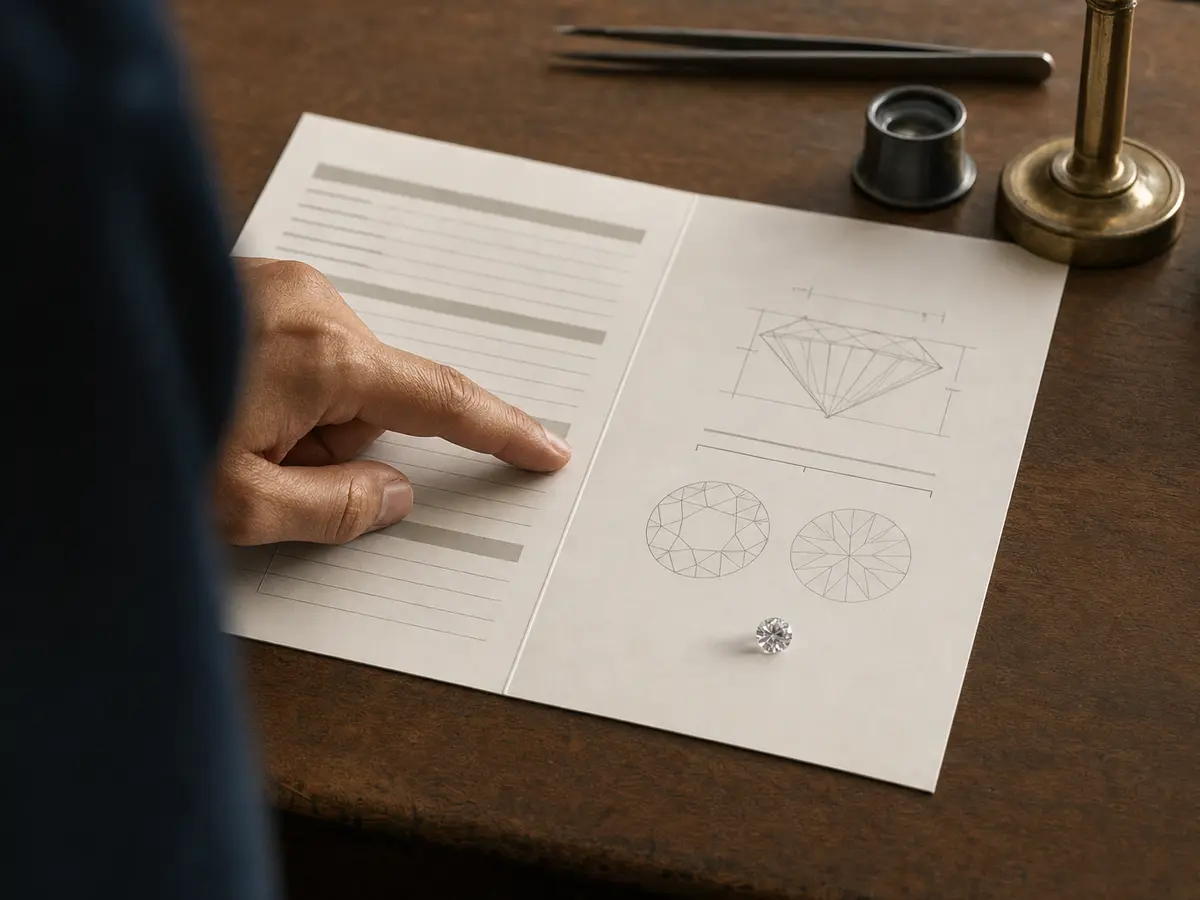
Many inherited stones have never been graded, because grading reports as they exist today were not common practice when the stone was originally set. Grading it now, out of its setting, gives you an honest description of what you actually have, which matters for insurance and for any conversation about resetting it. It is not a test the stone can fail. It is simply information you did not have before.
Documenting where it came from
Write down what you know while someone in the family still remembers it: who wore the stone, roughly when it was set, and any story attached to it. This note has no bearing on the stone's value, but it is the one thing that cannot be recreated later, and families regularly wish they had written it down sooner.
Family conversations about who gets what
Where more than one person has a claim, sentimental or otherwise, on the same stone or the same pair, that conversation goes better early and directly than late and assumed. A family with two sisters and one strong stone, say, has real options once everyone is talking: one stone reset for one sister and a new stone matched for the other, or the original stone split into two smaller pieces if it can bear that. None of those options work well as a surprise.
- Bring the stone in its current setting, not removed at home.
- Bring anything you know in writing, even if it is only a name and a rough date.
- Ask for the stone to be checked out of its setting before any design talk starts.
- Raise who else in the family has an interest, before a design is chosen.
Does an old stone need a new grading report before it can be reset?
Not strictly, but it is worth having, particularly if the piece will need insurance once it is reset. A report gives you an independent, current description of the stone rather than a family memory of what it was always said to be. It is done with the stone loose, takes a matter of days, and does not commit you to anything about the design.
What if the stone turns out to be more damaged than expected?
It happens, and it is better to know before a new setting is designed around it. Depending on where the damage sits, the usual answer is a setting that protects the vulnerable point rather than a recut, since recutting is only suggested when the damage genuinely threatens the stone. We will always tell you plainly what the options are and what each one costs the stone, not just the ring.