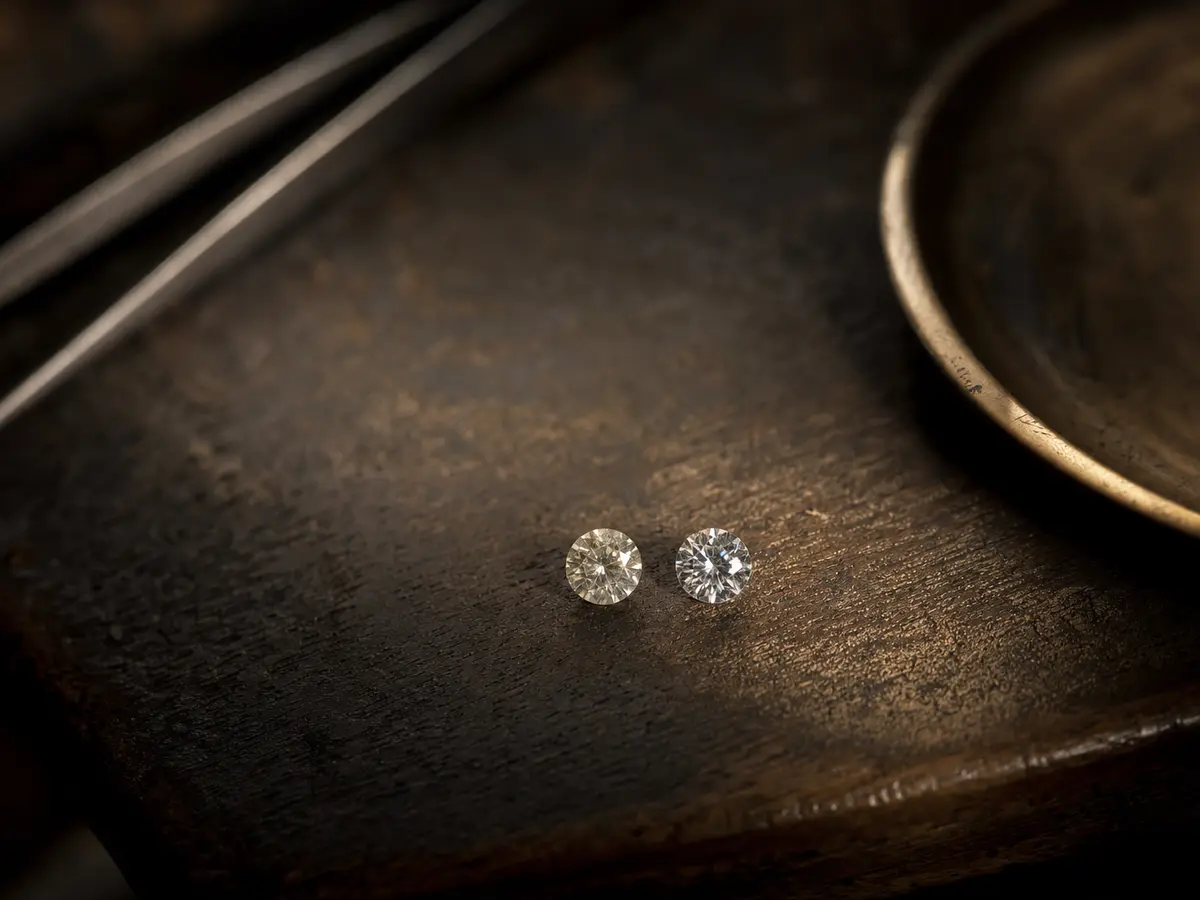
The four Cs are taught as though they carry equal weight. They do not. Cut is most of what you see, and the other three are largely a question of where to stop paying.
Cut is the whole thing
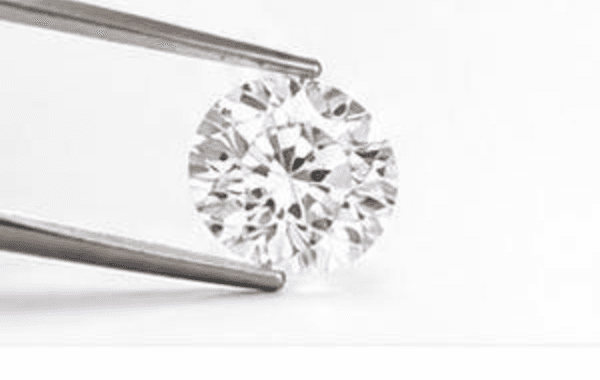
Cut is not the shape. It is how well the stone has been proportioned and finished, and it decides how much light comes back out of it. A well cut stone of modest colour and clarity will outperform a poorly cut stone that grades better on paper, every time, in every light.
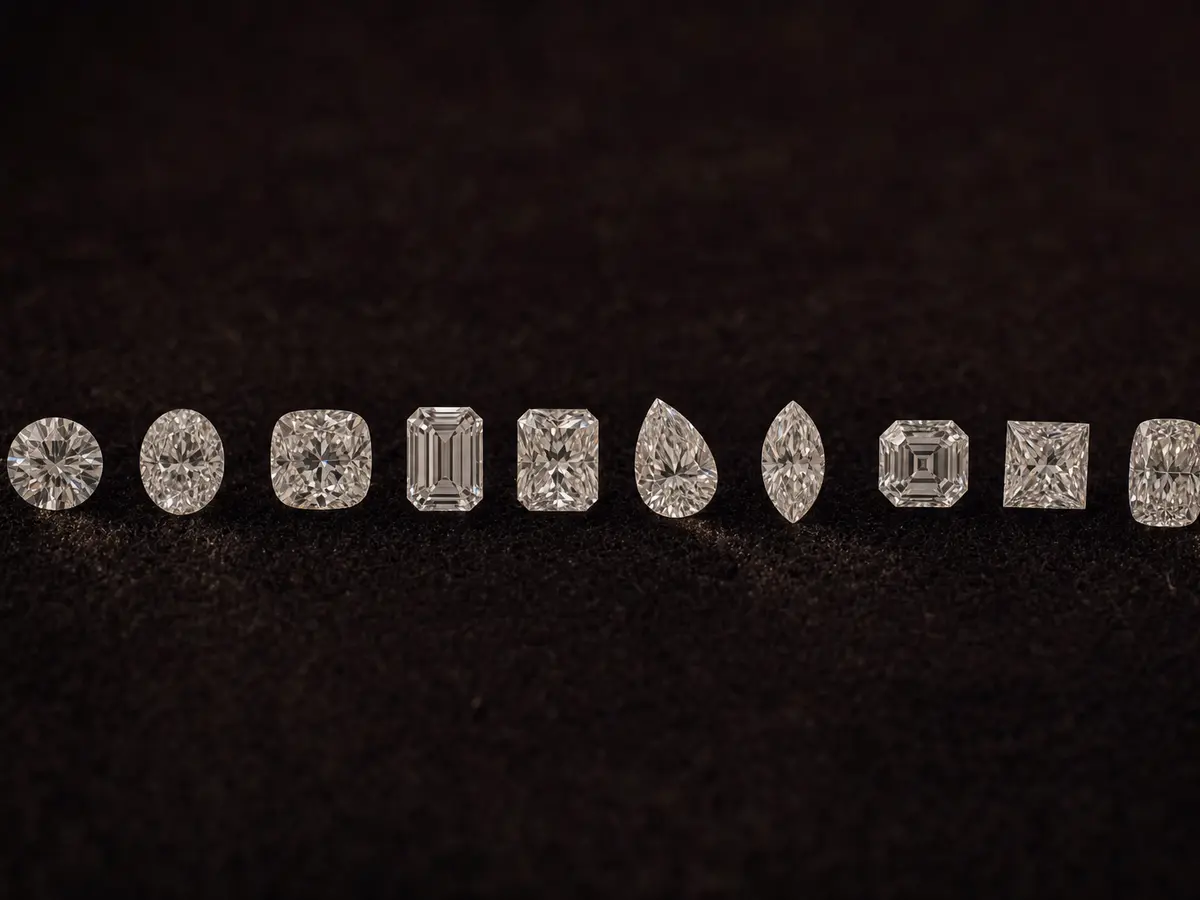
For round brilliants, take excellent and nothing less. The premium is real but small, and it buys you the only C that a person across a dinner table can actually see. Fancy shapes (ovals, pears, emeralds, cushions) are not given a cut grade on most reports at all, which is precisely why they need to be looked at rather than ordered. Ovals in particular hide a dark bowtie across the centre that no certificate will warn you about.
Colour: stop earlier than you think
The scale runs from D to Z. D, E and F are colourless and priced accordingly. G and H are near-colourless and, once set, are indistinguishable to the eye from the grades above them in almost every real setting.
Two things shift the answer. Metal: warm metals lend colour to the stone, so a G in yellow gold is doing fine work, while the same stone in platinum sits against a colder reference. And size: colour becomes easier to see as the stone gets bigger, so above two carats it is worth moving up a grade or two.
Clarity: the only test that matters is your eye
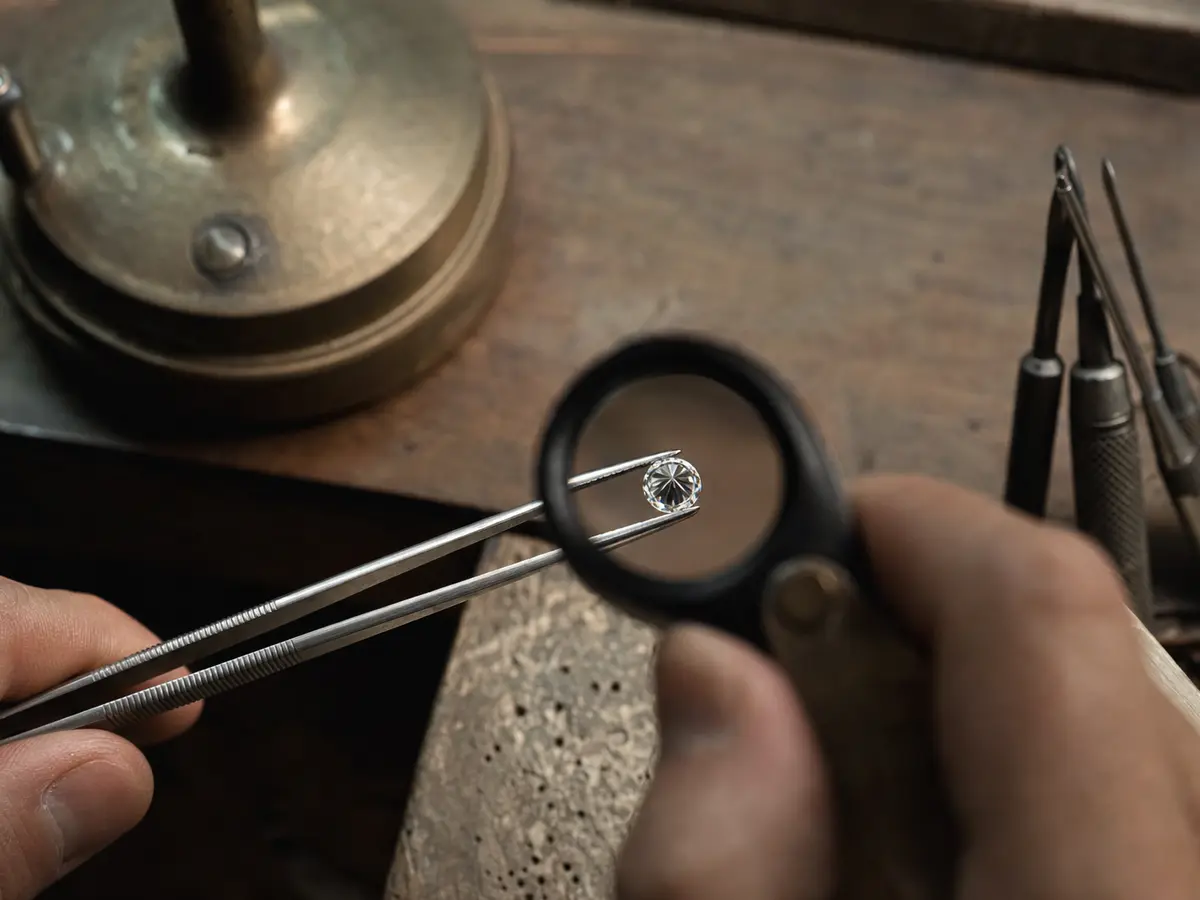
Clarity grades describe what a trained grader sees at ten times magnification. You will not be looking at it that way, and neither will anyone else.
The phrase to use is eye-clean: no inclusion visible to a normal eye at normal distance. For most stones that means VS2 or SI1, and the money you did not spend on VVS goes into cut or size, where it is visible. Two cautions. Where the inclusion sits matters more than its grade. Something under the table is far more noticeable than the same thing near the girdle where a prong will cover it. And avoid inclusions that reach the surface at an edge, which are a durability question rather than an appearance one.
Carat: buy just under the number
- Price jumps at the round numbers (0.50, 0.70, 1.00, 1.50, 2.00) because that is where demand clusters.
- A 0.95ct and a 1.00ct are about half a millimetre apart in diameter. Nobody has ever noticed the difference across a table; the price difference is significant.
- Spread matters more than weight. A well proportioned stone shows its size face-up; a deep stone hides weight in its belly where it does nothing for you.
- If the size of the stone is the point, say so plainly. It is a legitimate priority and it changes what we look for.
Where a certificate stops helping
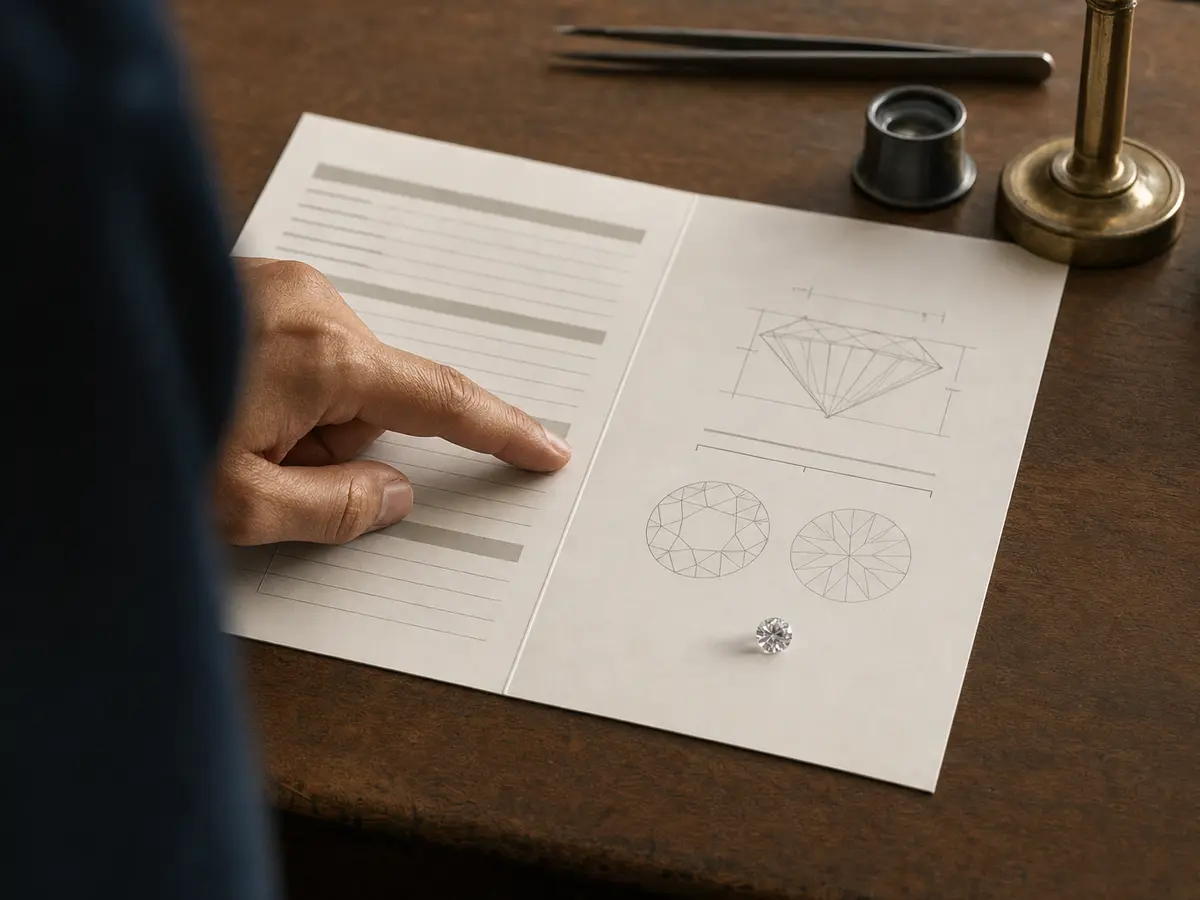
A report from a serious laboratory tells you what the stone is. It does not tell you whether the stone is beautiful, and it is not a valuation. Reports from less rigorous laboratories are often graded a full grade or two softer, which means a stone that looks like a bargain on paper is simply being described generously.
Compare like with like, insist on the same laboratory when you are weighing two stones against each other, and then put the paperwork down and look at them side by side. That last step is the one that decides it.
Spend on cut. Stop early on colour and clarity. Buy just under the round number. That is most of the expertise.
Is a D colour, flawless diamond ever the right choice?
For some people, yes, and it is a legitimate choice when the point is to own the rarest version of the thing. What we would say plainly is that nobody will see the difference on the hand, and the same money spent on cut and size buys a stone that visibly outperforms it across a room. If rarity is the priority, say so and we will find it. If beauty on the hand is the priority, the money goes elsewhere.