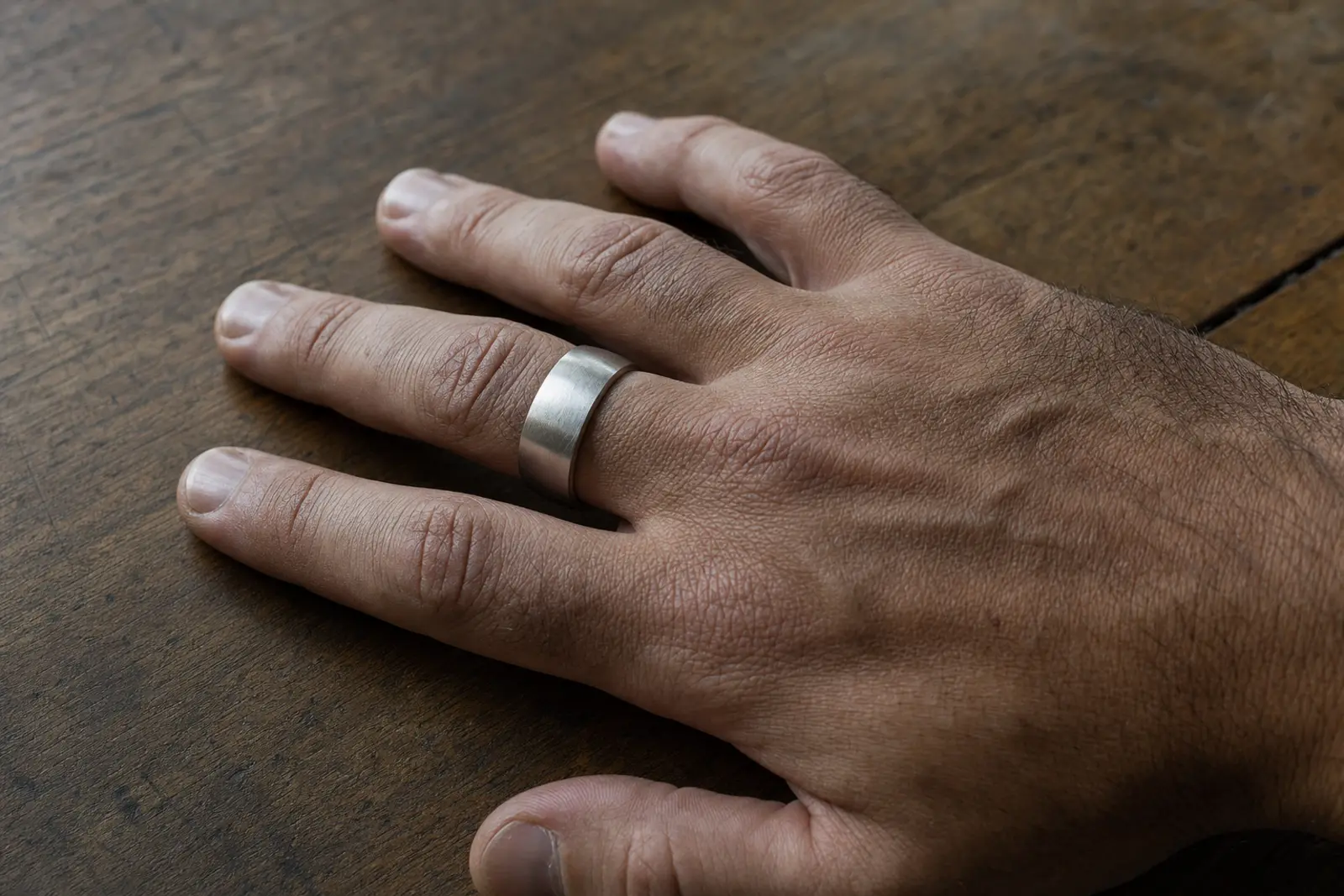
A man's wedding band has to survive whatever his hand actually does all day, and that single fact should decide more of the choice than metal colour, brand or fashion ever will.
A working hand: width and profile
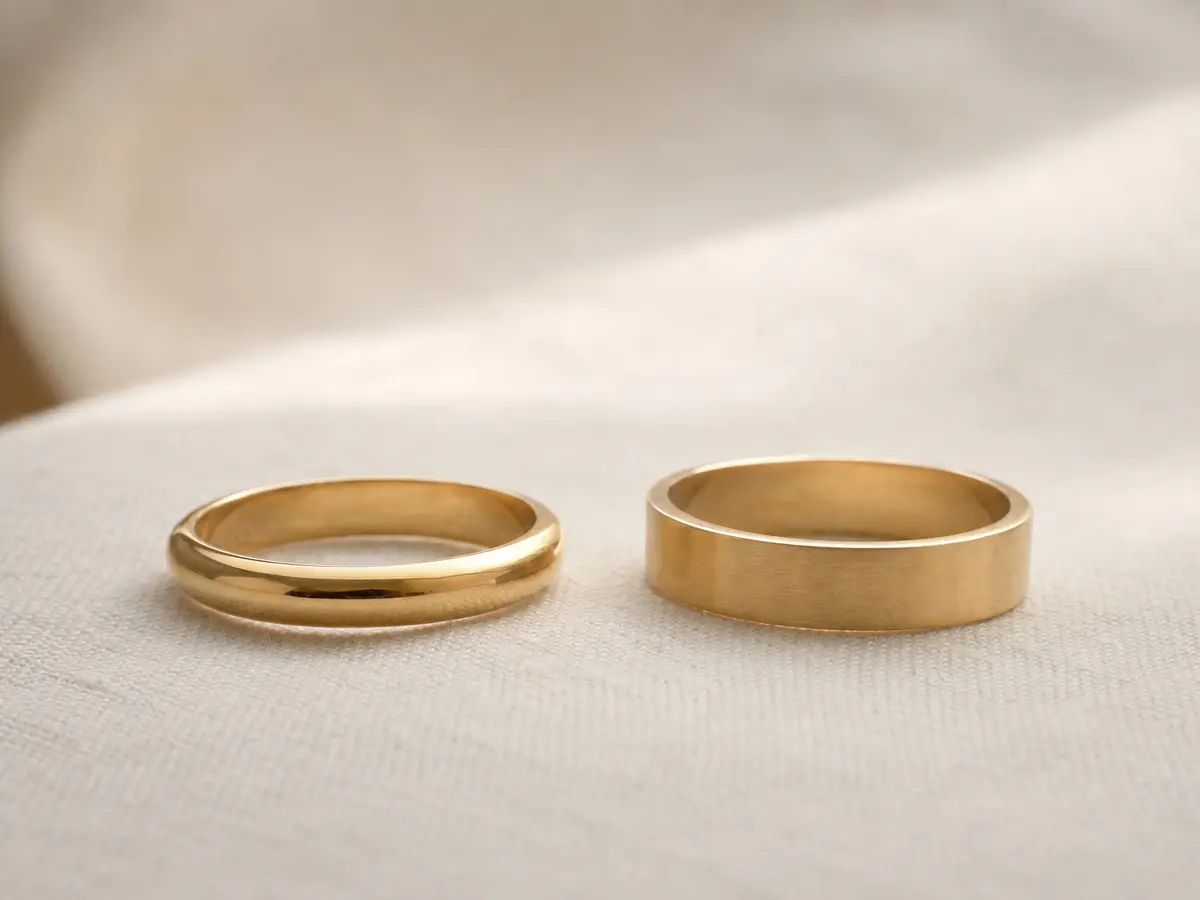
Men's bands typically run between four and eight millimetres, and a larger hand generally carries the wider end of that range without the band looking out of proportion. A hand that spends its day with tools, machinery or a steering wheel benefits from a lower, more rounded profile with a comfort-fit interior, so there is less edge to catch on the way past a knuckle repeatedly through the day. A wide, flat profile looks striking in a case and is the one most likely to feel wrong within a week on a hand that works hard.
Platinum and gold, honestly
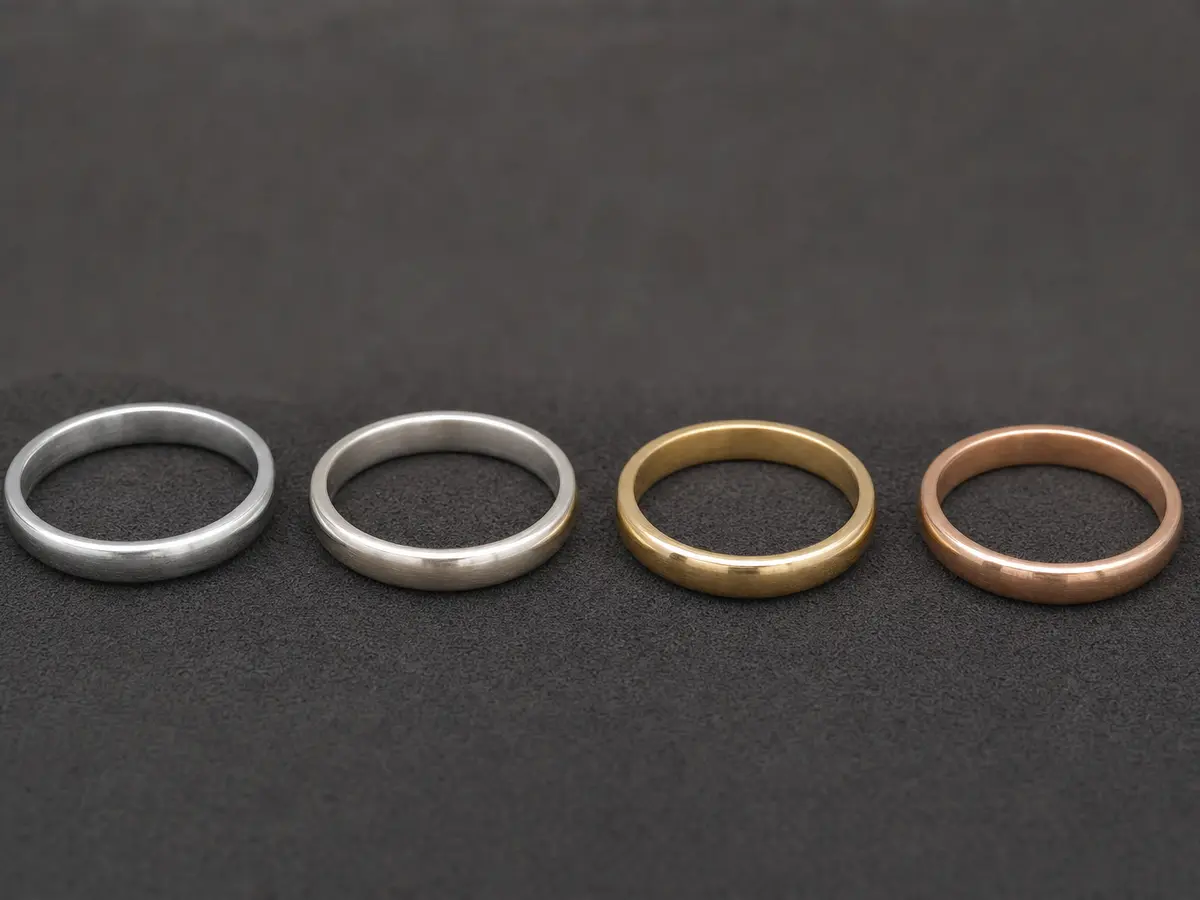
Platinum resists scratching less than people expect, given its reputation. Where gold sheds tiny amounts of metal each time it is polished, platinum mostly displaces rather than loses material, which is why an older platinum band often develops a soft, brushed patina instead of visibly thinning. Some men come to like that patina and leave it; others prefer the band re-polished back to bright every so often, and either is a reasonable choice. Gold, in either 9ct or 18ct, takes a crisper initial polish and costs less for a comparable look, and a lower-karat alloy such as 9ct also resists scratching a little better than an 18ct alloy of the same design, simply because it contains more of the harder metals it is alloyed with.
Matte and brushed finishes, and how they age
A matte or brushed finish hides the first scuffs of daily wear better than a high polish does, which is part of why it suits a working hand. It is not permanent, though. Months of contact with tools, a wallet or a steering wheel will soften a brushed finish toward something closer to a natural patina, and a jeweller can re-brush it back to its original texture in a short visit if that crispness matters to you. A high polish that picks up scratches can simply be re-polished the same way. No finish on a ring worn daily stays exactly as it left the workshop, and that is normal rather than a fault.
Will he actually wear it
Some men genuinely do not wear a ring day to day, usually for practical reasons: electrical or mechanical work where a metal band is a real hazard, sport, or simply a habit that never formed. Have that conversation honestly before committing to platinum for a ring that will spend most of its life in a drawer. A simpler metal for daily wear, with something better kept for occasions, is a legitimate answer, and a soft silicone band is a common practical stand-in for site days or the gym for men who otherwise wear their band.
Sizing a hand that has never worn a ring, and resizing later
Get sized at the end of the day, after normal activity, rather than first thing in the morning when a hand is at its smallest. A hand that works outdoors or trains regularly can swell noticeably with heat or exercise, more than most people expect, and a good jeweller will ask about that rather than sizing on a cool, resting hand alone.
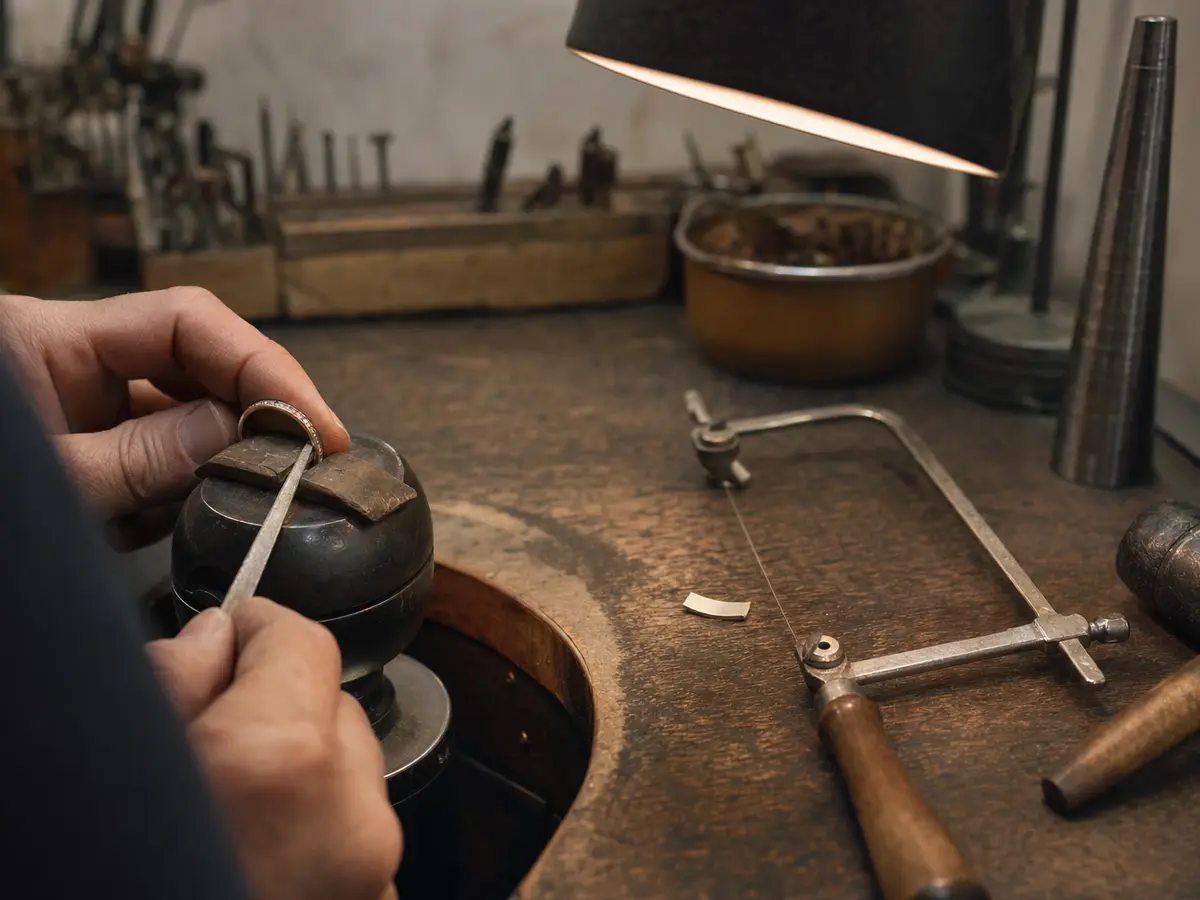
Resizing later is routine for gold and entirely possible for platinum too, though platinum takes longer and costs more to resize because of its density and higher melting point. A comfort-fit interior is more work to resize than a plain profile, since the whole rounded interior has to be reformed rather than simply cut and rejoined, which is worth knowing if a significant weight change seems likely down the line.
- Choose the width and profile on the actual hand, not from a chart.
- Ask what platinum and gold each do over decades, not just how they look on the day.
- Decide matte, brushed or polished knowing none of them stay exactly as delivered.
- Be honest about whether the ring will actually be worn daily before choosing the metal.
- Get sized at the end of the day, after normal activity.
How wide should a man's wedding band be?
There is no fixed rule, but most men's bands run between four and eight millimetres, and a larger hand generally carries the wider end of that range without the band looking heavy. A band that is too narrow for a bigger hand can look like an afterthought, while one that is too wide for a smaller hand can feel clumsy against tools or a keyboard. Try a few widths on the actual hand rather than choosing from a chart; the right width is usually obvious once it is on.
Can a scratched or dented wedding band be restored?
Yes, in almost every case. A gold band that has thinned or scratched from years of daily wear can be gently re-polished, and a platinum band that has taken on marks or a soft patina can be refreshed the same way if you want the brighter finish back, though many men come to like the patina and leave it alone. Bring the ring in before it feels genuinely thin rather than after, since a jeweller can tell you honestly how much wear is left to work with.
What if he has never worn a ring and does not know his size?
Get him sized properly rather than guessing from an online chart, and do it at the end of the day when the hand is at its largest, not first thing in the morning. A hand that works outdoors or exercises regularly can swell noticeably with heat and activity, so ask the jeweller to account for that rather than sizing on a cool, resting hand alone. If in doubt, a band can always be sized down more easily than up, so err slightly generous rather than tight.
None of this needs to be decided today. Bring the ring you already wear, if there is one, and an honest account of what your hands do for a living, and the choice narrows quickly from there.