Bespoke sounds like a luxury word for expensive. In practice it is a process, it is more ordinary than people expect, and it usually costs less than the equivalent piece bought finished from a display case.
The first conversation
An hour, usually. We ask what she wears now, what she has said about other people's rings, and what she does with her hands. We ask about budget early and directly, because a number spoken out loud at the start protects you from falling in love with something out of reach.
Bring photographs, including ones you dislike. Knowing what is wrong with a design narrows things faster than knowing what is right. If there is an existing piece in the family, bring that too.
Sketches, then the stone
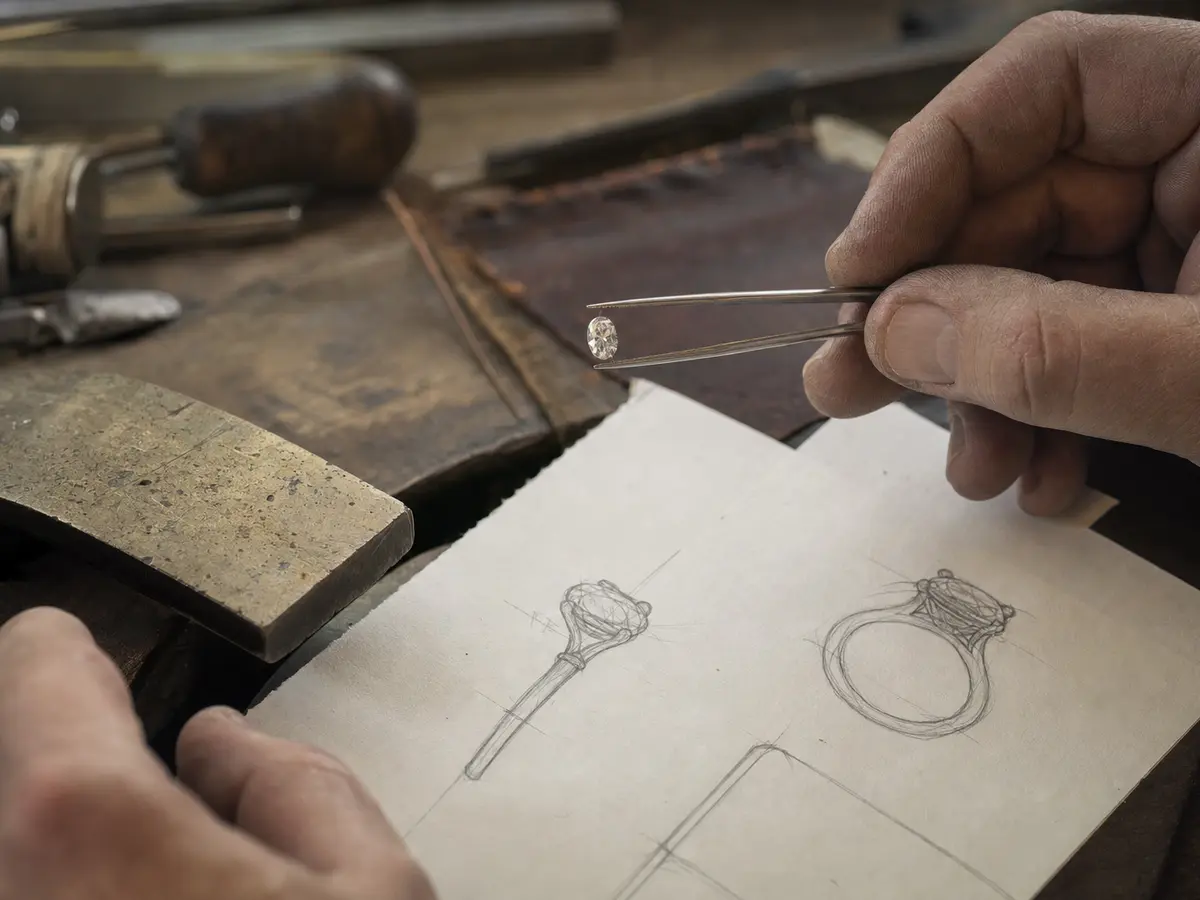
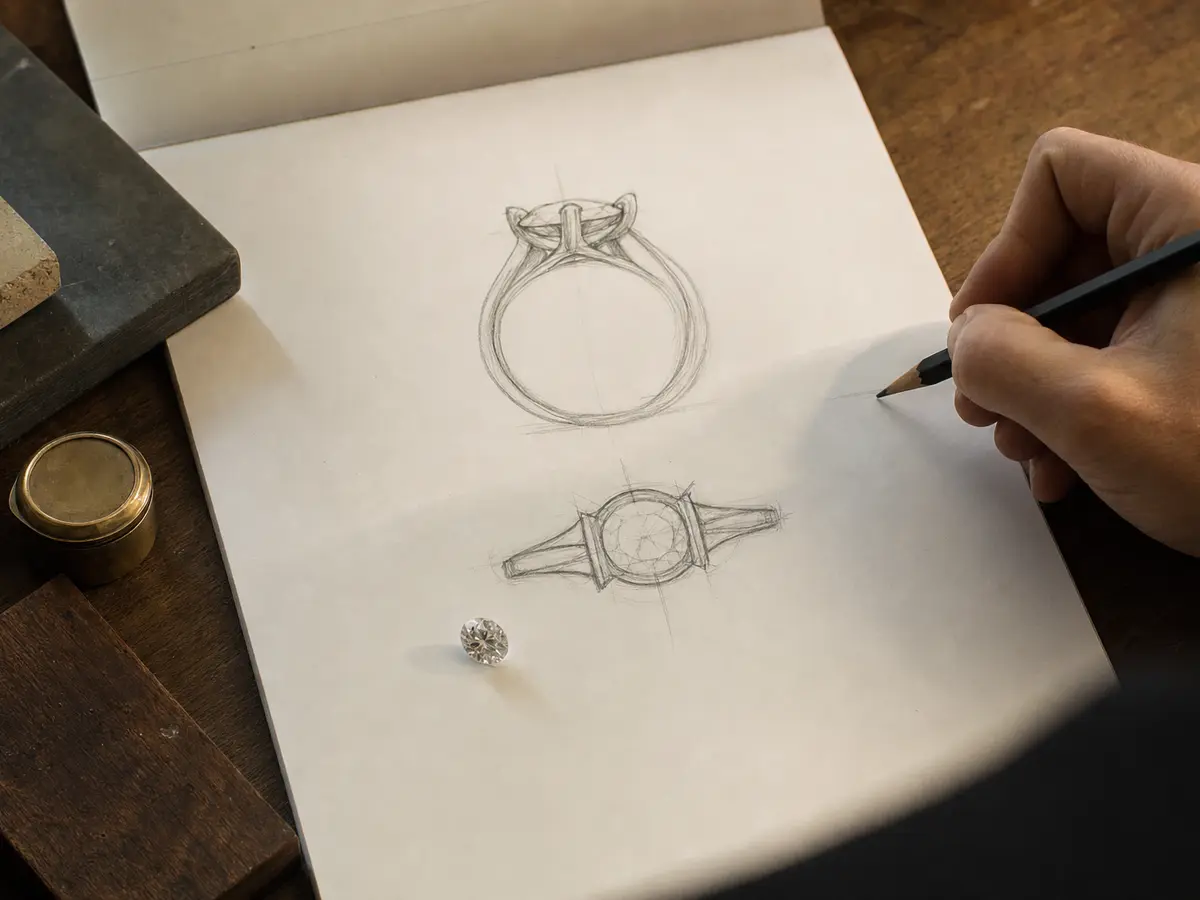
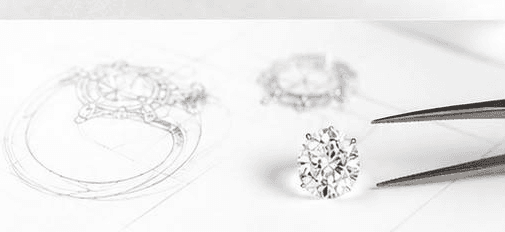
Gavin draws by hand at this stage, because a pencil sketch is easy to argue with and a polished render is not. Two or three directions, deliberately rough.
Then the stone, and this order matters. The stone determines the proportions of everything around it, so choosing the setting first and hunting for a stone to fit is the wrong way round. We source to your brief and show you the shortlist in person, under more than one light.
CAD and the wax
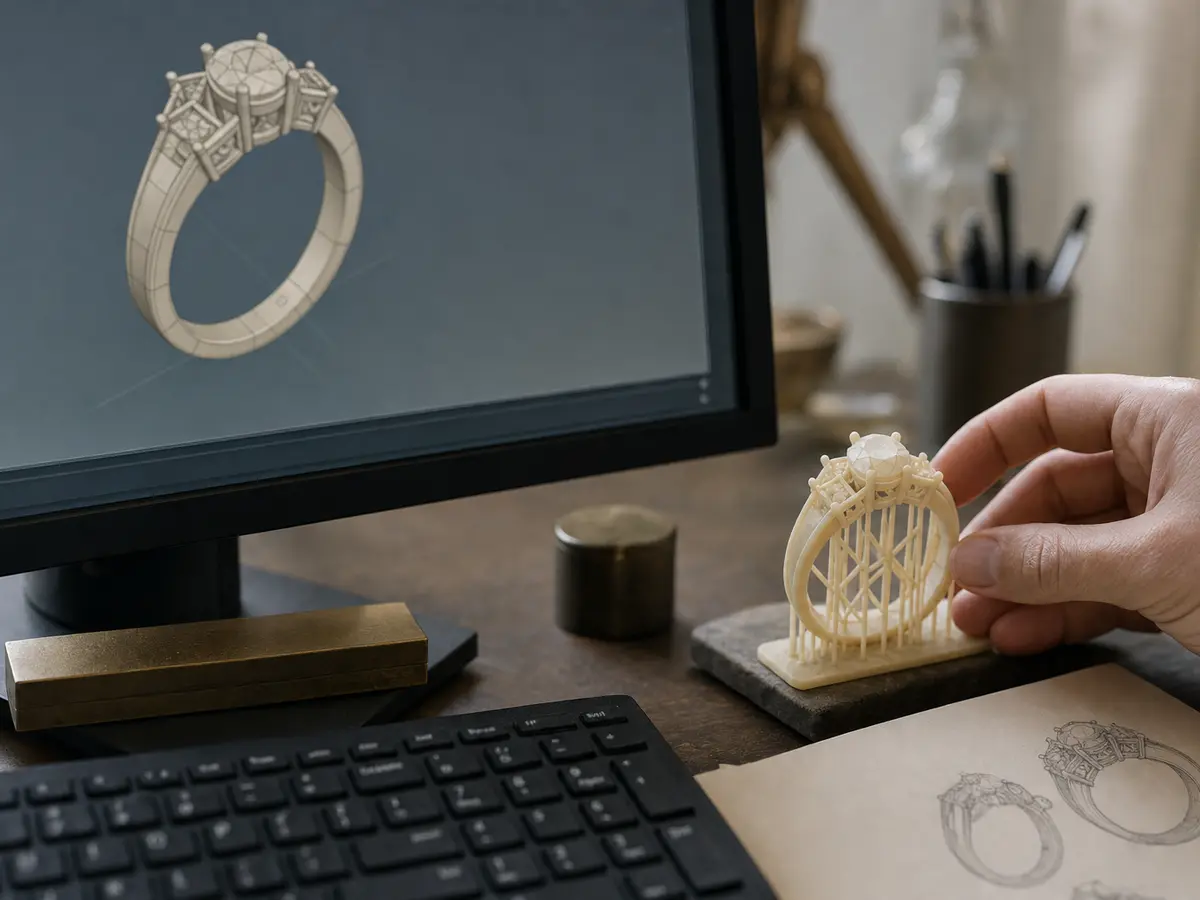
Once a direction is agreed, the design goes into CAD: a precise three-dimensional model you can see from every angle before anything is made. This is where the millimetre decisions happen: how high the basket sits, how thin the band can go before it stops being strong, how the profile looks from the side.
We print or carve a wax from that model. Trying the wax on the actual finger is the step that catches the problems a screen cannot show you, and it is worth the extra week.
Casting, setting, finishing
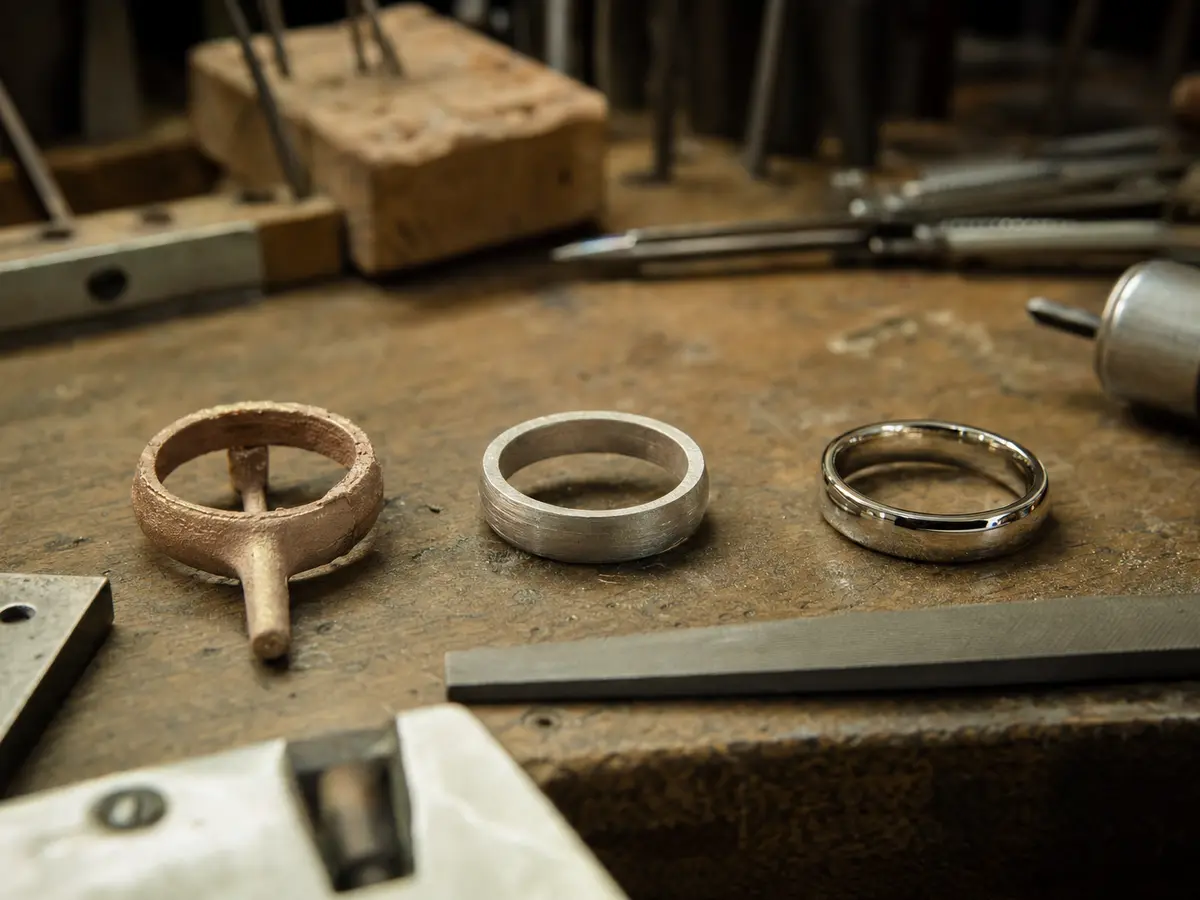
- The wax is invested in plaster and burned out, and metal is cast into the cavity it leaves behind. This is a centuries-old process and it has not been improved on.
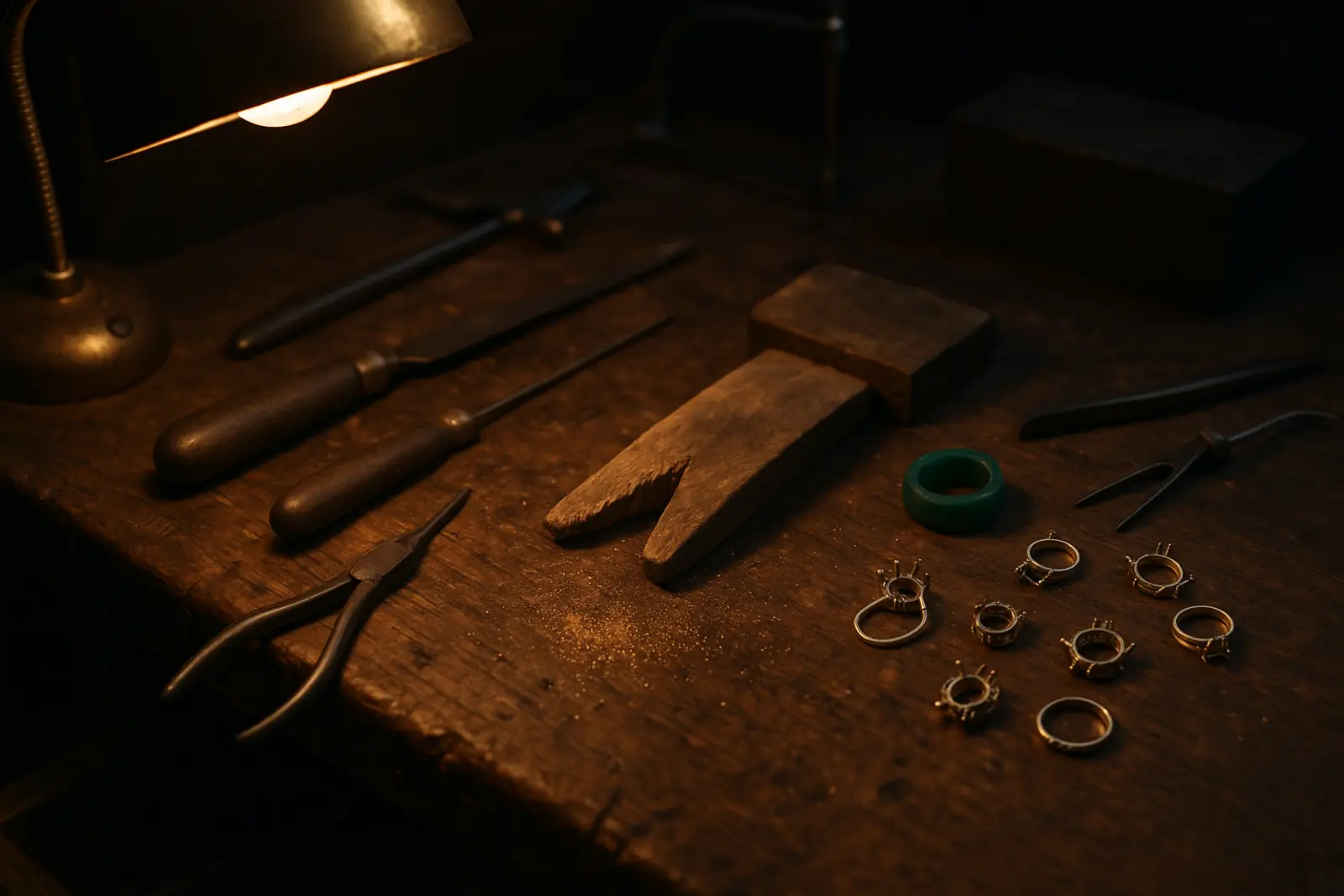
- The raw casting is filed, pre-polished and prepared for the setter, the least glamorous and most skilled part of the work.
- Setting is done under a microscope. Seats are cut into the metal for each stone, and there is no undo.
- Final polish and rhodium plating if it is white gold. The piece is checked, weighed and photographed before it goes into the box.
How long, and what can go wrong
Six to eight weeks is normal. Sourcing an unusual stone adds time, and so does a design change after CAD is approved, not because we mind, but because the model has to be rebuilt.
The most common delay is the simplest one: a decision left open. If you are working to a date, the useful thing you can do is answer the question we asked on the day we ask it.
You are not buying a design. You are commissioning one, and the difference is that you get to change your mind while it is still cheap to.
Do I need to know what I want before the first conversation?
No. Most people arrive with a feeling and three photographs, one of which they dislike, and that is a perfectly good start. The first hour is for turning that into a brief: how the ring will be worn, what it should not be, and what the number is. Knowing exactly what you want can actually slow things down if it turns out not to suit her hand. Come with the person, not the specification.