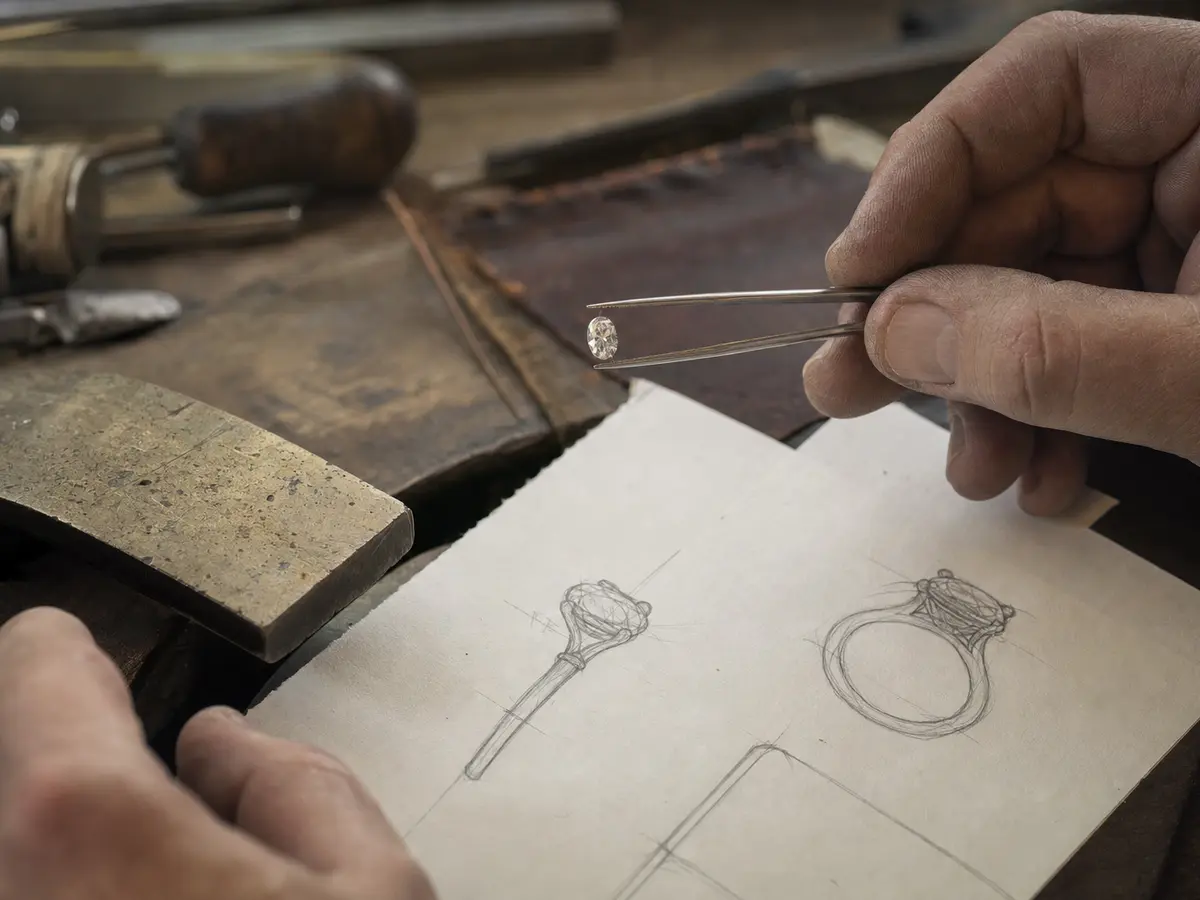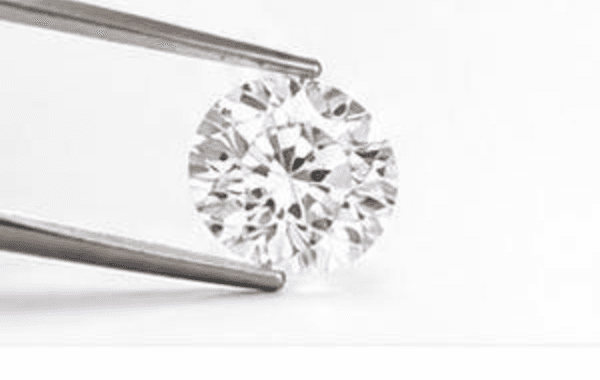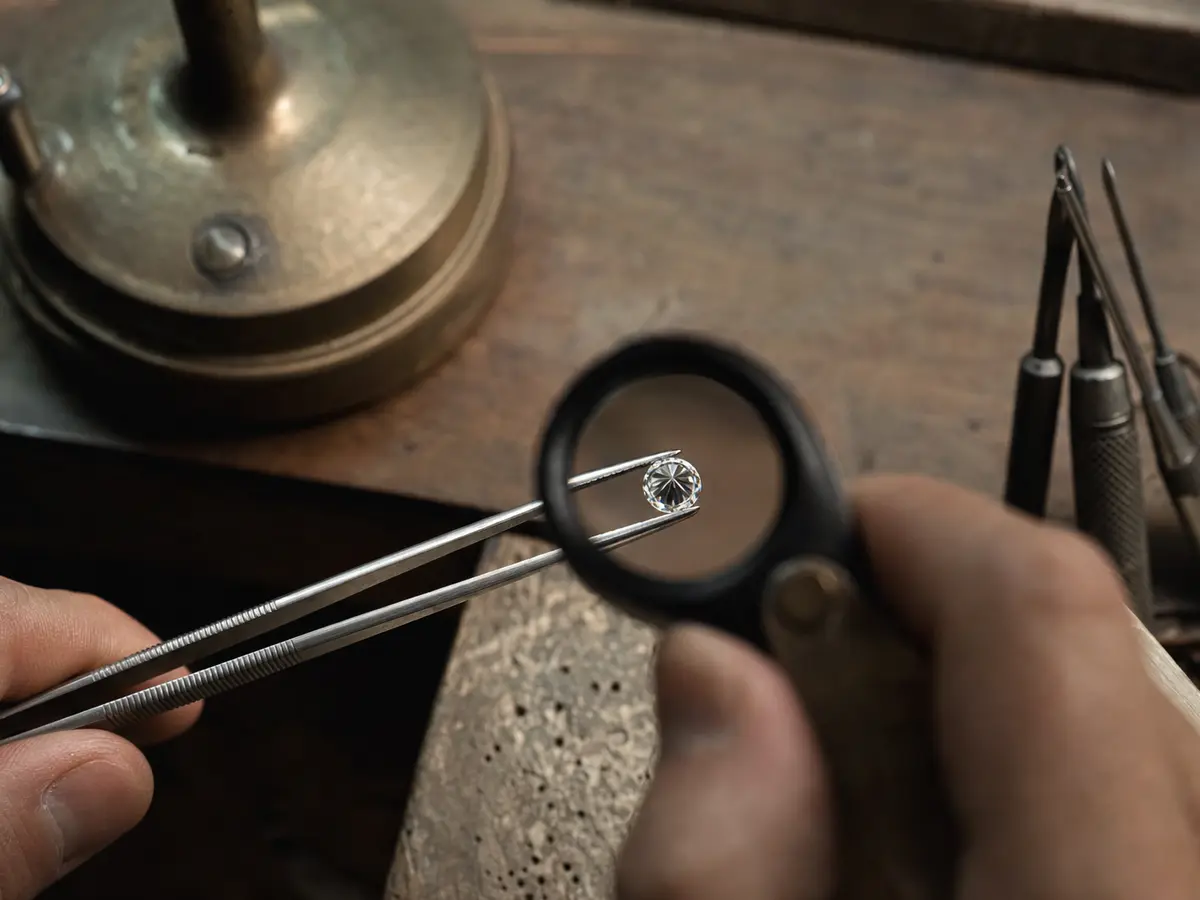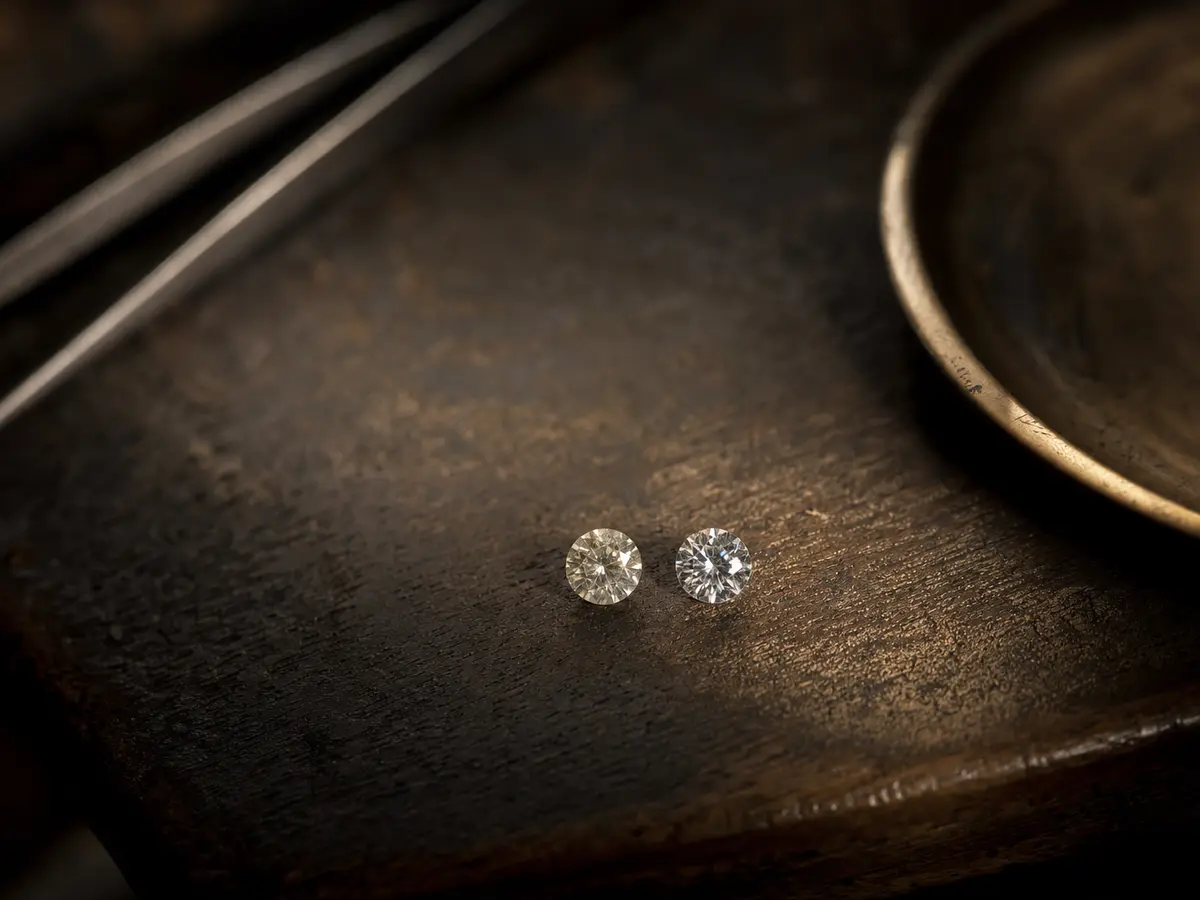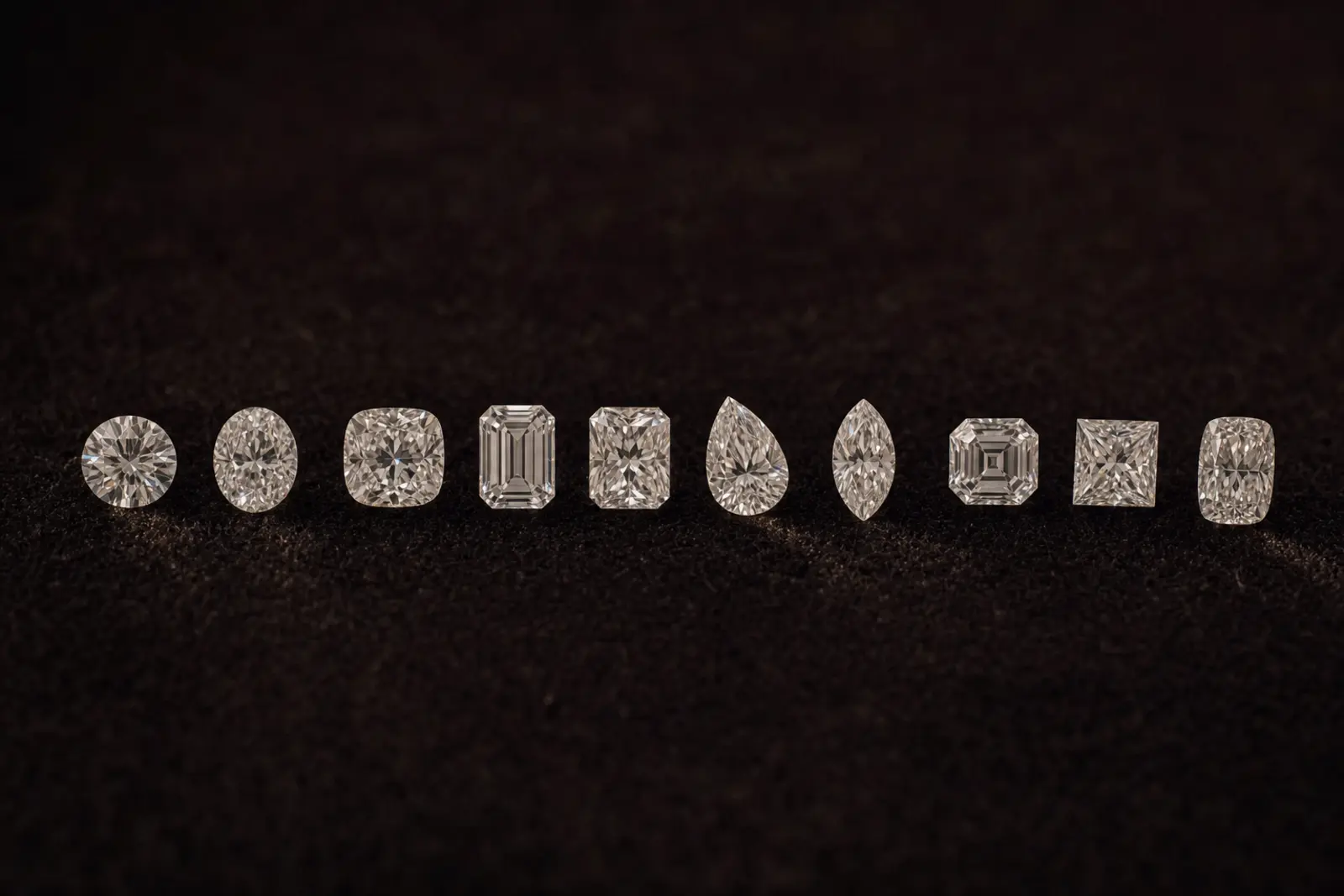
Shape is the first decision most people make and the one photographs mislead on most, because a shape that reads beautifully on a screen can behave completely differently once light is actually moving across it on a hand.
Brilliant cuts: built to scatter light
Round, oval, cushion, radiant, pear, marquise and princess are all brilliant cuts: many small, triangular and kite-shaped facets arranged to break light into a scatter of small flashes. That scatter is forgiving. It hides a slightly lower colour grade and a small inclusion far more effectively than a step cut does, which is one reason brilliant shapes are the easier place to save without it showing.
The round brilliant is the most refined version of this idea, the product of the most sustained cutting research of any shape, and it is the only shape most laboratories give a formal cut grade to. Every other brilliant shape borrows the same principle and adapts it to a different outline.
Step cuts: built to flash rather than scatter
Emerald and Asscher cuts are step cuts: long, rectangular facets set in parallel rows, like the steps of a staircase seen from above. Instead of scattering light into many small points, a step cut produces broad, mirror-like flashes as the stone moves, sometimes described as a hall of mirrors.
That same open architecture shows colour and inclusions more honestly than a brilliant cut does, because there are fewer facet junctions to break up what the eye sees through the top. A step-cut stone is a poor place to save on clarity or colour; buy a grade higher than you would on a round of the same size.
Bow ties and length-to-width ratio
Ovals, pears and marquise shapes can show a bow tie: a dark, shadowed band running across the centre of the stone, caused partly by the cutter's own head and hands blocking light as they work, and partly by proportions that let light escape out the sides rather than back through the top. A faint bow tie is normal and even attractive on some cuts. A heavy, hard-edged one is a proportioning fault and it shows in every light.
Length-to-width ratio decides how slender or plump a fancy shape reads. An oval most people find pleasing sits at roughly one and a half times as long as it is wide; much narrower and it starts to look thin, much closer to one and it starts to look round. Pear and marquise shapes read best a little more elongated again, and elongated cushions sit between a square cushion and a rectangle. None of these are rules so much as a starting point for what to compare stones against.
Apparent size and how shape moves the price
Carat weight measures weight, not size, and shape changes how much of that weight shows face-up. A well cut oval, pear, marquise or radiant spreads more of its weight across the top of the stone than a round brilliant of the same weight does, which is why fancy shapes often look larger on the hand than the number on the report suggests.
Shape also moves price behaviour, in general terms rather than figures. Round brilliants carry a premium because more of the rough crystal is wasted cutting one and because demand for them is highest. Fancy shapes waste less rough and sit in steadier rather than dominant demand, so a given budget commonly buys a larger, better cut fancy shape than the equivalent round. That is a real trade rather than a compromise, and it is worth deciding on shape before carat weight rather than after.
Which setting suits which shape
- Round brilliant: works with almost any setting, from a simple four-claw to a full pave band.
- Oval, pear and marquise: the pointed ends need a V-claw or a protected tip, or they chip on a first hard knock.
- Emerald and Asscher: the corners are the vulnerable point; a setting with corner protection matters more here than the number of claws.
- Cushion and radiant: forgiving of most settings, and their rounded or trimmed corners are naturally more robust than a true emerald cut.
- Princess: the sharpest corners of any common shape, and the one that benefits most from a protective, corner-covering setting.
Whichever shape you are drawn to on a screen, look at the actual stone before deciding. A bow tie, a dull side profile or a colour tint that only shows at certain angles are all things a photograph, however good, will not tell you.
Shape is a taste decision first and a light-performance decision second. Get both right and the size takes care of itself.
Is one diamond shape more expensive than another for the same carat weight?
Generally yes, and round brilliants sit at the top for a given quality level, because more rough is wasted cutting one and demand for them is consistently the highest. Fancy shapes such as oval, pear, cushion, radiant and marquise waste less of the rough crystal and are usually less expensive for a comparable quality, which is part of why they often look larger for the same budget. Emerald and Asscher cuts sit closer to round pricing because their clarity and colour requirements are stricter.
Which diamond shape hides a bow tie best?
Round brilliants do not show a bow tie at all, because the facet pattern is symmetrical around the centre rather than elongated. Among fancy shapes, a well proportioned cushion or radiant shows the least of it, since they sit closer to square than oval, pear or marquise do. If you love an elongated shape, the fix is not avoiding it, it is looking at several stones and choosing the one where the shadow is faint rather than assuming every stone in that shape behaves the same way.