Choosing a wedding venue goes wrong when it starts with the photographs and ends with the arithmetic. Done in a better order, it starts with two things you can fix on paper, the date window and the number of guests, and only then moves to the places that could hold them.
The order that saves you visits
Every venue you visit costs a Saturday, so the aim is to arrive at the first one with most of the elimination already done. This is the sequence that does it.
- A date window and the seasons you will avoid.
- A guest number, split into those you must invite and those you would like to.
- A total budget, and what share of it the venue may take.
- A region, set by where most of the guests will be travelling from.
- A catering position: in-house, approved list or your own caterer.
- A plan for rain and for the power going off.
- Only then, a shortlist and the site visits.
Date and season first
A venue is only available on a particular day, so the date narrows the field faster than any other choice. Inland, the busy windows are roughly March to May and September to November, and good venues for those months are often booked a year or more ahead. In the Western Cape and along the coast, December is peak season too. A midweek date or a quieter month for your region widens the choice, and sometimes the negotiating room, but it also changes who can attend. Check the date against public holidays and school terms before you fall for a place.
Once a venue and date are fixed, everything with a lead time can be worked back from them, including the wedding bands. If Gavin is making them, it helps to tell him the date early.
Work out what to book, and when.
The planning timeline sets the venue against the other bookings that depend on it.
Read the planning timelineA guest number you can defend
The number a room is advertised for and the number it comfortably holds at your layout are different, and the second one is the one that matters. Decide how many guests you truly need, then ask each venue to show you a plan for that number. A room that is full at the advertised figure rarely feels generous with a dance floor and a band in it.
Test a capacity claim.
How many guests a venue can really holdBudget, and what the venue fee does not cover
Set the whole wedding budget before you look, then decide how much the venue may take. Compare venues on the total they will cost you, not on the hire fee alone, because one place may include furniture, staff and a kitchen while another quotes the building and leaves the rest to you. Ask each venue for the same list of inclusions in writing so the comparison is fair.
Build the budget the venue sits inside.
How to build a wedding budgetLocation and how guests will get there
Choose the region by the guests, not by the view. A venue an hour out of the city is a pleasure for the couple and a logistics problem for a grandmother, a toddler and anyone who has been drinking. Ask about parking, the state of the last stretch of road, whether a shuttle is allowed and where out-of-town guests will sleep. Rooms on the property or close by change the whole shape of the evening.
Plan how guests arrive and leave.
Guest transport, parking and shuttlesWhere will guests sleep?
On-site and nearby accommodationCatering policy decides more venues than you expect
Some venues insist on their own kitchen, some keep a list of approved caterers, and some let you bring anyone. If you already have a caterer in mind, or a Kosher, Halaal, vegetarian or alcohol-free requirement, this is the question that can end the conversation in one email. Ask it before you visit, not after.
Understand the catering rules.
Wedding-venue catering policies explainedWeather, power and water
Any outdoor plan needs a real second plan, and in South Africa the first thing to ask about is not the rain but who decides to move indoors and by when. Load-shedding and local outages are a fact of planning, so ask what happens to the kitchen, the sound and the lights if the supply fails, and when the backup was last tested. A venue that has thought about this will answer without hesitation.
Rain and the indoor plan.
Indoor, outdoor and weather-backup questionsWhen the power or water fails.
Backup power, water and weather resilienceAccessibility, for everyone you are inviting
Think about the oldest and the youngest guests, anyone who uses a wheelchair or walks with difficulty, and anyone who will need to sit for the ceremony. Steps, gravel, long walks between spaces, and the bathrooms are the places a lovely venue quietly fails some of the people you love.
Check the venue works for every guest.
How to assess venue accessibilityCurfews, noise limits and the costs that arrive later
The end time on the contract and the time the music must stop are not always the same, and extra hours, security, cleaning and breakages can be billed on top of the quote. Ask for these as line items. A venue that is cheaper on paper can be the dearer one by the end of the night.
Read the small print before the deposit.
Curfews, noise limits and hidden costsMatch the kind of place to the kind of wedding
Once the practical limits are set, the type of venue usually becomes obvious. A hotel, a private estate, a garden, a wine estate, a game lodge, a restaurant, a rooftop, a country club, a place of worship, a beach or a private home each solve some problems and create others. Each has its own guide in this section, and a smaller guest list has its own considerations.
Compare the kinds of venue.
Every venue type is explained in the Venues & Destinations section, from hotels to private homes.
Browse venue typesPlanning for a smaller guest list?
Choosing an intimate wedding venueOn the site visit
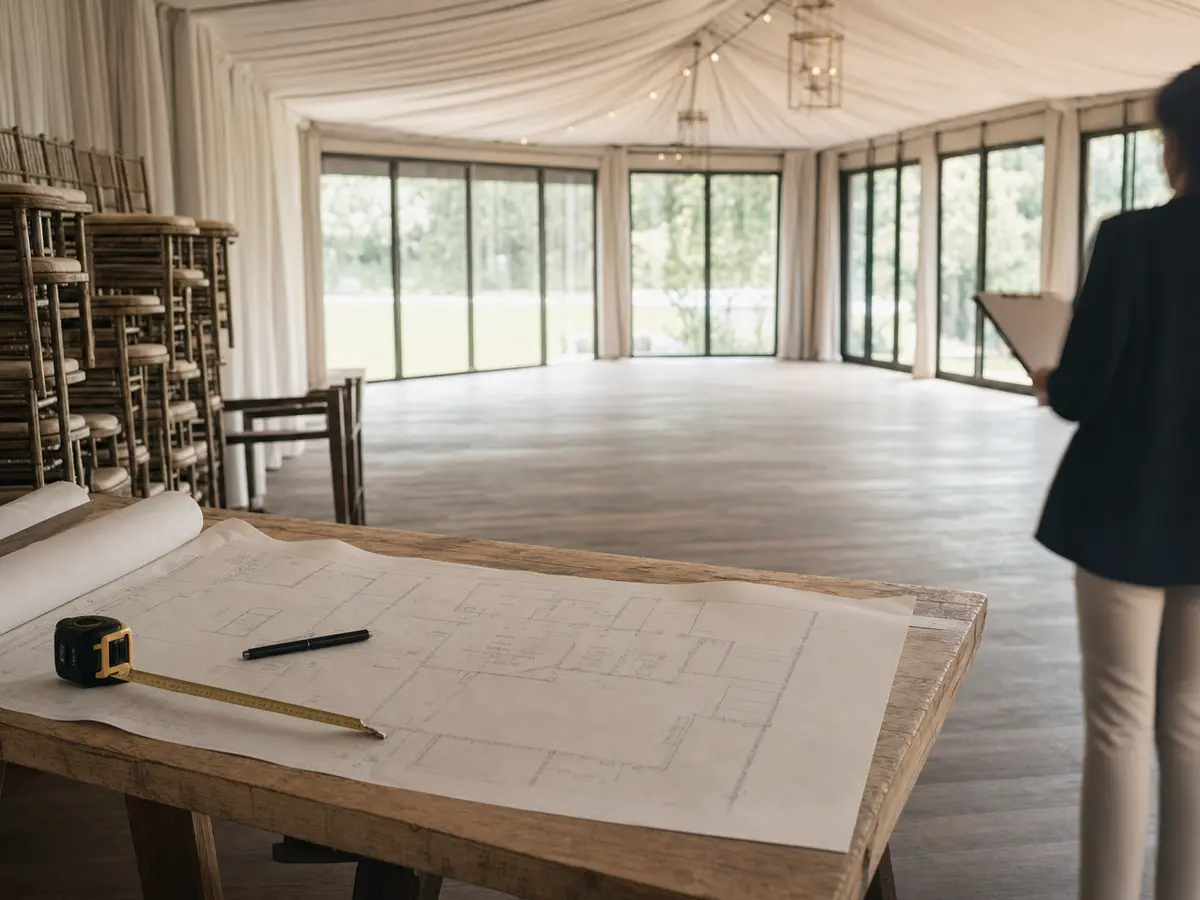
Visit at the time of day your ceremony would happen, and if you can, on a day when another event is running so you can see the place working. Ask to meet the person who will actually run your event rather than the person who sells the date. Walk the route a guest takes from the car to the seat, then the route the food takes from the kitchen to the table.
- Go at the hour the ceremony would start, and note where the sun and the wind sit.
- Meet the person who will run the day, not only the person who books it.
- See the room as it is set for an event, not only the empty one.
- Walk the guest route from the parking to the seat and from the kitchen to the table.
- Ask what the last two or three events there struggled with, and how it was handled.
- Take photographs and notes on the spot, since venues blur together by the third visit.
Take a working list with you.
A wedding-venue selection checklistContracts and deposits
A deposit secures a date, but only the contract says what happens if you or the venue need to change it. Read what the deposit is, whether it is refundable, what counts as a postponement and who carries the risk of a cancellation. Check the guest-number cut-off, the payment schedule and what the venue is liable for if something fails on the day.
A venue is a decision you will live inside for a whole day, so it is worth making slowly and in the right order.
How far in advance should you book a wedding venue in South Africa?
For the busy windows of roughly March to May and September to November inland, and December in the Western Cape and on the coast, popular venues are often booked a year or more ahead, so start looking as soon as you have a date window. Midweek dates and quieter months can sometimes be arranged with less notice, but availability varies by venue and cannot be promised. Ask each venue directly which dates are still open before you plan around them.
Should you choose the venue or the date first?
Settle a date window first, then let the venue fix the exact day. If a particular place matters most, be flexible on the date and ask what it has free. If a date matters most, such as an anniversary or a family gathering, expect a smaller choice of venues. Either way, do not book other suppliers until the venue and date are confirmed in writing.
How many venues should you visit before deciding?
There is no correct number, but a short list is easier to compare than a long one. Use the date, guest number, budget, catering policy and weather plan to remove venues by email first, then visit only the few that survive. Visiting too many tends to blur the details that separate them, so take notes and photographs at each one.
What should a wedding venue contract include?
At a minimum: the date and hours, what the fee includes, the deposit and payment schedule, the cancellation and postponement terms, the guest-number cut-off, the catering and alcohol rules, and the weather and power arrangements. Ask for anything promised verbally to be written in. If any clause is unclear, have the venue explain it in writing or ask an attorney to read it.