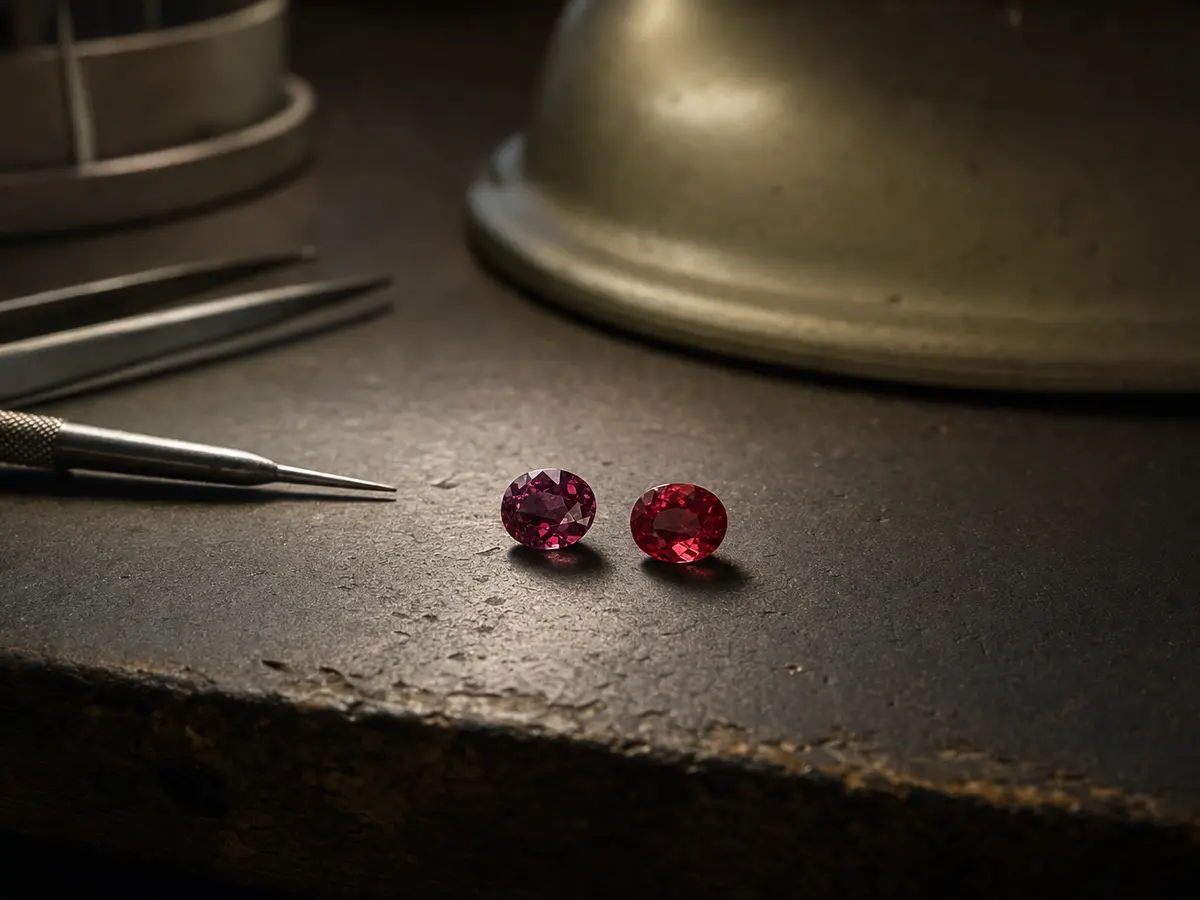
A sapphire engagement ring means choosing a colour first and a stone second, because sapphire comes in far more than blue, and the right one for a particular hand is rarely the most obvious one on a tray.
The colour range
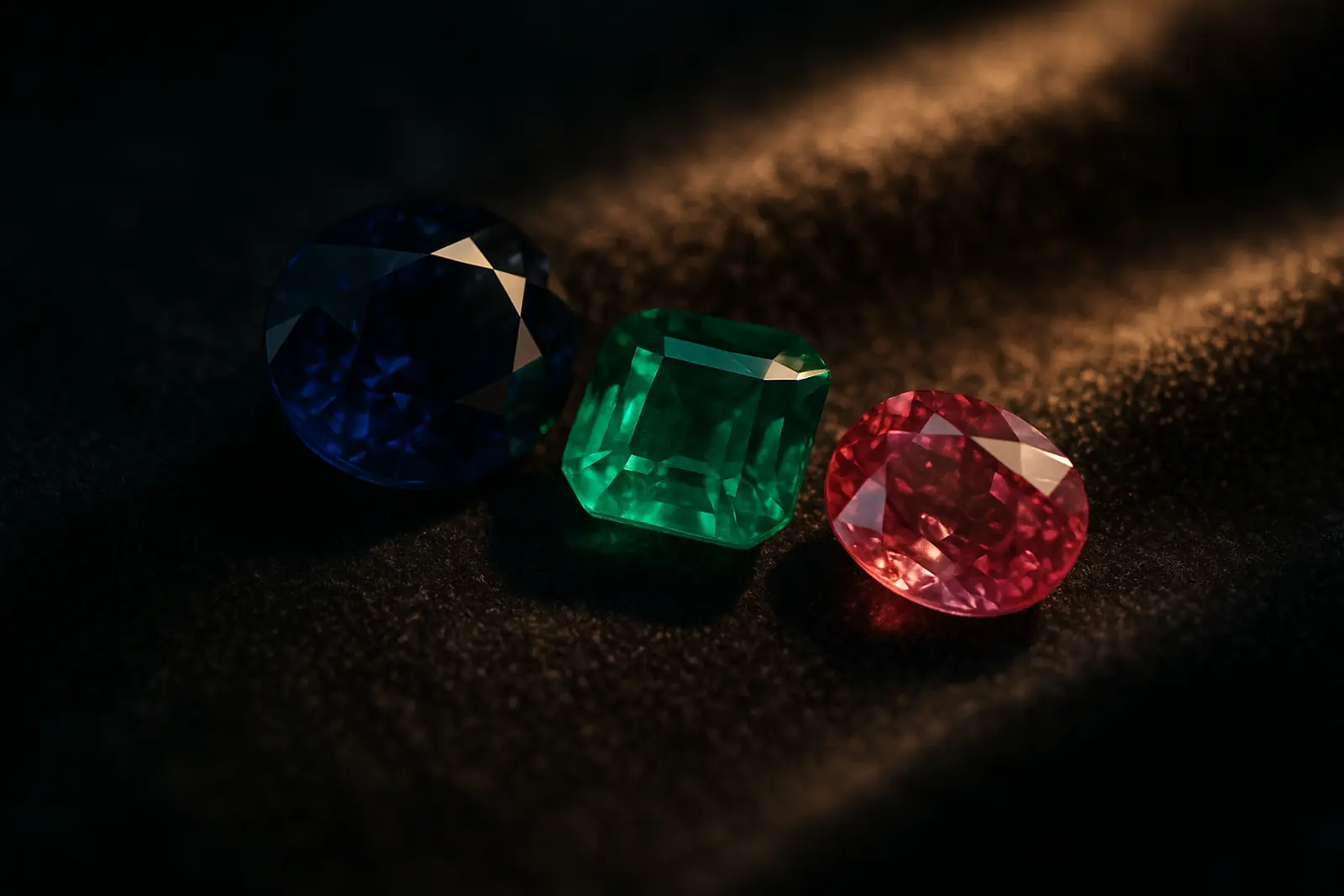
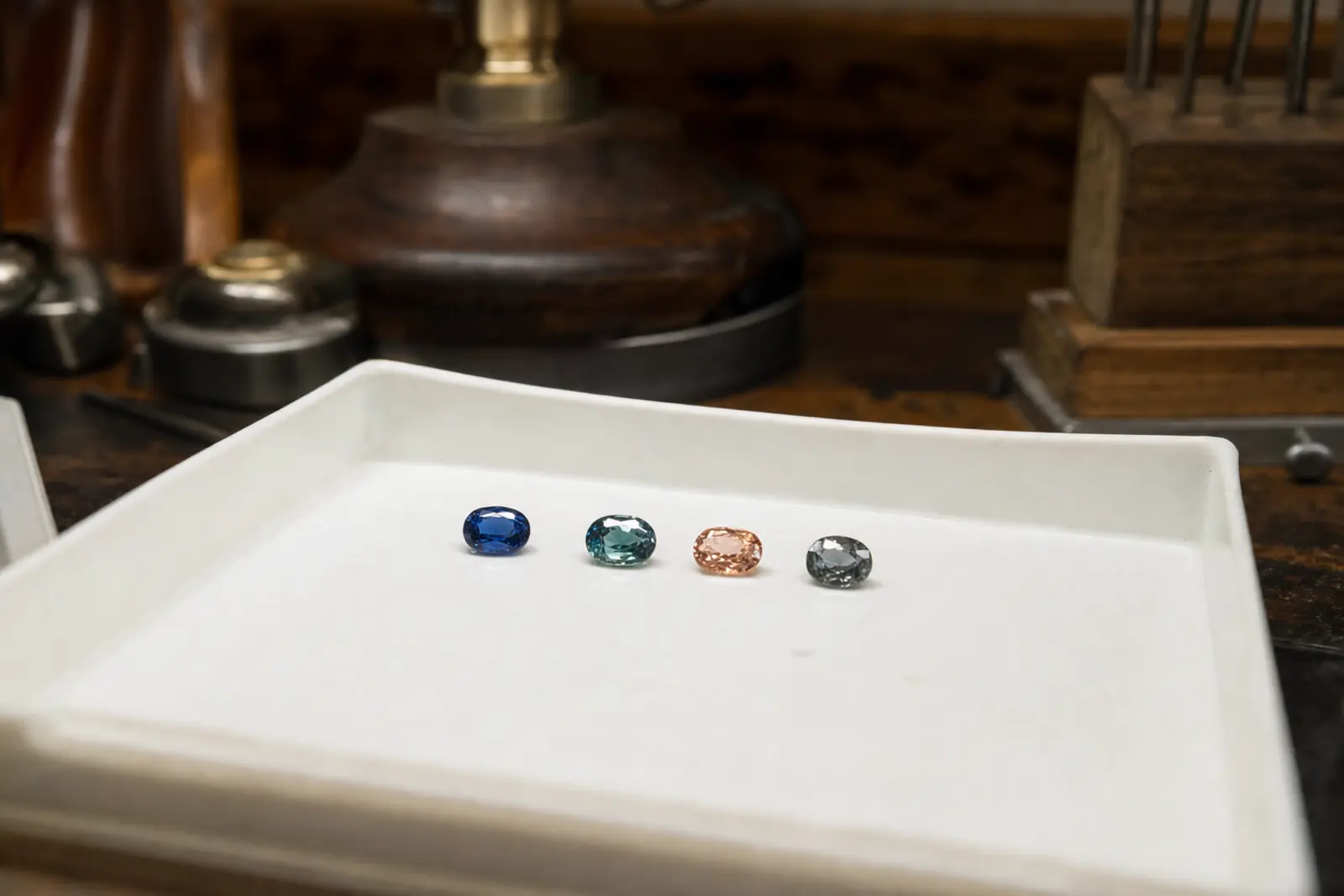
Blue is still the benchmark, and within blue the finest stones sit at a rich, saturated medium tone, neither so dark it reads black in low light nor so pale it looks washed out. Teal sapphires, a blue-green that shifts with the light, have become one of the most requested colours we source, precisely because they read as quiet rather than showy. Peach and grey sapphires sit at the softer end and suit a warmer metal particularly well. Padparadscha, a pink-orange that takes its name from a lotus blossom, is the rarest of the group and priced accordingly.
Saturation and tone matter more than the name of the colour. Two stones both correctly called blue can differ enormously in how alive they look, and this is a case where seeing several stones side by side tells you more in five minutes than any description can.
Origin and treatment, honestly
Sapphires are mined in several parts of the world, and origin affects character and, often, price, but we would rather show you the stone than sell you a region's reputation. What matters more in practice is treatment. The overwhelming majority of sapphires on the market are heat treated, a stable process that improves colour and clarity and has been standard practice for a very long time. It should be declared on the report and on the invoice, and it is worth asking about plainly rather than assuming.
Cut, size and how price behaves
Sapphire is cut to keep as much of the rough crystal's weight as possible, which sometimes means a slightly deeper or less symmetrical cut than a diamond buyer would accept. That is normal for the material rather than a flaw, though a poorly cut sapphire still looks duller than a well cut one, exactly as with a diamond. Price rises with saturation and evenness of colour more steeply than it rises with size, so a smaller stone in an exceptional colour is often the better buy than a larger stone in an ordinary one.
Settings and daily wear
Sapphire is hard, nine on the Mohs scale, second only to diamond, which genuinely suits it to daily wear in a way softer coloured stones are not. It settles happily into almost any setting a diamond would, from a simple claw to a full bezel, and a bezel is worth considering for an active hand regardless of the stone's hardness, simply because it protects the girdle from a hard knock.
Living with it
- Clean with warm water and a soft brush; sapphire tolerates an ultrasonic cleaner far better than most coloured stones.
- Ask what treatment your specific stone has had, and keep the answer with your paperwork.
- Have the setting checked every couple of years, the same as any ring worn daily.
- View a shortlist in more than one light before deciding; teal and grey sapphires in particular shift character between daylight and a shopfront.
Choose the colour that you keep returning to rather than the one you think you are supposed to want. Sapphire rewards that kind of honesty because there is genuinely enough range in it to suit almost anyone.
People arrive expecting to choose blue and leave with a teal or a peach more often than you would think. Once they see the range next to each other, blue stops being the default.
Is a sapphire engagement ring a practical choice for someone who works with her hands?
Yes, more than almost any coloured stone available. At nine on the Mohs scale, sapphire resists scratching nearly as well as diamond, and it is tough as well as hard, meaning it also resists chipping reasonably well. Combined with a secure setting such as a bezel or six-claw, it is a genuinely sensible choice for daily wear, including manual work, without the extra care a softer stone would need.
How do I know if a sapphire has been treated?
Ask directly and expect a direct answer. Heat treatment should be stated on the stone's report and repeated on the invoice, since it is standard practice rather than something to hide. Untreated stones are rarer and usually noted as such precisely because it adds value. If nobody has mentioned treatment to you at all, that is the question to ask before anything else, not after you have decided to buy.