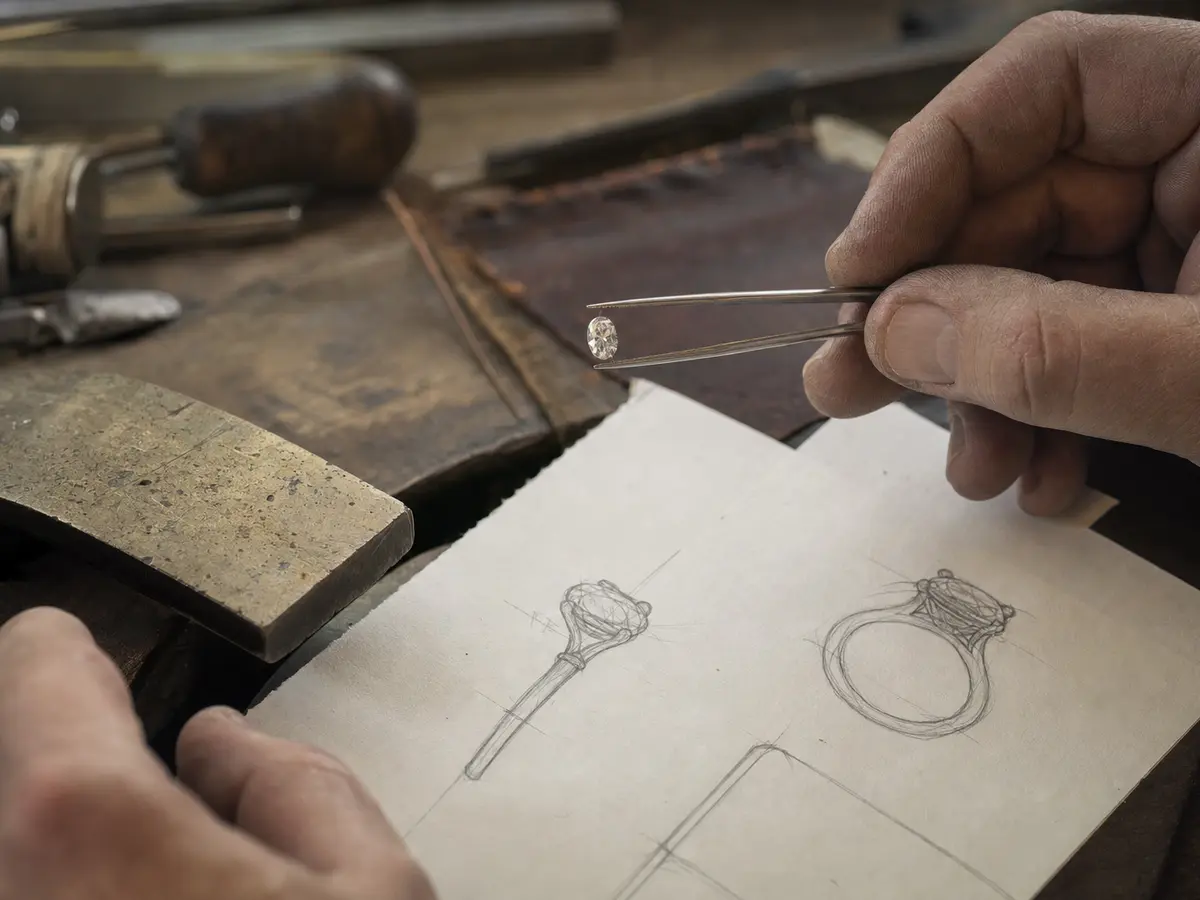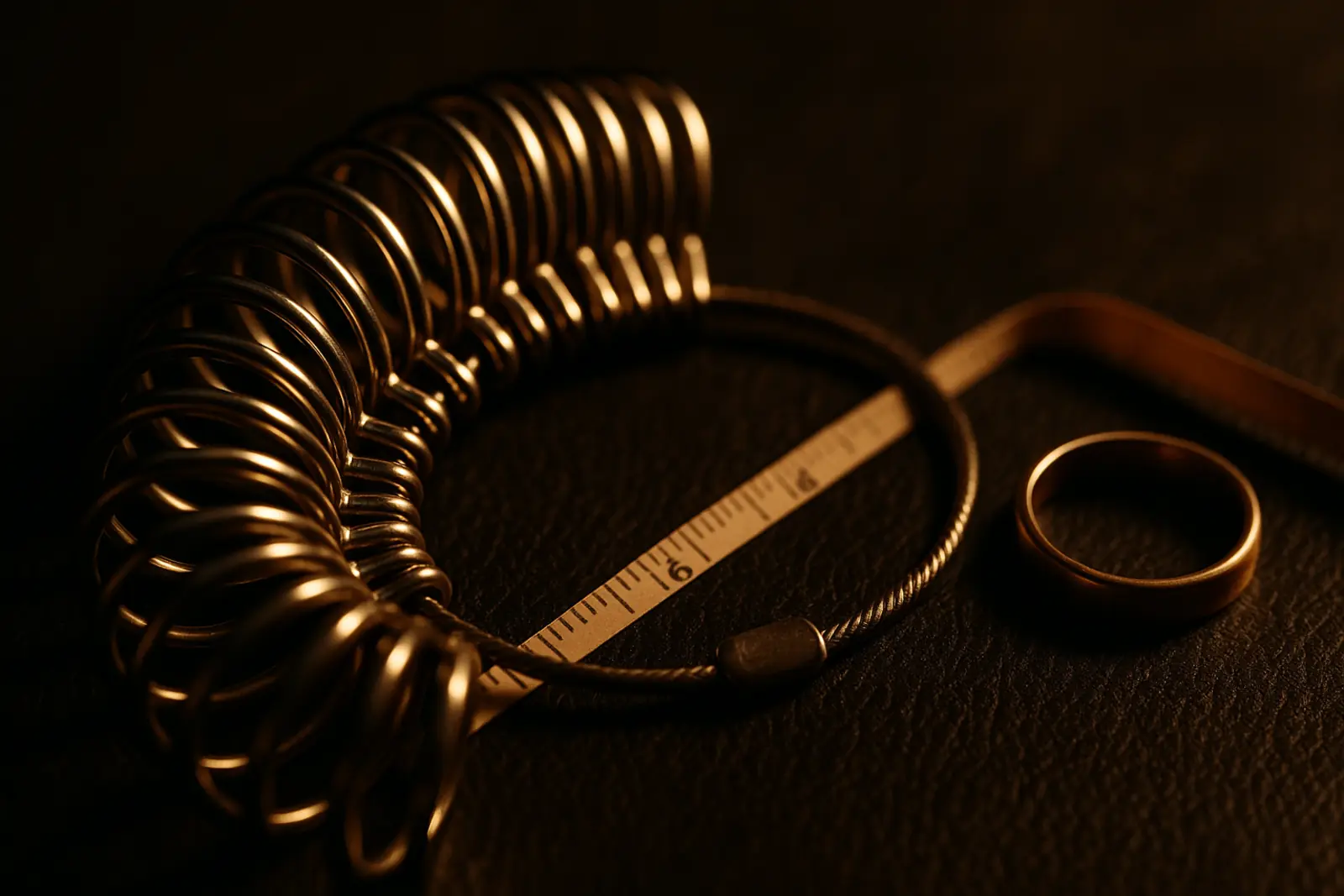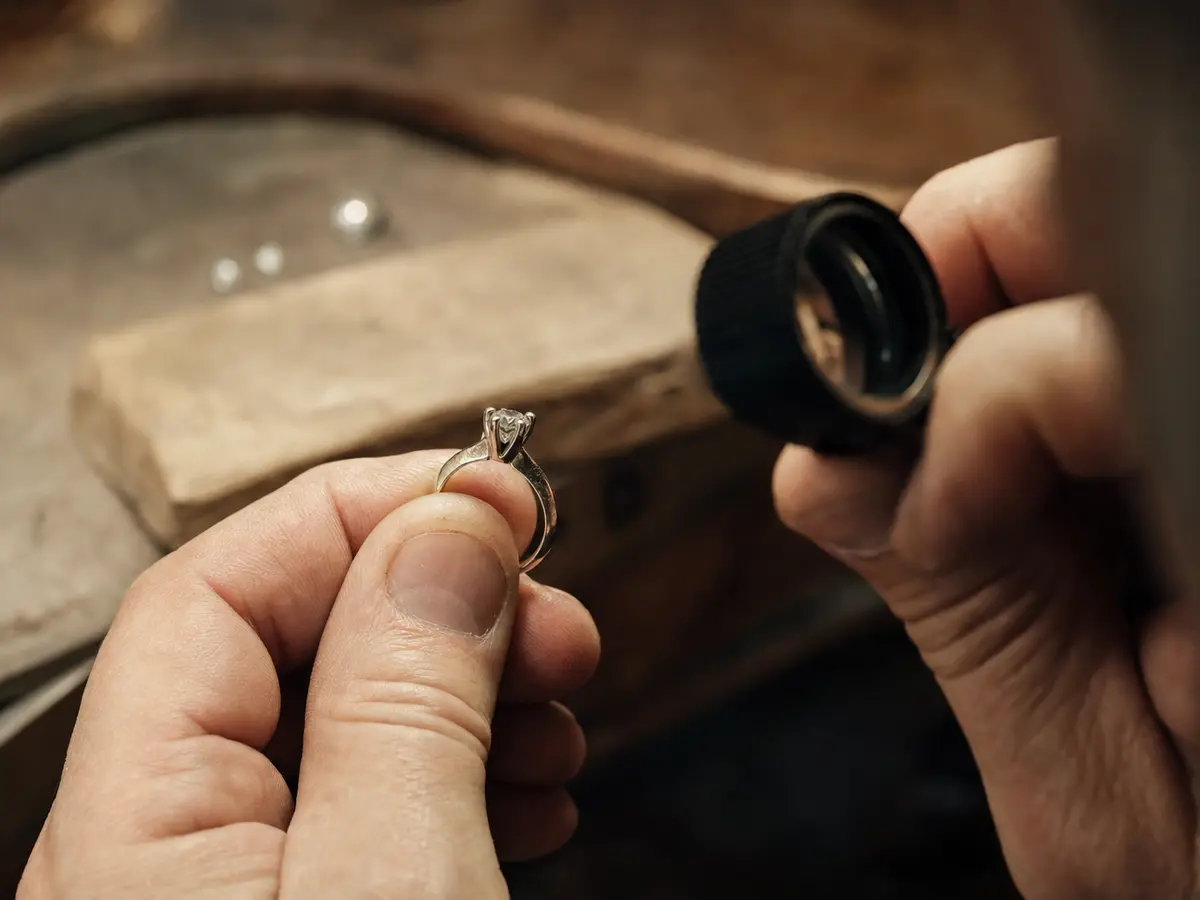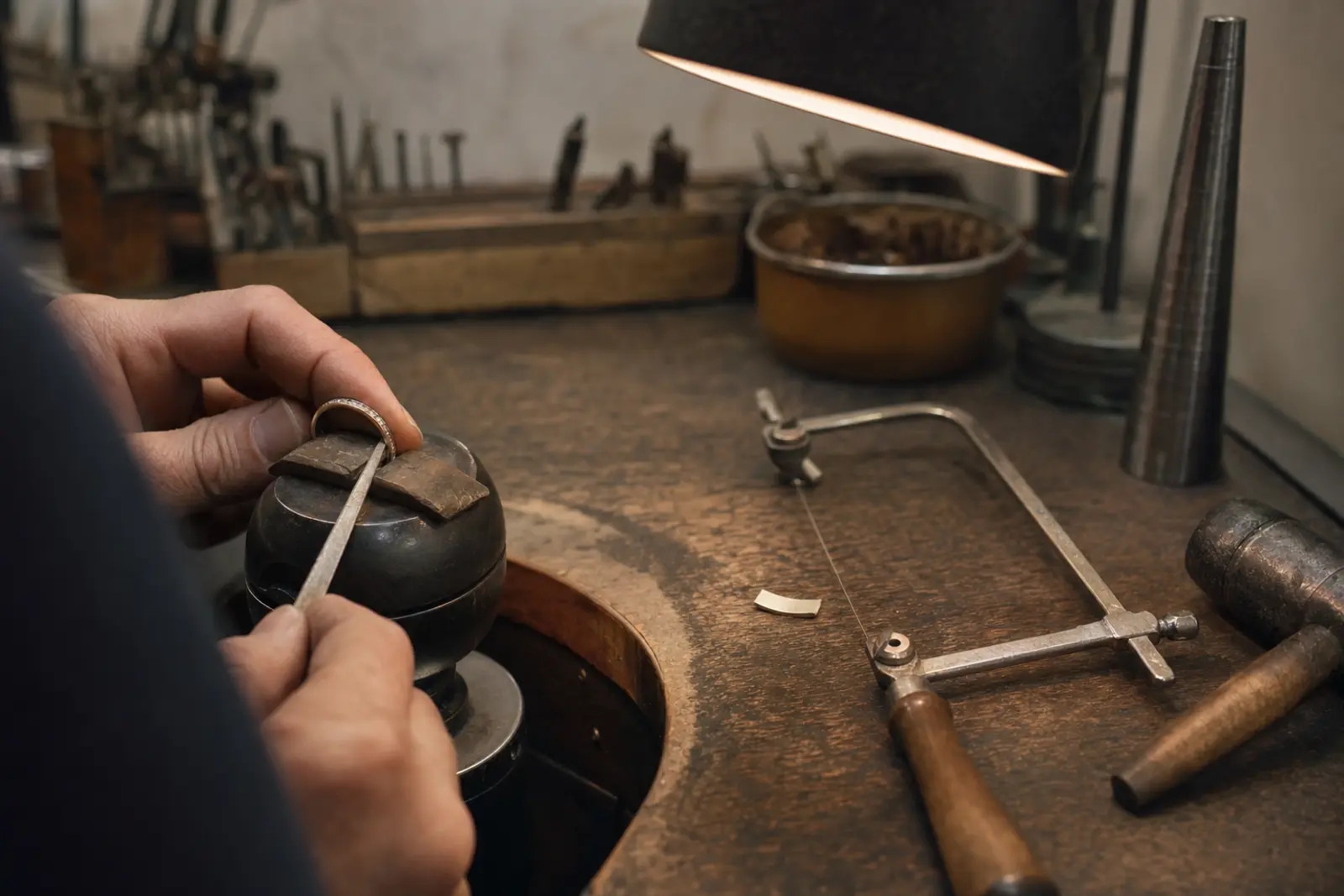
Resizing means physically cutting or adding metal to the shank, and what is actually possible depends on how the ring was made, not just on how many sizes the change involves.
How a resize is actually done
To make a ring larger, the shank is cut and a small section of matching metal is soldered in, then shaped and polished until the join is invisible. To make it smaller, a section is cut out and the two ends rejoined. Both are routine work on a plain or simply set band.
A sizing bead is a different approach: two small beads of metal are soldered to the inside of the band, reducing the effective size without cutting the shank at all. It suits rings with pattern engraving or texture running the whole way round, where a visible join would be hard to hide, and it can usually be removed later if the size needs to change again.
How many sizes is sensible
One or two sizes, up or down, is ordinary work on most settings. Beyond that, the proportions of the band and the position of the stones start to shift, and a larger setting with pave or a shaped profile may need to be partly or fully remade rather than simply resized. There is no fixed cut-off; it is judged ring by ring at the bench.
Settings that will not resize, or resize badly
A full eternity band, with stones set the entire way round, has no plain metal left to cut, so it generally cannot be resized at all. Most tension settings hold a stone by precise pressure between the two ends of the band; cutting into that structure changes the tension the whole design depends on, and the honest answer is usually to start again rather than adjust it. Very thin bands and shanks heavily set with pave have little room to work in and need more care, sometimes at extra cost.
Engraving and pave near the join
Inside engraving sits exactly where a resize cuts, so it is often disturbed and needs re-cutting afterwards; tell whoever does the work if there is engraving to protect or replace. Pave stones close to the sizing point are usually removed before the cut and reset once the join is finished, both to protect them and because resetting into a freshly soldered join gives a cleaner result than working around it.
Warranty, timing, and the practical side
A warranty on a ring usually covers manufacturing defects, not the outcome of work carried out afterwards by someone unfamiliar with how the piece was made. Where possible, have any resizing done by the studio that made the ring, or at least tell them about it, so nothing about the piece's history is unclear later. A straightforward resize is often a matter of days; a sizing bead, significant pave work, or a full re-shanking takes longer, so build the time in if there is a deadline attached.
Pregnancy and weight change
Fingers swell in pregnancy, in heat, and with some medications, and the change is not always permanent. It is usually worth waiting a few months after any noticeable swelling settles before committing to a permanent resize, rather than adjusting the ring twice. A temporary solution covers the gap in the meantime.
Temporary options
A ring guard, a small clip or coil fitted to the inside of the band, takes up space without any metal being cut and can be removed the moment it is no longer needed. It is the right answer for a swelling that may not last, or for the weeks between a proposal and a proper resize.
- Usually simple
- Plain bands and four- or six-claw settings, one to two sizes
- Needs more care
- Pattern engraving, pave shoulders, very thin shanks
- Cannot generally be resized
- Full eternity bands and most tension settings
- A stopgap
- A clip-on ring guard, reversible at any time
A resize done properly is invisible. That is the whole standard we hold it to.
Can a full eternity band be resized at all?
Almost never, because stones set the entire way round leave no plain metal to cut or add. The practical options are a ring guard as a temporary fix, or remaking the band with a small section left unset at the base so it can be resized in future, which is worth discussing at the design stage if you already know your size tends to move.
Does resizing weaken a ring?
Not when it is done properly. A well-made join is soldered and finished to the same strength as the surrounding metal, and there is no meaningful difference in daily wear. What does add up over time is repeated resizing of the same ring, which thins the metal a little with each cut, so it is worth getting the size right rather than adjusting it repeatedly.