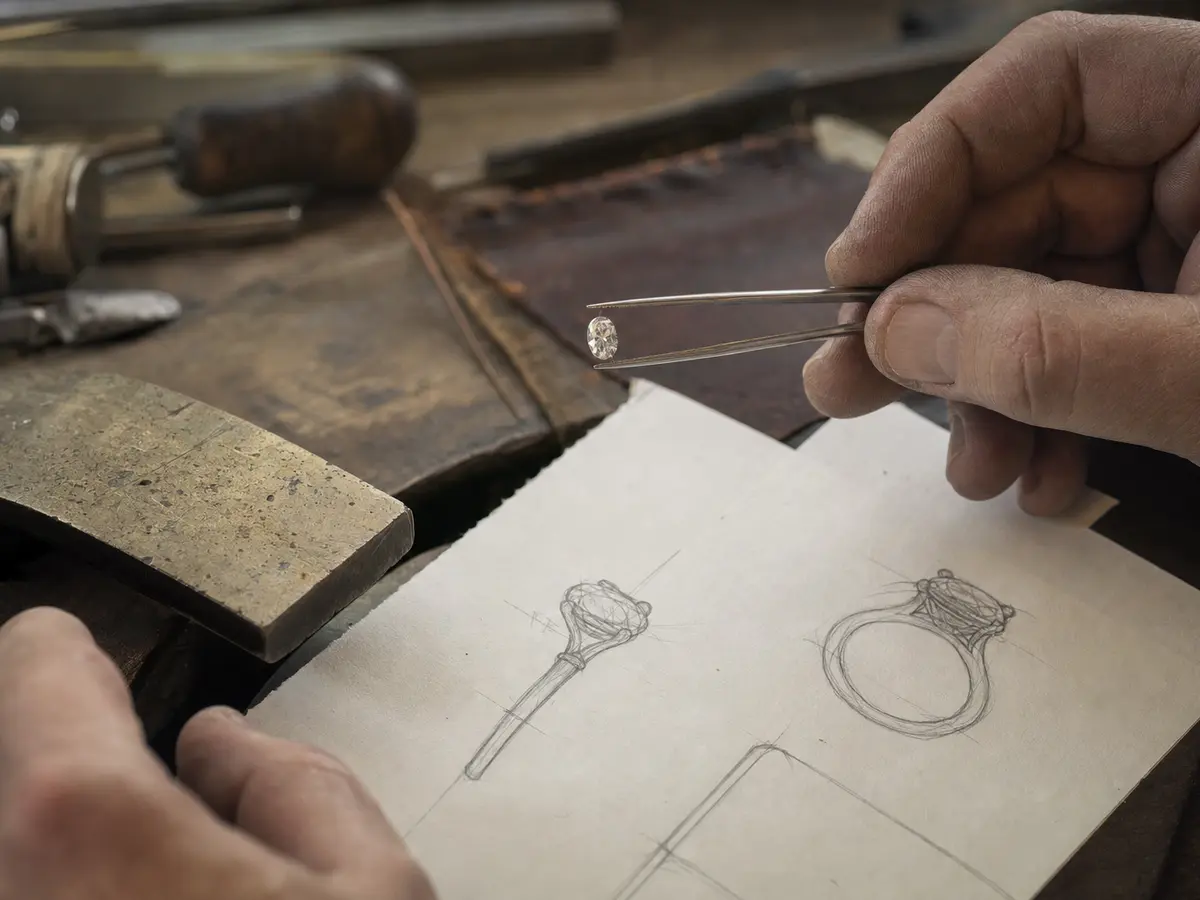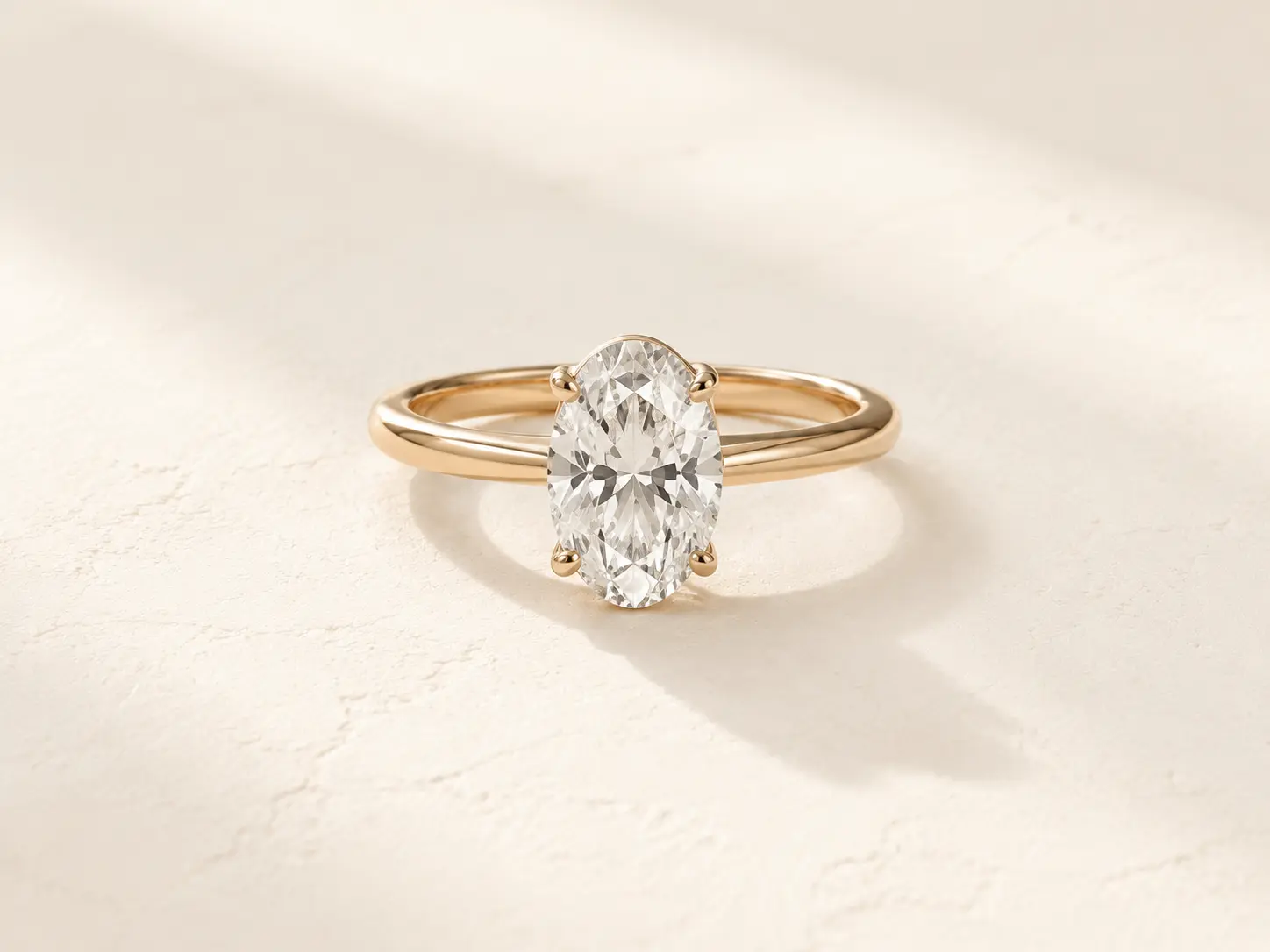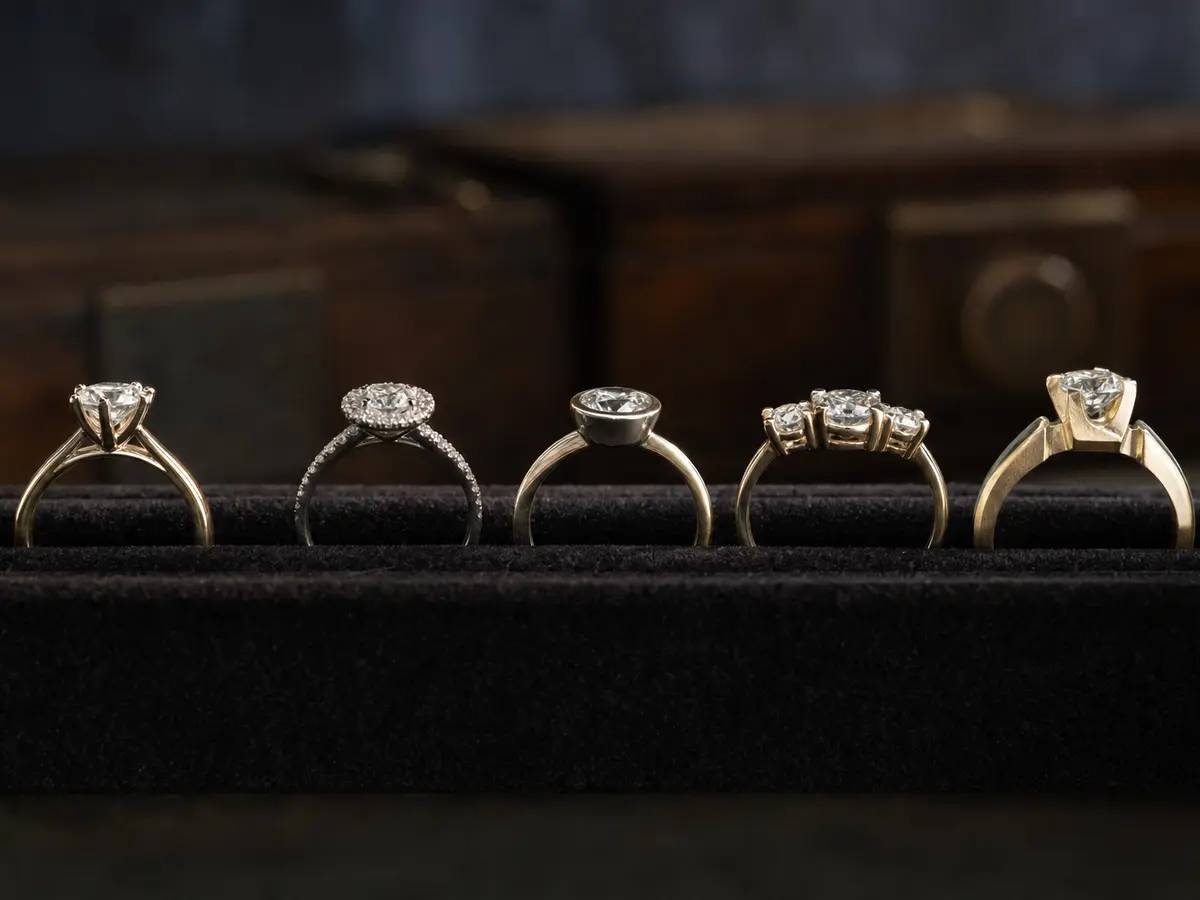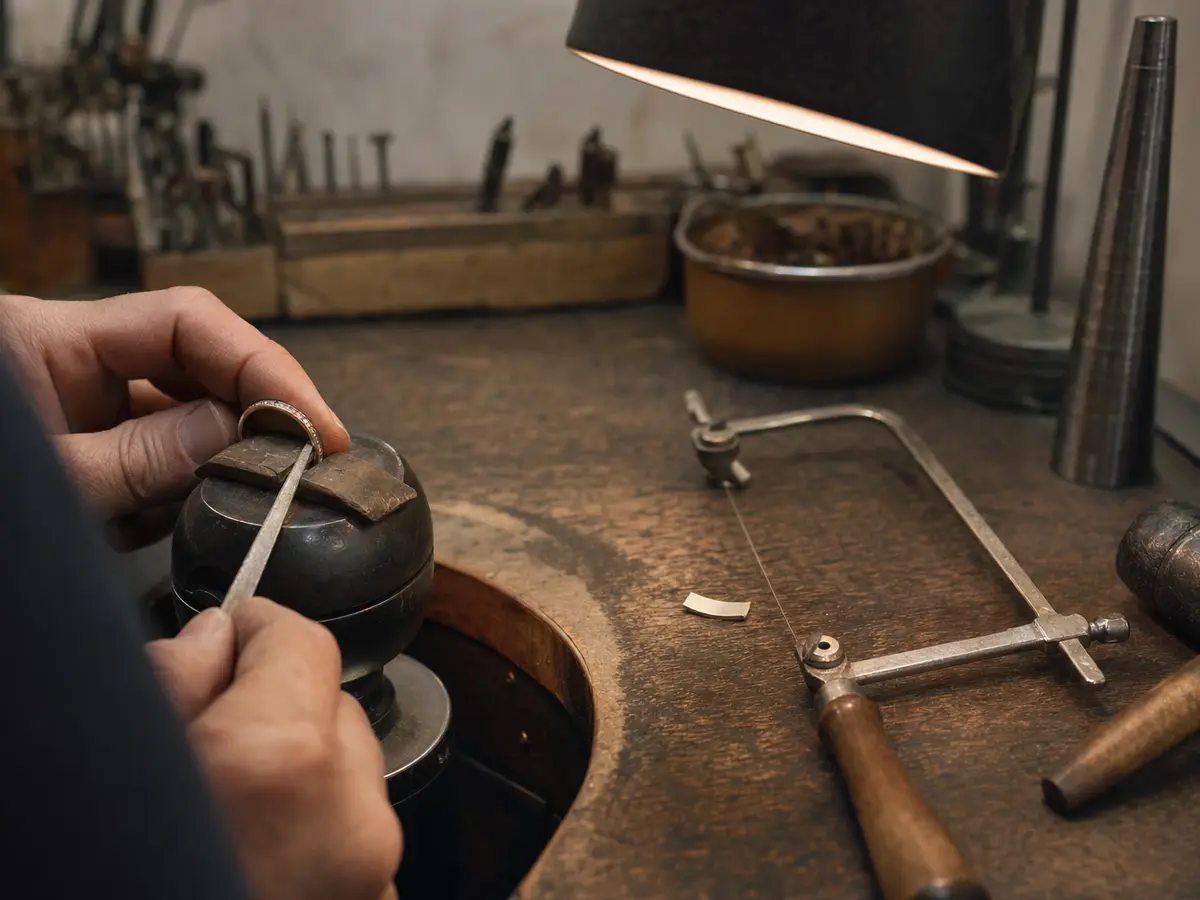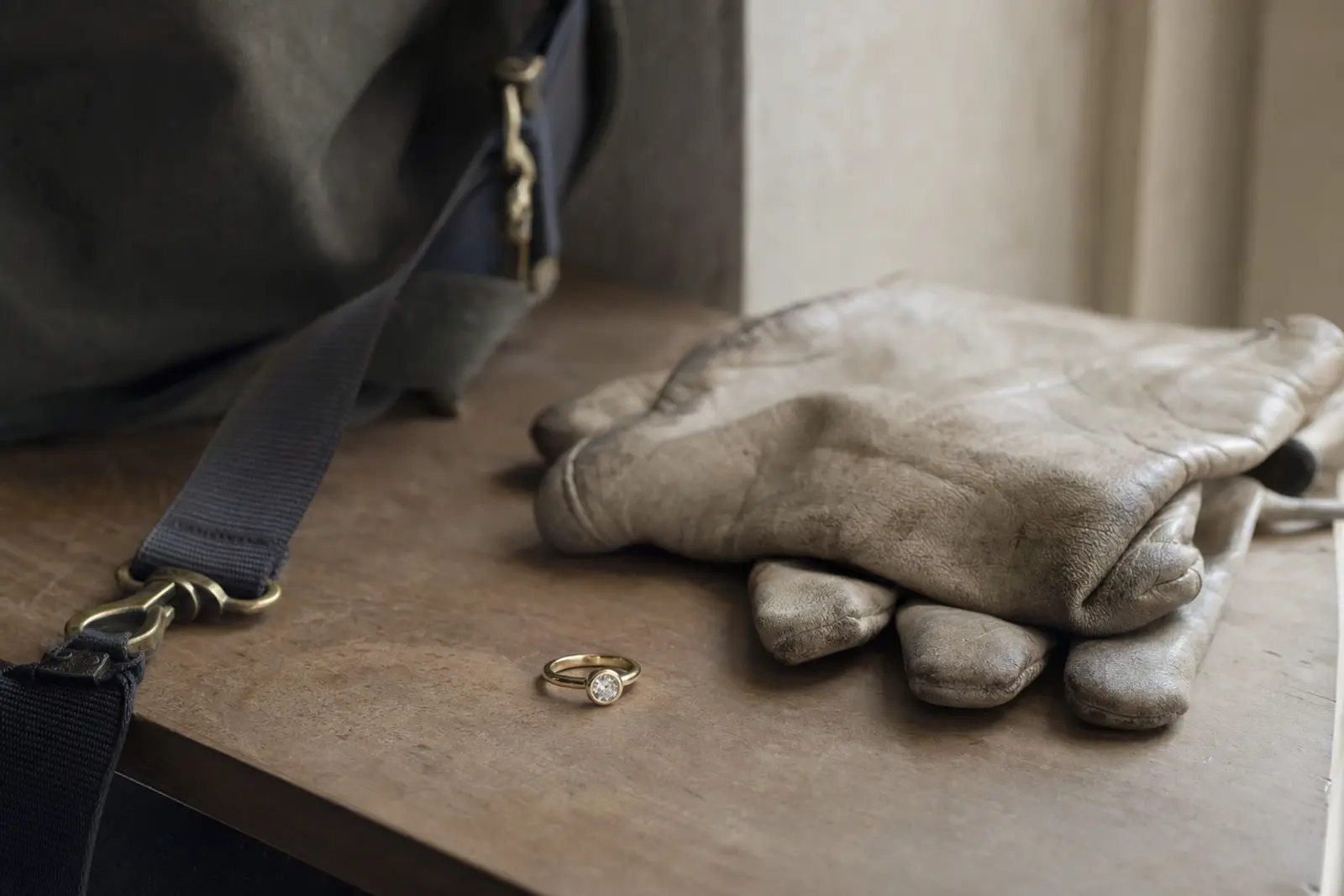
The right engagement ring for daily life is decided by what her hands actually do across a week, not by what looks best held still under a studio light. Profession, sport, children and travel each push the choice in a specific and knowable direction.
Hands-on professions and sport
Surgeons, chefs, physiotherapists, tradespeople and anyone who washes their hands often will wear rhodium plating and soft polish off faster than someone at a desk. Gym work, climbing and contact sport add impact risk on a high setting and a real chance of a caught prong. Riding means reins and gloves and a ring worth checking after, not before, a long session. Swimming brings two separate risks: chlorine dulls the shine on gold over time and can be hard on some coloured stones' surface treatments, and cold water shrinks fingers enough that a ring can come off in a pool without anyone noticing until later.
Hospitals, kitchens and anywhere gloves come off repeatedly
Many workplaces require rings off entirely for hygiene: medicine, food service, some laboratory and childcare settings among them. The ring itself matters less here than the habit around it. A ring taken off and put down several times a day is more often lost to a forgotten basin edge than to any setting failure. If this is a daily pattern, plan a consistent place it goes when it comes off, and consider a simple travel pouch or a chain worn under clothing for the days it cannot stay on the hand at all.
Children, travel and ordinary knocks
Small children grab, tug and headbutt at exactly ring height, and nappy changes and bath time add their own reasons to take a ring off often. Travel adds airport trays, sunscreen and sand to the same list. None of this argues against wearing a ring; it argues for choosing a setting that tolerates being touched and a routine for the moments it comes off, so the ring is not the thing you are managing on top of everything else.
A plain band for the days that need one
Teachers, hairdressers, vets and anyone who handles animals or chemicals face a version of the same problem: hands that are in and out of gloves, water or sanitiser dozens of times a day. For a life like that, a second, plain band worn on high-risk days, with the engagement ring kept for evenings and weekends, is a genuinely practical answer rather than a compromise. It is worth raising early, because a plain band can be designed to sit comfortably under the same setting habits as the main ring, rather than being an afterthought bought later.
- Write down what her hands do on an ordinary Tuesday and an ordinary Saturday.
- Note anything that means the ring must come off, and how often: surgery, food hygiene, a pool, a gym class, a laboratory.
- Decide whether the ring should be built to survive the activity, or protected from it by coming off.
- Choose the setting height and security level from that answer, not the other way around.
- If removal is frequent, plan where the ring lives when it is off before you plan what it looks like on.
A ring built for the life she actually has gets worn every day. A ring built for a photograph ends up in a drawer.
Should she take the ring off for the gym?
For anything involving weights, bars or repeated gripping, most people are better off without it, because a ring under load against metal is where prongs bend and stones chip. A plain, low band can often stay on for cardio and classes without issue. If she trains most days, a simple habit of a small dish by the door matters more than any setting choice.
What if her job means gloves all day?
A ring worn under a glove all day is generally fine as long as the profile is low enough not to press uncomfortably and the setting is secure, since the glove itself offers some protection. The bigger question is usually hygiene rules that require the ring off entirely, in which case the routine around removal matters more than the ring's design. Tell Gavin what the job actually involves and the setting can be chosen around it.