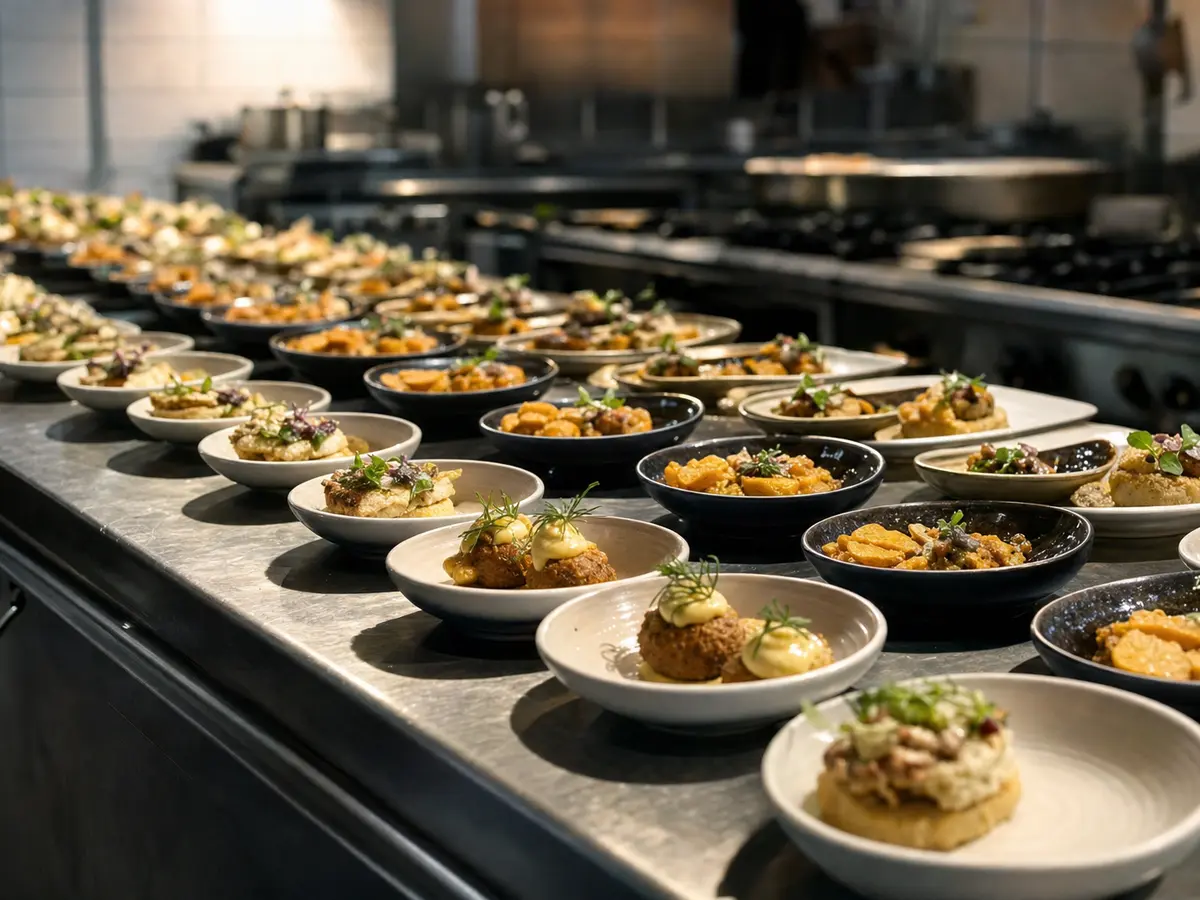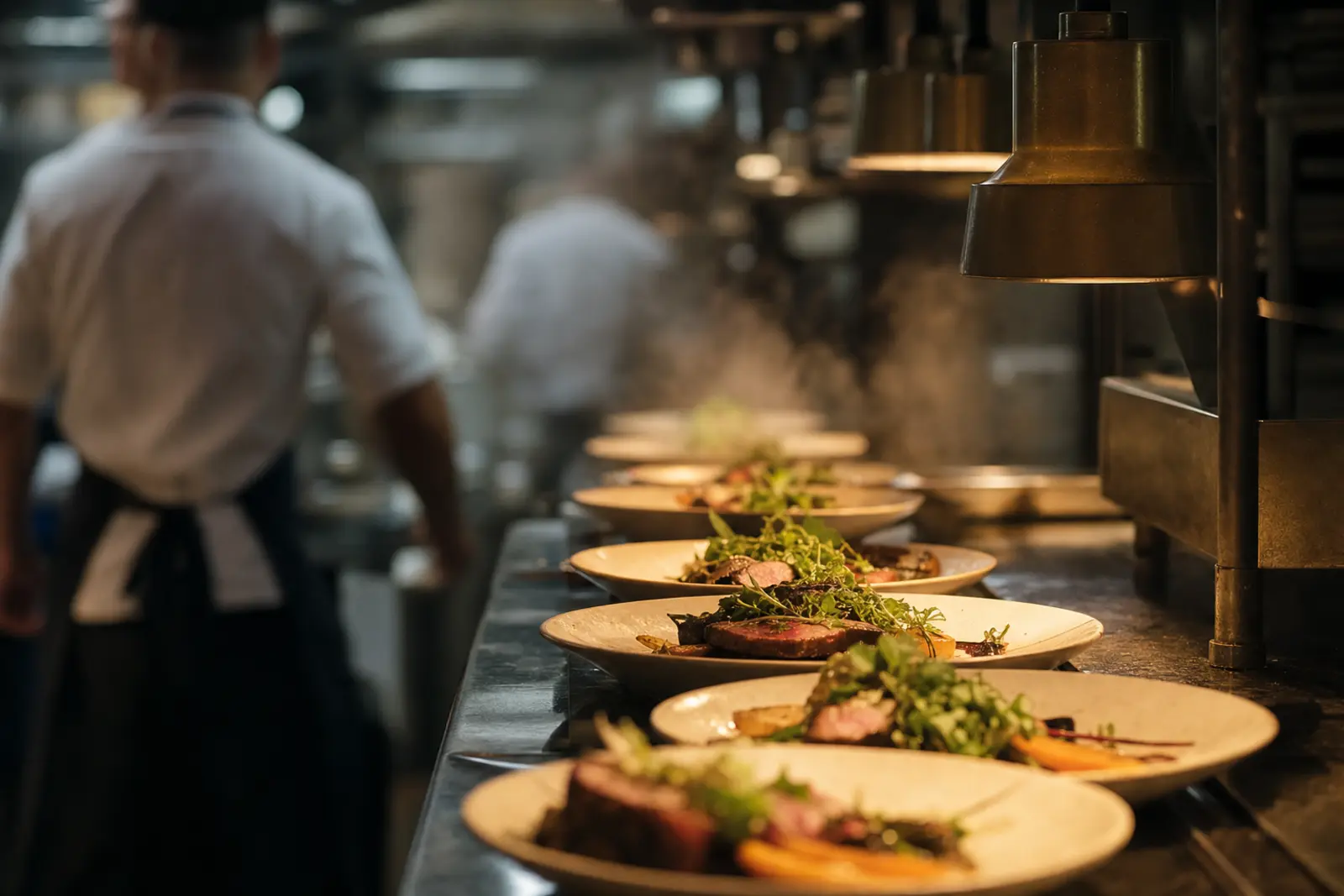
Every venue has a catering policy, whether or not anyone explains it before the contract is signed, and the four common versions of it change the budget, the menu and, for some couples, whether the venue is even usable at all.
The four common policies
In-house only means the venue's own kitchen cooks every meal and no outside caterer is permitted on site. A preferred list means the venue names a small group of caterers the couple must choose from, usually because those caterers already know the kitchen and the service flow. An exclusive-caterer clause is similar but with only one option, often because the venue and the caterer are run as a single operation. Bring-your-own-caterer, sometimes with a kitchen or corkage-style fee attached, gives the widest choice and the most coordination to manage.
None of these is better in the abstract. In-house catering removes a whole supplier conversation from the planning list but limits the menu to what that kitchen does well. A preferred list is a reasonable middle ground if the caterers on it are genuinely a good fit. Bring-your-own gives the most control and the most work, and it only pays off if the couple actually wants that control.
What each means for Kosher-supervised and Halaal-certified requirements
An in-house-only or exclusive-caterer policy can be a genuine obstacle for a couple who needs Kosher-supervised or Halaal-certified catering, since the venue's own kitchen may not be able to offer it and the exclusive caterer may not hold the certification. Ask this question before falling in love with a venue, not after: can a Kosher-supervised or Halaal-certified caterer work in this kitchen at all, and does the venue's policy allow it as an exception. The separate guides on planning Kosher-supervised and Halaal-certified catering go into what supervision and certification actually involve; this article is about the venue's side of the arrangement, which is where that conversation has to start.
Corkage, minimum spends and tastings
Corkage, charged when guests bring their own wine to a venue that also sells alcohol, and minimum spends, a floor the venue sets on the total catering or bar bill regardless of guest number, both belong in the written quote rather than a verbal explanation on the walk-through. Ask whether a tasting is included in the booking or charged separately, how many people can attend it, and how far in advance of the wedding it happens, since a tasting six months out can taste different from the meal actually served on the day if the kitchen or the menu changes in between.
Ask, too, what a service charge covers and whether it is already built into the per-head price or added at the end. Some venues include staff, crockery, cutlery and linen in a single figure; others itemise each of them separately, and a quote that looks lower at first glance can end up costing the same or more once every line is added. A clear, itemised quote is worth more than a lower headline number with vague inclusions.
Weighing the four policies against your own priorities
The right policy depends on what the couple actually wants from the day rather than which sounds most flexible on paper. A couple who wants one supplier to manage and a kitchen that already knows the room tends to do well with in-house or a preferred list. A couple with a specific menu in mind, a family recipe they want served, or a catering requirement the venue's own kitchen cannot meet, needs the flexibility of bring-your-own, even if it means more coordination. Ask which policy the venue has, then decide whether that policy suits the wedding you are planning rather than adjusting the wedding to suit the policy.
- Ask which of the four catering policies applies: in-house only, preferred list, exclusive caterer, or bring-your-own.
- For Kosher-supervised or Halaal-certified catering, confirm in writing that the policy allows it before booking.
- Get corkage and minimum-spend figures in the written quote, not a verbal estimate.
- Ask what service charges apply and whether they are already included in the quoted price.
- Confirm whether a tasting is included, how many people can attend, and how close to the wedding it happens.
Working with a venue that has general or unrestricted catering is its own subject, covered separately, since the questions there are less about permission and more about choice.
Can we bring our own caterer to a venue with an exclusive-caterer clause?
Usually not, and asking early avoids an expensive change of plan later. An exclusive-caterer clause typically means the venue's contract does not permit any other kitchen to operate on site, sometimes because insurance, licensing or the physical kitchen itself is tied to that one operator. If the exclusive caterer cannot meet a specific requirement such as Kosher supervision or Halaal certification, ask directly whether an exception exists rather than assuming one does.
What is a corkage fee and when does it apply?
Corkage is a fee a venue charges when guests bring their own wine or other alcohol to a venue that also sells it, calculated per bottle opened rather than per guest. It exists because the venue loses bar revenue when outside alcohol is served. Ask whether corkage applies to all alcohol or only wine, whether there is a limit on bottles, and get the fee itself in writing rather than a vague reference to a corkage fee applying.
Should we do a tasting before signing the venue contract?
Where the venue allows it, a tasting is worth doing before signing if the catering policy is in-house or exclusive, since you are committing to that kitchen with no alternative. If the venue works from a preferred list or allows an outside caterer, the tasting can reasonably happen once that caterer is chosen instead. Either way, confirm whether the tasting is complimentary or charged, since some venues bill it against the final invoice.