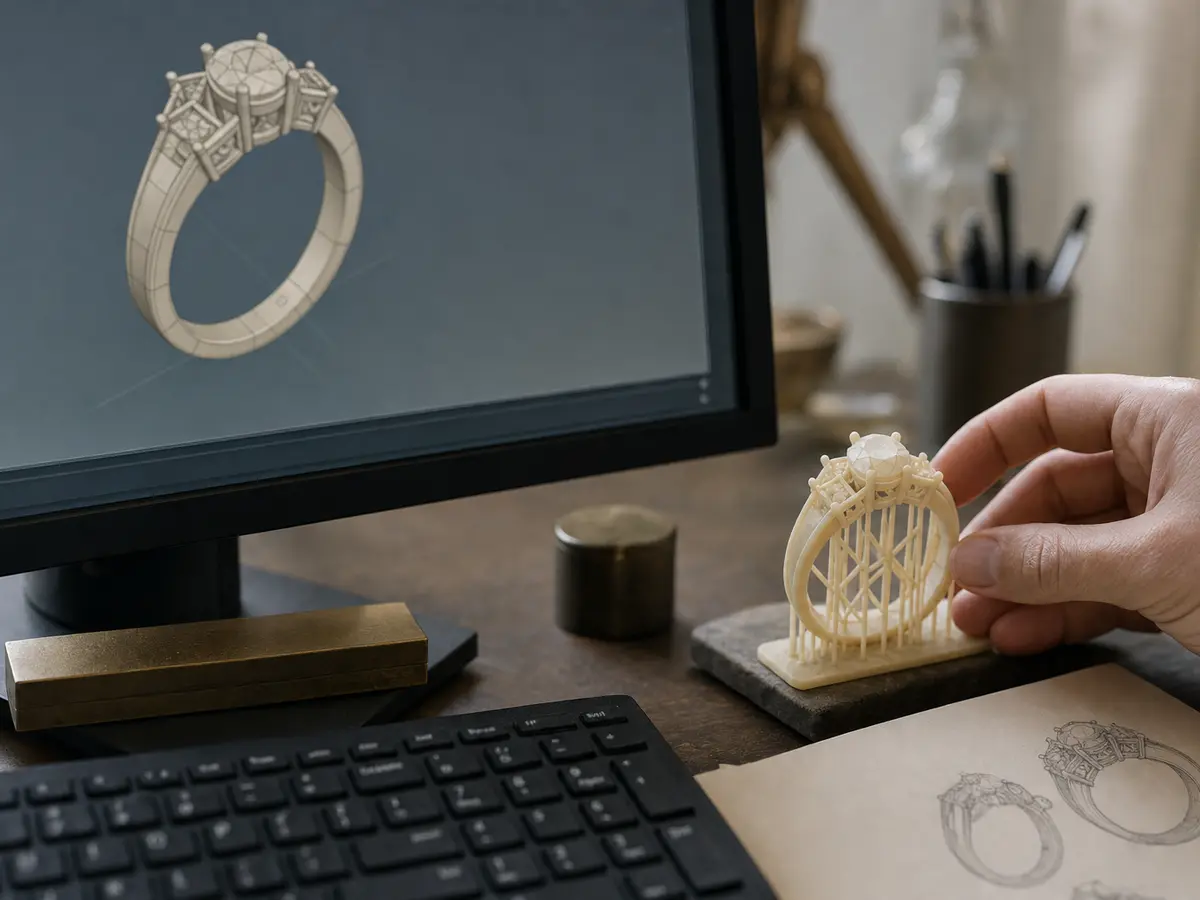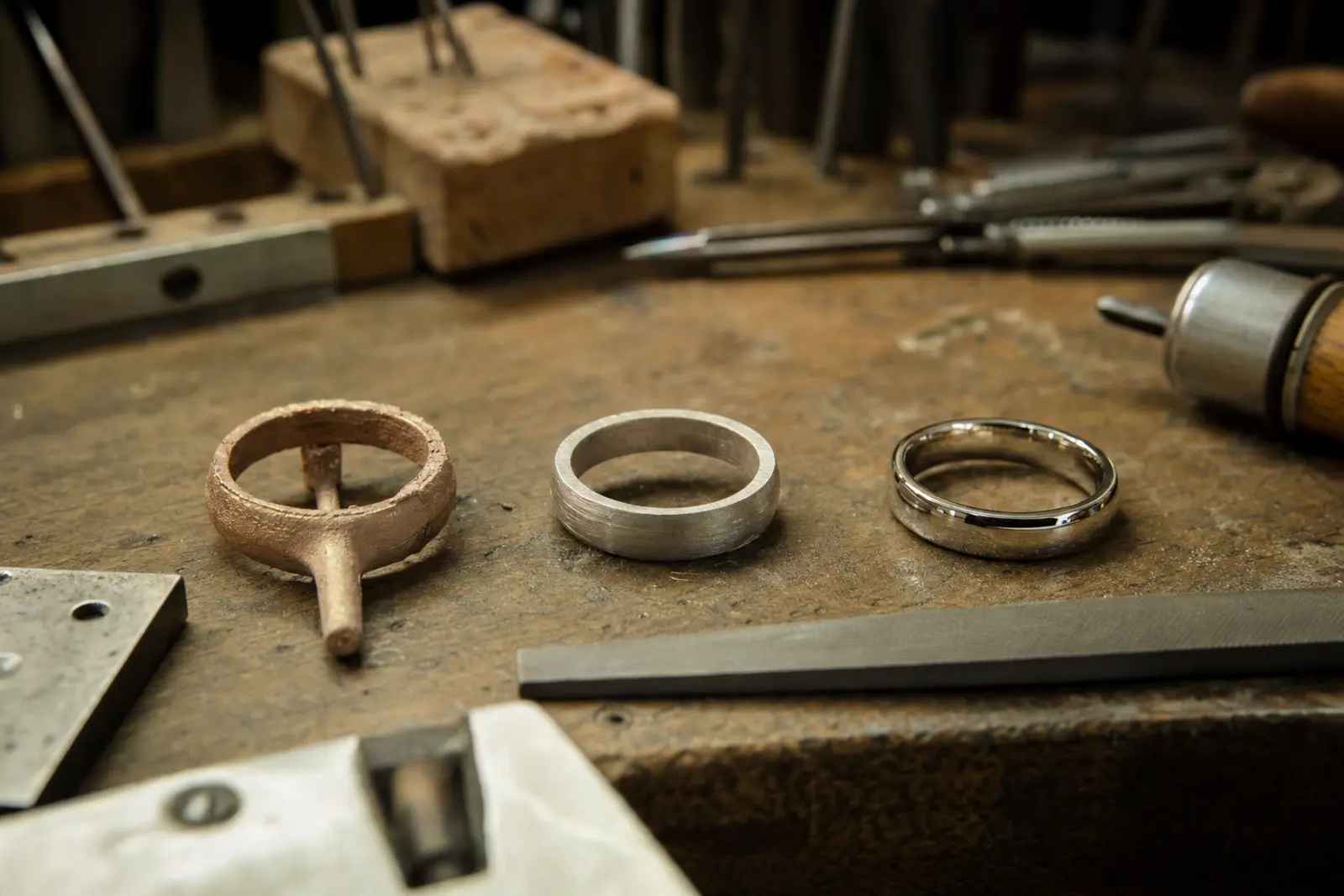
Made-to-order jewellery typically leaves the workshop six to ten weeks after a design is approved, though the honest answer depends on which stages a particular piece actually needs and how much of that time falls over December or Easter.
Stage by stage, in weeks
These are typical ranges, not promises, and stages often run partly in parallel once a design is approved rather than strictly one after another.
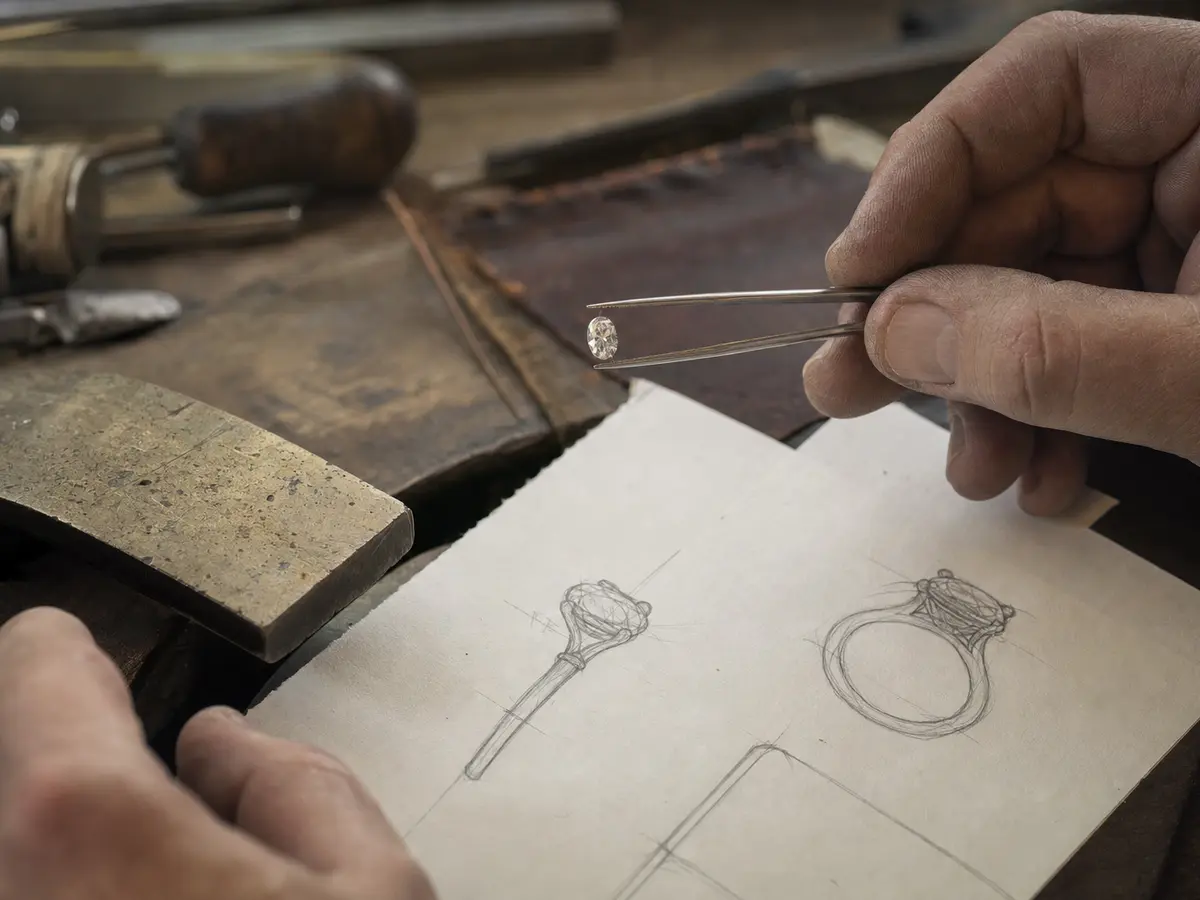
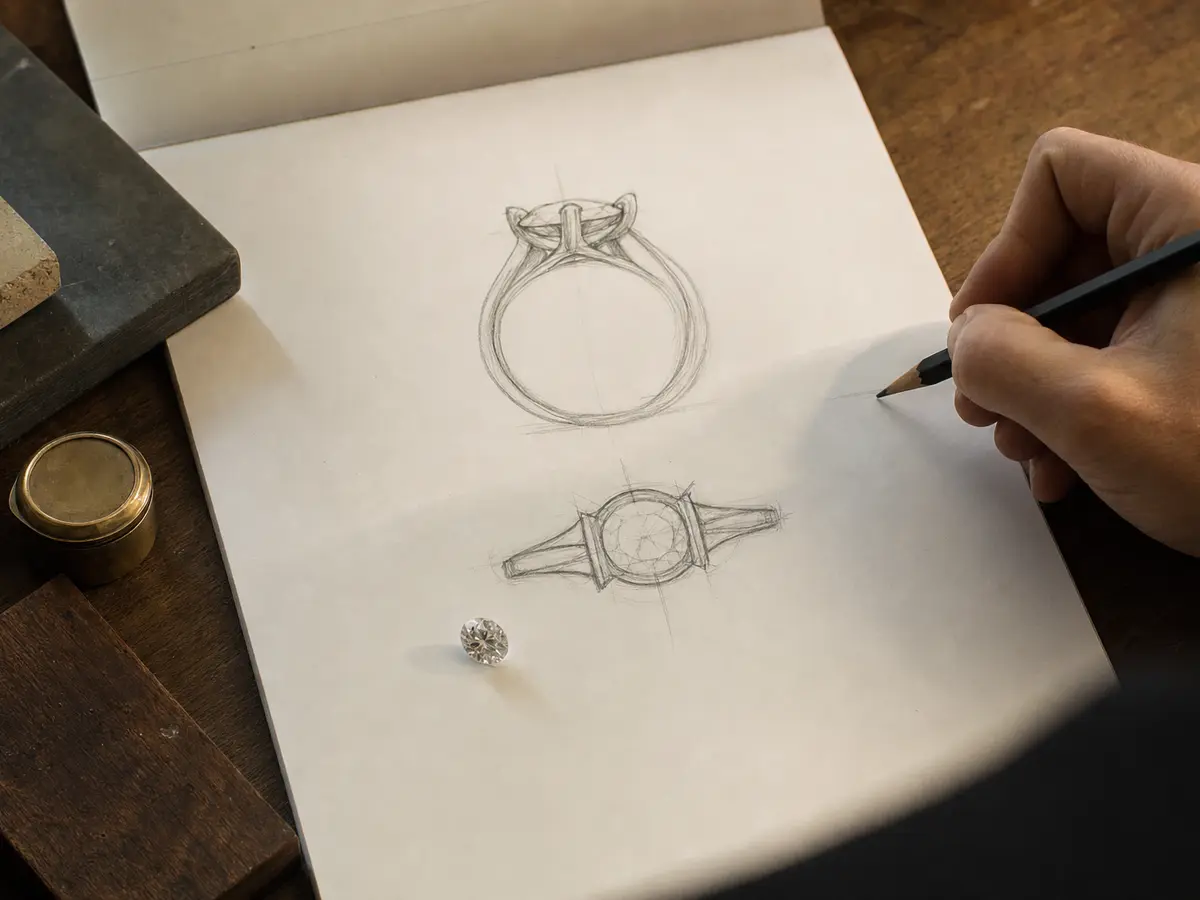
- Design and sketches
- One to two weeks
- Sourcing the stone
- Days if it is in stock, up to four weeks for something unusual
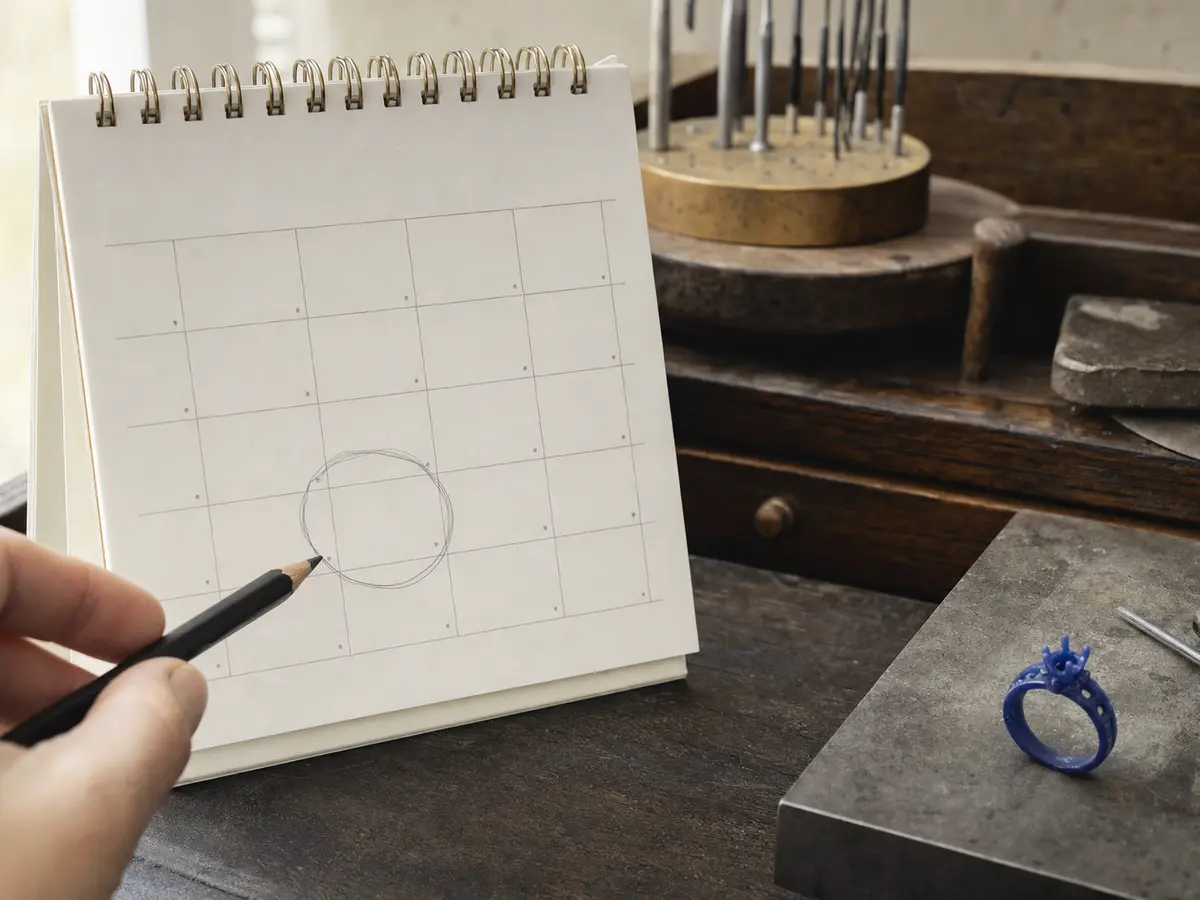
- CAD and the wax try-on
- One to two weeks
- Casting and setting
- Two to three weeks
- Finishing, engraving and plating
- A few days to a week
What adds time
Stone sourcing is the least predictable stage, because it depends on what you have asked for. A well-cut round or oval diamond in a common size is usually available within days. An unusual fancy shape, a fine coloured stone, or a stone with a specific certificate requirement can take weeks to find honestly, and we would rather take that time than offer you the wrong stone quickly.
Setting complexity moves the number too. A single solitaire is set in an afternoon. A pave band or a hidden halo is set stone by stone under a microscope, and there is no way to rush that part without risking a stone.
Engraving and plating both add a short but real amount of time at the very end, after the ring is otherwise finished, because neither can happen until the piece is in its final form.
The December and Easter effect
South African workshops, including ours, generally slow down or close for part of December and January, and again briefly over Easter. A ring due to leave a fortnight before either period needs to be started earlier than the same ring at any other time of year, because casting houses, stone suppliers and couriers are working through the same seasonal squeeze. If your date sits near either period, say so at the first conversation rather than the week before.
Holding a date honestly
We would rather tell you a realistic date at the start and hit it than promise an optimistic one and explain a delay later. If a stage is running late, most often stone sourcing, we say so as soon as we know, not when the date arrives. The one thing that reliably protects a date from your side is answering open decisions quickly, because a ring waiting on your answer is not moving even though the clock is. A date built with a week of slack in it, rather than quoted to the exact day, absorbs the ordinary friction of couriers, casting houses and other people's schedules without becoming a broken promise.
- Say the date at the first conversation, not once things are underway.
- Answer open decisions the day they are asked.
- Ask early whether any stage falls over December or Easter.
- Treat a quoted date as the plan, not the guarantee, until the ring is in setting.
Can made-to-order jewellery be rushed for an event?
Sometimes, within limits. The stages that can genuinely be compressed are casting and setting, if resources are shifted to prioritise the piece. The stages that cannot be rushed without real risk are stone sourcing, because a stone either exists or it does not, and setting itself, because it happens under a microscope and speed is exactly what you do not want there. Tell us the date as early as possible and we will say plainly what is realistic.
Does a simpler design mean a faster ring?
Generally yes, but not by as much as people expect. A plain band and an elaborate pave setting differ mainly in the setting stage, which is a smaller share of the total timeline than sourcing the stone and casting. A simple design with an unusual stone can easily take longer than a detailed design with a common one, so ask about the stone's timeline as closely as the design's.