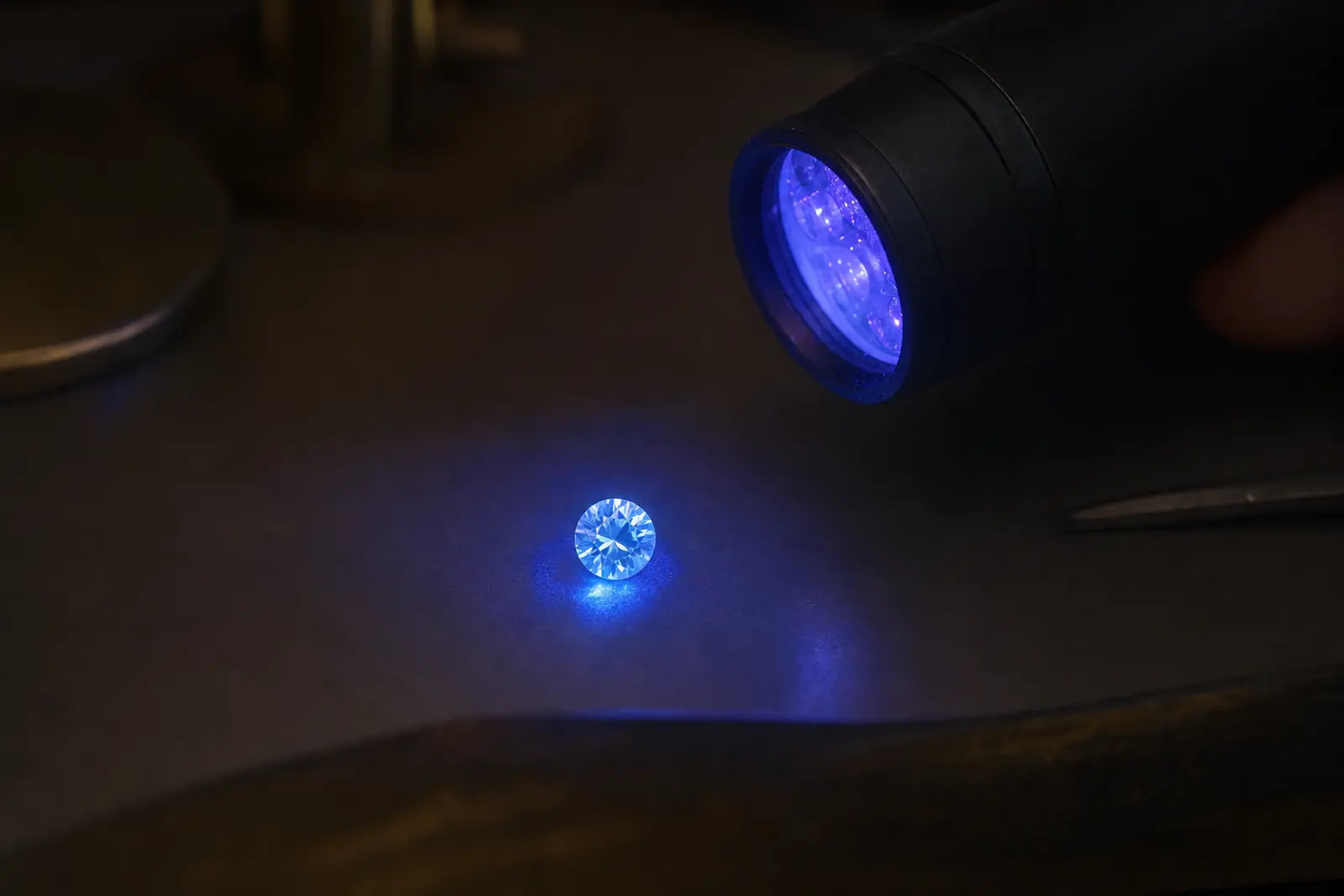
Fluorescence is how strongly a diamond glows under ultraviolet light, most often a soft blue, and on its own it is neither a fault nor a feature; it only matters in what it does to a particular stone in daylight.
What fluorescence actually is
Diamonds form over enormous stretches of time under heat and pressure, and trace elements caught up in that process can make a stone emit visible light when it is hit with ultraviolet light, the same wavelength present in daylight and in some shop lighting. Most fluorescent diamonds glow blue. A smaller number glow yellow, white or another colour, and many show no reaction at all.
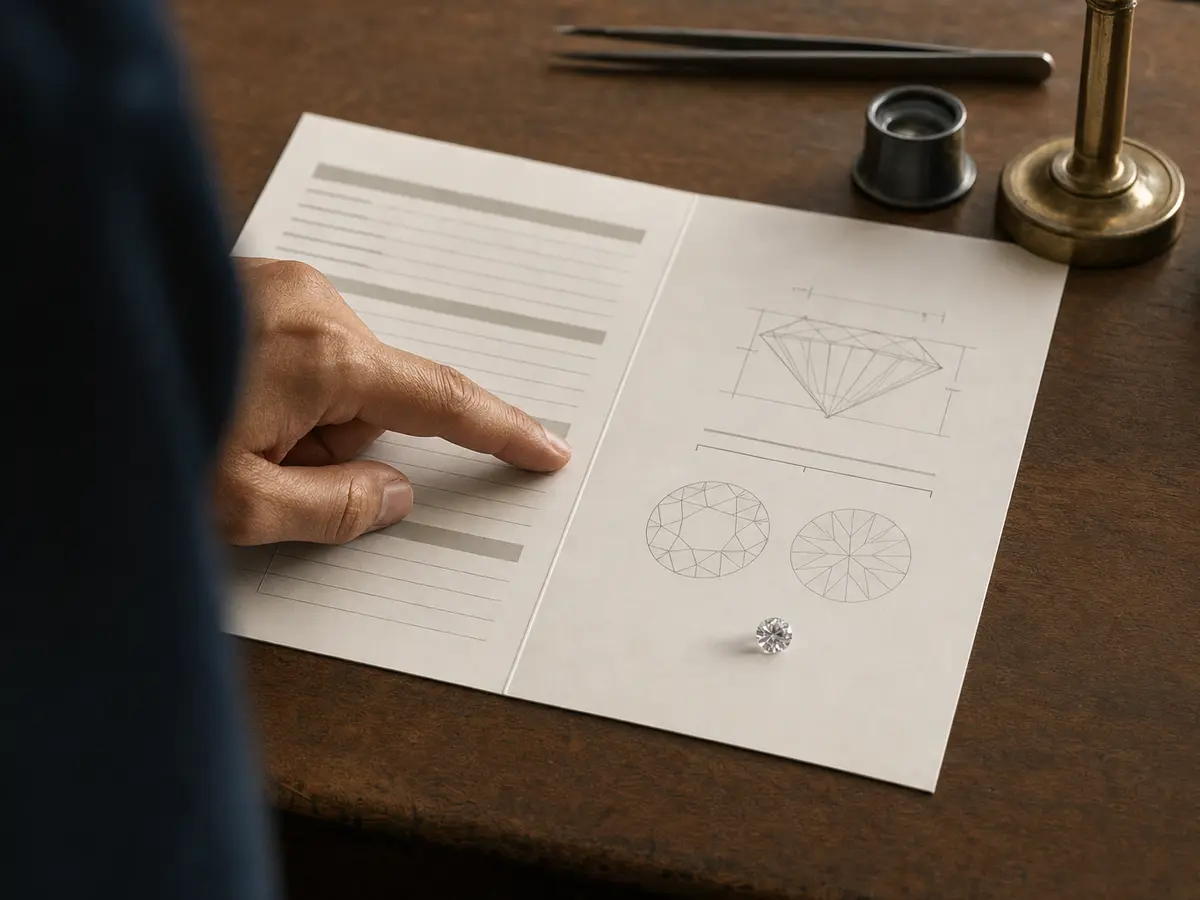
A report from a major laboratory records this as a category, typically from None through Faint, Medium, Strong and Very Strong. It is a real, measurable property, and it has nothing to do with clarity or durability.
When it works in your favour
In stones graded in the lower colour range, faint to medium blue fluorescence can counter a slight yellow tint, because blue and yellow sit opposite each other and the eye reads the combination as closer to colourless. This is one of the few places in diamond buying where a factor most people are taught to avoid can actually work for you, and it is worth asking about specifically if colour is where you are trying to save.
When it works against you
In a smaller number of stones, usually those with strong or very strong fluorescence, the effect can give the stone a slightly milky, oily or hazy look in strong ultraviolet-rich light, most noticeably outdoors in full sun. It is not common, and most fluorescent diamonds show nothing of the sort, but it is exactly the kind of thing a report cannot tell you and a photograph will not show you.
The Highveld sun is a genuinely useful test for this. Johannesburg light in the middle of the day carries more ultraviolet than an overcast afternoon or an evening under artificial light, so a stone that looks perfectly clean indoors deserves a second look outside before you commit, particularly at the stronger fluorescence categories.
How to check it yourself
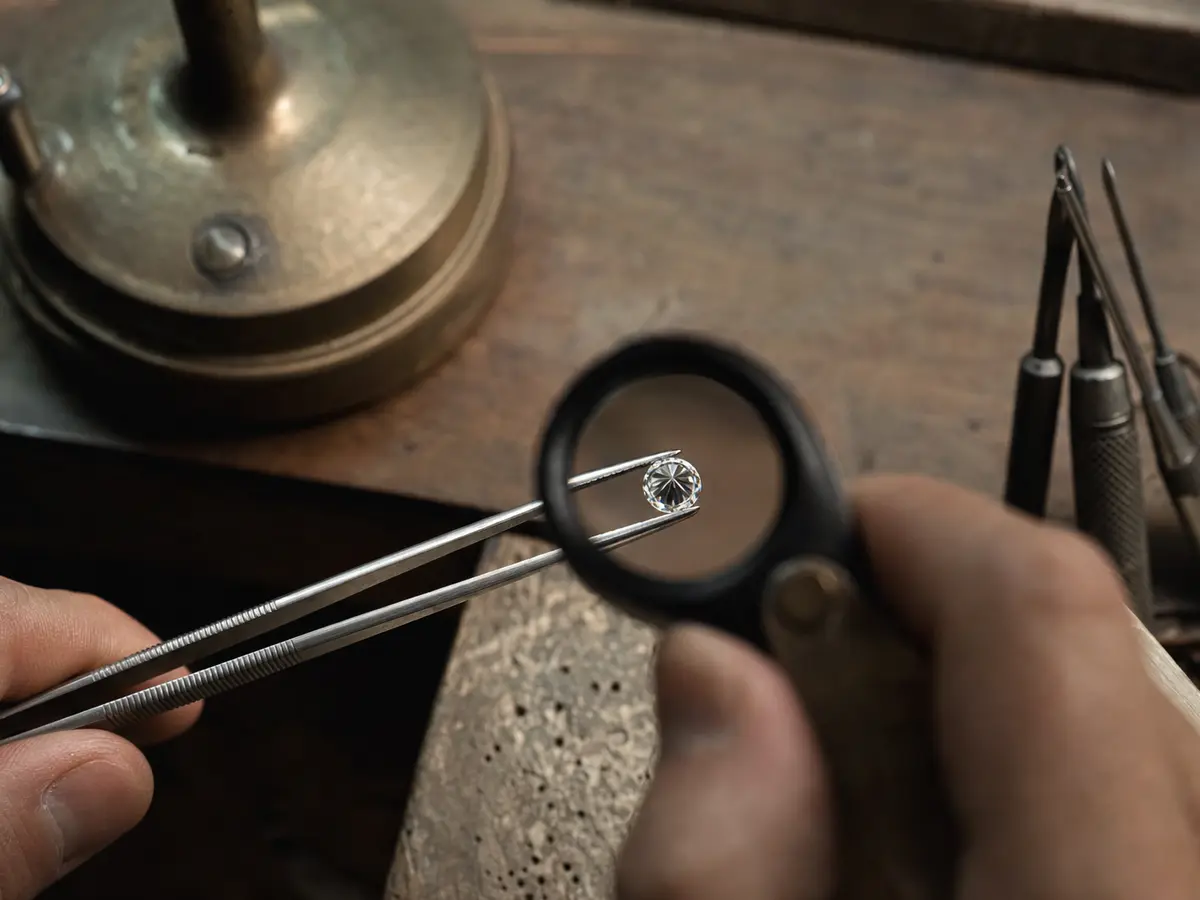
- Ask to see the stone indoors under warm bench light first, as a baseline.
- Then look at it outdoors in direct daylight, ideally around midday.
- Compare the same stone under both, rather than comparing two different stones in two different lights.
- If anything looks soft, milky or less crisp outdoors than indoors, say so and ask what the fluorescence category is.
None of this means fluorescence should decide the purchase on its own. It is one line on the report among many, and it is worth understanding rather than either fearing or chasing.
Fluorescence is one of the few things on a report you genuinely have to see in daylight to judge. I would rather show you than explain it.
Does diamond fluorescence affect the price?
Generally yes, though the direction depends on the stone. In lower colour grades, faint to medium blue fluorescence is sometimes priced no differently, or occasionally at a small premium, because it can make the stone look whiter than its letter grade suggests. In higher colour grades, strong fluorescence is sometimes discounted slightly, on the reasoning that it adds a small risk of haziness without adding any visible benefit to a stone already near colourless. Neither effect is large, and it should never be the only reason to choose or avoid a stone.
Can I tell if a diamond has fluorescence just by looking at it in normal light?
No, not reliably. Fluorescence only becomes visible under ultraviolet light, which daylight contains a meaningful amount of but ordinary indoor bulbs mostly do not. A stone can carry strong fluorescence and look completely unremarkable indoors under warm light. The report is the accurate source for the category, and checking the stone outdoors afterwards is how you judge what that category actually does to this particular stone.