Neither a surprise ring nor a ring chosen together is the more serious or more romantic option. They are two different ways of managing the same set of risks, and knowing what each one actually asks of you makes the choice easier than treating it as a test of the relationship.
The case for a surprise
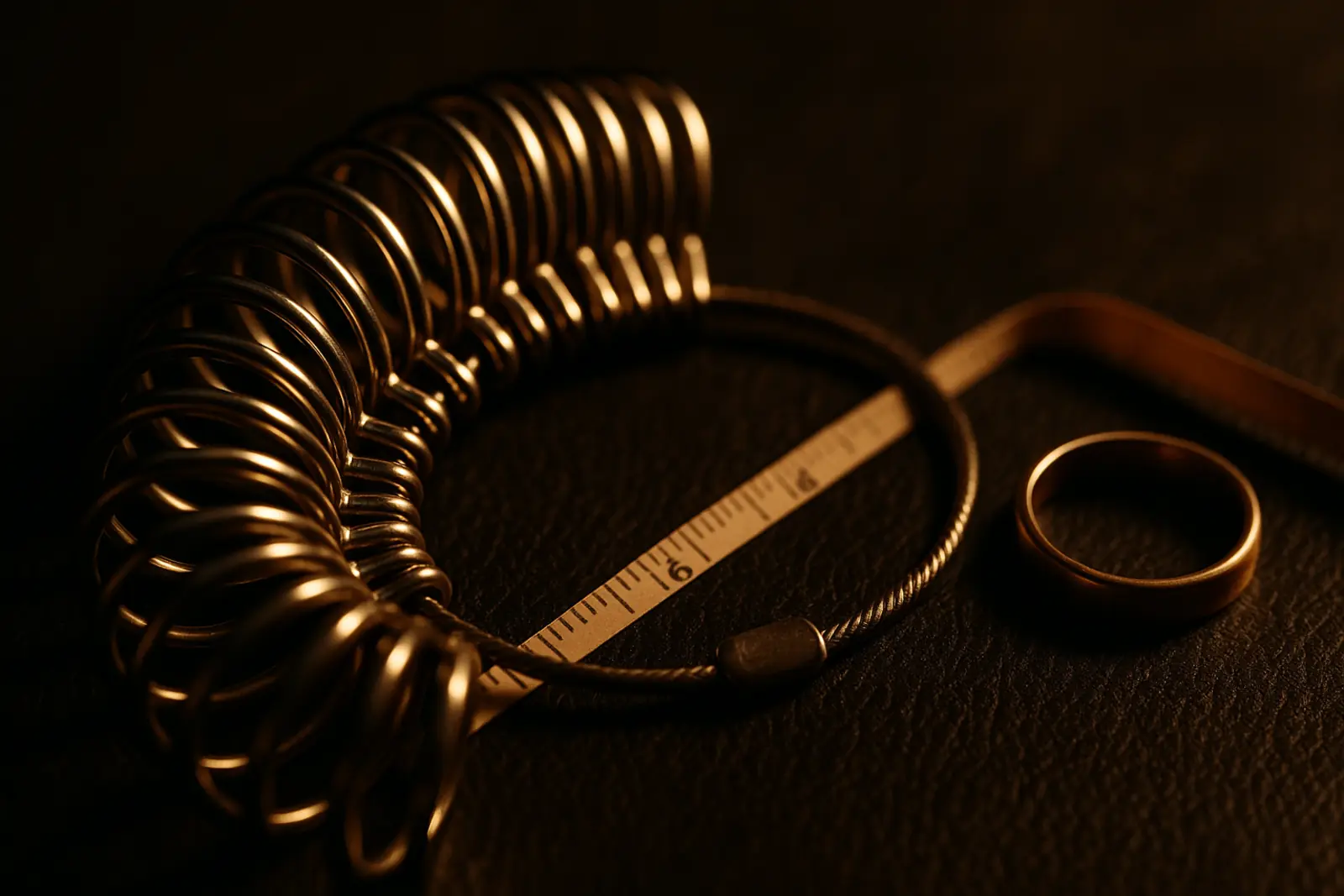
A surprise keeps the moment itself unpredictable, which matters to people who want the proposal to be an event rather than the final step of a joint project. It asks more of the person proposing: the size has to be found without asking directly, and the taste has to be read from what she already wears rather than from a conversation. Both are solvable, and neither needs to be exact. Most settings resize within a couple of sizes without difficulty, and a ring that is close is a fine starting point for a life together, not a flaw.
The case for choosing it together
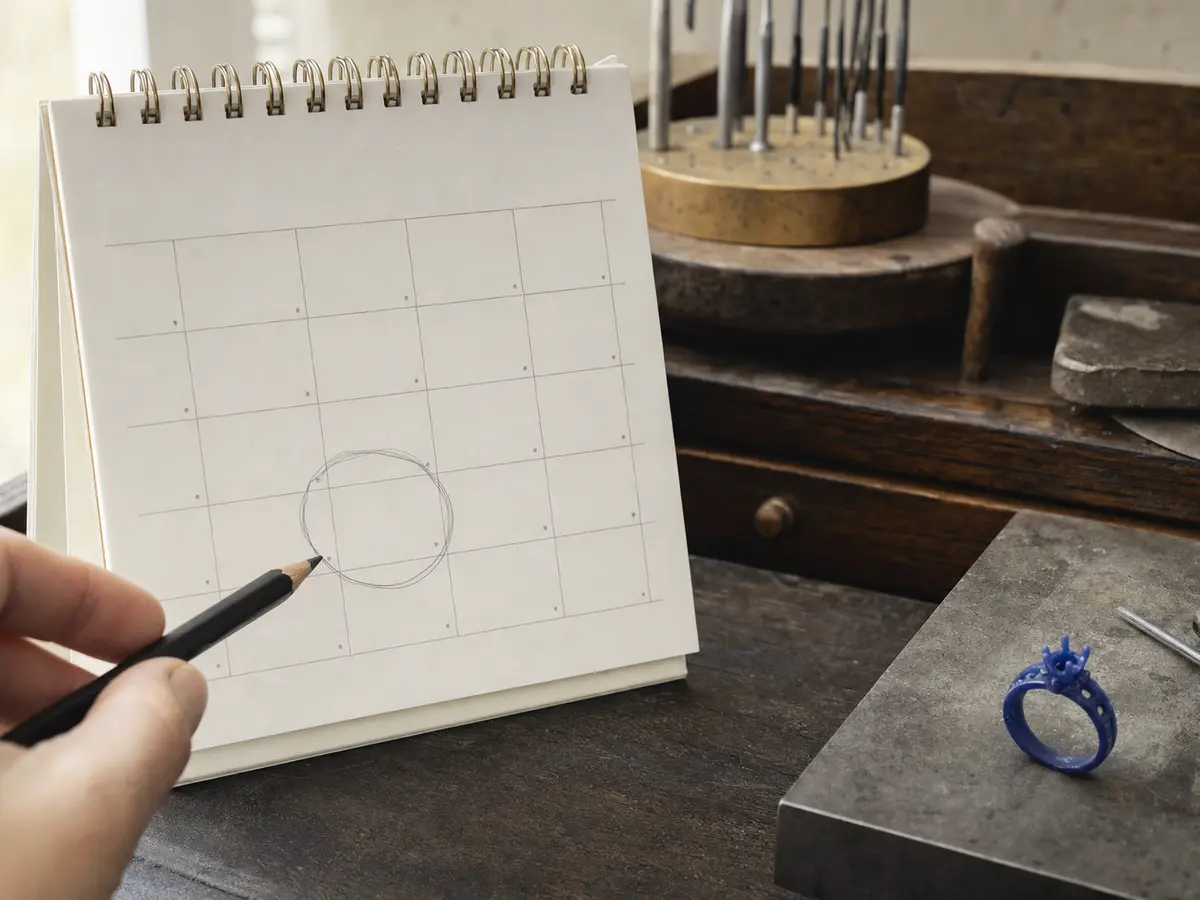
Choosing together removes the guesswork entirely: the size is exact, the shape and setting are hers, and there is no risk of a ring that gets quietly reset a month later. It changes the shape of the proposal rather than removing the moment from it; many couples who design a ring together still keep the actual asking, and the ring's arrival, as its own private surprise weeks after the decisions were made.
The middle paths
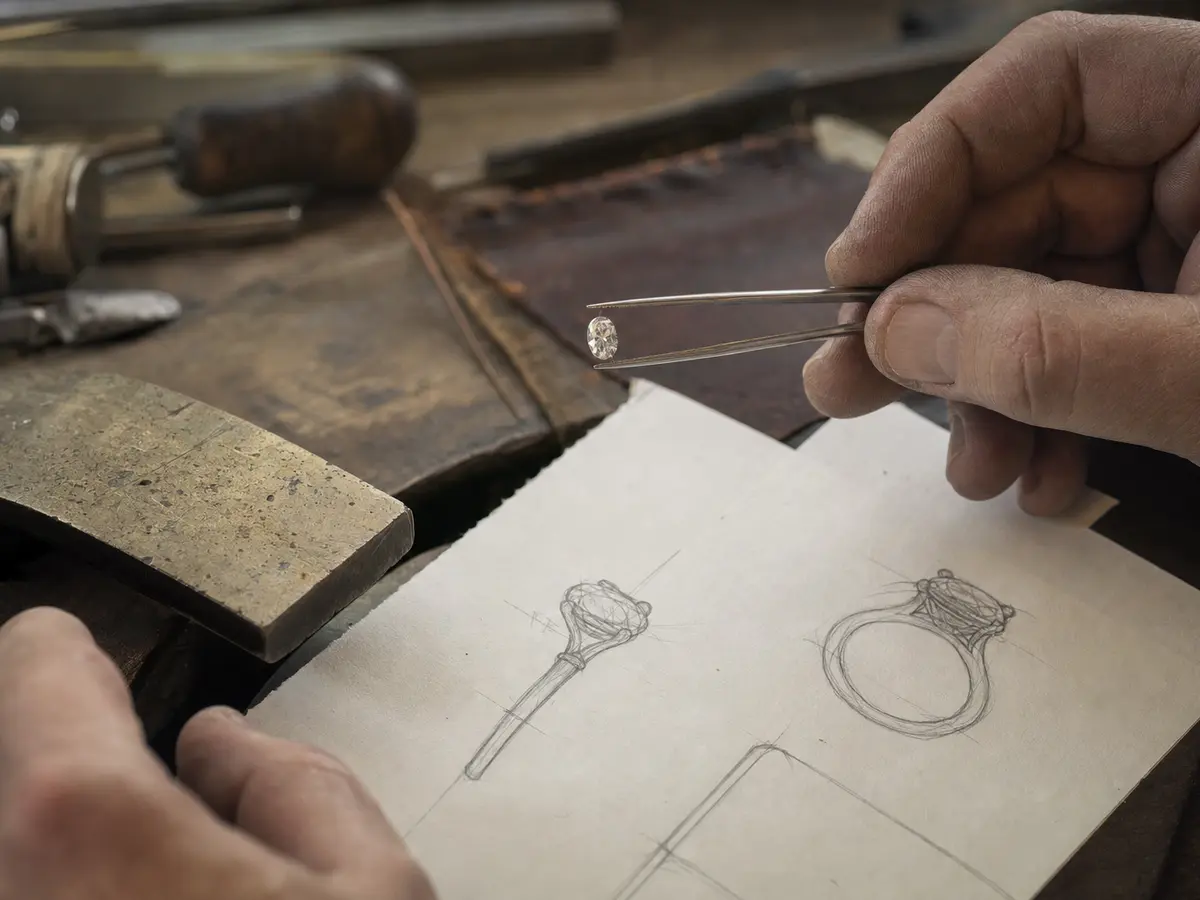
A few routes borrow from both. Choosing the stone together while keeping the final setting and the moment of giving it a surprise is common, and it solves the hardest part, the stone, while keeping some mystery in the design. Proposing without a ring at all and designing it together afterwards is another honest option, and a legitimate one rather than a lesser one; it simply moves the ring decision to after the yes instead of before it. A placeholder ring, worn only until the real one is finished, is a third route some couples use when the proposal date is fixed but the design is not.
Family, heirlooms and other people's opinions
An heirloom stone in the family changes the calculation in both directions. It can make a surprise easier, because the stone is already settled and only the setting needs deciding, or it can make choosing together more important, because the stone carries history and both people may want a say in what it becomes. Involving a parent or sibling to confirm a size or a taste preference is common on the surprise path and worth doing quietly rather than treating it as a security risk; most families keep a secret for a few weeks without difficulty.
- If getting the size right without asking feels achievable, a surprise stays fully on the table.
- If she has strong, specific opinions about shape or setting, involving her in at least the stone lowers the risk of a reset.
- If the proposal date matters more than having a finished ring on the day, consider proposing without one.
- If you are unsure which she would prefer, that uncertainty is itself useful information: ask a sister or close friend rather than guessing.
There is no wrong answer here, only a set of trade-offs. Decide which risk you would rather carry, and build the plan around that.
Is it acceptable to propose with a placeholder ring?
Yes, and it is more common than people assume. A simple band or a loose stone shown at the moment of asking lets the proposal happen on the date that matters while the real ring is still being designed or sourced. What matters is being upfront that the visible ring is not the final one, so there is no confusion later about what was actually chosen.
How do you keep a joint ring-shopping trip from ruining the surprise entirely?
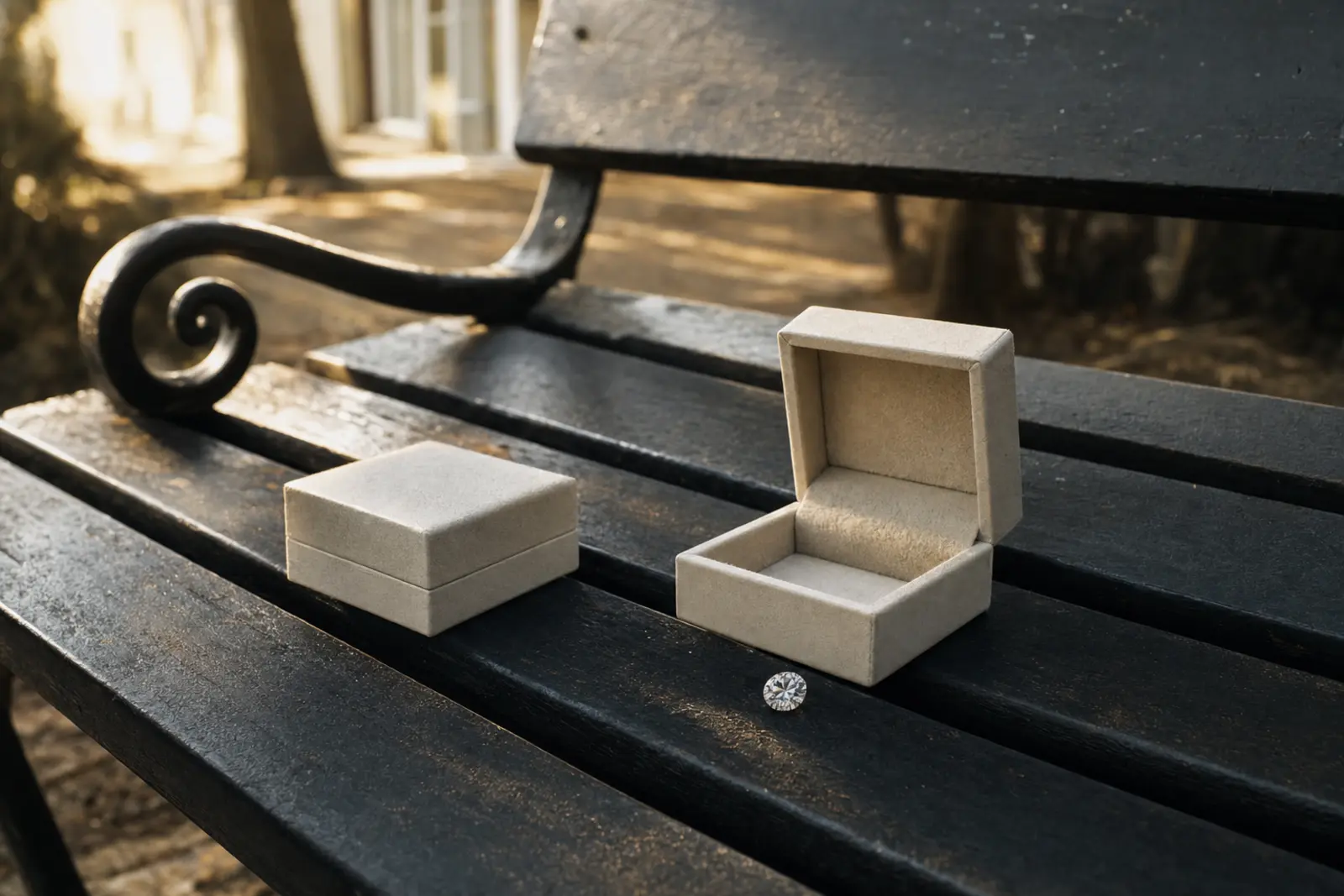
Separate the stone from the reveal. Choose the diamond or coloured stone together, in daylight, at the bench, then leave the final setting, the engraving and the moment it is handed over as the part that stays private. Most of what people worry about losing in a joint decision is the moment of surprise, not the ring itself, and that moment survives perfectly well even after the stone has been agreed.