A coloured diamond is graded on a completely different scale to a white one, because here colour is the entire point, and understanding that scale changes what you should actually be looking for.
How the grading language works
Where a white diamond is graded from colourless downward, a fancy colour diamond is graded on strength of colour, from Faint through Very Light, Light, Fancy, Fancy Intense and up to Fancy Vivid at the top. A term such as Fancy Vivid Yellow describes both the hue and how saturated it is, and the two together do most of the work in how the stone reads on the hand.
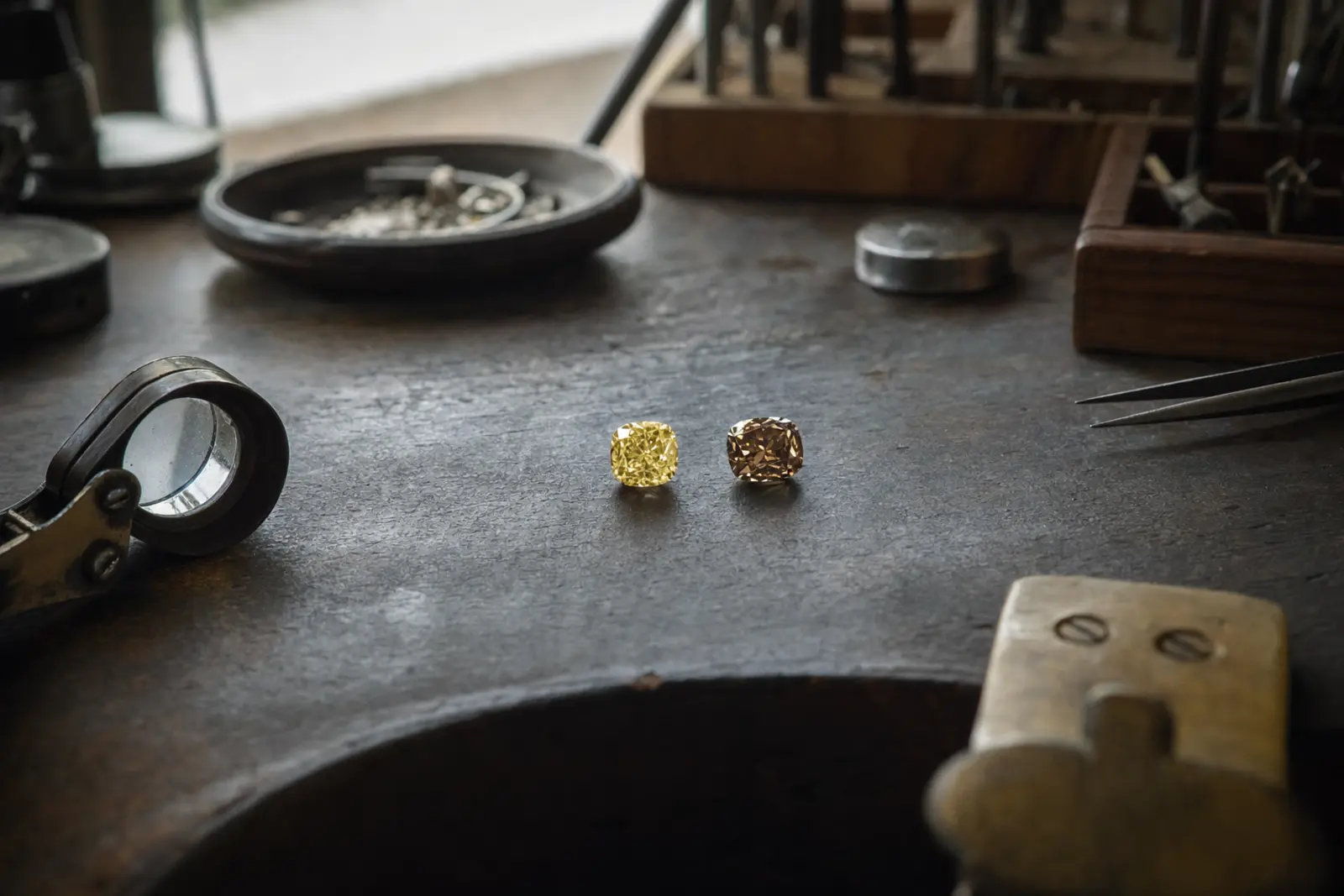
Yellow and brown, sometimes called champagne, are the most common natural fancy colours and the most accessible place to start, since even a modest budget can buy a genuinely striking Fancy Intense yellow. Pink, blue and green are far rarer, occur in a much smaller share of diamonds ever found, and sit at the top of the fancy colour market accordingly.
Why colour outweighs clarity here
With a white diamond, clarity and cut do most of the visible work once colour is near-colourless. With a fancy colour stone, the hierarchy flips: colour is the primary driver of both beauty and value, and a stone with a strong, even hue and a modest clarity grade will usually be more desirable, and more expensive, than a paler stone with excellent clarity. Cut still matters, but it is judged by how well it shows the colour rather than against the same proportions used for a white round brilliant.
Treatments, and why disclosure matters more here
Some fancy colour diamonds are treated to intensify their colour, and this should always be stated on the report and the invoice. An untreated natural fancy colour diamond, particularly in a strong saturation, is a genuinely rare object, and its price reflects that rarity directly. Ask plainly whether a stone's colour is as found or has been enhanced, and expect the answer in writing, not as a verbal aside.
Settings that flatter colour
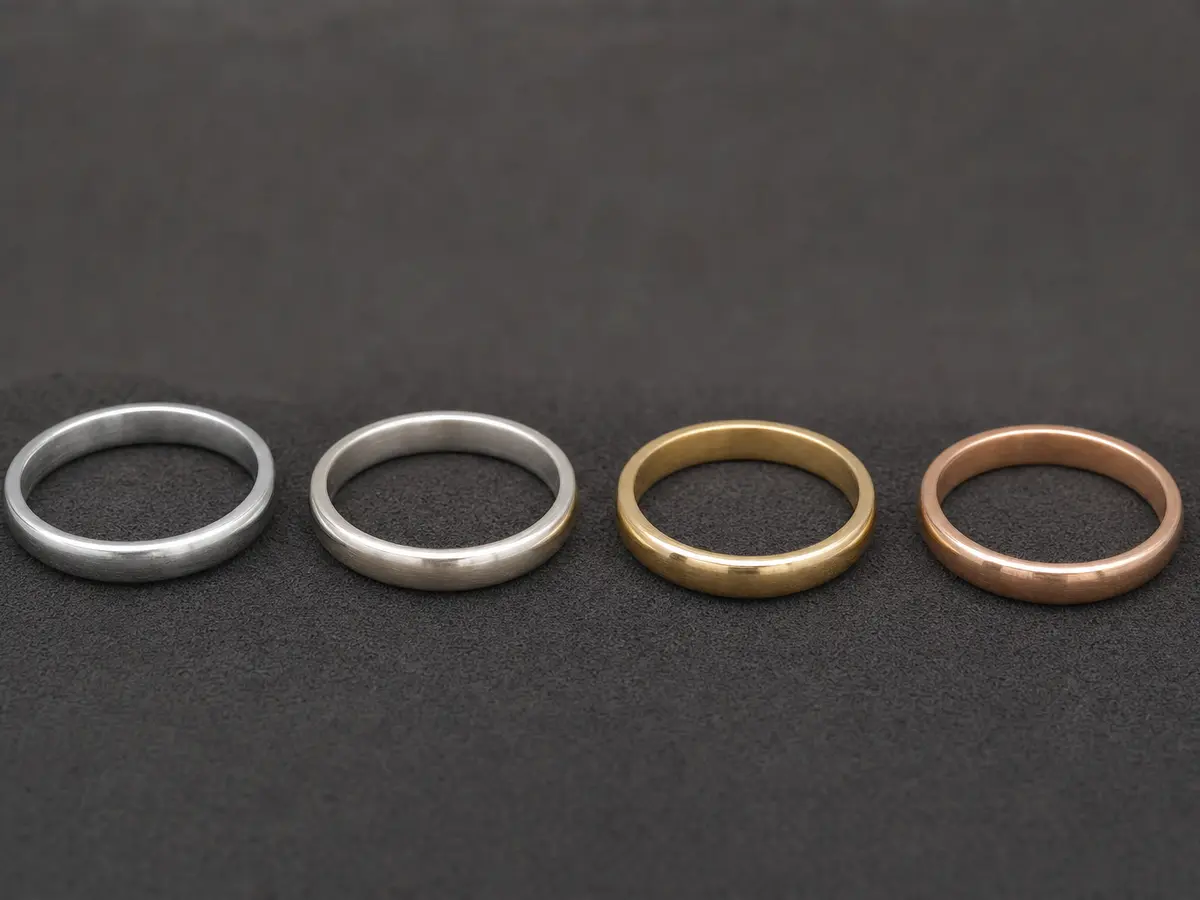
Metal choice matters more with a coloured diamond than almost anywhere else in jewellery. Yellow and champagne stones look richer set in yellow or rose gold, which echoes rather than fights the colour. Pink diamonds are often set in rose or a warm white metal to soften and flatter the tone. A halo of smaller white diamonds is a common and effective choice for a fancy colour centre stone, since it frames the colour and, in some cases, makes the centre stone appear both larger and more saturated by contrast.
- Ask for the exact fancy colour grade in writing, not just a colour name.
- Confirm whether the colour is natural or treated, on both the report and the invoice.
- View the stone in daylight and under warm indoor light; fancy colours can shift noticeably between the two.
- Consider the metal alongside the stone; the wrong setting can visibly dull a good colour.
A fancy colour diamond is not a lesser or a stranger choice than a white one. It is a different brief entirely, and it rewards exactly the same thing every diamond does: looking at the actual stone before deciding anything from a description.
People sometimes apologise for wanting colour, as though it is the unconventional choice. It is not. It is simply a different, and often rarer, kind of diamond.
Are coloured diamonds always more expensive than white ones?
Not always, and the range is wide. A modest Fancy Light yellow or champagne diamond can cost meaningfully less than a comparable white diamond, which is part of why they are a popular starting point. At the other end, a strongly saturated pink, blue or green diamond in the Fancy Vivid range can cost many times more than a white diamond of similar size, because true natural saturation in those colours is genuinely rare. Hue and saturation, far more than size, decide where a stone sits.
Do coloured diamonds need a different kind of report?
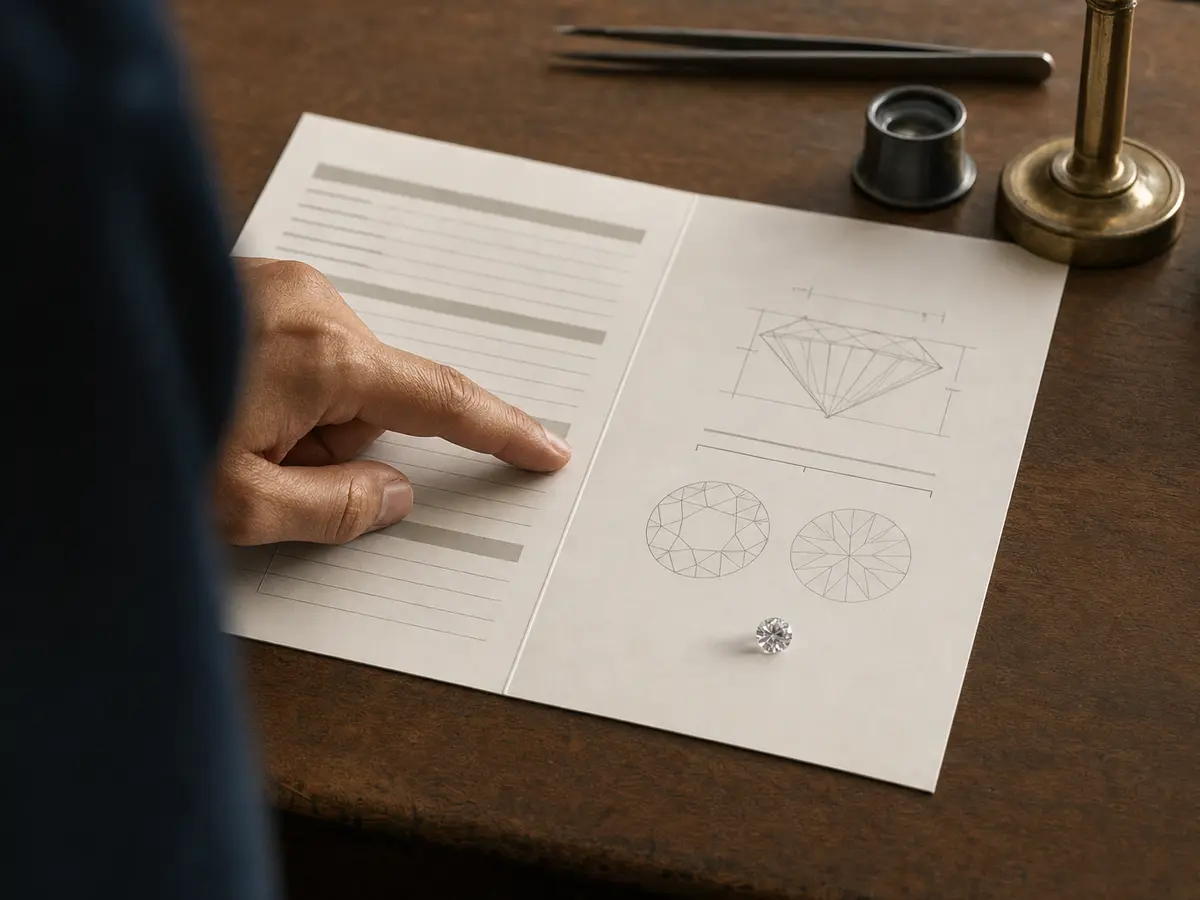
The report itself follows a similar structure to a white diamond's, but the colour section is assessed differently, describing hue, tone and saturation on the fancy colour scale rather than the D-to-Z scale used for white stones. For a stone of any real value, that assessment is best done by a major international laboratory with specific expertise in colour grading, since it is a more specialised judgement than grading a white diamond.