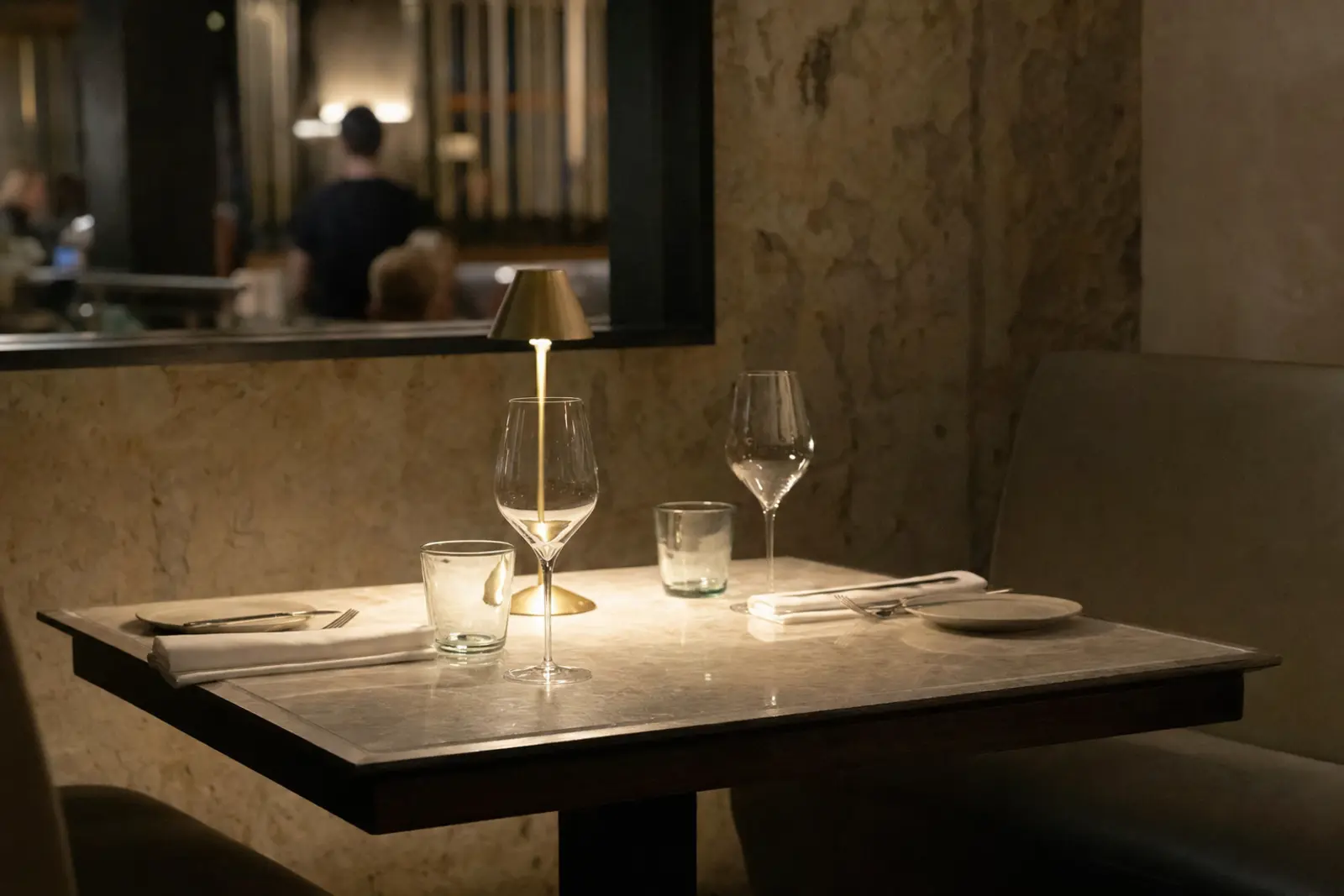
A restaurant proposal works when the restaurant disappears into the background for the two of you and stays fully present for everyone managing it on your behalf, which takes one careful conversation with the right person well before the night itself.
Speak to the manager, not the waiter on shift
Book a table for two on an ordinary reservation, then contact the restaurant directly, ideally the manager or duty manager, at least a few days ahead rather than the day before. Explain exactly what you want: whether you want the staff to do nothing at all, or whether you would like help with something specific, such as timing a dessert or holding a particular table. A restaurant that regularly hosts proposals will often have a quiet, practised way of managing this; one that does not may need more detail from you to get it right.
Choosing the table
Ask for something at the edge of the room rather than its centre: a booth, a corner, a table near a window rather than one in the direct path of the kitchen door. You want enough distance from the neighbouring tables that a conversation held at a normal volume is not shared with strangers, and enough privacy that neither of you is performing for a room. A table with a view is a bonus; a table where you can actually hear each other is the requirement.
Timing it within the meal
Most restaurant proposals happen either just before dessert or during it, largely out of habit rather than because it is the best moment. Consider the shape of your actual evening instead: a quieter table late in service, after the room has thinned out, can give you more privacy than the same table at the height of a Saturday sitting. If the restaurant is loud early and calmer later, book later. If it turns over quickly and empties by nine, book earlier and stay on for a slow dessert once the room is yours.
The ring, without the cliché
The ring hidden inside a dessert or delivered on a special plate is a well-worn idea, and a genuine risk: cutlery, a mouthful of food, or a server's timing can all go wrong at exactly the wrong moment. Simpler is more reliable. Keep the ring on you, in an inside pocket, and bring it out yourself when you are ready, rather than building the moment around a member of staff executing a small piece of theatre they only rehearsed once.
Other diners and discretion
A restaurant is a shared room, and other tables will notice, whether or not you want them to. Brief the staff on this specifically if it matters to you: some will discreetly ask nearby diners to keep their phones down for a minute, others will do nothing unless asked. If you are arranging a photographer, have them shoot from a genuine distance with a long lens rather than standing in the room, since a visible photographer changes how a table full of strangers behaves as much as it changes how the two of you do.
- Contact the manager directly, days ahead rather than the night before.
- Ask for a table at the edge of the room, not its centre.
- Match the timing to the restaurant's actual rhythm, not a default before-dessert plan.
- Keep the ring on your own person rather than handing it to staff to plate or deliver.
- Decide whether you want other diners managed or simply ignored, and tell the staff which.
- Book extra time at the table afterwards rather than rushing to pay the bill.
None of this needs a dramatic gesture from the restaurant itself. It needs a table where you can hear each other, and staff who know exactly what not to do.
Should we tip extra for staff who help with a proposal?
It is a kind gesture rather than an obligation, and most restaurants that help with proposals do so as a normal part of good service rather than expecting anything beyond the usual tip. If a manager or a particular server went out of their way, for example holding a table, timing a course, or managing other guests on your behalf, an additional thank you, whether that is a cash tip or a note, is a considerate way to acknowledge it, but it is entirely your call.
What if the restaurant is fully booked on the date we want?
Ask anyway, and be specific about what you are planning. Restaurants often hold a small number of tables back or can make an exception for a proposal, particularly if you give real notice and flexibility on time, such as an early or late sitting. If they genuinely cannot help, ask whether a sister restaurant or a quieter night that week might work instead, since a manager who cannot solve your first choice will often solve the actual problem if you explain it.
Is a restaurant too public a place to propose at all?
That depends entirely on the restaurant and the table, not on restaurants as a category. A busy, open dining room at peak time is genuinely public. The same restaurant on a quieter night, at a table chosen for privacy, is close to as private as a home proposal, minus the washing up. If total privacy matters more than the atmosphere a good restaurant provides, a private dining room within the same building is usually the better version of the same idea.