A finished ring is not a requirement for a good proposal, and treating it as one is usually what causes people to either rush a decision they are not ready for or delay a question they are ready to ask. If the date is fixed and the ring genuinely is not, there are two honest options, not one forced choice.
Option one: propose anyway
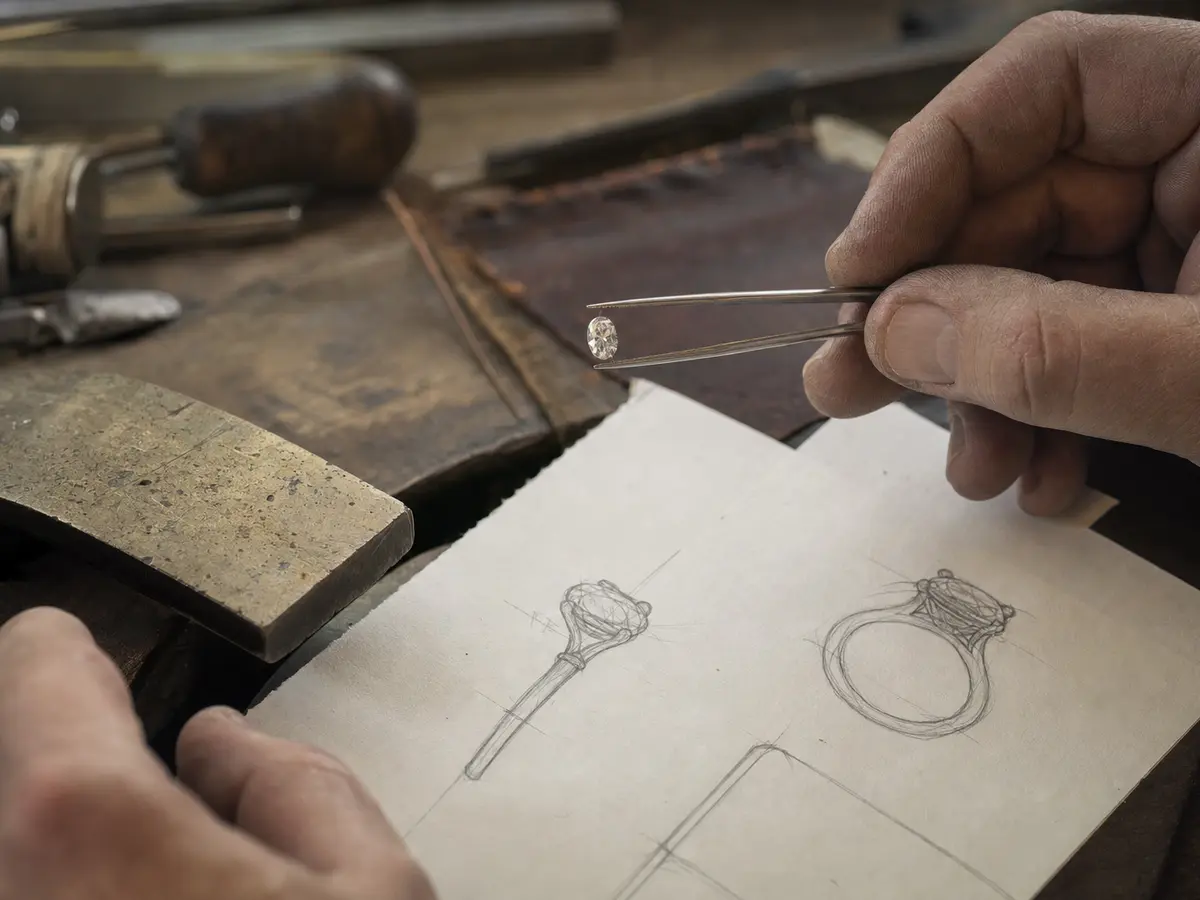
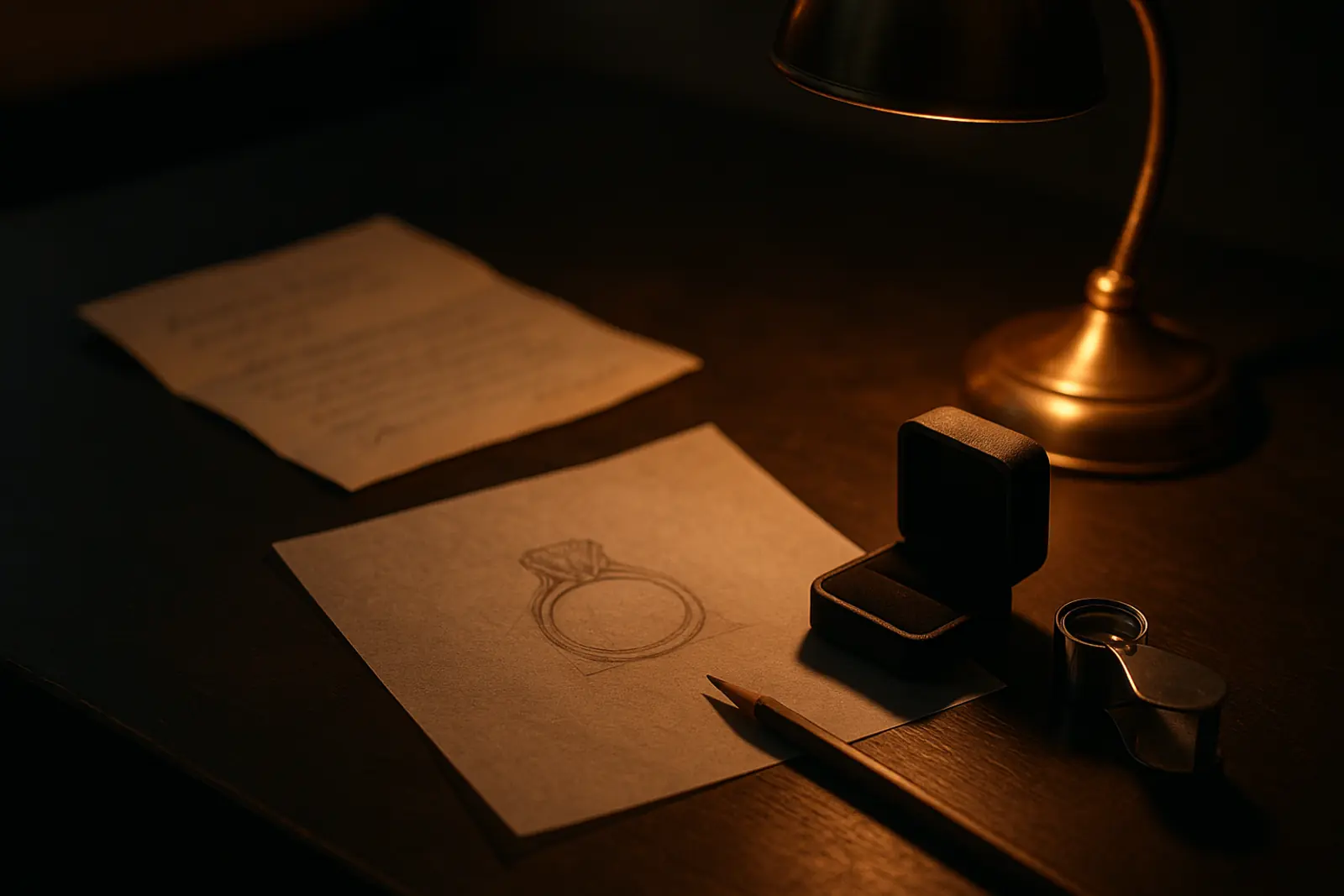
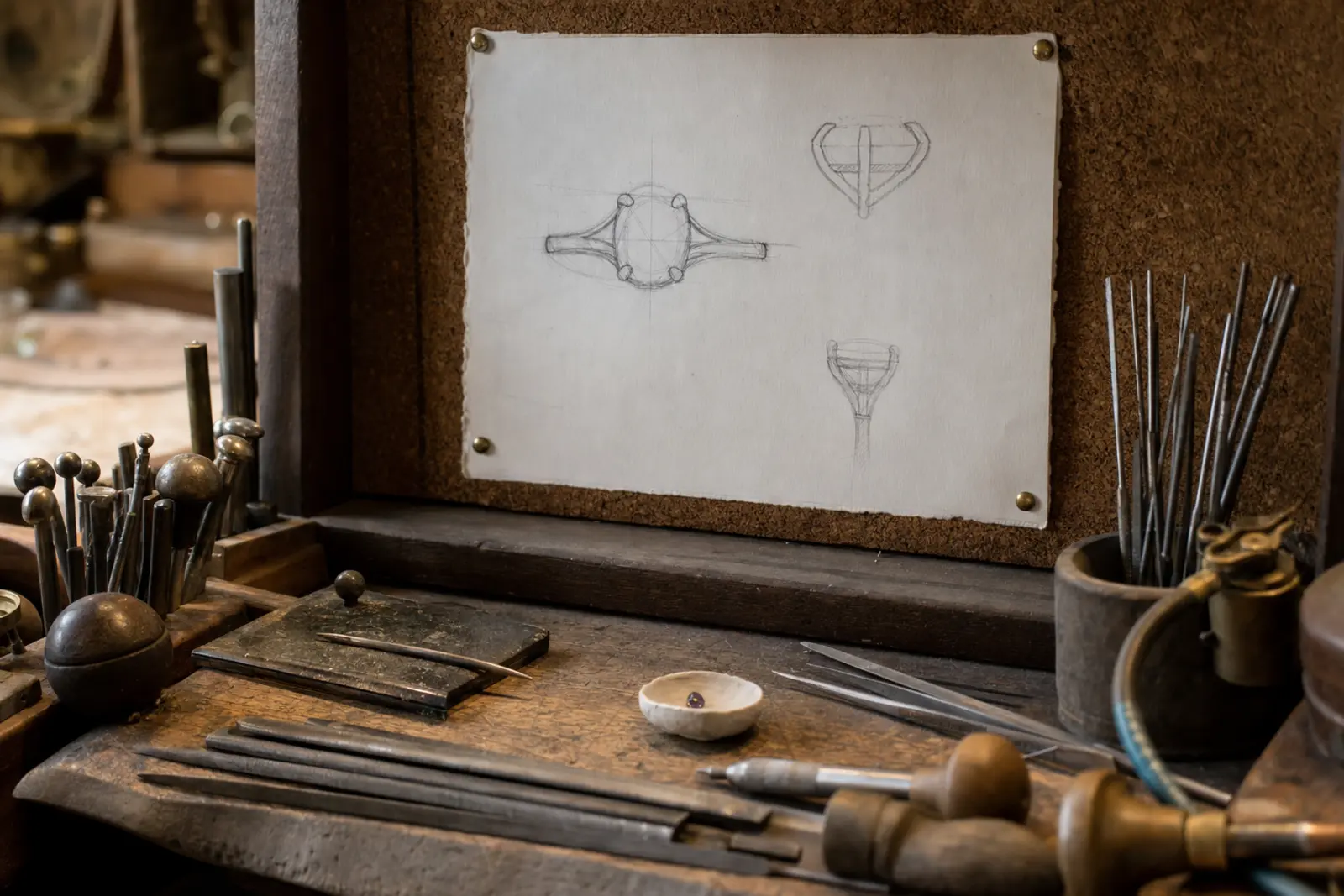
Plenty of proposals happen without a finished ring in the box, by design rather than by accident, and it tends to work well provided there is something real to hold and a clear plan for what comes next. A sketch, an unset stone in a small case, a plain band that can later become part of a stack, or simply a letter, all do the job properly. What matters is that whatever you hold out is genuine and considered, not a placeholder bought to be quietly replaced. The full range of options, and why a cheap stand-in ring is the one thing to avoid, is covered properly elsewhere on the Journal.
Option two: move the date
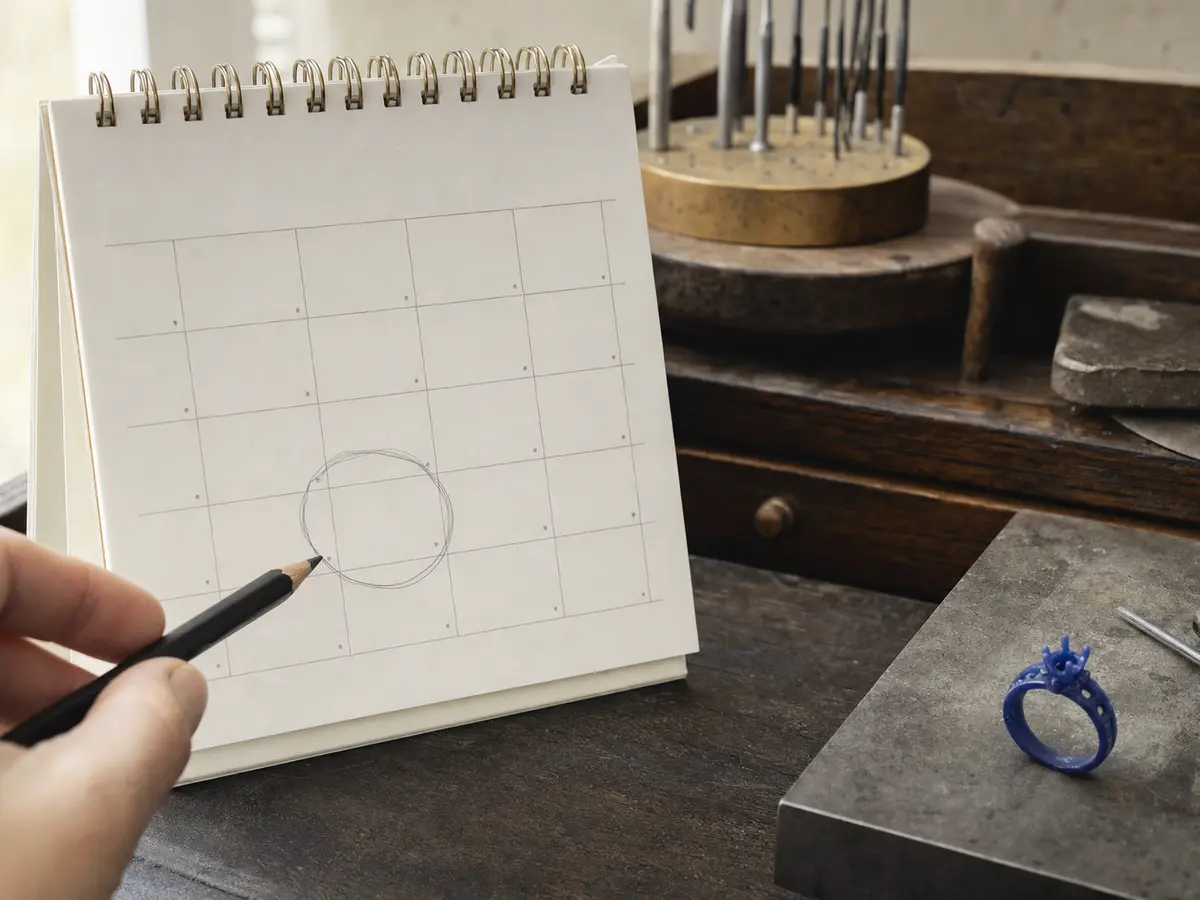
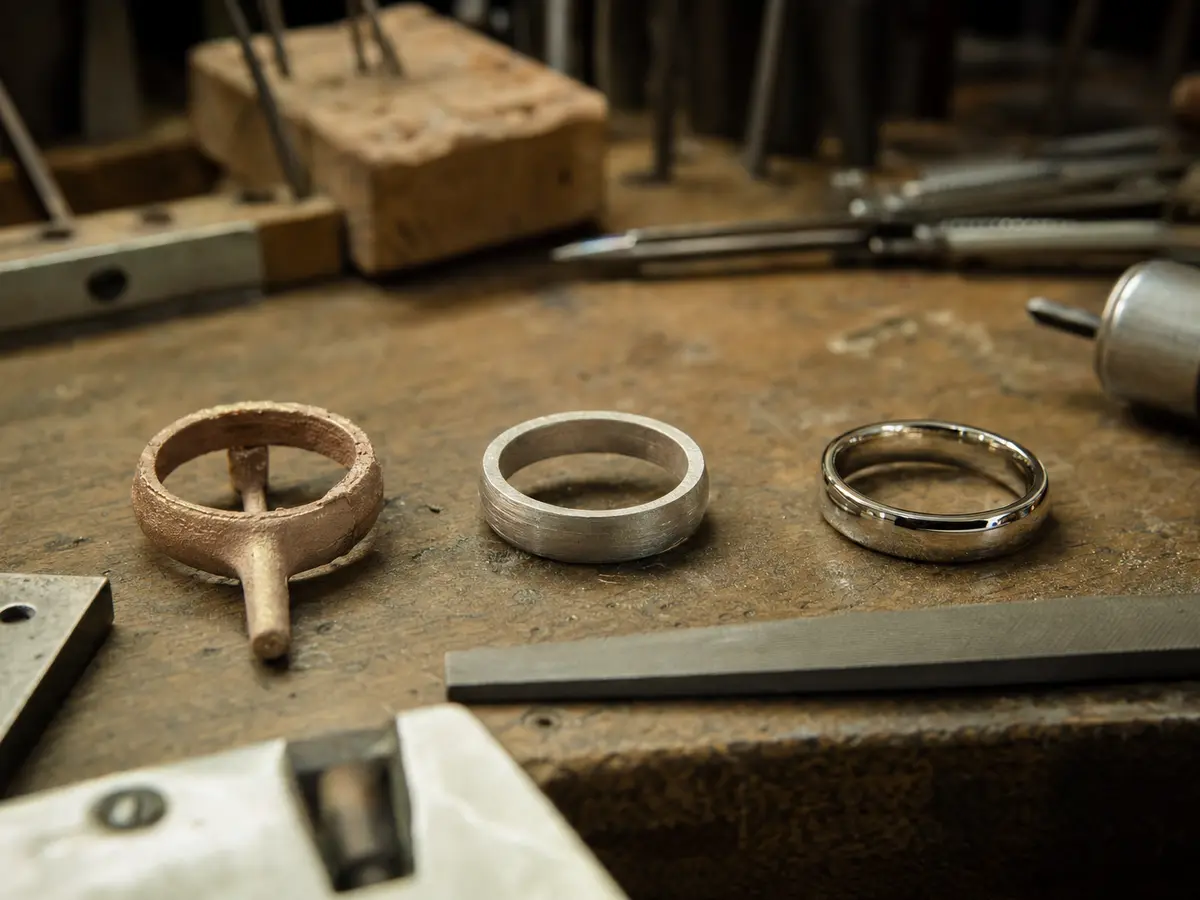
Moving the proposal to fit the ring's real timeline is not a failure, and for some couples it is simply the more comfortable choice, particularly where a finished ring genuinely matters to one or both of you. A short, honest conversation with Gavin about the realistic timeline lets you set a new date with confidence rather than guessing again. Once a stone has been sourced and approved, most made pieces move faster than people expect, so a delay is often shorter than it first feels.
- Get an honest timeline from Gavin, not a hopeful one, once the ring is actually in progress.
- Decide, based on that timeline, whether proposing on the original date or moving it makes more sense.
- If proceeding, choose what to hold out: a sketch, an unset stone, a plain band, or a letter.
- If moving the date, decide together how much of the reason to share with anyone who already knows a date was planned.
- Either way, book the design conversation for as soon after the proposal as suits you both.
Explaining a delay, if anyone needs to know
If family or friends were expecting a proposal on a particular date and it moves, a brief, unembarrassed explanation is normally all that is needed: the ring is being made properly and it is taking a little longer than hoped. Nobody who understands what goes into a made ring finds that an odd reason. If nobody outside the two of you knew a date was planned, there is nothing to explain at all, which is one advantage of keeping the date private until it happens.
Rushing a ring to hit an arbitrary date is rarely worth it. A stone chosen carelessly or a setting finished in a hurry is a compromise you both live with for years, in exchange for a date that, in most cases, nobody but the two of you was counting down to.
It is also worth separating two different situations that can look similar from the outside: a ring that is genuinely being made and simply needs the time it needs, and a decision that has not actually been made yet about what the ring should be. The first is a scheduling question with a real answer from the studio. The second is worth sitting with honestly before fixing any date at all, since no amount of pressure on a deadline solves a design that has not been decided on.
Is it better to delay the proposal or propose without the ring?
There is no universally better option, only the one that suits how the two of you feel about it. Some people would rather wait however long it takes for the finished ring to be part of the moment. Others would rather ask the question the day they are ready and treat the ring as its own separate, unhurried project. Both are common, and neither says anything about how serious the proposal is.
Will people think something is wrong if the proposal date moves?
Almost never, provided there is a simple explanation ready if anyone asks: the ring is being made and it needed more time. Most people, once they hear that, think better of the decision rather than worse. The bigger risk to a couple's own peace of mind is usually the pressure of an arbitrary date they set for themselves early on and then felt locked into.