The parts of a wedding day that go wrong quietly, power, transport and security, rarely get the attention they deserve until something has already gone wrong, and a calm conversation about each one in advance is worth more than any amount of worrying about it on the day itself.
Generator coverage: ask what it actually powers
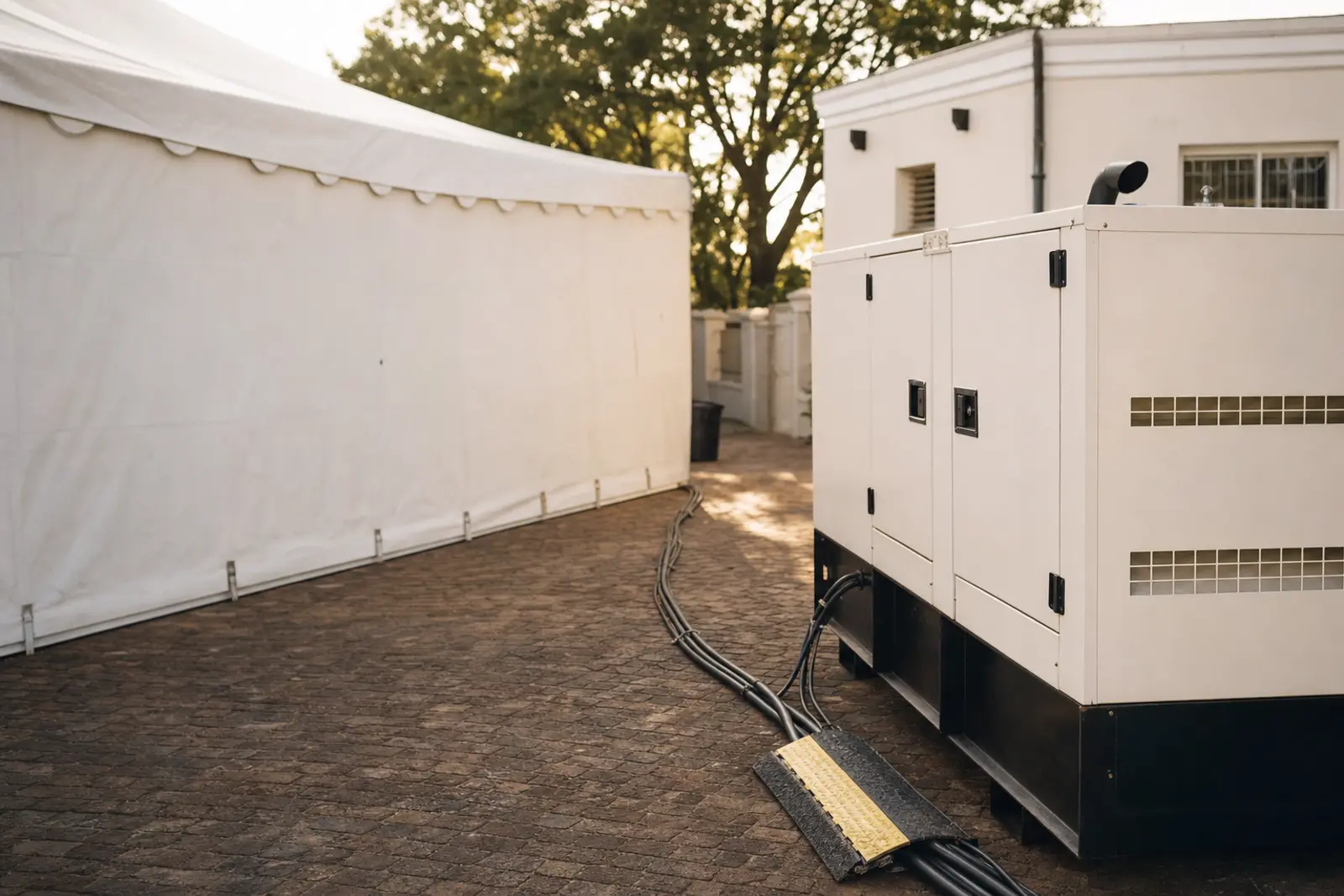
A venue confirming it has backup power is not the same as confirming what that backup power covers. Ask specifically whether it runs the kitchen, since a generator that keeps the lights and speakers on but not the ovens or fridges changes the catering plan considerably. Ask how the generator is tested and maintained, and ask what happens if it fails partway through the evening.
The schedule, sound and the kitchen
Build the running order with power in mind: if load-shedding is a live risk on the day, know roughly when the schedule's most power-dependent moments fall, the band's set, the speeches with amplified sound, and check that those windows are covered by whatever backup exists. A generator that covers the reception but not the ceremony, or the other way round, is a common gap worth closing before the day rather than discovering during it.
Guest shuttles and drinking
If alcohol is part of the reception and guests are driving themselves, arrange shuttles between the venue and the main areas guests are staying, and communicate the shuttle times clearly and early rather than as an afterthought on the invitation. A well-organised shuttle is one of the details guests remember gratefully, and its absence is one of the details that turns a good evening into a stressful drive home.
Dark car parks and venue security staff
Ask what security presence the venue provides once the light goes, particularly for the car park, and whether that presence is separate from whatever staff are managing the event itself. Confirm whether the car park is lit and whether valet parking, if offered, includes someone watching the vehicles once parked rather than only during arrival and departure.
Gifts, cash and jewellery on the day
Cash gifts and any envelope collection at the reception need one clearly designated, trusted person managing them, moved to somewhere secure well before the reception ends rather than left on a table overnight. The same goes for jewellery removed for comfort during dancing: agree in advance where it goes, ideally somewhere lockable, rather than a jacket pocket or a handbag left at a table.
- Confirm exactly what the venue's backup power covers, including the kitchen.
- Check that power-dependent moments in the schedule fall within backup coverage.
- Arrange guest shuttles if drinking and driving would otherwise be a risk.
- Ask what security presence covers the car park after dark.
- Appoint one trusted person to manage cash gifts and secure them promptly.
- Agree in advance where jewellery goes if it comes off for dancing.
None of this needs to feel like a worry list. It needs to feel like a short, calm set of questions answered well before the music starts, so nobody is solving them for the first time at nine in the evening.
How do we find out if a venue's generator will actually cover our whole event?
Ask directly and specifically: does it cover the kitchen as well as the lighting and sound, how is it tested, and what is the plan if it fails during the event. A venue used to hosting weddings should be able to answer this without hesitation. If the answer is vague, ask to see the generator and its documented capacity rather than accepting a general assurance that power is not a problem.
Do we need to organise transport for guests at a South African wedding?
It is worth arranging if alcohol is being served and a meaningful number of guests will be driving themselves from a nearby area, particularly where public transport or reliable ride-hailing is limited in that location. Shuttles between the venue and the accommodation guests are using are a common and appreciated solution, and communicating the schedule clearly in the invitation or a follow-up message helps guests plan around it.
Who should be responsible for wedding gifts and cash at the reception?
One specific, trusted person, agreed on in advance rather than assumed, should be responsible for collecting and securing any cash gifts, ideally moving them to somewhere lockable well before the reception ends rather than at the very end of the night when everyone is tired and distracted. The same principle applies to jewellery taken off for comfort during dancing: agree where it goes before the day, not in the moment.
Do we need to hire dedicated security for a home or private-property wedding?
It is worth considering more seriously than at a commercial venue, since a private property usually has no existing security staff, no managed car park and no one already responsible for the perimeter once dark falls. Even a small, temporary security presence for the car park and the gate covers the gap a commercial venue would otherwise fill on its own, and it is a reasonable question to raise with your insurer if the guest list or the gifts involved are substantial.