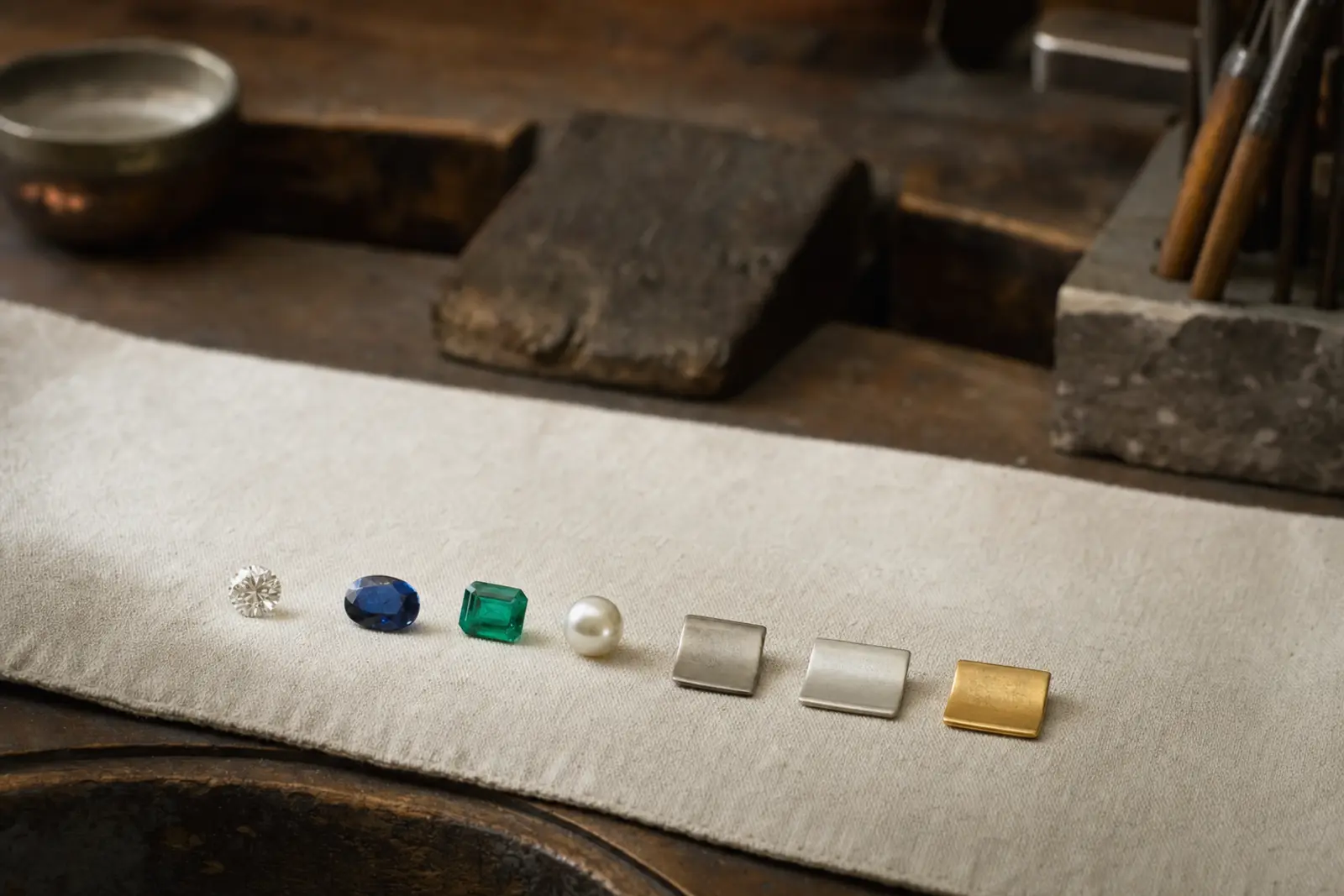
Every material in a piece of jewellery ages differently, and treating an emerald the way you would treat a diamond, or platinum the way you would treat white gold, is the fastest way to shorten its life without realising why.
Platinum
Platinum does not lose metal with wear so much as move it, which is why prong settings in platinum tend to stay structurally sound for decades. What it does develop is a soft, matte surface, a patina, where the metal has been quietly displaced by daily contact. Some people prefer that softened look; others prefer the bright original polish, which a jeweller can restore at any point without any loss to the metal itself.
White gold and its plating
White gold is naturally a faint warm tone rather than bright white, so a rhodium layer is plated over it to give the crisp look most people expect. That layer wears thin at points of contact, usually the underside of a ring, and needs renewing from time to time, on the same rhythm as the routine check described elsewhere in this Journal.
Yellow and rose gold
Neither carries a plated layer, so there is nothing to wear through, but both still pick up scratches and small dents over years of daily wear, the same as any soft metal. Rose gold's copper content can shift very slightly in tone with long-term contact with certain lotions and chemicals. Both develop a gentle patina of their own that many people like, and both can be repolished back to a brighter finish whenever it is wanted.
Diamonds and grease
Diamonds attract oils and grease more readily than most gemstones, which is why a diamond dulls faster from ordinary hand cream and skin contact than a sapphire set beside it. As the hardest natural material, a diamond resists scratching almost entirely, but it is not chip-proof: a direct knock to the girdle or a thin point of the cut can still chip it.
Sapphire and ruby
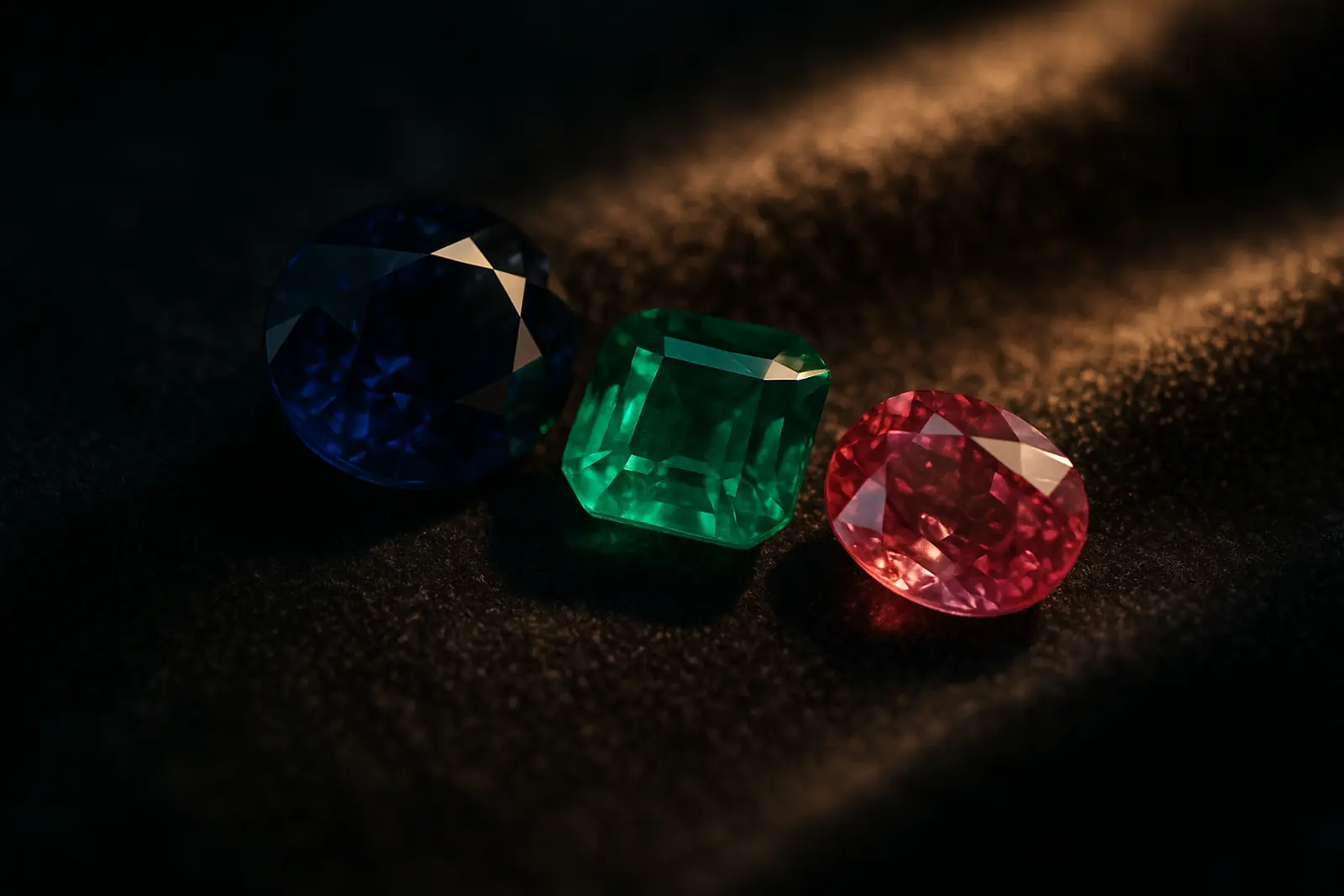
Both are corundum, extremely hard and well suited to daily wear. Untreated or lightly treated stones are generally safe with ultrasonic and steam cleaning, though a heavily included stone, or one with a known fracture-fill treatment, is not; ask before assuming either way. Colour in both is stable under normal wear and everyday light.
Emerald and its fillers
Emeralds are naturally included, and the great majority are treated with an oil or resin filler to improve their clarity, a standard and disclosed practice rather than a flaw. That filler is exactly what makes emeralds sensitive: ultrasonic cleaners, steam, sudden heat and harsh chemicals can all draw it out and make the natural inclusions more visible. Clean an emerald with a soft cloth and mild soapy water only, and never soak it or apply heat.
Spinel
The great majority of spinel on the market is untreated, hard, and genuinely stable, which makes it one of the more practical coloured stones for daily wear. Normal cleaning methods, including most ultrasonic cleaners, are generally safe, though it is still worth asking about the specific stone rather than assuming.
Pearls, opal and tanzanite
Pearls are organic and soft compared with any gemstone, and are damaged by the acids in perfume, hairspray and everyday skin products; wipe them after wearing, store them flat and apart from harder stones, and have them restrung every few years if worn often. Opal contains water within its own structure and can crack from sudden temperature change or from drying out, so it should never go near an ultrasonic or steam cleaner, extreme heat, or a hot car left in the sun. Tanzanite is comparatively soft and can be brittle along certain directions within the stone; gentle hand cleaning is fine, but ultrasonic cleaning and hard knocks are not. All three do best in protective settings for daily wear rather than exposed claws.
Storage, chlorine, heat and the gym
Store pieces separated, in individual pouches or a divided box, so a harder stone cannot scratch a softer one and metals do not mark each other. Keep everything away from chlorine, which attacks the alloys in gold over time and is never safe for pearls or opal. Avoid sudden heat and prolonged dry conditions, and take rings off for the gym; a weights rack, not an obvious accident, is behind most of the bent claws we see at the bench.
- Diamond, sapphire, ruby, spinel
- Ultrasonic and steam generally safe, unless heavily included or treated
- Emerald
- No ultrasonic, no steam, no soaking. Soft cloth and mild soap only
- Pearl and opal
- No ultrasonic, no steam, no soaking. Wipe after wearing
- Tanzanite
- No ultrasonic. Gentle hand cleaning only
- Platinum
- Develops a soft patina with wear; repolish if you prefer it bright
- White gold
- Rhodium plating wears at contact points and needs periodic renewal
- Chlorine
- Avoid in all gold alloys, and always for pearls and opal
- Heat
- Avoid sudden change and prolonged direct heat, especially for opal
The material decides the care, not the price. A well-chosen spinel is easier to live with than an emerald costing three times as much.
Which stones are safest for someone who does not want to think about maintenance?
Diamond, sapphire, ruby and spinel are the most forgiving group, tolerant of ordinary daily wear, most cleaning methods and the occasional knock. Emerald, pearl, opal and tanzanite all ask for more care and more restraint around heat, chemicals and ultrasonic cleaning, which is worth knowing before choosing one for a ring worn every day rather than an occasional piece.
Is platinum genuinely lower maintenance than white gold?
In one sense, yes: platinum needs no plating, so it never shows the warm patch that appears where rhodium has worn through on white gold. It does develop its own patina sooner, which some people repolish away and others leave alone. That is a difference in appearance rather than in how much upkeep either metal actually needs.