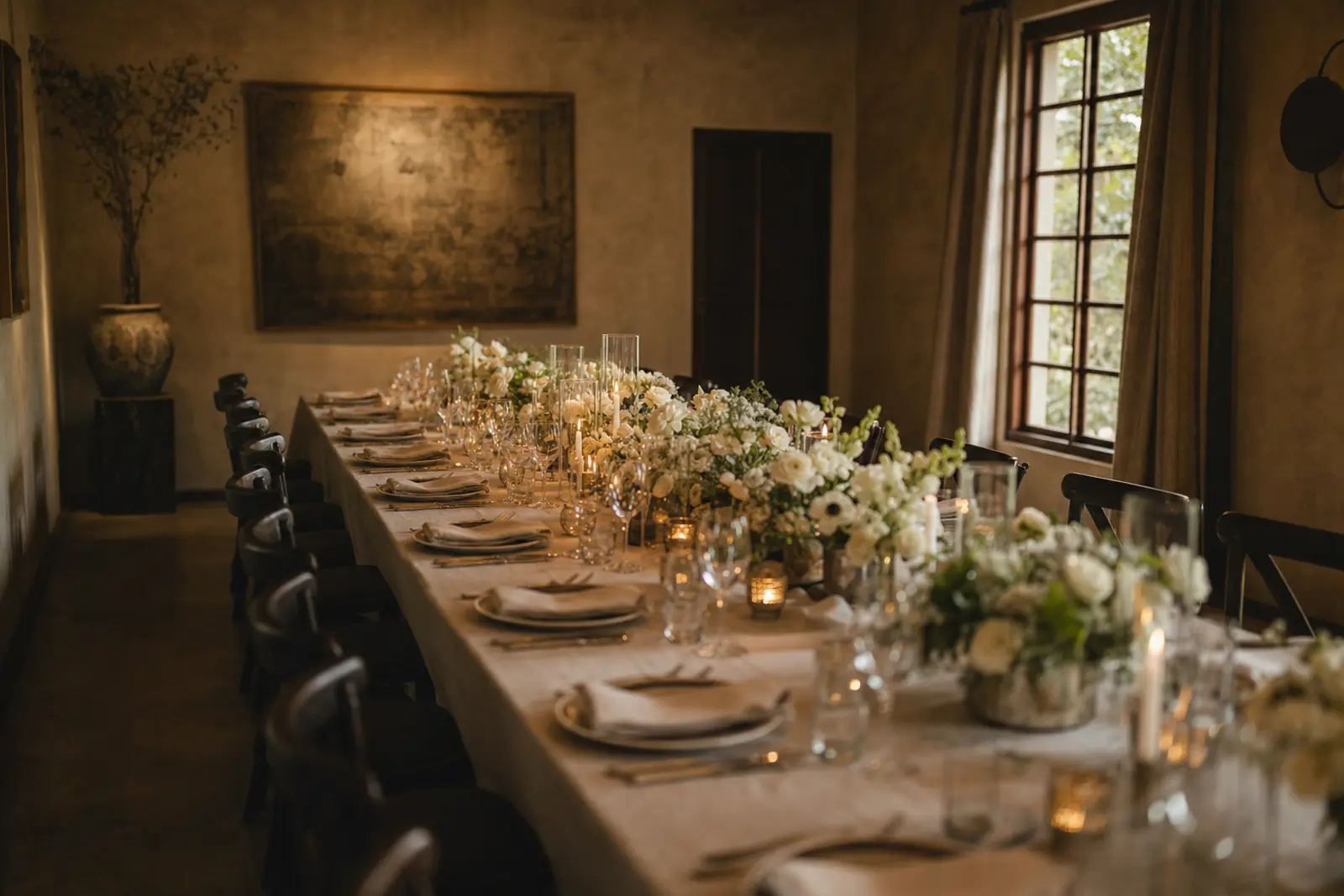
Twenty to forty guests is a different brief from two hundred, and the venues that handle it well are rarely the ones built for a crowd: choosing an intimate wedding venue means finding a room that makes a small group feel complete, not a smaller version of a big one.
This guide is about small guest lists in particular. If you are still deciding what to look for in any venue, start with the general guide to choosing a wedding venue and come back here if your guest list is small.
Choosing a venue at any size.
How to choose a wedding venueWhat a small venue does better
A small venue lets every guest hear the speeches without amplification, lets the couple actually speak to everyone in the room rather than working a receiving line, and tends to suit a single well-chosen space rather than a set of function rooms. Detail also reads differently at this scale: better flowers, better food per head and better light matter more when there are forty people to notice them rather than two hundred.
What it cannot do
A small venue cannot absorb a guest list that grows after the invitations go out, cannot easily add a dance floor and a band without the room changing character entirely, and generally cannot offer the scale discounts a caterer or a hire company gives for larger numbers. If either family wants a big, loud celebration with dancing until late, an intimate venue is usually the wrong shape for that brief, however much the couple likes the room itself.
Private dining rooms, small estates and guesthouses
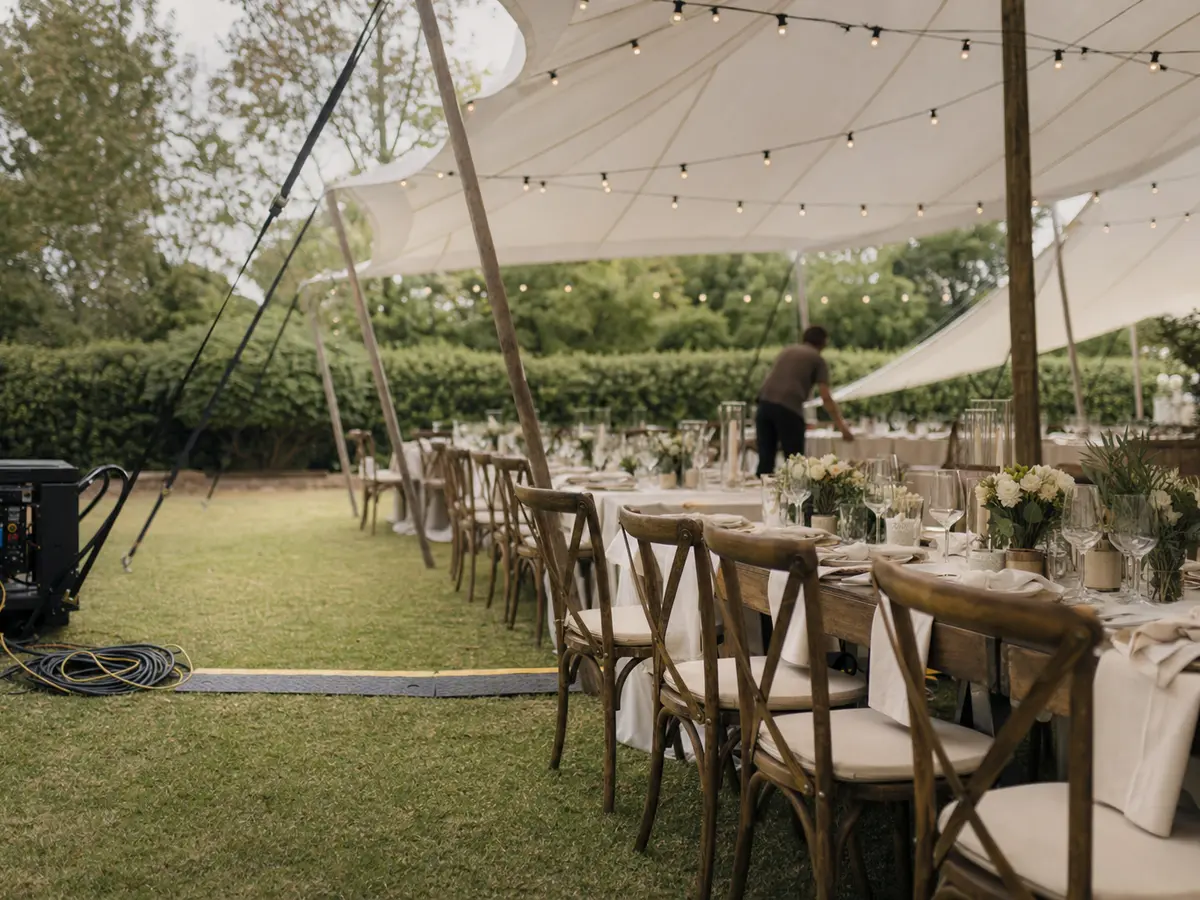
Three venue types tend to come up most often at this size. A private dining room within a restaurant gives you a kitchen and service team already built for quality at a small scale. A small estate, sized for forty rather than two hundred, offers a genuine setting without the scale a larger estate is built around. A guesthouse gives you accommodation and the ceremony in one place, useful when most of the guest list is travelling in for the weekend.
The long table
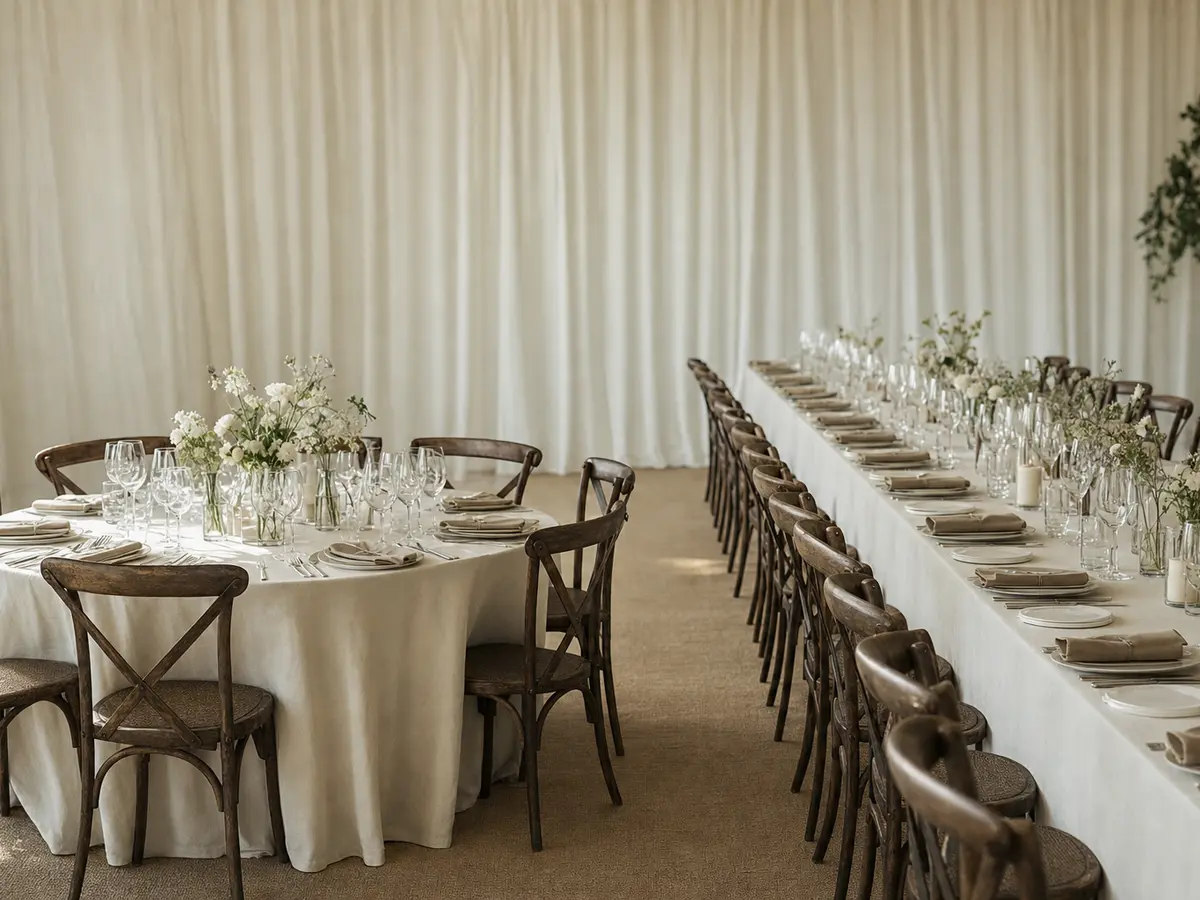
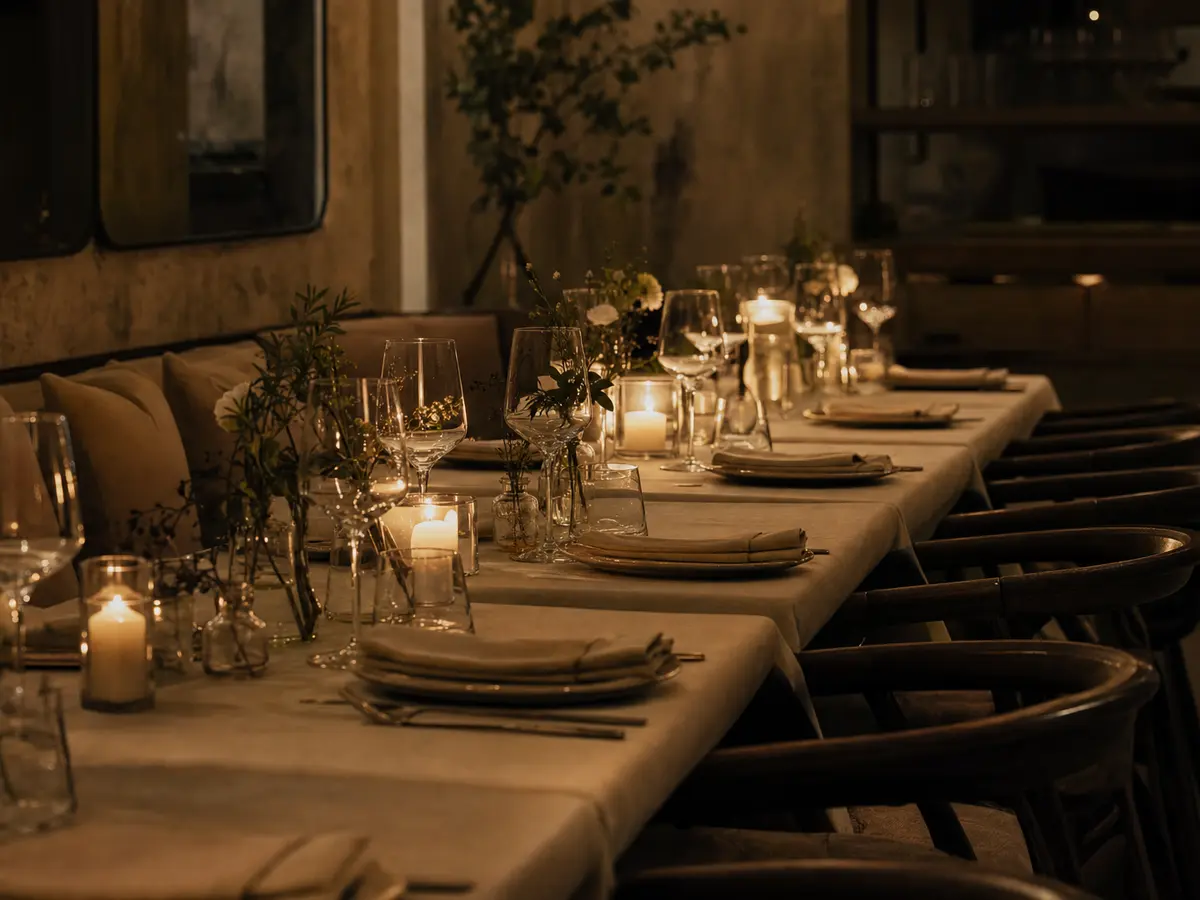
A single long table, rather than several round ones, is the format that suits this guest count best, and it is worth asking any venue whether its room can genuinely take one properly rather than being forced to split the group across smaller tables that undercut the point of keeping the wedding intimate in the first place.
Ceremony and reception in the same room
At this scale, holding the ceremony and the reception in the same room, reset between the two, is often more practical than moving guests between spaces, and it avoids the dead time a venue change creates for a small group with nowhere obvious to wait. Ask how quickly the venue can turn the room around, and where guests go during that gap.
Where the budget moves: scale to quality
A smaller guest list moves the budget conversation from how many people you can afford to feed to how well you can feed the people you have. Couples planning an intimate wedding frequently spend more per head than they would for a larger event, on better food, better flowers and a better band, precisely because the smaller numbers make that possible without the total cost growing.
The photographer and the band in a small space
A photographer and a band both need briefing differently for a small room: a long lens that works well in a large hall reads as intrusive across a table of forty, and a full band can simply overpower a small space in a way it never would in a marquee. Ask both suppliers how they typically work at this scale, not just what they normally do.
Questions for an intimate venue
- Can the room genuinely take one long table for the number we are inviting?
- Can the ceremony and reception happen in the same room, and how quickly is it turned around?
- What happens if the guest list grows after invitations are sent?
- Does the venue have experience at this scale, or is it usually set up for larger events?
- How does the venue expect a photographer and a band to work in the space?
The right intimate venue makes forty people feel like exactly the right number, not a smaller version of something built for two hundred. That is a different room to look for, not simply a smaller one.
How many guests count as an intimate wedding?
There is no fixed number, but most venues and suppliers treat anything from around twenty to forty guests as intimate, distinct from a small wedding of fifty to eighty and a full-scale wedding above that. The exact cut-off matters less than being honest with a venue about your real number early, since a room built for forty rarely works well at eighty, and a room built for two hundred rarely feels right at thirty.
Is an intimate wedding always cheaper than a large one?
Not necessarily, and often not per guest. Fewer guests usually means a lower total bill, but couples planning an intimate wedding frequently choose to spend more per head on food, flowers and music than they would for a larger event, since the smaller numbers make that upgrade affordable. Decide early whether the goal is a smaller total cost or a better experience for fewer people, since those are different briefs.