Engraving looks permanent the day it is cut, but not every method actually is, and the choice between hand engraving, machine engraving and laser marking decides whether the words are still legible on a ring's fiftieth anniversary or worn to a shadow long before then.
Hand engraving versus machine and laser
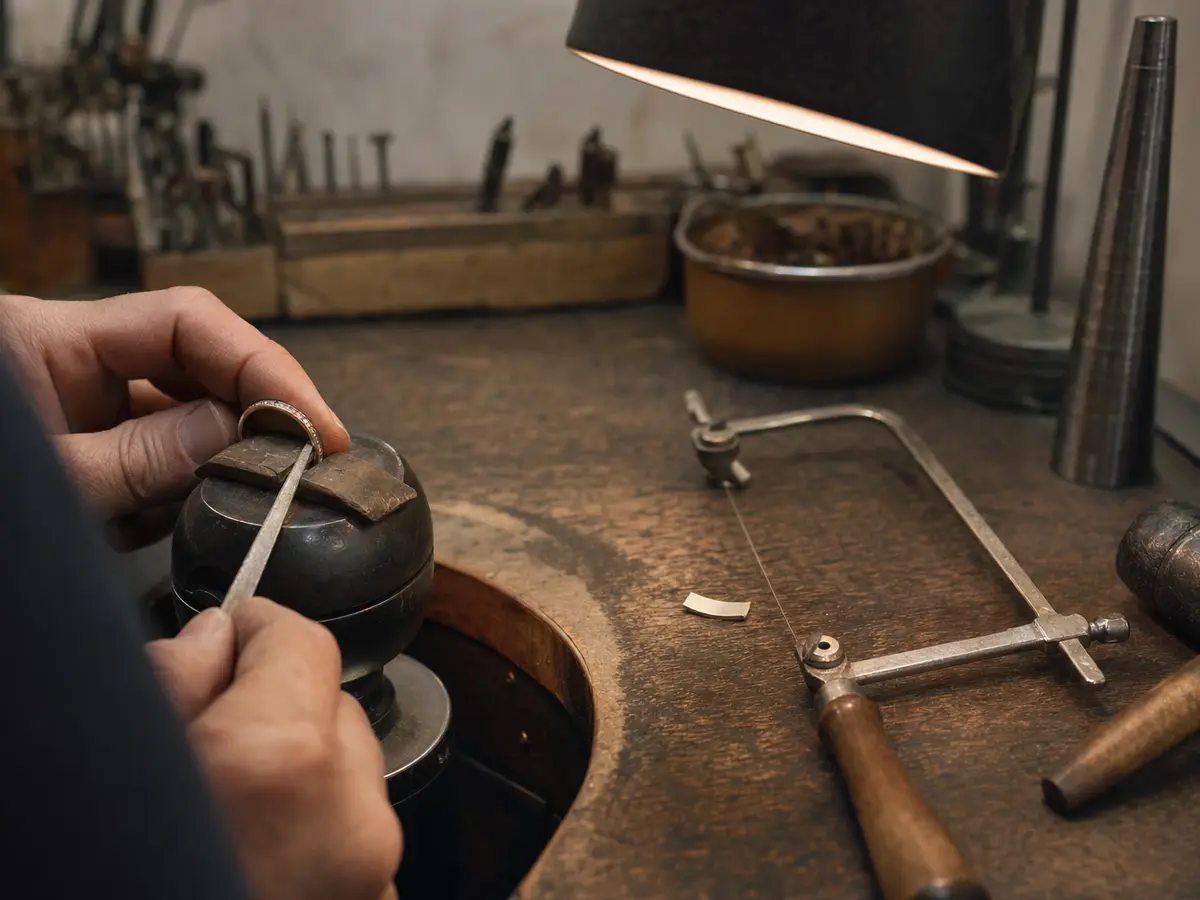
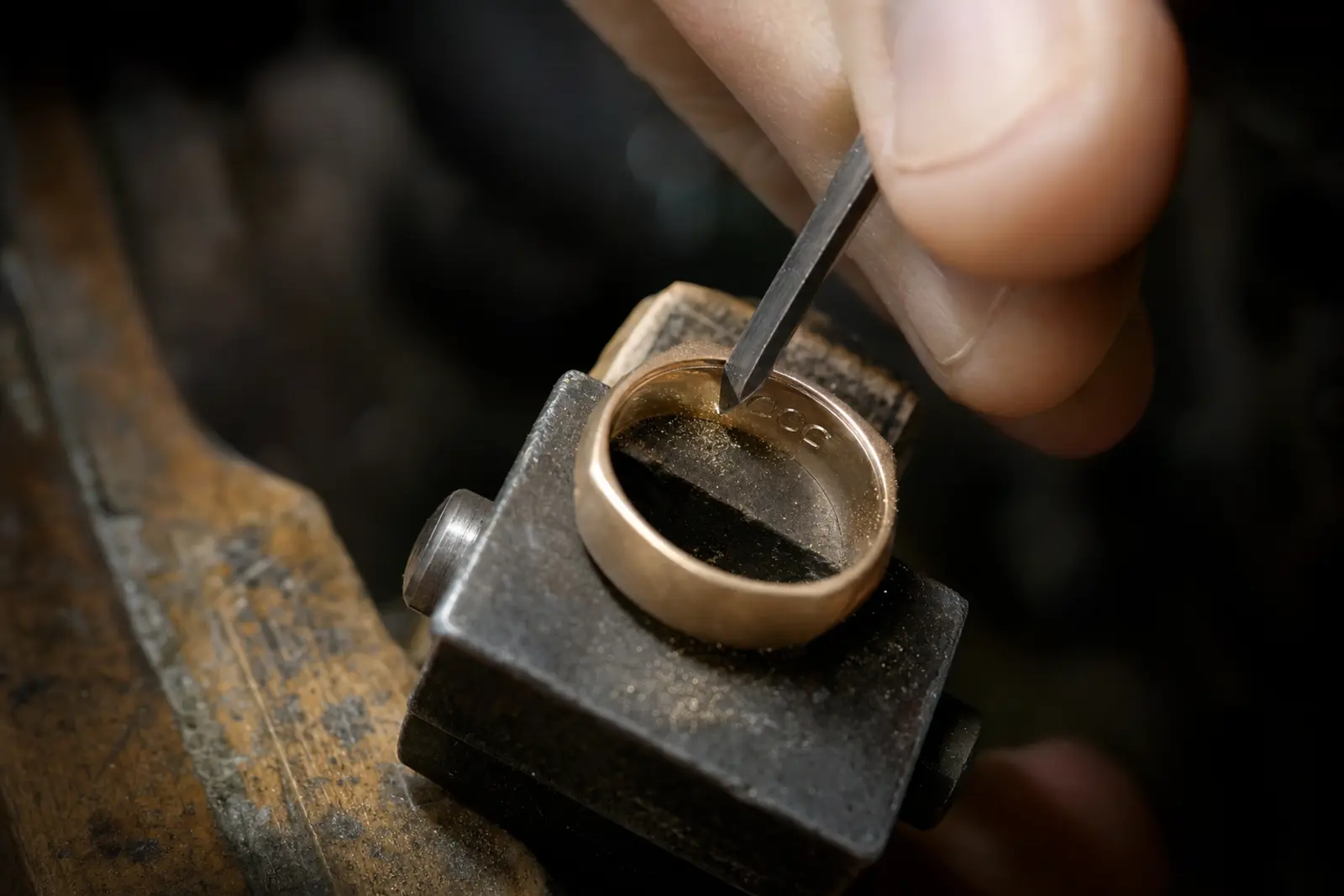
A graver held and guided by hand cuts a line with real depth and a slightly uneven, human quality that a machine does not reproduce. A machine, usually a pantograph or a computer-guided cutter, cuts a cleaner, more uniform line at a consistent depth, which suits small precise text well. Laser marking does not cut at all. It burns a shallow mark into the surface, which is why it is fast and inexpensive, and why it is also the method least likely to survive fifty years of wear.
What wears and what lasts
A ring is polished occasionally over its life, whether for cleaning, resizing or repair, and each polish removes a whisper of metal from the surface. A deep hand-cut or machine-cut line can survive many polishes before it fades. A laser mark, sitting only on the surface, can disappear after surprisingly few. If you want engraving that is still there in fifty years, ask what method was used and how deep the line actually runs, not just what it looks like on the day.
Inside the band or outside
Inside the band is private, seen only by the wearer, and it sits against skin all day, so the engraving needs to be cut smooth with no raised edge to catch or irritate. Outside the band is visible to everyone else but takes the wear a hand takes: knocks, polishing, decades of contact with everything a hand touches. A line cut outside will soften with age in a way an inside line, protected by the finger itself, generally does not.
Fonts and legibility at small size
The width of a band limits how ornate a font can be before it stops being legible. A script font that looks elegant enlarged on a screen can blur into an illegible line once it is cut at three millimetres high. A plain, slightly rounded font, cut deep and evenly spaced, reads clearly at fifty years old in a way a fashionable script rarely does. Ask to see the actual font at the actual size before you commit to it.
What people engrave, and what they regret
Dates, initials and coordinates are the most common choices, and they age well because they do not need explaining. A line of a poem or a private joke ages less predictably: right for some couples for a lifetime, and for others a quiet source of second-guessing a few years on. The regrets we see are rarely about sentiment. They are almost always about spelling, wrong dates, or wording rushed at the last minute before a piece has to leave the workshop. Check it twice, slowly, before it is cut.
Platinum versus gold
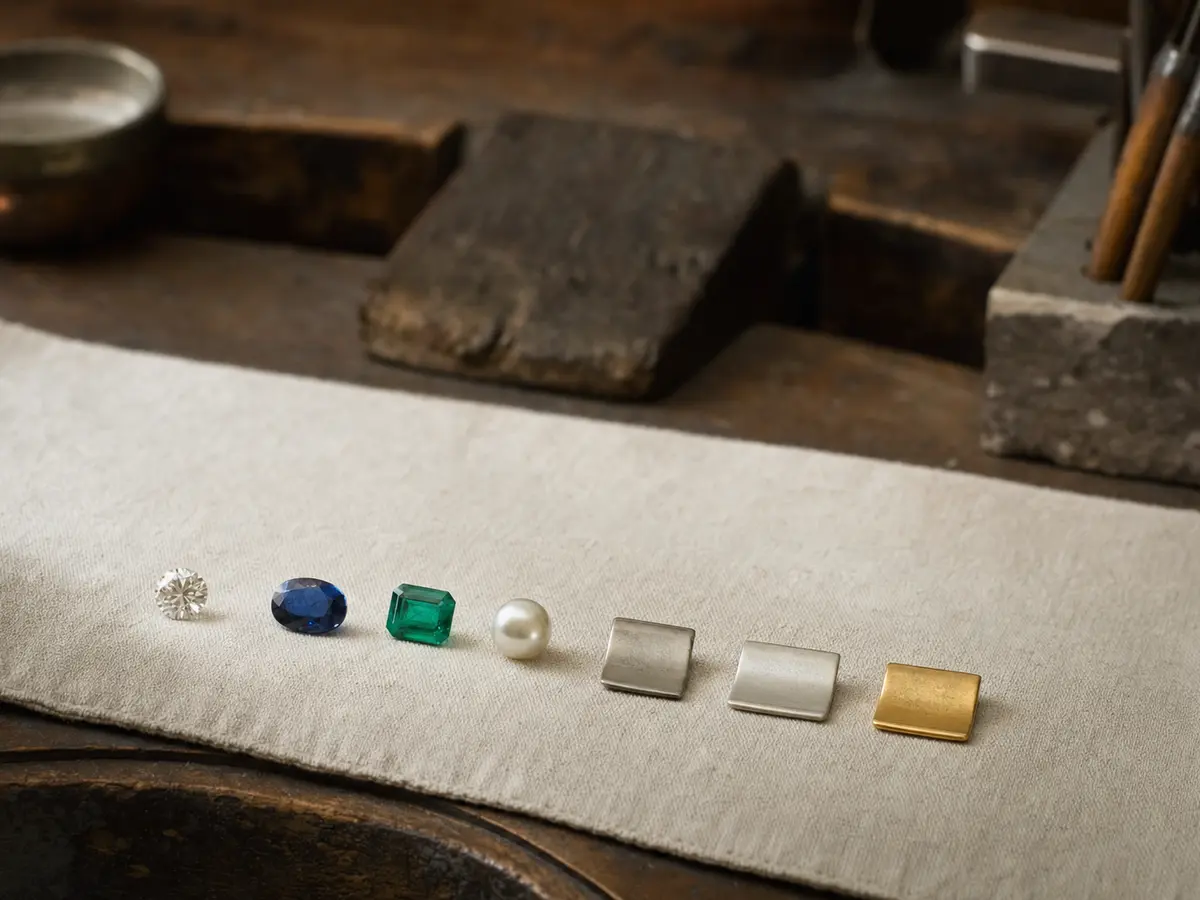
Platinum is a harder metal and holds a fine engraved line beautifully once it is cut, but it resists the graver more than gold does and takes longer to work. Gold engraves more easily and takes a crisp line quickly, but being a softer metal it also polishes down faster over the decades, which is the same wear question above applied specifically to the metal rather than the method.
Resizing an engraved ring
Resizing usually means cutting the shank and adding or removing a small section of metal at the join. If engraving runs across that join, it will be interrupted and needs to be redone in that section, matched as closely as possible to the original. Engraving placed away from where a shank is likely to be cut, generally at the back rather than directly opposite the setting, survives a future resizing with far less disruption.
- Check the spelling and the date twice, out loud, with someone else.
- See the actual font at the actual size, not enlarged on a screen.
- Decide inside or outside before the band's final profile is set.
- Ask how deep the chosen method actually cuts.
- Consider where a future resize is likely to cut the shank.
Can old, worn engraving be redone or refreshed?
Often, yes, particularly if the original line was hand-cut or machine-cut with real depth to begin with. A jeweller can trace and deepen a faded line so it reads clearly again. If the original engraving was a shallow laser mark that has worn away almost completely, there may not be enough of it left to trace accurately, and the honest option is often to re-engrave the wording fresh rather than guess at what was there.
Is hand engraving worth it over laser for a wedding band?
For a piece meant to be worn every day for decades, yes, generally. Laser marking is faster and reads perfectly well on the day it is done, which suits some occasions fine. For a wedding band specifically, the whole point is that it is still there in fifty years, and depth is what makes that true, so hand or machine engraving is the method more likely to keep that promise.