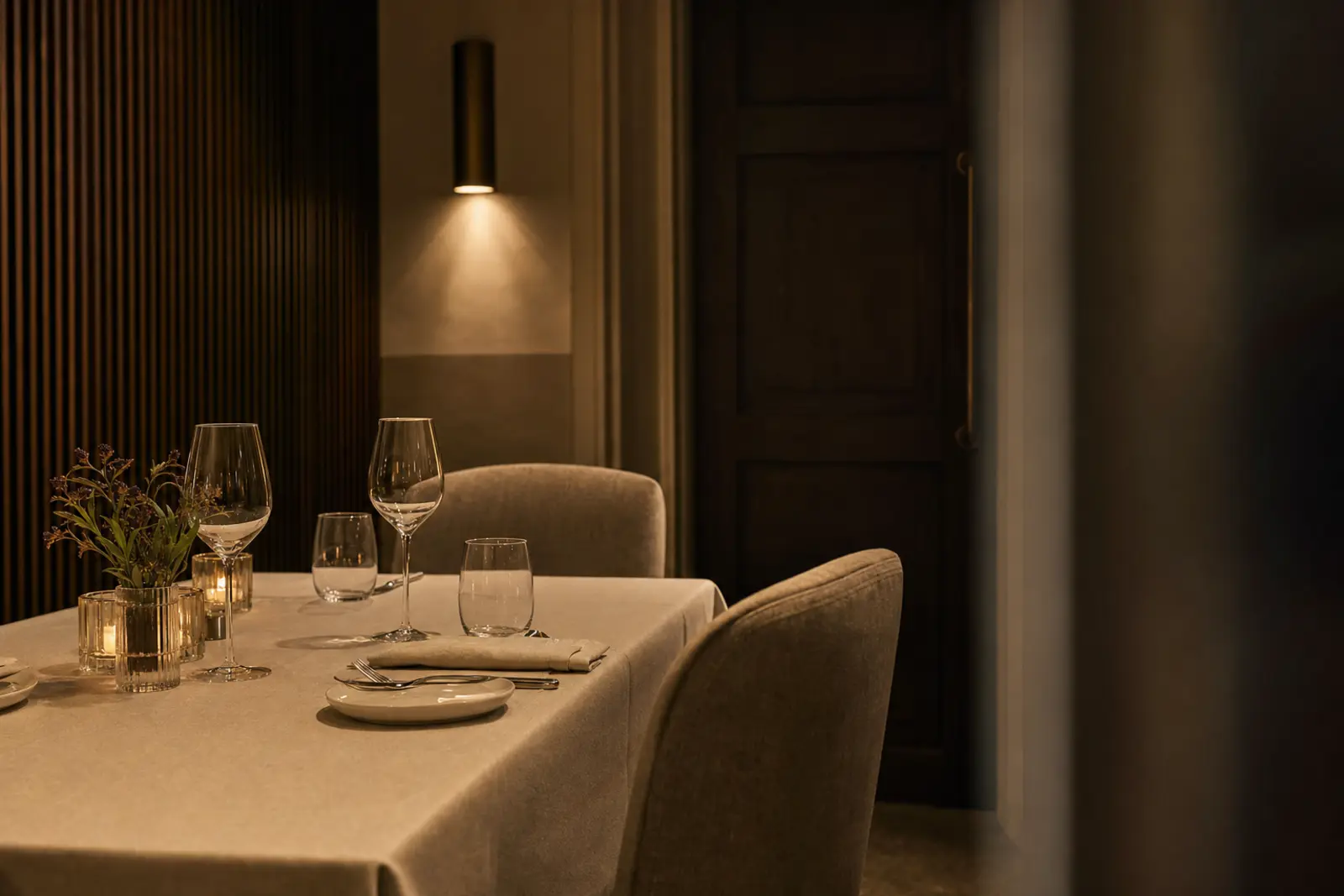
A private dining room solves the one problem an open restaurant floor cannot: nobody else in the room at all, which changes both what you can plan and how much the moment rests entirely on the two of you rather than on the atmosphere around you.
What exclusivity actually buys you
Booking the whole room, rather than a table within a larger restaurant, gives you control over the menu's timing, the music if there is any, and who has access to the space, right down to whether a server enters between courses or waits to be called. Most venues that offer this kind of room will build a timeline with you in advance, course by course, if you ask; use that conversation to plan exactly when you want the room to yourselves rather than leaving it to chance mid-meal.
A quiet room amplifies more than it hides
An open restaurant has ambient noise working in your favour: other conversations, music, general activity that covers a slightly shaky voice or a long pause. A private room removes all of that, which means silence, nerves and any hesitation are far more audible than they would be on a busy floor. It is not a reason to avoid a private room, but it is worth knowing before you are standing in one: say what you planned to say, and do not let the quiet talk you out of it.
The door matters more than the table
Ask exactly who has access to the room and the corridor leading to it during your booking: whether it is a single dedicated server, or whether the room shares a passage with the rest of the restaurant's service. A room that is technically private but has staff moving through it constantly on the way to somewhere else is a different experience to one that is genuinely closed off, and it is a reasonable, specific question to ask when you book.
Where these rooms tend to be
Private dining rooms are usually found within hotels, larger restaurants, or dedicated function venues rather than existing as their own category of business. A hotel's version often comes with the added benefit of somewhere to stay afterwards; a restaurant's version usually has the food of its main kitchen behind it. Neither is automatically the better choice for a proposal, and the deciding factor is usually the room itself, its size, its light and its distance from the rest of the building, rather than which type of venue it belongs to.
Photographs, without the room working against you
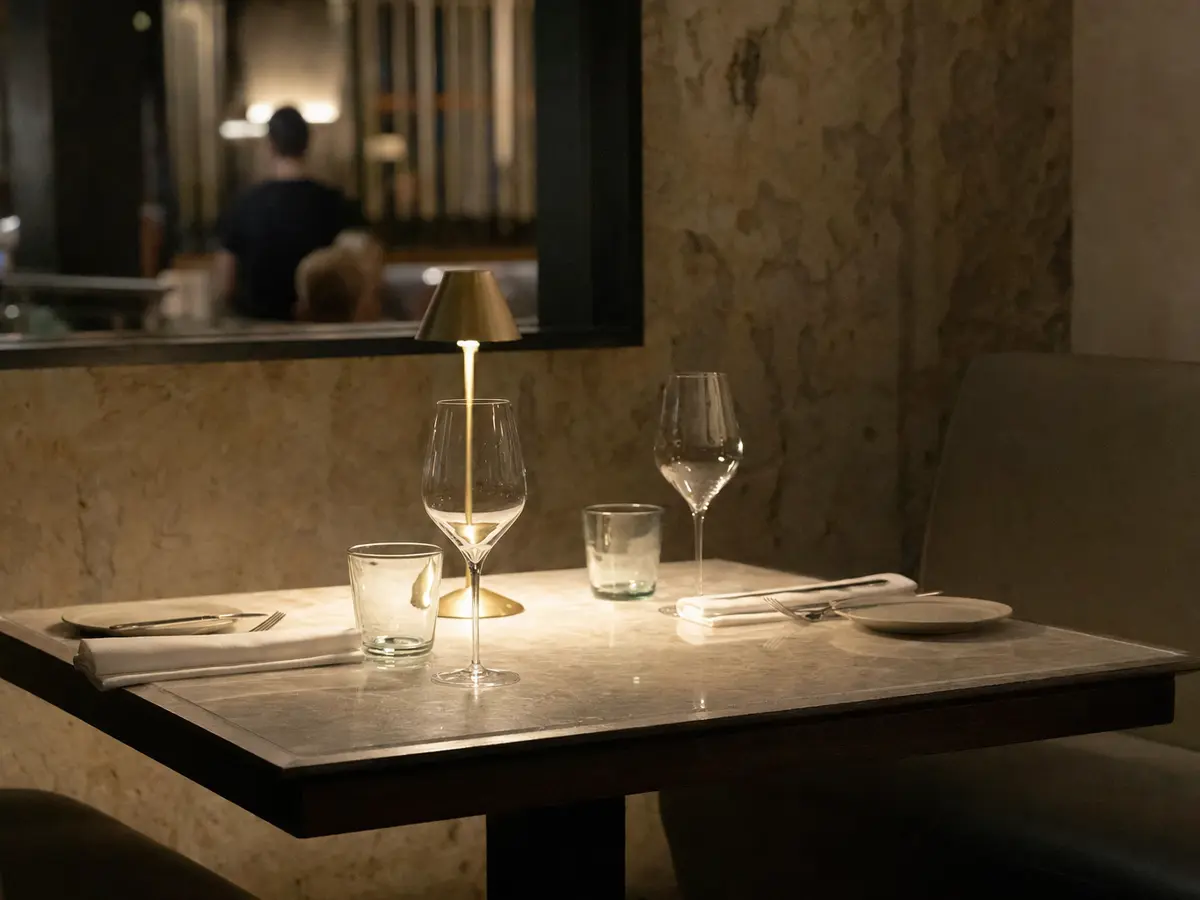
The controlled light of a private dining room, usually low and warm, is easier to plan around than a rooftop's changing sky or a garden's moving shade, but it is also unforgiving if a nervous moment shows on a face with nowhere else in the frame to look. A photographer working this kind of room should know the layout beforehand, including where they can stand without being seen from your table, since there is no crowd to disappear into.
- Build a course-by-course timeline with the venue rather than leaving the moment to chance mid-meal.
- Ask exactly who has access to the room and the corridor during your booking.
- Say what you planned to say; the quiet of a private room can make hesitation feel louder than it is.
- Brief a photographer on the room's layout in advance if you want photographs.
- Book extra time afterwards rather than the venue's standard turnaround.
A private room removes almost every variable except the two of you. That is either the whole appeal or the thing to prepare for, depending on how either of you handles a quiet room.
Is a private dining room much more expensive than a normal table?
Often yes, sometimes considerably so, since many venues charge a minimum spend or a room fee on top of the meal itself, particularly for a smaller party of two in a space built for larger groups. Ask for the specific costs before you commit, including whether there is a minimum number of covers assumed in the price, since a two-person booking in a ten-person room is sometimes priced as though the room were full.
Can we still have music in a private dining room?
Usually, yes, and it is one of the details worth specifying when you book rather than leaving to the venue's default playlist. Some rooms have their own sound system you can control or hand a device to the venue for; others rely on whatever is playing through the main restaurant, piped in at a lower volume. If music matters to the moment, ask specifically what the room offers rather than assuming it will suit you.
What if the private room is not as private as we expected?
Raise it with the manager immediately rather than proceeding and hoping it settles down; a room with the door constantly opening for service is a legitimate thing to ask to be fixed, whether that means asking staff to knock and pause rather than walk straight in, or moving the timing of the next course. Most venues would rather adjust than have a guest experience the room as less private than they were promised.