Choosing a ruby engagement ring means understanding that a genuinely fine ruby is rarer than most people assume, rarer at a given size than a comparable diamond, and that rarity is exactly where the decision starts.
The colour, spoken about soberly
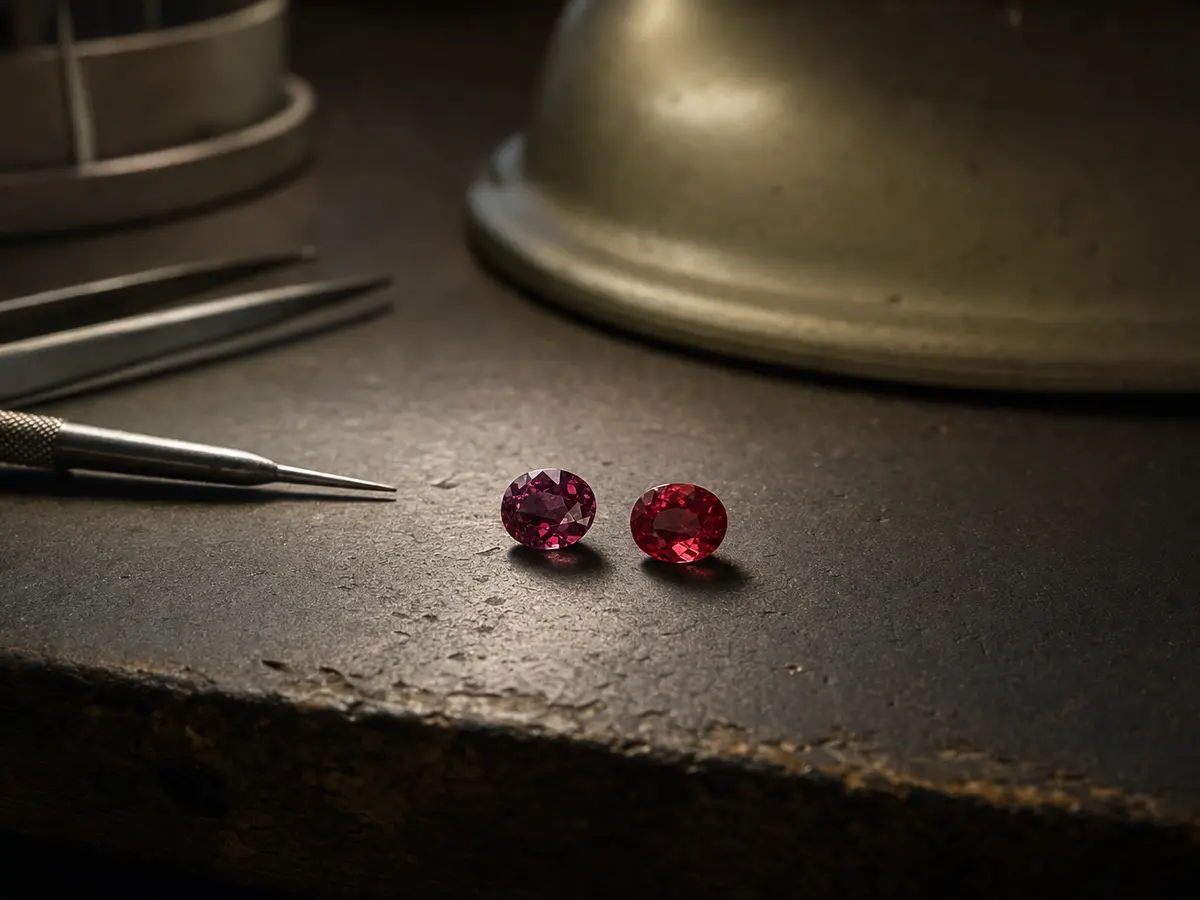
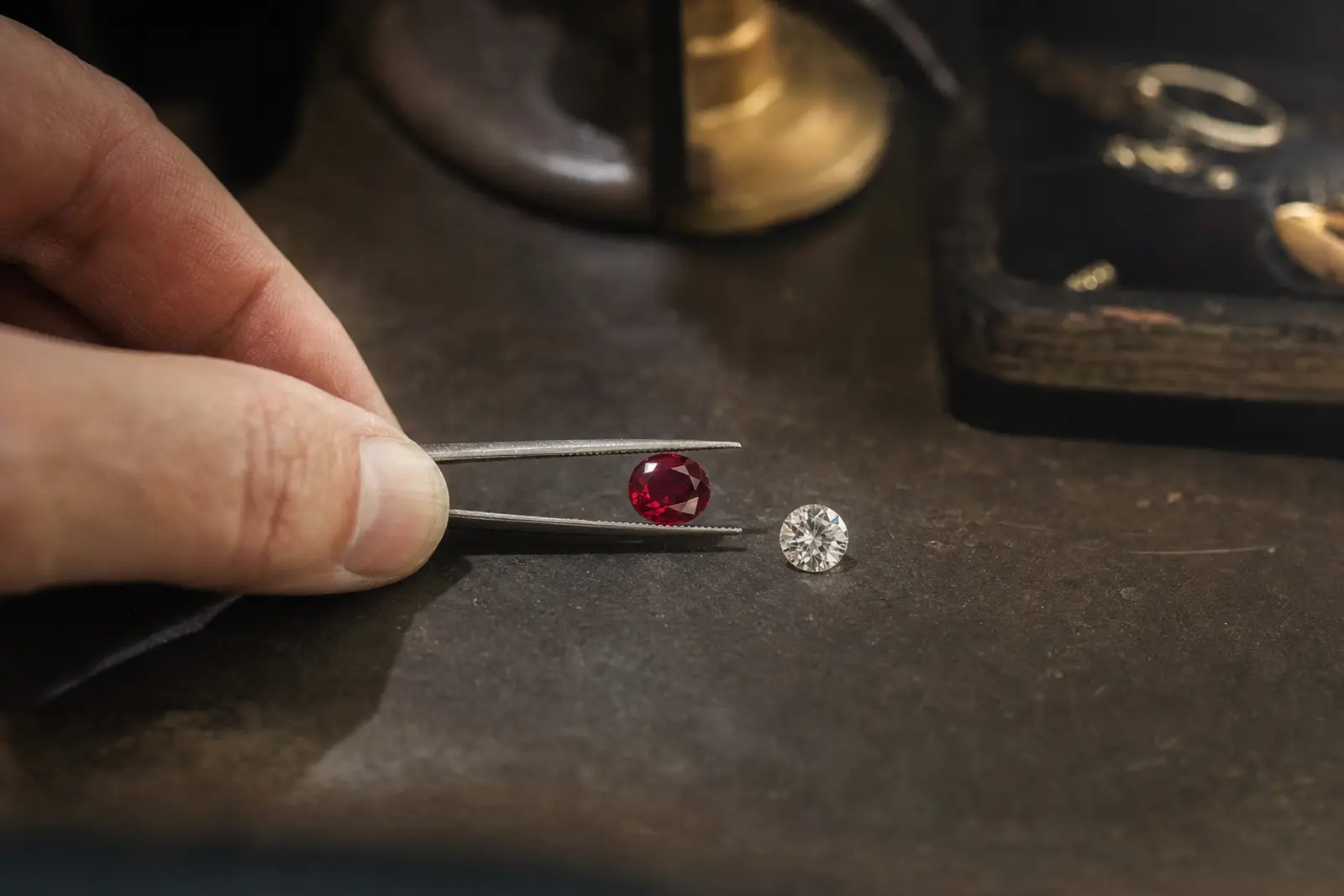
The finest rubies show a vivid, slightly purplish red with even saturation across the stone, a quality the trade sometimes calls pigeon-blood, a name worth knowing rather than chasing, since it describes a level of colour rather than a guarantee stamped on any particular stone. Most rubies sit somewhere below that peak, in perfectly attractive tones that range from brownish-red to a brighter, more orange-leaning red, and the difference between a good ruby and an exceptional one is almost entirely down to how even and how saturated that red is.
Ruby often shows red fluorescence under ultraviolet light, which, unlike the blue fluorescence more commonly discussed with diamonds, tends to make the stone's colour look richer rather than hazier in strong daylight. It is one of the few places where a coloured stone genuinely benefits from the same sunlight that can be unkind to a diamond.
Heat treatment, and the treatment that actually matters
As with sapphire, heat treatment is standard practice for ruby and should be disclosed on the report and the invoice as a matter of course. It is a different matter from glass-filling, a treatment used on heavily fractured, low-quality rough where lead glass is used to fill fractures and dramatically improve apparent clarity. A glass-filled ruby is a genuinely different, much lower-value stone, and it needs to be avoided by anyone buying for an engagement ring rather than treated as a cheaper version of the same thing. This is the one disclosure question worth asking twice.
Rarity and size
Fine rubies of a carat or more in a strong, even colour are genuinely rare, rarer at that size than a comparable diamond, and the price reflects it. This surprises people who assume coloured stones are automatically the more affordable choice. Where a ruby buyer often gets real value is in choosing a slightly smaller stone with exceptional colour over a larger stone with a duller, more brownish tone, since colour drives desirability far more steeply than size does.
Setting a ruby to last
Ruby shares sapphire's hardness, nine on the Mohs scale, and its toughness, which genuinely suits it to daily wear. That single fact settles most practical questions about whether a ruby engagement ring can survive an ordinary life. It sits happily in claw, bezel or half-bezel settings, and the choice between them is mostly aesthetic rather than protective, unlike softer stones where the setting is doing real defensive work.
- Heat treatment
- Standard practice; declare on the report and the invoice.
- Glass-filling
- A different, lower-value stone; ask specifically and in writing.
- Hardness
- Nine on the Mohs scale, the same as sapphire.
- Rarity
- A fine ruby is often rarer at a given size than a comparable diamond.
A ruby earns its reputation honestly. Ask about treatment plainly, look at colour before size, and it is one of the few coloured stones we would put in front of anyone without a single caveat about daily wear.
I have had exactly one conversation about a glass-filled ruby that ended well, and it was the one where the client walked away before buying it.
What is glass-filled ruby, and why does it matter for an engagement ring?
It is heavily fractured, low-grade ruby rough that has had lead glass forced into its fractures to disguise inclusions and dramatically improve apparent clarity. It looks far better than the raw material underneath and is priced far below a genuine, untreated or heat-treated ruby, but it is fragile: household chemicals and even some jewellery cleaning methods can damage the glass fill. It should always be disclosed, and it is not a stone to build an engagement ring around.
Is a ruby a durable enough choice for someone who does not want to worry about her ring?
Yes. Ruby sits at nine on the Mohs scale, the same hardness as sapphire and second only to diamond, and it is tough as well as hard, meaning it resists chipping reasonably well too. Set securely, a genuine heat-treated ruby, the normal and accepted kind, is a sound choice for daily wear with essentially the same practical confidence as a sapphire.