A rooftop gives you the best view in the building and the least control over who else is sharing it, which makes timing, not the view itself, the part of a rooftop proposal that actually needs planning.
The view is public more often than private
Most rooftops with a view worth having are also bars or restaurants that other people can walk into, which means the setting you picture as yours alone is, for most of the evening, a room anyone can book a table at. The two windows that work in your favour are the first hour after opening, before the evening crowd builds, and a booked private section if the venue offers one. Ask specifically whether any part of the roof can be held for you, even briefly, rather than assuming the whole space is available.
Wind changes more up here than the view does
Height amplifies wind in a way that is easy to underestimate from the ground. A breeze that is barely noticeable at street level can make conversation genuinely difficult twenty storeys up, and it gets worse as the sun goes down and the air cools. Check the forecast for wind, not just rain, and have a sheltered corner or an indoor fallback in mind if the rooftop has one, since a proposal shouted over wind noise loses most of what makes it feel private in the first place.
Golden hour, then the crowd
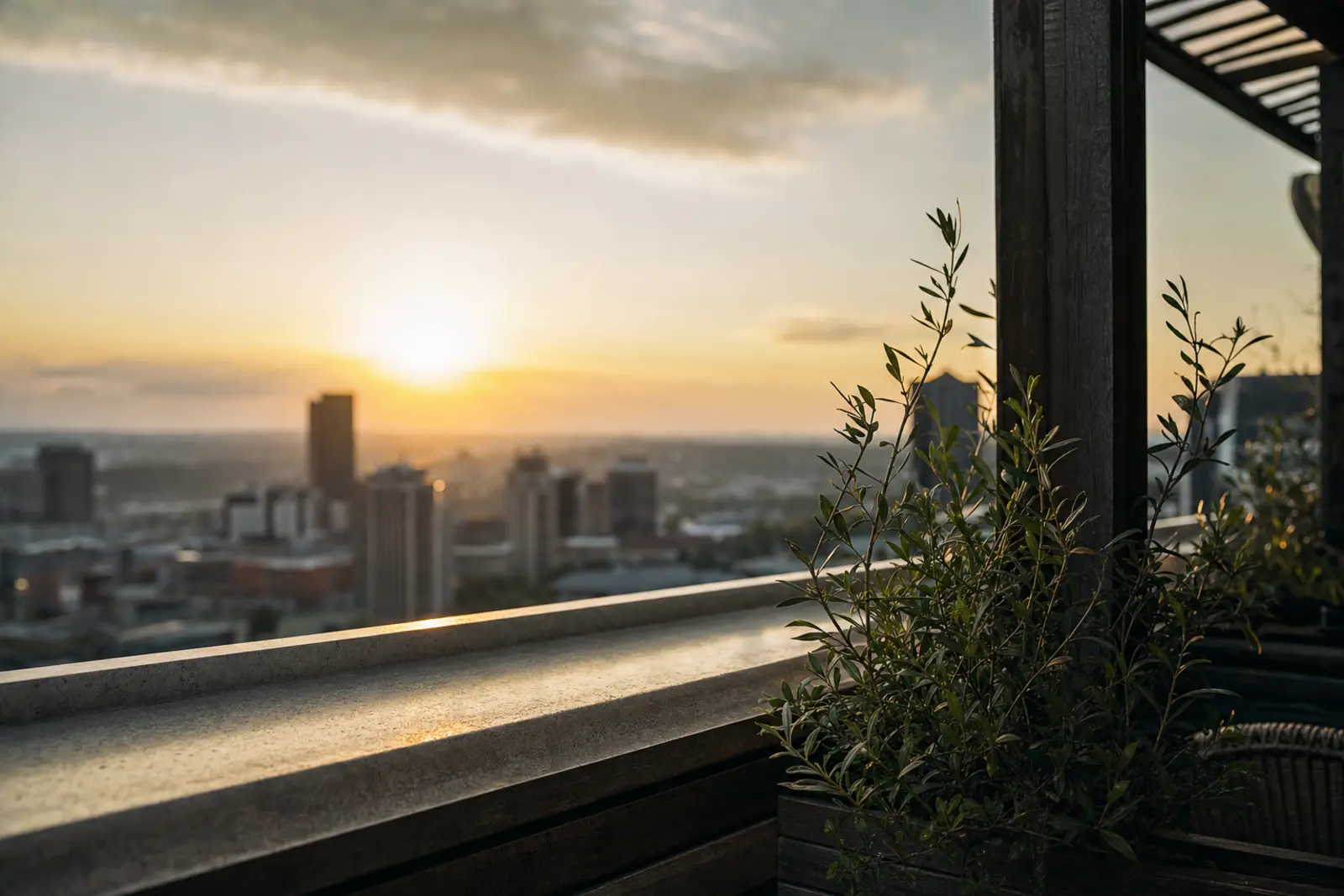
The light that makes a rooftop worth choosing, low sun, a skyline turning warm, is at its best for a narrow window before sunset and disappears with it. Most rooftop bars also start filling from around that same hour, so the best light and the busiest crowd tend to arrive together. Getting there early, an hour or so before the light peaks, buys you both a quieter room and first pick of where to stand.
The practical risk nobody mentions
If you are planning to kneel, check the ground and the railing first. Rooftop surfaces are not always level, decking can be slippery when the evening dew sets in, and a low glass barrier is not something you want to discover you are too close to mid-gesture. Walk the exact spot beforehand, in the shoes you will actually be wearing, rather than assuming it will be fine on the night.
Photographs against the light
A sunset backdrop is dramatic and genuinely difficult to photograph well, since the two of you will be lit from behind by the brightest part of the sky. A photographer working this setting needs to know that in advance, either positioning for a side light rather than a straight silhouette, or timing the shot for just after the sun has dropped, when the sky still glows but no longer overpowers the exposure.
- Check the wind forecast specifically, not just rain.
- Arrive an hour before the light peaks, ahead of the evening crowd.
- Walk the exact spot in advance if you are planning to kneel.
- Ask whether any part of the roof can be held for you.
- Brief a photographer on the backlight problem before the evening, not on the night.
- Have an indoor fallback in mind if the wind or the crowd makes the roof unworkable.
The skyline will still be there in an hour. Nobody remembers whether it was seven o'clock or eight, only whether they could actually hear each other.
Plan around the wind and the crowd, and the view takes care of itself.
Do rooftop bars let you book a private area for a proposal?
Some do, particularly larger venues with a defined lounge or terrace section separate from the main bar; smaller rooftops with one open area are less able to offer this. Ask directly rather than assuming either way, and if a private section is not possible, ask about arriving early instead, since the first hour after opening is usually the closest a shared rooftop gets to feeling private without a formal booking.
What happens if the wind is too strong on the day?
Have an indoor alternative already chosen, ideally within the same building, such as a lounge or bar one floor down, so the change of plan does not turn into a scramble. Most rooftop venues have somewhere sheltered nearby precisely because wind is common enough that they plan for it too. Deciding this in advance, rather than improvising on the day, is the difference between a minor change of scenery and a visibly disrupted plan.
Is a rooftop a good choice if she does not love heights?
Not necessarily, and it is worth being honest with yourself about this rather than choosing the setting for the view alone. A rooftop with a solid, substantial barrier rather than a low glass edge is a meaningfully different experience for someone uneasy with height, so look closely at the specific venue's layout rather than rooftops as a category. If in doubt, a garden or a hotel lounge gives you comparable light and atmosphere without the exposure.